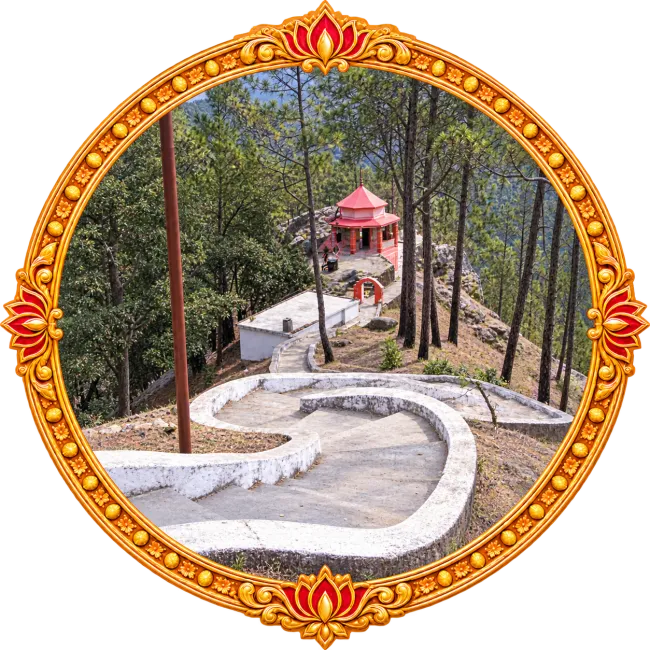
Santala Devi Temple, Dehradun
Visit Santala Devi Temple in Dehradun, a hilltop shrine dedicated to Goddess Santala Devi and her brother. Surrounded by forest above the Nun River, the temple combines a sacred pilgrimage with a walk through the hills of the Doon Valley.
Known for its local legends and the special importance of Saturday worship, Santala Devi Temple attracts devotees seeking blessings for protection, courage and family well-being. The uphill approach is an important part of the experience, leading visitors away from the city towards a quieter place of prayer.
About Santala Devi Temple
Santala Devi Temple is situated in the Santur Garh area, approximately 15 kilometres from Dehradun city. The shrine is also known as Santaula Devi Temple and Santaura Devi Temple.
Goddess Santala Devi is worshipped here alongside her brother. This shared worship is central to the temple’s identity and the story associated with its origin.
The shrine stands on a hill above the Nun River, with forest surrounding the approach. Visitors travel by road towards Punjabiwala and complete the final section on foot. The uphill route is approximately 2 kilometres long.
For pilgrims, the climb provides time for prayer and reflection before reaching the sanctum. Visitors interested in nature can also appreciate the wooded surroundings, while respecting the religious character of the destination.
History and Religious Heritage of Santala Devi Temple
Santala Devi Temple’s heritage is preserved through local traditions concerning the goddess and her brother.
The shrine is associated with Santur Garh, where the siblings are believed to have taken refuge. Local accounts connect the establishment of the temple with their transformation into sacred stone images.
A place of worship developed at the location remembered in this story. Over time, the temple became an important destination for families in Dehradun and nearby settlements.
The continuing practice of Saturday pilgrimage is one of the clearest expressions of this heritage. Devotees return to the shrine to offer prayers, express gratitude and maintain their family’s connection with the goddess.
Legend of Santala Devi and Her Brother
According to local legend, Santala Devi and her brother faced an attack by a Mughal force. They resisted but eventually realised that they could not overcome the attackers.
The siblings then laid down their weapons and turned to prayer. A brilliant divine light appeared, and both were transformed into stone images.
The temple commemorates this event, and the two figures continue to be worshipped together.
The transformation is traditionally believed to have occurred on a Saturday, which explains the special significance of that day at the shrine. This account belongs to the temple’s devotional tradition and expresses faith in divine protection during a time of danger.
Religious Significance of Santala Devi Temple
Santala Devi is revered as a protective goddess. Devotees approach her with prayers for strength, peace and the welfare of their families.
The story of the siblings gives the shrine a particular association with courage and trust in the divine. Their worship together also makes the temple distinctive among the religious destinations near Dehradun.
A pilgrimage may include:
Darshan of Santala Devi and her brother.
Quiet prayer for family well-being.
Offerings made with gratitude.
Remembrance of the temple’s sacred story.
Time for reflection after the uphill walk.
For many visitors, the journey to the shrine is itself meaningful. Walking at a steady pace allows the pilgrimage to unfold gradually, with the temple providing the focus of the journey.
Importance of Saturday Worship
Saturday is the principal weekly day of devotion at Santala Devi Temple.
The day is associated with the transformation described in the temple legend. Larger numbers of worshippers visit to receive blessings and offer prayers.
Saturday visits can therefore involve more people on both the walking route and the temple premises. Families should keep extra time for the climb and darshan.
Visitors seeking a quieter experience can choose another weekday. Those wishing to experience the temple’s distinctive weekly pilgrimage tradition may prefer Saturday.
Architecture and Hilltop Setting
Santala Devi Temple follows a traditional North Indian temple form. Its defining feature is the setting: a shrine reached through an uphill approach amid forested slopes.
The sacred images form the centre of worship, while the surrounding hill gives visitors space to appreciate the landscape after darshan.
The experience is shaped by:
The hilltop location.
The forested approach.
The shrine dedicated to the goddess and her brother.
The views available from open sections of the route.
The transition from the roadside settlement to the temple.
The main attraction is the combination of worship and landscape. Allow time to appreciate both without treating the sacred premises as a picnic area.
Santala Devi Temple Timings
For a daytime pilgrimage, 8:00 AM to 6:00 PM is the general darshan window.
The suggested morning window is a visit-planning recommendation, allowing time for worship and a daylight return trek.
Keep sufficient time for the descent rather than planning to leave the hilltop at the end of visiting hours.
Morning Worship and Darshan
A morning visit is a practical choice for Santala Devi because the pilgrimage includes an uphill walk.
Carry your offerings in a small bag and climb at a comfortable pace. On reaching the temple, take a short rest before joining the darshan queue.
Morning prayer can be kept simple: receive darshan, offer flowers or fruit where permitted, and spend a few moments in quiet devotion.
Families travelling with children or elderly members should leave additional time for breaks along the route.
Afternoon and Evening Visits
An afternoon visit can also be rewarding, particularly when the weather is comfortable for walking.
The return journey should remain an important part of the plan. Complete darshan with enough daylight left to descend safely, especially during winter when darkness arrives earlier.
Visitors should avoid beginning the climb late merely because the darshan window extends into the evening. Temple visiting hours and the time needed for a comfortable round trip are separate considerations.
Trek to Santala Devi Temple
The final approach begins near Punjabiwala and involves an uphill walk of approximately 2 kilometres each way.
The route is a significant part of the pilgrimage. Although relatively short, it requires more effort than a level walk through a city temple complex.
For planning, allow two to three hours for the climb, darshan and descent, with additional time for rest stops or busy Saturdays.
Practical preparation includes:
Wear walking shoes with a good grip.
Carry drinking water.
Keep your bag light.
Walk slowly on steep sections.
Stay on the established route.
Take breaks before becoming tired.
Allow more time when travelling with older family members.
During wet weather, the path can be more difficult to negotiate. Choose conditions suitable for everyone in your group.
Offerings at Santala Devi Temple
Simple offerings suitable for goddess worship include:
Fresh flowers.
Fruits.
Sweets.
Coconut.
A red chunari.
Present offerings in the designated worship area. Keep packaging separate and carry it back to a waste bin.
Avoid leaving food, cloth or plastic along the walking route. The forested approach is part of the temple’s surroundings and deserves the same care as the shrine itself.
An offering should remain an expression of devotion rather than an obstacle to a comfortable climb.
Festivals and Important Religious Occasions
Navratri
Navratri is an important period of goddess worship at Santala Devi Temple. Devotees visit for prayer and darshan during the sacred days dedicated to the Divine Mother.
Durga Puja
Durga Puja is another occasion connected with the temple’s devotional calendar. Worship centres on reverence for the goddess and prayers for protection and well-being.
Weekly Saturday Pilgrimage
Alongside annual festivals, Saturday remains the temple’s most distinctive recurring religious occasion. This weekly tradition maintains a close connection between the shrine and its devotees.
Best Time to Visit
The cooler months are comfortable for an uphill pilgrimage. October to February is a useful period for planning a visit, with warm layers for mornings and shaded sections of the route.
Choose a clear-weather morning when possible. This leaves time for a relaxed climb, darshan and return journey.
During warmer weather, carry adequate water and avoid rushing. During rain, give priority to safe footing and the condition of the trail.
How to Reach Santala Devi Temple
By Air
Jolly Grant Airport serves Dehradun. From the airport, continue by road towards the temple’s approach area near Punjabiwala.
The final uphill section must be completed on foot.
By Train
Dehradun Railway Station is the principal railhead for the journey. Continue by taxi or suitable local transport towards Jaitunwala and Punjabiwala.
By Road
The usual approach is:
Dehradun → Garhi Cantt → Jaitunwala → Punjabiwala → Santala Devi Temple trek.
From Jaitunwala, Punjabiwala is approximately 2 kilometres by road. The walking route begins beyond the road approach.
Arrange your return transport before beginning the climb, particularly if using a hired vehicle.
Other Places to Visit in Dehradun
These destinations can be included separately in a wider Dehradun itinerary:
Tapkeshwar Mahadev Temple: A Shiva cave shrine known for water dripping onto its Shivling.
Robber’s Cave: Also called Guchhupani, a natural cave attraction.
Dehradun Zoo: A family sightseeing destination formerly known as Malsi Deer Park.
Sahastradhara: Known for its springs and surrounding landscape.
Keep the Santala Devi trek’s duration in mind before adding several other stops to the same day.
Important Visitor Guidelines
Wear modest clothing suitable for worship and walking.
Remove footwear at the designated temple area.
Carry water and essential personal items.
Stay with your group on the trail.
Keep children supervised near slopes and steps.
Respect photography restrictions.
Avoid loud music on the route and inside the temple.
Do not damage trees or leave offerings in the forest.
Keep the darshan queue orderly.
Take all packaging back with you.
Allow extra time on Saturdays and festival days.
Complete the descent before darkness.
Conclusion
Santala Devi Temple brings together a distinctive local legend, the worship of the goddess and her brother, and a hilltop pilgrimage near Dehradun.
Its Saturday tradition and forested approach give the visit a character of its own. With time set aside for the walk, darshan and return journey, the temple offers a meaningful opportunity for prayer and reflection in the hills of the Doon Valley.