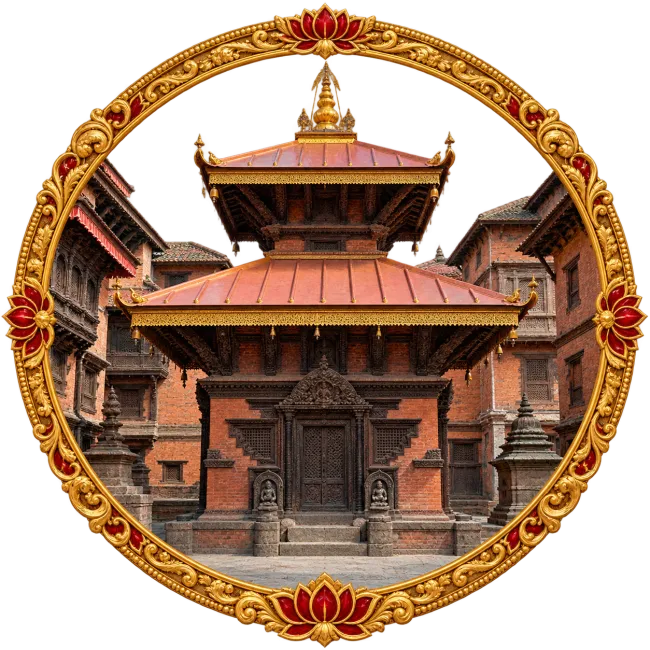
Sankata Temple, New Road, Kathmandu
Visit Sankata Temple near New Road in Kathmandu, one of the city’s most popular temples for devotees seeking freedom from problems, fear and negative influences. Situated within the traditional Tebahal courtyard, the temple is dedicated to Goddess Sankata, whose name means the divine mother who removes difficulties.
The temple attracts large numbers of devotees every Saturday. People visit Goddess Sankata before beginning new work, travelling, purchasing a vehicle, attending an important examination or facing a personal crisis. The shrine reflects Kathmandu’s shared Hindu, Buddhist and Tantric traditions.
About Sankata Temple
Sankata Temple is located inside Tebahal near New Road in central Kathmandu. It is within walking distance of Mahankal Temple, Dharahara, Ratna Park and Kathmandu Durbar Square.
The presiding deity is Goddess Sankata, a protective manifestation of Adi Shakti. She is also called:
- Sankata Devi
- Sankata Mai
- Sankata Harini
- Sankata Nashini
- Tebahal Sankata
The Sanskrit word Sankata means crisis, danger, obstacle or difficult situation. Sankata Harini means the goddess who removes these difficulties.
Devotees believe that sincere worship at the temple provides courage, protection and guidance during uncertain periods.
History of Sankata Temple
The worship of Goddess Sankata in Kathmandu is connected with the Licchavi period and the development of Tantric traditions in the Kathmandu Valley.
Local religious tradition associates the establishment of the shrine with the reign of King Narendra Deva during the seventh century. A Buddhist Tantric master from the Vajracharya tradition is believed to have invoked the divine power of Goddess Sankata and established her worship at Tebahal.
The goddess is traditionally connected with the sacred Tantric traditions of Kamakhya in Assam. Her worship was introduced to Kathmandu as a means of protecting the city and its residents from disease, disasters and spiritual dangers.
During the Malla period, the temple was expanded and given its traditional Newari architectural form. Local residents and Guthi organizations preserved the daily worship, festival ceremonies and Saturday rituals.
The shrine underwent several repairs during later periods while maintaining its position within the old Tebahal courtyard.
Legend of Goddess Sankata
According to local tradition, Kathmandu once experienced a period of serious difficulties. Disease, fear and unexplained problems affected the people.
A Tantric master entered deep meditation and prayed for divine guidance. During his spiritual practice, he received a vision of a powerful goddess capable of removing the community’s suffering.
The master invoked the goddess through sacred mantras and rituals. Her divine energy appeared and was established at Tebahal.
After the goddess was worshipped, the problems affecting the community gradually ended. The deity became known as Sankata Harini—the mother who removes crises.
People began visiting the shrine whenever they faced fear, illness, financial trouble or family conflict. This belief continues to attract devotees to the temple.
Connection with Kamakhya Tradition
Goddess Sankata is closely associated with Tantric Shakti worship. Local tradition connects her divine power with Goddess Kamakhya of Assam, one of the most important Tantric forms of Adi Shakti.
This connection explains several features of worship at Sankata Temple:
- Use of protective mantras
- Importance of red flowers and vermilion
- Lighting of mustard-oil lamps
- Worship on Ashtami dates
- Special prayers for removal of negative influences
- Presence of Hindu and Buddhist Tantric traditions
Regular devotees can offer simple prayers, flowers and lamps without participating in specialized Tantric ceremonies.
Religious Significance of Sankata Temple
Sankata Temple is regarded as one of Kathmandu’s most powerful places for overcoming personal and family difficulties.
Devotees visit the temple for:
- Removal of obstacles
- Protection from accidents
- Freedom from fear and anxiety
- Recovery from illness
- Success in examinations
- Employment and career growth
- Business prosperity
- Family peace
- Marriage and children
- Protection from negative influences
- Safe travel
- Resolution of legal disputes
- Fulfilment of sincere wishes
Many people visit the temple for several consecutive Saturdays as part of a personal religious promise.
Importance of Saturday Worship
Saturday is the principal weekly worship day at Sankata Temple. It is associated with discipline, karmic difficulties and the influence of Shani.
Devotees believe that worshipping Goddess Sankata on Saturday provides relief from:
- Repeated obstacles
- Financial problems
- Delays in marriage
- Employment difficulties
- Court cases
- Family disputes
- Fear and stress
- Unfavourable planetary influences
Mustard-oil lamps are commonly offered on Saturday. Long queues begin forming before sunrise, especially during festival periods.
Main Deity of Sankata Temple
The principal deity is Goddess Sankata, worshipped in a powerful protective form.
The sacred representation of the goddess is installed inside the main sanctum and decorated with:
- Red cloth
- Vermilion
- Red flowers
- Marigold garlands
- Traditional jewellery
- Sacred ornaments
- Metal decorations
- Oil lamps
The detailed inner form of the deity remains covered during parts of the daily ritual. Devotees receive darshan from the designated area outside the sanctum.
Images and symbols connected with Bhairav, Lord Ganesha and Buddhist protector deities can also be found within the Tebahal complex.
Hindu and Buddhist Worship
Sankata Temple represents Kathmandu’s shared Hindu and Buddhist religious heritage.
Hindu devotees worship Sankata as a form of Durga, Kali and Bhagwati. Newar Buddhists honour her through Vajrayana rituals conducted by Vajracharya priests.
Both traditions regard her as a protective mother who removes suffering.
The coexistence of these practices reflects the religious harmony found throughout the Kathmandu Valley.
Architecture of Sankata Temple
Sankata Temple is built in the traditional Newari pagoda style and stands within the enclosed Tebahal courtyard.
Important architectural features include:
- Multi-tiered pagoda-style shrine
- Traditional Newari brickwork
- Carved wooden doors and windows
- Decorative wooden supports
- Metal roof elements and pinnacle
- Stone-paved courtyard
- Prayer bells
- Mustard-oil lamp stands
- Images of protective deities
- Traditional residential buildings surrounding the Bahal
The courtyard creates a peaceful environment despite being close to the crowded commercial streets of New Road.
Sankata Temple Timings
The temple may remain open for extended hours on Saturdays, during Navratri and on important Ashtami dates.
Morning Puja and Aarti
The temple opens at 5:00 AM on regular days and at 4:30 AM on Saturdays.
Morning Puja begins at 5:30 AM, followed by Aarti at 6:00 AM.
The goddess is worshipped with:
- Red flowers
- Vermilion
- Sacred water
- Incense
- Mustard-oil lamps
- Rice and grains
- Fruits and sweets
- Red cloth
- Protective mantras
The period between 6:00 AM and 9:00 AM is ideal for peaceful darshan on regular weekdays.
Special Puja
Special pujas are generally arranged between 6:30 AM and 11:00 AM.
Devotees may perform special worship for:
- Removal of serious obstacles
- Protection from accidents
- Recovery from illness
- Employment and business
- Family peace
- Marriage
- Safe travel
- Legal matters
- Relief from planetary difficulties
- Protection from negative influences
A special Sankata Puja may include:
- Sankalp
- Kalash worship
- Sankata Mantra recitation
- Kumkum Archana
- Flower offerings
- Mustard-oil lamps
- Protective sacred thread
- Bhog
- Distribution of prasad
Special ceremonies should be arranged through authorized temple priests.
Bhog and Afternoon Darshan
Bhog is offered to Goddess Sankata at 12:00 PM. The offering may contain rice, fruits, sweets and traditional Newari vegetarian preparations.
Afternoon darshan continues after the Bhog ritual. The temple remains less crowded during the early afternoon on regular weekdays.
Evening Puja and Aarti
Evening Puja begins at 6:30 PM, followed by Aarti at 7:00 PM.
Mustard-oil lamps and incense are offered before Goddess Sankata while devotees recite prayers. The illuminated courtyard provides a calm devotional atmosphere.
Visitors should reach before 6:30 PM to attend the complete evening worship. The temple closes at 8:30 PM.
Saturday Worship Procedure
Devotees visiting on Saturday may follow this simple worship sequence:
- Bathe and wear clean clothes.
- Enter the Tebahal courtyard respectfully.
- Light a mustard-oil lamp at the designated stand.
- Offer red flowers and vermilion.
- Present fruits or sweets.
- Chant the name of Goddess Sankata.
- Pray for the removal of difficulties.
- Perform circumambulation where permitted.
- Receive prasad and sacred thread.
Visitors should not block the queue while performing extended personal prayers.
Major Festivals Celebrated
Sharadiya Navratri
The nine forms of Goddess Durga are worshipped throughout Navratri. Special prayers, lamps and offerings are arranged.
Dashain
Goddess Sankata is worshipped for protection, courage and victory during Dashain.
Special worship takes place during:
- Ghatasthapana
- Phulpati
- Maha Ashtami
- Maha Navami
- Vijayadashami
Chaitra Navratri
Special Shakti Puja and mantra recitation are performed during Chaitra Navratri.
Chaite Dashain
Devotees pray for protection and freedom from obstacles during Chaite Dashain.
Kali Puja
The goddess is worshipped with lamps, flowers and protective mantras.
Ashtami
Every Ashtami is considered auspicious for Goddess Sankata. The temple receives additional devotees on these lunar dates.
Saturdays
Saturday is observed as the principal weekly worship day throughout the year.
Offerings and Prasad
Common offerings made at Sankata Temple include:
- Red hibiscus flowers
- Marigold garlands
- Red cloth
- Vermilion
- Mustard oil
- Oil lamps
- Black sesame seeds
- Rice and grains
- Coconut
- Fruits and sweets
- Incense sticks
- Sacred red or black threads
- Bells
- Monetary donations
Prasad may include fruits, sweets, flowers, vermilion and protective sacred threads.
Oil lamps should be lit only at the designated stands to prevent fire and crowding.
Entry Fee and Visit Duration
There is no entry fee for regular darshan at Sankata Temple. Charges may apply for special Puja, ritual materials and priest-led ceremonies.
A regular visit requires 45–60 minutes. On Saturday, darshan may require one to three hours because of long queues.
Visitors exploring New Road, Kathmandu Durbar Square and nearby temples should keep three to four hours.
Visitor Guidelines
- Wear modest and respectful clothing.
- Remove footwear before approaching the shrine.
- Follow the designated darshan queue.
- Keep mobile phones on silent mode.
- Ask permission before photographing the deity.
- Do not block the narrow courtyard entrance.
- Light lamps only in designated areas.
- Use authorized priests for special pujas.
- Do not touch the principal deity or ornaments.
- Keep the courtyard clean.
- Avoid carrying large bags on Saturdays.
- Keep personal belongings secure.
- Respect both Hindu and Buddhist worship practices.
- Keep children and elderly devotees under supervision.
- Follow instructions from temple caretakers.
Best Time to Visit
October to March is the best period for visiting Kathmandu because the weather remains pleasant.
For peaceful darshan, visit between 6:00 AM and 9:00 AM from Sunday to Friday.
Saturday provides the most traditional worship experience but also brings the largest crowds. Saturday visitors should reach between 4:30 AM and 6:00 AM.
How to Reach Sankata Temple
By Air
Tribhuvan International Airport is the nearest airport. Visitors can hire a taxi to New Road or a nearby drop-off point.
From Thamel
Sankata Temple is approximately 2 kilometres from Thamel. Walking, taxis and cycle-rickshaws are available.
From New Road
The temple is situated inside Tebahal and can be reached on foot from New Road Gate.
From Ratna Park
Sankata Temple is within walking distance of Ratna Park and Rani Pokhari.
From Kathmandu Durbar Square
The temple is located approximately 1 kilometre from Kathmandu Durbar Square. Walking is the most convenient option.
By Local Transport
Local buses and minibuses stop near New Road Gate, Ratna Park, Shahid Gate and Sundhara.
From India
Indian visitors can reach Kathmandu by air or enter Nepal through road-border points such as Raxaul–Birgunj and Sunauli–Bhairahawa.
Indian citizens should carry a valid passport or voter identity card and confirm transportation requirements before departure.
Nearby Places to Visit
- Mahankal Temple
- Dharahara
- Rani Pokhari
- Ratna Park
- Bhadrakali Temple
- Kathmandu Durbar Square
- Taleju Bhawani Temple
- Kumari Ghar
- Akash Bhairav Temple
- Indra Chowk
- Ason Market
- New Road
Conclusion
Sankata Temple is one of Kathmandu’s most trusted places of worship for devotees facing difficulties, fear and uncertainty. Its origin is connected with ancient Tantric traditions, the Licchavi period and the protective power of Goddess Sankata Harini.
The temple’s shared Hindu-Buddhist identity, Newari courtyard and special Saturday worship give it a distinctive spiritual character.
Worshipping Goddess Sankata is believed to remove obstacles and provide courage during difficult periods. A visit to the temple offers devotees hope, protection and the inner strength required to face life’s challenges.