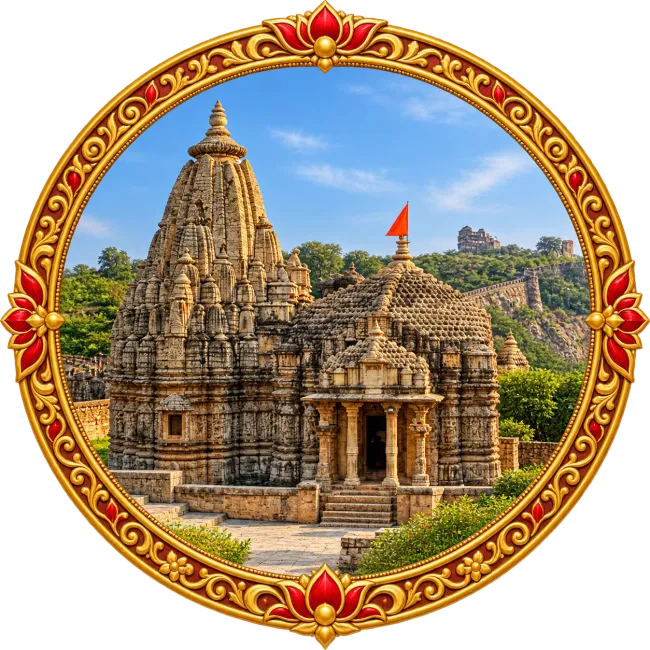
Samadhisvara Temple, Chittorgarh
Visit Samadhisvara Temple inside Chittorgarh Fort, an ancient Shiva temple known for its magnificent three-faced image of Lord Shiva, intricately carved stone walls and centuries-old religious heritage. Constructed during the 11th century and restored by different rulers of Mewar, the temple stands near Gaumukh Kund and Vijay Stambh. Its peaceful atmosphere, historic inscriptions and impressive architecture make it one of the most important temples within Chittorgarh Fort.
About Samadhisvara Temple
Samadhisvara Temple, also known as Samadhishwar Mahadev Temple, is a historic Hindu temple dedicated to Lord Shiva. It is located inside Chittorgarh Fort in Rajasthan, close to Gaumukh Kund and Vijay Stambh.
The word “Samadhisvara” means “Lord of Samadhi” or “Lord of Meditation.” This name represents Lord Shiva as the supreme yogi absorbed in deep meditation.
The temple is also locally known as:
- Samadhishwar Mahadev Temple
- Samadhisha Temple
- Mokal Ji Temple
- Tribhuvan Narayan Temple
- Adbhut Ji Temple
The temple’s principal attraction is a large three-faced image of Lord Shiva installed inside the sanctum. Each face represents a different expression of divine power. The impressive image, combined with the temple’s ancient stone architecture, creates a deeply spiritual atmosphere.
History of Samadhisvara Temple
Samadhisvara Temple was constructed during the 11th century. Historical inscriptions and architectural studies associate the temple with Raja Bhoja of the Paramara dynasty, one of medieval India’s most respected rulers, scholars and patrons of temple architecture.
Raja Bhoja was a devotee of Lord Shiva and supported the construction of several Shaiva temples. Samadhisvara Temple is identified by several historians with the ancient Tribhuvan Narayan or Bhoja Swamin Temple mentioned in historical records.
The temple was repaired and restored several times because Chittorgarh witnessed repeated battles and political changes.
An inscription from 1150 CE records the visit of Chaulukya king Kumarapala. It states that the ruler worshipped Lord Shiva and Goddess Parvati at the temple and made religious donations.
During the 13th century, restoration work was undertaken under Guhila ruler Rawal Samar Singh. An inscription dated 1274 CE records the restoration of the Gaumukh Tirth area where the temple is situated.
The temple suffered damage during the attack on Chittorgarh in 1303. It was restored again during the 15th century by Maharana Mokal of Mewar. A black marble inscription dated 1428 CE records Maharana Mokal’s contribution to the restoration of the temple.
Due to Maharana Mokal’s extensive renovation work, the temple is sometimes called Mokal Ji Temple. It underwent additional repairs during subsequent periods and continues to function as an active Shiva shrine.
Who Built Samadhisvara Temple?
Samadhisvara Temple was built during the 11th century and is traditionally attributed to Raja Bhoja of the Paramara dynasty.
Important stages in its construction and restoration include:
The various restorations introduced architectural elements from different centuries. Therefore, the temple presents a combination of Paramara, Gujarati-influenced and Mewar architectural features.
Main Deity of Samadhisvara Temple
The temple is dedicated to Lord Shiva in his Samadhisvara form. The name presents Shiva as the master of meditation, spiritual awareness and inner stillness.
The principal image inside the sanctum is a massive three-faced representation of Lord Shiva. It rises prominently from the sanctum and is one of the most distinctive Shiva images found inside Chittorgarh Fort.
The three faces are associated with different aspects of Shiva’s divine power, including:
- Creation
- Preservation
- Destruction and transformation
- Meditation
- Divine wisdom
- Control over time and cosmic existence
The deity is also popularly called Adbhut Ji, meaning extraordinary or wonderful. The name reflects the unusual and impressive appearance of the three-faced image.
A sculpture of Nandi, Lord Shiva’s sacred bull and vehicle, faces the sanctum from the prayer area.
Religious Significance
Samadhisvara Temple is one of the most important Shaiva shrines inside Chittorgarh Fort. It has remained a place of worship and meditation for several centuries.
Lord Shiva is worshipped here as the lord of samadhi—the highest state of meditative consciousness. Devotees visit the temple to seek:
- Mental peace
- Spiritual wisdom
- Protection from negative influences
- Relief from fear and anxiety
- Strength during difficult circumstances
- Family happiness
- Health and prosperity
- Freedom from harmful habits
- Success in spiritual practices
The temple’s proximity to Gaumukh Kund adds to its religious importance. Water continuously flows from a natural opening shaped like a cow’s mouth into the sacred reservoir. Devotees traditionally consider the Gaumukh area a holy tirtha within the fort.
Three-Faced Image of Lord Shiva
The three-faced Shiva image is the most remarkable feature of Samadhisvara Temple. The large sculpture dominates the sanctum and gives the shrine its unique spiritual character.
The three faces display different expressions. They are commonly understood as symbolic representations of Shiva’s multiple cosmic roles.
The central face appears calm and meditative, representing peace, balance and spiritual awareness. The other faces express different aspects of divine authority and transformative energy.
All three faces display the third eye, an important symbol associated with Lord Shiva. The third eye represents higher knowledge, spiritual vision and the destruction of ignorance.
Devotees stand before the image for darshan, prayer and meditation. The sanctum should be approached quietly, and visitors should not touch the idol unless specifically permitted by the priest.
Architecture of Samadhisvara Temple
Samadhisvara Temple is an impressive example of medieval North Indian temple architecture. Its present form developed through construction and restoration work undertaken between the 11th and 15th centuries.
Temple Platform
The temple stands on a stone platform near Gaumukh Kund. A flight of steps leads visitors toward the main structure.
The elevated position protects the sanctum while giving the temple a commanding presence within the sacred Gaumukh area.
Three Entrance Porches
The temple has three entrance porches that provide access from different directions. Each porch is supported by carved stone pillars.
The multiple entrances allow light and air to enter the prayer hall and create a spacious arrangement around the central shrine.
Sabha Mandapa
The pillared hall is used for prayer, meditation and religious gatherings. Its carved pillars display floral patterns, divine figures and decorative bands.
The mandapa connects the entrance porches with the inner sanctum.
Antarala
The antarala is a small transitional chamber between the mandapa and the garbhagriha. It separates the public prayer area from the most sacred section of the temple.
Garbhagriha
The garbhagriha houses the three-faced image of Lord Shiva. It is positioned at a lower level than some adjoining sections, giving devotees a close view of the deity from the designated darshan area.
Shikhara
The tower above the sanctum rises vertically and marks the temple’s sacred centre. Sections of the superstructure were restored during later renovations.
Exterior Sculptures
The exterior walls contain multiple bands of carvings depicting:
- Forms of Shiva
- Hindu deities
- Celestial beings
- Musicians and dancers
- Floral patterns
- Geometric motifs
- Scenes from everyday life
- Warriors and hunting scenes
- Jain Tirthankaras and associated figures
- Decorative mythical creatures
The variety of sculptures reflects the social, cultural and religious diversity of medieval Chittorgarh.
Historical Inscriptions
Several important inscriptions have been connected with Samadhisvara Temple and the surrounding Gaumukh Tirth area.
These include:
- The 1150 CE inscription recording King Kumarapala’s visit and donations
- The 1274 CE inscription associated with restoration under Rawal Samar Singh
- The 1428 CE black marble inscription recording restoration by Maharana Mokal
- Shorter inscriptions left by architects and worshippers during the 15th century
These records help historians understand the temple’s history, religious identity and repeated restoration.
Samadhisvara Temple Timings
Samadhisvara Temple Timings
The religious shrine may open earlier than the general sightseeing areas of Chittorgarh Fort. Most tourists visit between 9:00 AM and 6:00 PM because access depends on fort operating arrangements.
Regular puja and aarti are performed, but the precise aarti time can be adjusted by the priest according to the season, festival calendar and fort access conditions.
Best Time for Darshan
The best time for general visitors is between 9:00 AM and 11:00 AM. The weather is more comfortable, the temple receives natural morning light and the surroundings remain comparatively peaceful.
Visitors planning to explore the entire fort should reach the main entrance by 9:00 AM. Samadhisvara Temple can be visited with Vijay Stambh, Gaumukh Kund and nearby monuments.
The best season is from October to March. Chittorgarh becomes extremely hot during summer, making afternoon exploration difficult.
Daily Puja and Aarti
Daily worship at Samadhisvara Temple generally includes:
- Opening of the sanctum
- Cleaning and preparation of the deity
- Jalabhishek
- Offering of milk where permitted
- Application of sandalwood paste
- Offering of bilva leaves
- Flower and garland offerings
- Lighting of incense and lamps
- Recitation of Shiva mantras
- Morning puja
- Evening puja
- Aarti
- Closing prayers
Devotees commonly chant:
- Om Namah Shivaya
- Mahamrityunjaya Mantra
- Shiva Panchakshara Mantra
- Shiva Chalisa
- Rudrashtakam
Special abhishek or puja arrangements should be discussed directly with the temple priest.
Major Festivals
Mahashivratri
Mahashivratri is the most important festival celebrated at Samadhisvara Temple. Devotees offer water, milk, bilva leaves, flowers and sacred items to Lord Shiva.
Special abhishek, mantra chanting, devotional singing and aarti are performed. The temple receives a larger number of visitors on this occasion.
Shravan Month
The Hindu month of Shravan is considered especially sacred for Lord Shiva. Mondays during Shravan attract devotees for jalabhishek and special prayers.
Shravan Somvar
Each Monday of Shravan is observed with special devotion. Devotees fast, chant Shiva mantras and make traditional offerings.
Kartik Purnima
Devotees visit the temple for prayer, lamp offerings and spiritual worship on Kartik Purnima.
Pradosh Vrat
Pradosh Vrat is observed in honour of Lord Shiva. Evening worship performed during Pradosh Kaal is considered especially auspicious.
Diwali
Lamps are lit during Diwali, and devotees seek blessings for peace, prosperity and protection.
Offerings at Samadhisvara Temple
Devotees may offer:
- Water
- Milk
- Bilva leaves
- White flowers
- Flower garlands
- Sandalwood paste
- Incense
- Ghee lamps
- Fruits
- Sweets
- Coconut
- Monetary donations
Offerings should be made according to the instructions of the temple priest. Visitors should not pour liquids directly on protected sculptures or historic architectural surfaces.
Entry Fee and Visit Duration
Visitors should check the current Chittorgarh Fort ticket rates at the authorized counter.
How to Reach Samadhisvara Temple
Location Inside Chittorgarh Fort
Samadhisvara Temple is located near Vijay Stambh and on the northern side of Gaumukh Kund inside Chittorgarh Fort.
Visitors can travel within the fort by:
- Private car
- Local auto-rickshaw
- Hired taxi
- Authorized sightseeing vehicle
- Walking between nearby monuments
The temple can easily be combined with Vijay Stambh, Gaumukh Kund and other attractions in the same section of the fort.
By Air
Maharana Pratap Airport in Udaipur is the nearest airport. It is approximately 90–100 kilometres from Chittorgarh.
Taxis are available from the airport to Chittorgarh.
By Train
Chittorgarh Junction is the nearest railway station. It has railway connections with Udaipur, Jaipur, Ajmer, Kota, Delhi, Ratlam and other major cities.
Auto-rickshaws and taxis are available from the railway station to Chittorgarh Fort.
By Road
Chittorgarh is connected by road with:
- Udaipur
- Jaipur
- Ajmer
- Kota
- Bhilwara
- Bundi
- Neemuch
From the city, visitors can hire an auto-rickshaw, taxi or private vehicle to reach the fort.
Nearby Places to Visit
Visitors can explore the following places near Samadhisvara Temple:
- Gaumukh Kund
- Vijay Stambh
- Jauhar Sthal
- Kalika Mata Temple
- Kumbha Shyam Temple
- Meera Temple
- Rana Kumbha Palace
- Fateh Prakash Palace Museum
- Padmini Palace
- Kirti Stambh
- Satbees Deori Jain Temple
- Ratan Singh Palace
- Tulja Bhawani Temple
Gaumukh Kund and Vijay Stambh are situated very close to the temple and can be explored during the same visit.
Visitor Guidelines
- Remove footwear before entering the temple.
- Wear modest clothing suitable for a place of worship.
- Maintain silence near the sanctum.
- Do not touch the three-faced Shiva image.
- Ask permission before taking photographs inside.
- Avoid photography during puja and aarti.
- Do not climb on ancient walls or carved platforms.
- Do not pour oil, milk or water on protected sculptures.
- Place offerings only in designated areas.
- Keep the temple and Gaumukh Kund surroundings clean.
- Supervise children near steps and the reservoir.
- Carry drinking water while exploring the fort.
- Visit early during summer.
- Follow the instructions of priests and fort authorities.
- Allow enough time to leave the fort before public access closes.
Conclusion
Samadhisvara Temple is one of the finest religious and architectural treasures inside Chittorgarh Fort. Constructed during the 11th century and traditionally associated with Raja Bhoja, the temple was restored by Rawal Samar Singh and Maharana Mokal during later periods.
Its massive three-faced Shiva image, carved pillars, three entrance porches, medieval inscriptions and location beside Gaumukh Kund make it an exceptional place of worship and historical study.
For devotees, the temple represents Lord Shiva as the supreme master of meditation and spiritual consciousness. For travellers, it offers an opportunity to experience the artistic excellence and sacred traditions of medieval Mewar. A visit to Samadhisvara Temple adds spiritual depth to any journey through Chittorgarh Fort.