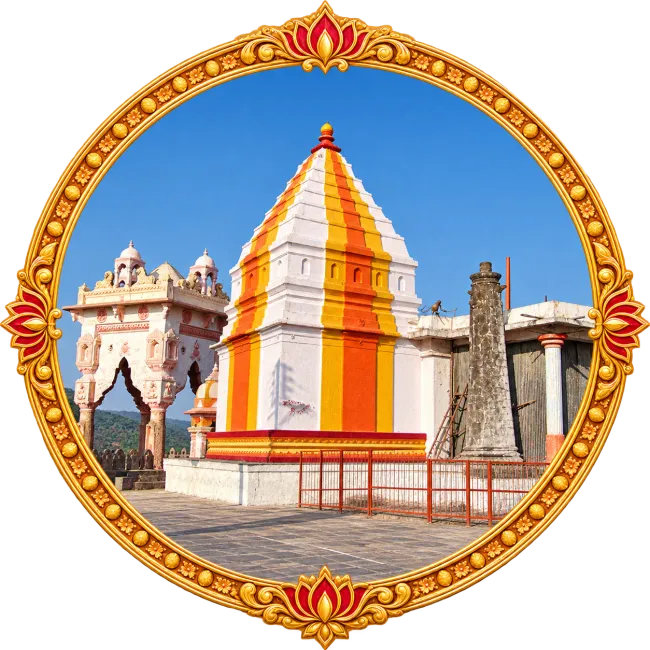
Renuka Devi Temple, Mahur, Maharashtra
Renuka Devi Temple is one of the most revered Shakti shrines in Maharashtra. Situated on a forested hill at Mahur in the Nanded district, the temple is dedicated to Goddess Renuka, the mother of Lord Parashurama. It is traditionally included among the three-and-a-half Shakti Peethas of Maharashtra.
The hilltop shrine is surrounded by forests, valleys and several places connected with Hindu mythology. Devotees visit the temple to seek maternal protection, courage, family welfare and relief from difficulties.
About Renuka Devi Temple
Renuka Devi Temple is located on Renuka Shikhar near Mahur, also called Mahurgad. The shrine stands at an elevation that requires visitors to climb a long series of steps from the parking area.
Goddess Renuka is worshipped as a manifestation of Adi Shakti and the divine mother of Lord Parashurama, the sixth incarnation of Lord Vishnu. She is also known as Renuka Mata, Yellamma and Ekvira in different regions of India.
The temple houses the sacred form of Renuka Devi rather than a large conventional standing idol. The deity is decorated with a silver covering, crown, flowers, jewellery, sarees and sindoor.
Mahur is also associated with Lord Dattatreya, Anasuya Mata, Sage Atri and Lord Parashurama. It is therefore an important pilgrimage centre for both Shakta and Datta traditions.
When Was Renuka Devi Temple Built and Who Built It?
The sacred site has ancient mythological origins. The existing temple is associated with the Yadava rulers of Devagiri, who supported the shrine during the medieval period. The principal stone structure is generally connected with the 12th–13th centuries.
Later rulers, local patrons and devotees repaired and expanded the temple. The present complex contains architectural features from different periods because it has undergone several phases of renovation.
Modern additions include approach steps, queue passages, protective railings, pilgrim shelters, lighting and facilities near the hilltop.
The temple’s spiritual foundation, however, is much older than the surviving structure and is connected with the legend of Renuka Mata and Lord Parashurama.
Legend of Renuka Devi and Sage Jamadagni
Renuka Devi was the devoted wife of Sage Jamadagni and the mother of five sons, including Lord Parashurama.
Renuka was known for her purity and spiritual power. Every day, she collected water from a river in an unbaked clay pot held together by the strength of her devotion.
According to the traditional story, her concentration was disturbed one day after she observed a celestial king with his companions. Because her mind became distracted, the unbaked pot dissolved, and she returned to the hermitage without water.
Sage Jamadagni became angry and ordered his sons to punish her. The elder sons refused, but Parashurama obeyed his father’s command. Pleased with his obedience, Jamadagni offered him a boon.
Parashurama requested that his mother be restored to life. Sage Jamadagni granted the request, and Renuka Devi returned through divine power.
The story is interpreted symbolically as a lesson concerning duty, forgiveness, restoration and the spiritual power of the Divine Mother.
Death of Sage Jamadagni
Another legend explains the connection between Renuka Devi and Mahur. King Kartavirya Arjuna once visited Sage Jamadagni’s hermitage and witnessed the miraculous powers of the divine cow Kamadhenu.
The king later attempted to take the cow by force. Parashurama defeated him, but the king’s sons returned and killed Sage Jamadagni.
Renuka Devi mourned her husband, and Parashurama vowed to punish the unjust rulers responsible for the crime. Mahur is traditionally associated with the final ceremonies performed for Renuka Devi and Sage Jamadagni.
Lord Dattatreya is believed to have guided Parashurama in completing the funeral rituals. When Parashurama called out to his mother, Renuka Devi emerged from the earth to bless him. Her sacred presence has been worshipped at Mahur ever since.
Shakti Peetha Significance
Renuka Devi Temple is one of Maharashtra’s three-and-a-half Shakti Peethas. The principal Shakti Peethas of the state are generally identified as:
- Mahalakshmi Temple at Kolhapur
- Tulja Bhavani Temple at Tuljapur
- Renuka Devi Temple at Mahur
- Saptashrungi Temple near Nashik as the half Peetha
Renuka Mata represents maternal strength, protection and unconditional compassion. Devotees believe that she protects families and grants courage during difficult periods.
Religious Significance
People visit Renuka Devi Temple to pray for:
- Maternal protection
- Family peace and prosperity
- Good health
- Marriage and children
- Courage and emotional strength
- Relief from negative influences
- Success in education and employment
- Fulfilment of wishes
- Spiritual progress
Newly married couples and families with children frequently visit the shrine to seek the blessings of the Divine Mother.
Architecture of Renuka Devi Temple
The temple reflects the medieval hill-shrine architecture of Maharashtra. The structure is built primarily from stone and stands within a fortified hilltop setting.
A long flight of steps leads from the approach area to the main temple. The sanctum is compact and contains the sacred form of Renuka Mata.
The complex includes:
- Main sanctum of Renuka Devi
- Sabha Mandap
- Smaller shrines
- Deepastambha
- Queue passages
- Offering counters
- Pilgrim resting areas
- Viewpoints overlooking the surrounding forests
The stone walls and simple exterior give the shrine a peaceful and ancient character.
Renuka Devi Temple Timings
The temple follows a daily schedule for Puja, Bhog and Aarti. Timings may be extended during Navratri and Datta Jayanti.
Festival ceremonies and crowd-control measures can affect ordinary darshan. Visitors should follow the schedule displayed at the temple entrance.
Morning Puja and Aarti
The day begins with Kakad Aarti at 6:00 AM. Lamps are lit, hymns are sung and the Goddess is ceremonially awakened.
The morning rituals include:
- Sanctum purification
- Abhishekam
- Offering of fresh saree
- Flower and jewellery decoration
- Application of kumkum and sandalwood
- Mantra chanting
- Naivedya
- Morning Aarti
General darshan continues after the morning Shringar has been completed.
Afternoon and Evening Worship
Naivedya and Madhyana Aarti are performed at noon. Cooked Satvik food, fruits and sweets are offered to the Goddess.
Evening Puja begins at 6:00 PM, followed by Aarti at 7:00 PM. Devotees participate through prayers, bhajans and the chanting of Renuka Mata’s name.
Shej Aarti is performed at 8:00 PM before the temple closes.
Major Festivals
Navratri
Both Chaitra and Sharadiya Navratri are celebrated with special Puja, Aarti, Havan and devotional programmes. Sharadiya Navratri attracts the largest crowds.
Vijayadashami
Vijayadashami is celebrated as the victory of divine power over evil. A large number of devotees visit the shrine.
Renuka Devi Yatra
The annual Renuka Devi Yatra is an important regional festival. Devotees from Maharashtra, Telangana and neighbouring states participate in the celebrations.
Datta Jayanti
Mahur is associated with Lord Dattatreya, so Datta Jayanti is celebrated throughout the pilgrimage region. Devotees visit both Renuka Devi Temple and Dattatreya Shikhar.
Parashurama Jayanti
Special prayers are offered in honour of Lord Parashurama and his mother, Renuka Devi.
Puja, Offerings and Prasad
Available religious services may include general Puja, Abhishekam, Navratri Puja, Havan, family welfare prayers and thanksgiving ceremonies.
Common offerings include:
- Saree and blouse cloth
- Coconut
- Flowers and garlands
- Kumkum
- Bangles
- Sweets
- Fruits
- Incense
- Clarified butter
- Monetary donations
Prasad generally includes coconut, sugar, sweets, dry fruits and blessed flowers. Offerings and Puja arrangements should be obtained through recognised counters.
Dress Code and Temple Rules
Visitors should wear clean, modest and comfortable clothes. Suitable footwear is essential for climbing the steps, although shoes must be removed before entering the temple.
Important rules include:
- Follow the designated queue.
- Do not touch the sacred deity.
- Follow photography restrictions.
- Keep the hill and temple clean.
- Avoid alcohol, tobacco and non-vegetarian food.
- Do not feed wild animals.
- Deposit donations only at authorised counters.
- Assist children and elderly visitors on the steps.
Entry Fee and Darshan Duration
General entry and darshan are free. Charges apply to optional Pujas and ritual materials.
Darshan generally requires 30–60 minutes on ordinary days. Visitors should allow additional time for climbing the steps. During Navratri and annual festivals, waiting time can extend to several hours.
Best Time to Visit
October to March is the best period for visiting Mahur because the weather is pleasant. Navratri offers the grandest devotional atmosphere but attracts large crowds.
The monsoon makes the surrounding hills green and scenic, but steps can become slippery. Summer afternoons are hot, so early morning visits are preferable.
How to Reach Renuka Devi Temple
By Air
Nanded Airport is the nearest airport. Nagpur and Hyderabad airports provide wider flight connectivity.
By Train
Kinwat is the nearest convenient railway station. Nanded Railway Station is the nearest major railhead with better connections.
By Road
Mahur is connected with Nanded, Kinwat, Yavatmal, Nagpur and Adilabad by road.
Buses and taxis are available, but service frequency may be limited during late hours.
Nearby Places to Visit
- Dattatreya Shikhar: A hilltop shrine associated with Lord Dattatreya.
- Anasuya Mata Temple: Dedicated to the mother of Dattatreya.
- Jamadagni Temple: Associated with Sage Jamadagni.
- Parashurama Temple: Dedicated to the son of Renuka Devi.
- Mahur Fort: A historic hill fort overlooking the region.
- Matrutirtha: A sacred place associated with Renuka Mata.
- Devdeveshwar Temple: An important local Shiva shrine.
Conclusion
Renuka Devi Temple at Mahur is an important Shakti Peetha and a sacred centre of maternal worship. Its association with Goddess Renuka, Lord Parashurama, Sage Jamadagni and Lord Dattatreya gives the shrine exceptional religious importance.
The medieval hilltop temple, daily Aartis, Navratri celebrations and surrounding sacred sites create a complete pilgrimage experience. Devotees visit Renuka Mata to seek courage, family welfare, protection and the compassionate blessings of the Divine Mother.