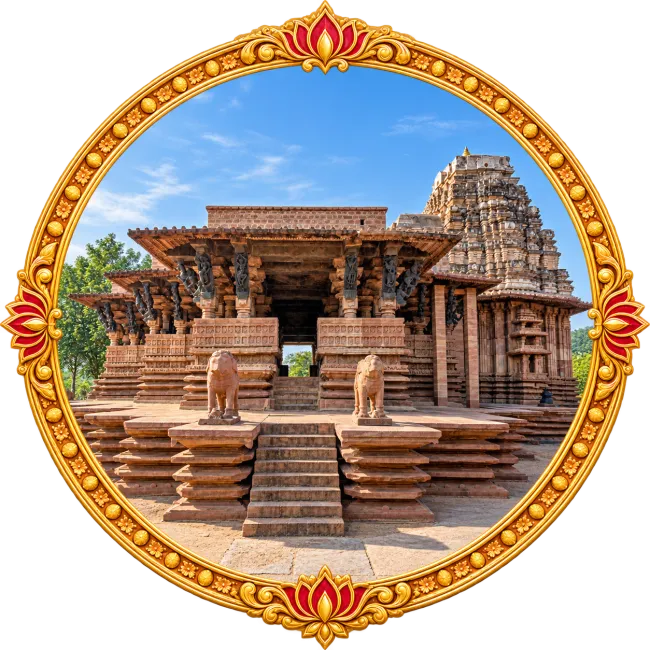
Ramappa Temple, Palampet
Ramappa Temple in Palampet, Telangana, is one of India’s finest examples of Kakatiya architecture. Dedicated to Lord Shiva as Sri Ramalingeswara or Rudreshwara Swamy, the temple is celebrated for its star-shaped platform, lightweight floating bricks, sandbox foundation and exquisitely carved dancer sculptures.
Constructed in 1213 CE during the reign of Kakatiya king Ganapati Deva, the temple is commonly named after its chief architect, Ramappa. This unusual honour reflects the extraordinary skill involved in its construction. In 2021, the temple received UNESCO World Heritage recognition under the official name Kakatiya Rudreshwara Temple.
About Ramappa Temple
Ramappa Temple is situated in Palampet village in Mulugu district, Telangana. It forms part of a historic temple complex close to Ramappa Lake.
The principal deity is Lord Shiva, worshipped in the form of a large Shiva Lingam. The temple is officially known as Rudreshwara Temple, while Ramappa Temple is its widely recognised name.
The monument is famous for:
Kakatiya architecture
Star-shaped platform
Sandbox foundation
Lightweight roof bricks
Madanika sculptures
Carved black basalt pillars
Large Nandi
Dance and musical imagery
Detailed narrative panels
UNESCO World Heritage status
Ramappa functions as both an active Shiva temple and a protected heritage monument.
When and Who Built Ramappa Temple?
Ramappa Temple was constructed in 1213 CE during the reign of Kakatiya ruler Ganapati Deva.
The temple was commissioned by Recharla Rudra, also known as Rudra Samani. He served as a general and regional governor under Ganapati Deva.
Recharla Rudra played an important role in expanding and defending the Kakatiya kingdom. He commissioned the temple as an expression of devotion, royal authority and gratitude.
Construction was supervised by the master architect Ramappa. The craftsmanship was considered so exceptional that the monument became popularly known by the architect’s name instead of only the deity or patron.
The temple complex took several years to complete and involved teams of sculptors, engineers, builders and metalworkers.
Kakatiya Dynasty and Palampet
The Kakatiyas ruled large parts of the Telugu-speaking region between the twelfth and fourteenth centuries.
Their capital was established at Warangal, while important regional centres and temples were developed throughout present-day Telangana.
Kakatiya rulers supported:
- Shaivism
- Irrigation projects
- Temple construction
- Fortifications
- Trade
- Telugu literature
- Dance and music
- Skilled artisan communities
Palampet was an important settlement connected with agricultural land, water management and religious activity. The large Ramappa Lake helped support farming and local communities.
Why Is It Called Ramappa Temple?
The temple’s popular name honours Ramappa, the chief architect traditionally credited with supervising its design and construction.
Indian temples are generally named after the principal deity, sacred location or royal patron. Naming this monument after its architect is therefore unusual.
The name reflects recognition of the architect’s mastery of:
- Structural engineering
- Stone carving
- Foundation design
- Acoustic planning
- Lightweight construction
- Temple geometry
- Dance and sculptural representation
The official deity remains Lord Rudreshwara or Ramalingeswara, but the name Ramappa has become permanently associated with the temple.
Religious Significance
Lord Shiva is worshipped at Ramappa as Rudreshwara and Ramalingeswara. The temple’s vast sculptural programme presents Shiva as:
- The supreme Yogi
- Nataraja, the cosmic dancer
- Destroyer of evil
- Protector of devotees
- Source of music and dance
- Lord of transformation
Devotees visit the temple to pray for:
- Good health
- Courage and protection
- Family peace
- Marriage and marital harmony
- Blessings for children
- Professional success
- Relief from obstacles
- Artistic ability
- Spiritual discipline
- Forgiveness for past actions
- Mental peace
- Liberation
Mondays, Pradosham, Maha Shivaratri and Karthika month are considered especially auspicious.
Main Deity and Other Shrines
Sri Ramalingeswara Swamy
The principal deity is Lord Shiva in the form of a large Lingam. Daily Puja, Abhishekam and Aarti are conducted in the sanctum.
Nandi
A large stone Nandi sits in a separate mandapa facing the principal shrine. The sculpture is highly polished and decorated with detailed ornaments.
Kateshwara and Kameshwara Shrines
The complex contains subsidiary Shiva temples traditionally identified as Kateshwara and Kameshwara. Some sections have suffered damage over time.
Other sacred figures and sculptures include:
- Lord Ganesha
- Goddess Parvati
- Kartikeya
- Nataraja
- Bhairava
- Surya
- Divine dancers
- Musicians
- Mythological animals
- Guardian deities
Architecture of Ramappa Temple
Ramappa Temple represents the mature phase of Kakatiya architecture. It combines engineering innovation with exceptionally refined sculpture.
Star-Shaped Platform
The main temple stands on a raised star-shaped platform. This arrangement produces multiple projecting surfaces and allows sculptures to be viewed from changing angles.
The platform also separates the sacred building from the surrounding ground and provides structural stability.
Main Mandapa
The principal hall contains polished pillars, carved beams and a carefully organised interior.
Large openings allow light to fall on selected sculptures, creating dramatic contrasts between illuminated and shadowed surfaces.
Sanctum and Vimana
The sanctum houses the Shiva Lingam. Above it rises a brick superstructure constructed using unusually lightweight material.
Nandi Mandapa
The Nandi Mandapa stands directly before the main temple. Its open design allows a clear view between Nandi and the Shiva sanctum.
Sandbox Foundation
One of Ramappa Temple’s most important engineering features is its sandbox foundation.
The builders prepared a foundation using materials such as:
- Sand
- Lime
- Jaggery mixtures
- Crushed stone
- Other binding materials
The foundation helped distribute the temple’s weight and absorb vibrations caused by ground movement.
This technique contributed to the monument’s survival through centuries of environmental stress and regional seismic activity.
Lightweight Floating Bricks
The upper structure of Ramappa Temple uses lightweight porous bricks.
These bricks have a lower density than conventional stone or clay bricks. Selected examples can remain buoyant in water, which led to the popular description “floating bricks.”
Their reduced weight decreased pressure on the foundation and supporting walls.
The use of lightweight materials demonstrates the advanced engineering knowledge of Kakatiya builders.
Visitors must not attempt to remove, handle or test architectural bricks.
Madanika Sculptures
The most celebrated sculptures at Ramappa are the bracket figures known as Madanikas or Salabhanjikas.
These figures appear beneath the roof projections and depict graceful women in different poses.
Important forms include:
- Dancers
- Musicians
- Women holding mirrors
- Women accompanied by birds
- Performers adjusting ornaments
- Figures displaying martial or acrobatic movement
- Female attendants with expressive postures
The sculptures show remarkable detail in jewellery, clothing, facial expressions and body movement.
Their poses are connected with classical dance and may have influenced the study and revival of regional performance traditions.
Nagini and Dance Sculptures
Several sculptures show dancers with flexible, rhythmic postures. One famous figure is often identified as Nagini.
The sculptors captured:
- Twisting movement
- Balanced posture
- Hand gestures
- Detailed ornaments
- Musical rhythm
- Facial expression
These figures demonstrate the close relationship between temple worship, sculpture, dance and music during the Kakatiya period.
Perini Shiva Tandavam Connection
Perini Shiva Tandavam is a vigorous dance tradition associated with Kakatiya warriors.
The dance was performed before battle to inspire courage and invoke Lord Shiva.
Sculptures at Ramappa and other Kakatiya temples preserve poses, movements and musical imagery connected with this tradition.
Modern researchers and dancers have studied these carvings while reconstructing Perini Shiva Tandavam.
Carved Pillars and Beams
The interior pillars are made from dark stone and display a high degree of polish.
Carvings include:
- Mythological scenes
- Dancers
- Musicians
- Floral designs
- Geometric patterns
- Animals
- Yalis
- Episodes from Hindu epics
The beams and ceilings are also decorated, demonstrating that every architectural surface was treated as an opportunity for artistic expression.
UNESCO World Heritage Recognition
In 2021, Ramappa Temple was inscribed on the UNESCO World Heritage List as the Kakatiya Rudreshwara Temple.
The recognition highlights:
- Kakatiya engineering
- Architectural innovation
- Sandbox foundation
- Lightweight bricks
- High-quality sculpture
- Integration of dance and architecture
- Historical importance
Visitors should treat the temple as both a sacred shrine and an internationally important heritage monument.
Ramappa Temple Timings
The temple grounds and active Shiva sanctum follow this regular schedule:
Access to selected sections may be restricted during conservation work, special religious ceremonies or severe weather.
Morning Puja and Aarti
The temple opens at 6:00 AM with Suprabhata prayers and the ceremonial opening of the Shiva sanctum.
Morning Abhishekam is performed from 6:30 AM to 7:30 AM. The Shiva Lingam is worshipped with sacred water and other permitted offerings.
Morning Puja and Aarti are conducted at 8:00 AM.
The best morning darshan period is from 7:00 AM to 10:00 AM. Morning light also reveals the depth and detail of the temple’s carvings.
Madhyahna Puja
Madhyahna Puja and Naivedyam are performed at 11:30 AM.
The active sanctum may pause general worship after the midday ritual, while permitted heritage areas remain available for visitors.
Visitors should not cross ritual or conservation barriers during the afternoon.
Evening Puja and Aarti
Evening sanctum darshan begins at 4:00 PM.
Evening Puja and Deepa Aradhana are performed at 5:30 PM, followed by final Aarti at 5:45 PM.
The temple complex closes at 6:00 PM. Visitors should enter before 5:00 PM to allow sufficient time for darshan and architecture viewing.
Maha Shivaratri
Maha Shivaratri is the most important religious festival celebrated at Ramappa Temple.
Special activities include:
- Rudrabhishekam
- Bilvarchana
- Shiva Sahasranama
- Fasting
- Devotional singing
- Extended worship
- Cultural performances
- Special Aarti
Large crowds gather, and additional security and queue arrangements are introduced.
Major Festivals
Other important occasions include:
- Karthika Masam
- Pradosham
- Shravan Mondays
- Ugadi
- Sankranti
- Ganesh Chaturthi
- Navaratri
- Deepavali
- Monthly Shivaratri
- Telangana cultural festivals
Approved dance and music programmes may also be organised in connection with Kakatiya heritage.
Sevas and Offerings
Available temple Sevas may include:
- Abhishekam
- Rudrabhishekam
- Panchamrita Abhishekam
- Bilvarchana
- Sahasranama Archana
- Special Aarti
- Deepa Seva
- Vahana Puja
- Annadanam donation
- Festival sponsorship
Bilva leaves, flowers, coconuts, fruits and sacred lamps are common offerings.
Seva tickets should be purchased only through authorised counters.
Prasadam
Devotees may receive:
- Sacred ash
- Kumkum
- Flowers
- Sandalwood paste
- Food prasadam on selected days
- Other blessed ritual items
Prasadam should be accepted respectfully. Visitors should not leave packaging inside the heritage complex.
Dress Code and Entry Rules
Visitors should wear clean and modest clothing.
Men may wear a dhoti, kurta-pyjama or full-length trousers with a shirt. Women may wear a saree, salwar kameez or another modest outfit.
Footwear must be removed before entering the active sanctum.
Visitors must not:
- Touch or scratch sculptures
- Climb onto the temple platform in restricted areas
- Strike pillars
- Touch Madanika figures
- Cross conservation barriers
- Use drones without permission
- Write on walls
- Remove bricks or stones
- Conduct commercial photography without approval
Photography may be restricted inside the sanctum.
Entry Fee and Visit Duration
General temple darshan is available without an entry fee. Ticket requirements may apply to protected monument services or authorised facilities.
A complete visit requires 2 to 3 hours. Architecture enthusiasts may need additional time to study the sculptures and subsidiary structures.
Visitors combining Ramappa Temple with Warangal and nearby monuments should reserve a full day.
Best Time to Visit
October to February is the most comfortable period for visiting Palampet.
The best morning period is from 7:00 AM to 10:00 AM. The best evening period is from 4:00 PM to 5:30 PM.
Summer afternoons are extremely hot, and much of the monument is exposed to direct sunlight.
The monsoon makes the surrounding landscape and Ramappa Lake beautiful, but stone surfaces can become slippery.
How to Reach Ramappa Temple
By Air
Rajiv Gandhi International Airport in Hyderabad is the nearest major airport with extensive connectivity.
Road or rail travel is required from Hyderabad to Warangal and Palampet.
By Train
Warangal Railway Station and Kazipet Junction are the nearest major railheads.
Buses, taxis and private vehicles are available from Warangal to Palampet.
By Road
Ramappa Temple is connected by road with Warangal, Hanamkonda, Mulugu and Hyderabad.
The temple is approximately 65 kilometres from Warangal. Hiring a taxi or private vehicle is convenient for a combined heritage tour.
Nearby Places to Visit
Visitors may also explore:
- Ramappa Lake
- Kota Gullu Temples, Ghanpur
- Laknavaram Lake
- Warangal Fort
- Thousand Pillar Temple
- Bhadrakali Temple
- Pakhal Lake
- Medaram
- Mallur Hemachala Narasimha Temple
- Bogatha Waterfall
- Kakatiya Kala Thoranam
- Mulugu
Ramappa Lake
Ramappa Lake was constructed during the Kakatiya period as part of the region’s irrigation system.
The lake demonstrates the Kakatiyas’ ability to integrate temples, agriculture and water management.
Visitors can enjoy the landscape but should follow all boating and water-safety instructions.
Suggested Kakatiya Heritage Circuit
A heritage circuit may include:
- Thousand Pillar Temple
- Warangal Fort
- Kakatiya Kala Thoranam
- Ramappa Temple
- Ramappa Lake
- Ghanpur Kota Gullu Temples
Beginning early is essential if the full route is to be completed in one day.
Visitor Guidelines
Complete darshan before exploring the outer architecture. The active sanctum has a shorter schedule than the monument grounds.
Use an authorised guide if you want detailed explanations of the Madanikas, engineering and inscriptions.
Do not touch sculptures or test the lightweight bricks. These actions can cause irreversible damage.
Carry drinking water, a cap and sun protection. Food facilities may be limited near the monument.
Follow conservation barriers and instructions issued by temple staff and heritage authorities.
Conclusion
Ramappa Temple is one of India’s greatest architectural treasures and a living centre of Shiva worship. Constructed in 1213 CE under Kakatiya king Ganapati Deva and commissioned by Recharla Rudra, it honours both Lord Rudreshwara and the master architect Ramappa.
Its sandbox foundation, lightweight bricks, star-shaped plan, polished Nandi and graceful Madanika sculptures demonstrate the extraordinary knowledge of Kakatiya artisans.
A visit to Ramappa Temple offers devotees the blessings of Lord Shiva while providing an unforgettable experience of Telangana’s history, architecture and cultural heritage.