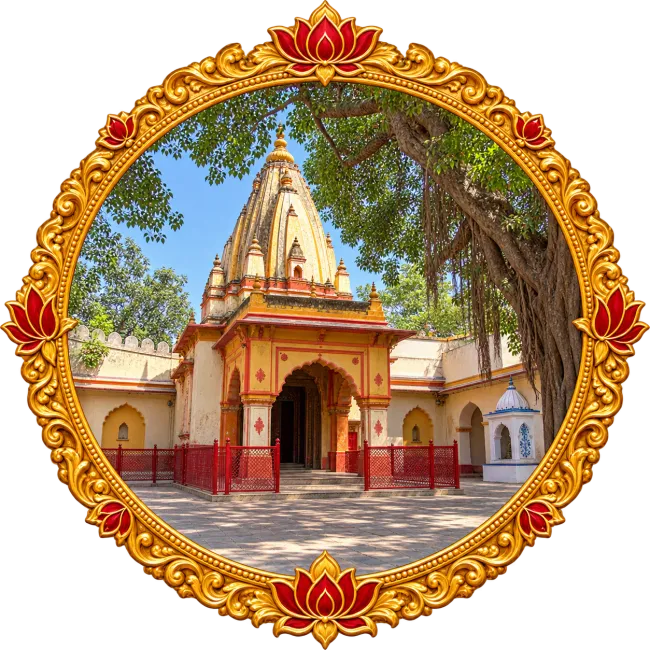
Phoolmati Temple Kannauj
Phoolmati Temple in Kannauj is a revered Siddhpeeth dedicated to Maa Phoolmati Devi. Located in the historic city famous for its perfumes, the temple holds a special place in the religious and cultural life of the region. Devotees visit the shrine to pray for protection, good health, family welfare, prosperity, and the fulfilment of wishes.
The temple is particularly crowded during Chaitra Navratri and Sharadiya Navratri, when the goddess is adorned with flowers and special decorations. Daily puja, devotional songs, aarti, havan, and other religious ceremonies create a peaceful and spiritually uplifting atmosphere within the temple complex.
About Phoolmati Temple Kannauj
Phoolmati Temple is situated on Makrand Nagar Road in the Nakhasa area of Kannauj, Uttar Pradesh. The goddess worshipped here is known as Maa Phoolmati Devi, and the shrine is regarded by devotees as a Siddhpeeth—a sacred place where prayers performed with sincere faith are believed to bear spiritual fruit.
According to the long-standing religious tradition of Kannauj, Maa Phoolmati was the eldest of the seven daughters of Raja Venu Chakra, an ancient ruler associated with the region. All seven sisters later came to be worshipped as different manifestations of divine feminine power at various sacred places in and around Kannauj.
Maa Phoolmati is worshipped as a compassionate and protective mother goddess. Families visit the temple during important occasions such as childbirth, marriage, mundan ceremonies, new beginnings, and the fulfilment of vows. Many families from Kannauj and neighbouring districts also regard the goddess as their Kuldevi.
The temple is closely connected with Kannauj’s identity as the “City of Perfumes.” Flowers, fragrances, garlands, and floral decorations play an important role in the worship of Maa Phoolmati. During Navratri, the deity is beautifully decorated with fresh flowers every day.
History of Phoolmati Temple Kannauj
The origin of Phoolmati Temple is connected with the traditional story of Raja Venu Chakra and his seven daughters. According to local belief, Raja Venu Chakra ruled Kannauj and was known for living a simple and disciplined life. Maa Phoolmati is remembered as the eldest of his seven daughters.
The names traditionally associated with the seven divine sisters include Phoolmati Devi, Kshemkali Devi, Singhvahini Devi, Maurari Devi, Govardhani Devi, Sheetla Devi, and Tapeshwari Devi. These sisters are believed to have chosen a spiritual path and established themselves at different sacred locations.
Maa Phoolmati selected the present area of Kannauj as her place of worship and meditation. With time, the location developed into an important centre of Shakti worship. Generations of devotees continued to maintain the shrine, and the temple gradually took its present form through renovation and expansion.
Local religious tradition places the sacred association of the shrine in an ancient period. The present temple complex reflects work carried out during different phases rather than construction completed by a single ruler or patron.
The temple is also linked with regional traditions associated with the legendary warriors Alha and Udal. It is believed that during their stay in Kannauj, they performed kanya bhoj at the sacred place connected with Maa Phoolmati Devi. This association further strengthened the temple’s importance in local folklore.
An ancient well was also discovered within the temple premises during development work. Local tradition states that several wells once existed in the area and were associated with the temple’s old religious practices. The discovery reflects the historical depth of the site and its long connection with the people of Kannauj.
Religious Significance of Phoolmati Temple
Phoolmati Temple is considered one of the prominent Shakti temples of Kannauj. Devotees believe that Maa Phoolmati protects her worshippers from negative influences, illness, fear, family difficulties, and unexpected troubles.
The goddess is especially worshipped for:
- Good health and protection from disease
- Peace and happiness within the family
- Blessings for children
- Success in marriage-related matters
- Prosperity and financial stability
- Protection from negative energies
- Courage during difficult circumstances
- Fulfilment of wishes and religious vows
Women frequently visit the temple to pray for the welfare and long life of their family members. Newly married couples seek the goddess’s blessings for a peaceful married life, while parents bring children for their first formal darshan and mundan ceremonies.
A special tradition is connected with the sacred water used during the ceremonial bathing of the deity. Devotees respectfully call it the goddess’s “neer” and receive it as a form of blessing. Local faith particularly associates this sacred water with prayers for healthy eyesight. It should be received and used only according to the instructions of the temple priests and should not be treated as a substitute for medical care.
Architecture of Phoolmati Temple
Phoolmati Temple represents the traditional architectural character of a North Indian Shakti shrine. Its design focuses primarily on the sanctum where Maa Phoolmati Devi is worshipped. The entrance, prayer spaces, and surrounding structures have developed over time to accommodate devotees and religious ceremonies.
The sanctum is the spiritual centre of the temple. The deity is decorated with colourful clothes, crowns, ornaments, flower garlands, vermilion, and seasonal flowers. Red is one of the dominant colours used in the decoration because it represents Shakti, courage, protection, and divine feminine power.
Flowers are the most distinctive feature of the temple’s worship and decoration. The goddess is often covered with fresh floral garlands, especially during Navratri and other important festivals. Decorative pillars, religious pictures, bells, lamps, and sacred symbols add to the devotional atmosphere.
The temple complex includes space for:
- Daily puja and aarti
- Havan and religious ceremonies
- Devotional singing and bhajan programmes
- Kanya pujan and kanya bhoj
- Distribution of prasad
- Community gatherings and bhandaras
- Mundan and family rituals
Development and beautification work has also been undertaken to improve facilities for pilgrims. These efforts include better arrangements for religious functions, visitor movement, ceremonial spaces, and the comfort of devotees.
Main Deity of Phoolmati Temple
The presiding deity is Maa Phoolmati Devi, worshipped as a manifestation of Adi Shakti. The goddess represents motherly compassion as well as the strength that destroys fear, suffering, and negative forces.
The name “Phoolmati” is associated with flowers, beauty, purity, and divine fragrance. This meaning is particularly significant in Kannauj, which has been internationally known for traditional perfumes and flower-based attars for centuries.
Devotees usually offer red chunari, flowers, garlands, sindoor, coconuts, sweets, and shringar items to the goddess. During special celebrations, the deity receives an elaborate floral shringar prepared with different varieties of fresh flowers.
Phoolmati Temple Timings
The temple remains open throughout the week. The regular visiting schedule is as follows:
During Chaitra Navratri, Sharadiya Navratri, Ashtami, Navami, and special religious events, the temple may remain open for extended darshan. Puja and aarti schedules may also be adjusted according to festival ceremonies. Devotees planning special puja should confirm the programme with the temple office before visiting.
Daily Puja and Rituals
The daily worship begins after the temple opens in the early morning. The sanctum is cleaned, lamps are lit, and the goddess is prepared for darshan. The deity is dressed in fresh clothes and adorned with flowers, ornaments, sindoor, and a chunari.
The principal daily rituals include:
- Cleaning and purification of the sanctum
- Ceremonial worship of Maa Phoolmati
- Floral shringar of the deity
- Offering of incense, lamps, flowers, and sweets
- Recitation of Devi mantras
- Morning puja and aarti
- Distribution of prasad
- Evening lamp-lighting ceremony
- Evening puja and aarti
Devotees may also arrange havan, Durga Saptashati recitation, Mata Ki Chowki, bhajan programmes, kanya pujan, and bhandara after consulting the temple administration.
Tuesday, Friday, and the days of Navratri are especially important for the worship of the goddess. Fridays often attract women who offer flowers, chunari, sindoor, and shringar items.
Festivals Celebrated at Phoolmati Temple
Chaitra Navratri
Chaitra Navratri is one of the most important festivals celebrated at the temple. The goddess receives a different floral decoration during the nine days. Devotees observe fasts, recite Durga Saptashati, perform kanya pujan, and participate in morning and evening aarti.
Sharadiya Navratri
Sharadiya Navratri brings the largest gatherings of devotees. The temple is decorated with flowers, lights, flags, and religious ornaments. Special puja, havan, devotional songs, and mahahaarti are organised throughout the festival.
Durga Ashtami and Maha Navami
Ashtami and Navami are considered particularly auspicious. Kanya pujan, kanya bhoj, havan, and prasad distribution are organised. Large numbers of devotees offer coconut, chunari, flowers, and sweets.
Deepavali
Lamps are lit throughout the temple complex during Deepavali. Devotees pray to the goddess for prosperity, happiness, and protection from darkness and negativity.
Full-Moon and New-Moon Days
Special prayers may be performed on Purnima and Amavasya. Devotees visit the temple for family welfare, peace, and relief from personal difficulties.
Offerings and Prasad
Common offerings made to Maa Phoolmati include:
- Fresh flowers and garlands
- Red chunari
- Sindoor and kumkum
- Coconut
- Batasha and mishri
- Peda and other sweets
- Fruits
- Incense sticks and lamps
- Bangles and shringar items
- Religious flags
Devotees should place offerings only at the designated counter or hand them to an authorised priest. Flowers hold particular importance at this shrine and are regarded as an appropriate offering to Maa Phoolmati.
Prasad generally consists of sweets, batasha, coconut, fruits, or other food items offered during puja. Bhandaras and community meals are also organised during Navratri and special occasions.
Best Time to Visit Phoolmati Temple
The most comfortable period to visit Kannauj is from October to March, when the weather remains suitable for temple visits and local sightseeing. For a peaceful experience, devotees should arrive between 7:30 AM and 9:30 AM.
The period between 5:00 PM and 6:30 PM is also suitable for darshan. Visitors who wish to attend the evening aarti should enter the temple before 6:30 PM so they can find a suitable place before the ceremony begins at 7:00 PM.
Navratri offers the most colourful and devotional experience, but it is also the busiest time. Visitors should be prepared for long queues during Ashtami, Navami, and major festival days.
Entry Fee and Visit Duration
Entry to Phoolmati Temple is free for all devotees.
A regular visit generally requires 30 to 60 minutes. During Navratri, Fridays, and major religious celebrations, devotees may require 1 to 2 hours because of queues and special ceremonies.
Charges may apply for individually arranged puja, havan, religious recitation, or family ceremonies. These services should be booked directly through the authorised temple representatives.
Visitor Guidelines
- Wear modest and respectful clothing.
- Remove footwear at the designated place.
- Maintain silence near the sanctum.
- Follow the queue arranged by temple volunteers.
- Do not touch the deity or sacred objects without permission.
- Offer flowers, chunari, and prasad only at authorised places.
- Avoid carrying leather items inside the main worship area.
- Do not litter in or near the temple complex.
- Ask permission before taking photographs inside the sanctum.
- Keep children and elderly family members close during crowded festivals.
- Do not give money to unauthorised individuals claiming to arrange special darshan.
- Use the sacred water or prasad only according to temple instructions.
How to Reach Phoolmati Temple Kannauj
By Train
Kannauj Railway Station is the nearest railway station. The temple is located a short local journey from the station. Auto-rickshaws, e-rickshaws, cycle-rickshaws, and local taxis are available outside the station.
Kannauj is connected by rail with Kanpur, Farrukhabad, Lucknow, and several other cities of Uttar Pradesh.
By Road
Kannauj is connected with Kanpur, Lucknow, Farrukhabad, Hardoi, and nearby towns through state highways and local roads. Government buses, private buses, taxis, and personal vehicles can be used to reach the city.
After entering Kannauj, visitors can ask for Maa Phoolmati Devi Temple on Makrand Nagar Road in the Nakhasa area.
By Air
Kanpur Airport is a convenient option for air travellers. Lucknow’s Chaudhary Charan Singh International Airport provides wider domestic and international connectivity. Taxis, buses, and trains are available from Kanpur and Lucknow to Kannauj.
Nearby Places to Visit
Visitors can also explore other important religious and historical attractions in Kannauj, including:
- Gauri Shankar Temple
- Annapurna Devi Temple
- Kshemkali Devi Temple
- Singhvahini Devi Temple
- Govardhani Devi Temple
- Sheetla Devi Temple
- Kali Durga Temple
- Archaeological Museum of Kannauj
- Traditional attar and perfume markets
- Historic areas connected with ancient Kannauj
Kannauj’s perfume-making workshops are especially popular among visitors. Traditional attars prepared from roses, jasmine, kewra, khus, and other natural materials reflect the city’s centuries-old cultural heritage.
Conclusion
Phoolmati Temple is one of the most respected centres of Shakti worship in Kannauj. Its association with Raja Venu Chakra and his seven daughters gives the shrine a distinctive place in local religious tradition. The worship of Maa Phoolmati as the eldest divine sister, the extensive use of flowers in her decoration, and the temple’s connection with Kannauj’s fragrant cultural identity make it a remarkable spiritual destination.
Whether a devotee comes to attend the morning puja, participate in the evening aarti, offer a chunari, perform kanya pujan, or simply sit peacefully in the temple, the shrine offers an atmosphere of faith and devotion. The grand celebrations of Navratri, daily floral shringar, community ceremonies, and generations of local belief continue to preserve the spiritual importance of Maa Phoolmati Devi Temple.