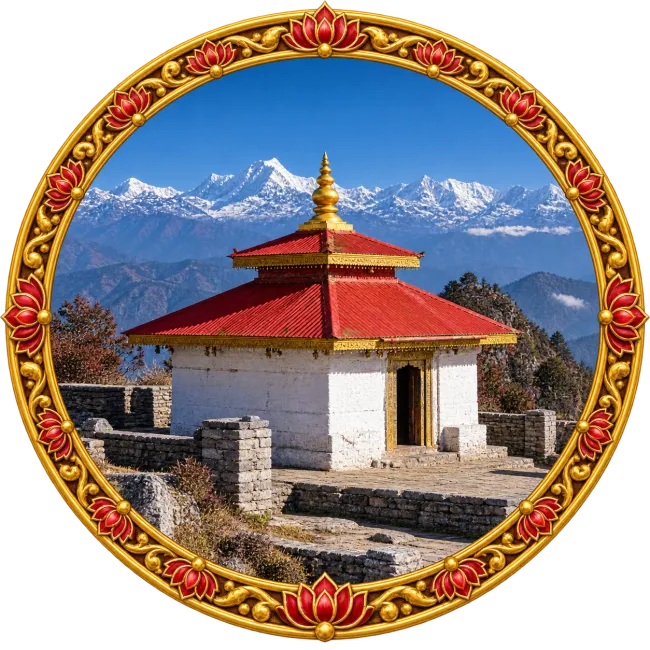
Pathibhara Devi Temple, Taplejung, Nepal
Visit Pathibhara Devi Temple in Taplejung, one of eastern Nepal’s most revered high-altitude Shakti shrines. Situated at an elevation of approximately 3,794 metres, the temple is dedicated to Goddess Pathibhara, who is believed to protect devotees and fulfil sincere wishes.
The temple is surrounded by Himalayan peaks, forests and mountain trails. Devotees undertake a challenging uphill journey to seek blessings for health, marriage, children, prosperity and protection. The temple is also known as Mukkumlung among the indigenous Limbu community and holds deep spiritual importance in both Hindu and Kirati traditions.
About Pathibhara Devi Temple
Pathibhara Devi Temple is located in Taplejung district of Koshi Province in eastern Nepal. The shrine stands on the summit of Pathibhara Hill, offering views of the Kanchenjunga mountain range and the surrounding Himalayan landscape.
The name Pathibhara comes from the traditional Nepali measuring vessel called a Pathi. The hill is believed to resemble a Pathi filled with grain, which led to the goddess and hill being called Pathibhara.
Goddess Pathibhara is worshipped as a powerful form of Adi Shakti, Durga and Bhagwati. Devotees believe that she fulfils wishes made with complete faith and protects pilgrims undertaking the difficult mountain journey.
The sacred hill is also called Mukkumlung by the Limbu community. In the local tradition, Mukkumlung is connected with ancestral spirituality, nature worship and the sacred landscape of the eastern Himalayas.
History of Pathibhara Devi Temple
Pathibhara Devi Temple developed as an ancient folk and nature-worship site rather than as a royal temple constructed by a single king.
For generations, local Limbu communities worshipped the sacred hill as Mukkumlung. The place was regarded as the residence of a powerful protective goddess connected with the land, mountains and natural forces.
As Hindu traditions became associated with the shrine, the goddess came to be widely worshipped as Pathibhara Bhagwati, a manifestation of Durga. Local communities constructed the original shrine and gradually developed the route used by pilgrims.
The temple complex has been renovated and expanded over time through community donations and support from local development organizations. Resting shelters, stone pathways, railings and basic facilities have also been added along the pilgrimage route.
Despite these improvements, the temple retains the atmosphere of an ancient Himalayan Shakti shrine where the mountain itself is treated as sacred.
Legend of Pathibhara Devi
The most popular legend associated with Pathibhara Devi concerns a group of shepherds.
According to the story, the shepherds brought their sheep to graze on Pathibhara Hill. One day, their entire flock mysteriously disappeared. They searched throughout the forest and mountain slopes but could not find the animals.
That night, Goddess Pathibhara appeared in a shepherd’s dream. She instructed him to worship her and make an offering at the sacred hill.
The shepherds followed the divine instruction and performed the required worship. After completing the ritual, the missing sheep returned safely.
The news of the miracle spread among nearby communities. People began worshipping the goddess for protection, prosperity and fulfilment of wishes. The hill gradually became a major pilgrimage destination.
The story reflects the goddess’s connection with pastoral communities, animals, forests and the natural environment.
Religious Significance of Pathibhara Devi Temple
Pathibhara Devi is worshipped as a wish-fulfilling goddess. Devotees believe that she tests their dedication through the difficult mountain journey before granting her blessings.
Pilgrims often make a promise before visiting the temple. After their wish is fulfilled, they return to offer thanks to the goddess.
Devotees visit Pathibhara Devi Temple for:
Fulfilment of sincere wishes
Family peace and prosperity
Blessings for marriage
Birth and well-being of children
Recovery from illness
Success in education and employment
Growth in business
Protection from accidents
Courage during difficult situations
Victory over negative influences
Safe travel
Spiritual strength and discipline
The physical effort required to reach the temple is regarded as a form of devotion and penance.
Goddess Pathibhara as Mukkumlung
Mukkumlung is the traditional Limbu name for the sacred hill and deity. The site is deeply connected with the cultural and spiritual identity of the indigenous communities of eastern Nepal.
In the Mukkumlung tradition, the mountain is not simply the location of a temple. The entire landscape—including its forests, rocks, water sources and pathways—is sacred.
Local spiritual customs emphasize respect for nature, ancestral traditions and community life. Many pilgrims therefore use both names, Pathibhara and Mukkumlung, while recognizing the religious significance of the site for different communities.
This shared devotion makes the temple an important example of the interaction between Hindu Shakti worship and indigenous Himalayan traditions.
Main Deity of Pathibhara Devi Temple
Goddess Pathibhara is worshipped in the form of sacred stones, images and divine symbols installed within the hilltop shrine.
The deity is decorated with:
Red cloth
Vermilion
Flowers and garlands
Traditional jewellery
Bells
Tridents
Sacred threads
Oil lamps
Numerous bells and tridents donated by devotees can be seen within the temple complex. These offerings are made after wishes are fulfilled or as prayers for divine protection.
The simple appearance of the shrine reflects its origin as a mountain and nature-worship site.
Architecture of Pathibhara Devi Temple
Pathibhara Devi Temple is a compact hilltop shrine designed to withstand strong winds, rain, snow and cold Himalayan conditions.
Important features include:
Main hilltop sanctum
Sacred stones representing the goddess
Metal roof and protective structure
Red flags and prayer cloths
Bells donated by devotees
Tridents and Shakti symbols
Stone-paved worship area
Railings along exposed sections
Panoramic Himalayan viewpoints
Resting shelters along the pilgrimage route
The temple’s spiritual impact comes primarily from its natural surroundings rather than elaborate architecture. Clouds frequently move across the hill, and the weather can change within minutes.
Pathibhara Devi Temple Timings
Temple access depends on weather, snowfall and visibility. Pilgrims should reach the summit before noon because clouds, wind and rain frequently increase later in the day.
During severe snowfall or dangerous weather, entry to the upper trail may be temporarily restricted for safety.
Morning Puja and Aarti
Morning worship begins at 5:30 AM. The priest lights lamps, offers flowers and performs traditional rituals before Goddess Pathibhara.
Morning Aarti is performed at 6:00 AM. Devotees offer:
Red flowers
Vermilion
Sacred water
Incense
Oil lamps
Rice and grains
Fruits and sweets
Red cloth
Sacred threads
The period between 6:00 AM and 9:00 AM is the best time for darshan. The weather is usually clearer, winds are lighter and the mountain views are more visible during the morning.
Bhog and Afternoon Darshan
Bhog is offered to the goddess at 12:00 PM. The offering may contain rice, sweets, fruits and locally prepared vegetarian food.
Afternoon darshan continues after the Bhog ceremony. Pilgrims should not remain on the summit for an extended period if clouds, wind or snowfall begin developing.
The descent should be started early enough to reach the lower shelters before darkness.
Evening Puja and Aarti
Evening Puja begins at 4:30 PM, followed by Aarti at 5:00 PM. Pilgrims staying near the upper trail can attend the evening ceremony.
Day visitors are generally advised to complete darshan in the morning and begin descending before the evening worship. The mountain trail becomes difficult after sunset, and temperatures fall rapidly.
The temple closes at 5:30 PM after the completion of the evening rituals.
Bali Puja at Pathibhara Temple
Traditional worship at Pathibhara may include Bali Puja. Some devotees offer goats or other animals after the fulfilment of a religious promise.
Animal sacrifice is not compulsory. Devotees preferring vegetarian or symbolic worship may offer:
Coconut
Pumpkin
Fruits
Sweets
Red flowers
Red cloth
Vermilion
Bells
Tridents
Oil lamps
Visitors should respect both traditional practices and the personal choices of other devotees.
Major Festivals Celebrated
Dashain
Dashain is the most important festival celebrated at Pathibhara Temple. The goddess is worshipped as a powerful manifestation of Durga.
Special prayers and offerings are performed during Ghatasthapana, Phulpati, Maha Ashtami, Maha Navami and Vijayadashami.
Sharadiya Navratri
Large numbers of pilgrims visit during the nine days of Navratri. Devotees observe fasting and offer red flowers, lamps and sacred cloth.
Chaitra Navratri
Chaitra Navratri is another important pilgrimage period. The weather is generally favourable, and rhododendron forests along the trail are in bloom.
Chaite Dashain
Special Shakti worship is performed during Chaite Dashain. Devotees pray for courage, victory and protection.
Ashtami and Purnima
Ashtami and full-moon dates are considered auspicious for worshipping the goddess.
Local Mukkumlung Ceremonies
Indigenous communities perform traditional ceremonies connected with the sacred landscape, nature and ancestral beliefs.
Offerings and Prasad
Common offerings made to Goddess Pathibhara include:
Red flowers and garlands
Red chunari
Vermilion
Bells
Tridents
Sacred threads
Rice and grains
Fruits and sweets
Coconut
Incense sticks
Oil or ghee lamps
Monetary donations
Many devotees offer a bell or trident after their wish is fulfilled.
Prasad may include fruits, sweets, flowers, vermilion and sacred threads blessed during worship.
Pilgrims should carry lightweight offerings because they must be transported along the mountain trail.
Entry Fee and Visit Duration
There is no entry fee for regular darshan at Pathibhara Devi Temple. Visitors may need to pay separately for transportation, porters, horses, accommodation and special pujas.
The complete visit depends on the starting point:
From Kafle Pati: 3–5 hours uphill
Temple darshan: 1–2 hours
Descent: 2–4 hours
Complete pilgrimage: one full day
Elderly pilgrims may use locally available porter, stretcher or horse services where operational.
High-Altitude Safety Guidelines
Pathibhara Temple is situated at an altitude of approximately 3,794 metres. Visitors may experience altitude sickness.
Common symptoms include:
Headache
Dizziness
Nausea
Difficulty breathing
Unusual tiredness
Loss of appetite
Confusion
Difficulty walking
Pilgrims should:
Walk slowly and take regular breaks.
Drink sufficient water.
Avoid alcohol and smoking.
Carry warm layered clothing.
Use gloves, a cap and waterproof footwear.
Carry basic medicines and a first-aid kit.
Avoid climbing with serious heart or respiratory conditions.
Descend immediately if symptoms become severe.
Follow weather and local safety instructions.
Avoid walking alone after dark.
Visitor Guidelines
Wear modest and weather-appropriate clothing.
Carry a raincoat and warm jacket.
Use shoes with a strong grip.
Keep luggage light.
Carry drinking water and energy snacks.
Do not throw plastic or waste along the trail.
Respect the Mukkumlung identity of the sacred hill.
Ask permission before photographing rituals.
Use authorized priests for special pujas.
Do not damage forests, rocks or water sources.
Keep children and elderly visitors under supervision.
Begin the climb early in the morning.
Avoid the summit during thunderstorms and severe snowfall.
Best Time to Visit Pathibhara Temple
The best periods for visiting are:
March to May
September to November
Spring offers blooming rhododendron forests and pleasant daytime conditions. Autumn provides clearer skies and better Himalayan views.
December to February can bring heavy snowfall and freezing temperatures. The monsoon period from June to August may cause slippery trails, leeches, clouds and landslides.
For safe travel and clear views, pilgrims should begin the trek before sunrise and reach the temple between 6:00 AM and 9:00 AM.
How to Reach Pathibhara Devi Temple
By Air
Travellers can fly from Kathmandu to Bhadrapur and continue towards Taplejung by road.
Flights to Suketar Airport near Taplejung may operate according to weather and scheduled availability.
By Road
Buses and private vehicles connect Kathmandu, Birtamod, Ilam and other eastern Nepalese towns with Taplejung.
From Taplejung or Phungling, local jeeps travel towards the road-accessible points below the temple trail.
From Kafle Pati
Kafle Pati is an important starting point for the final trek. From here, pilgrims follow a steep uphill path through forested terrain and resting points.
The climb requires physical effort, especially at higher elevations.
From India
Indian visitors can enter Nepal through the Panitanki–Kakarbhitta border. From Kakarbhitta, they can travel through Birtamod and Ilam towards Taplejung.
Indian citizens should carry a valid passport or voter identity card and confirm transportation requirements before departure.
Nearby Places to Visit
Kanchenjunga Conservation Area
Phungling Bazaar
Suketar
Kafle Pati
Deurali
Timbung Pokhari
Olangchung Gola
Sinwa and local Limbu villages
Tamor River
Rhododendron forests
Kanchenjunga viewpoints
Conclusion
Pathibhara Devi Temple is one of Nepal’s most spiritually powerful and naturally beautiful pilgrimage destinations. Its high-altitude location, Himalayan views and connection with both Goddess Bhagwati and the indigenous Mukkumlung tradition give it a distinctive religious identity.
The difficult trek is considered an important part of the pilgrimage. Devotees believe that Goddess Pathibhara tests their faith and determination before granting her blessings.
A visit to Pathibhara Devi Temple offers spiritual strength, courage and an opportunity to experience the sacred relationship between faith, culture and the Himalayan landscape.