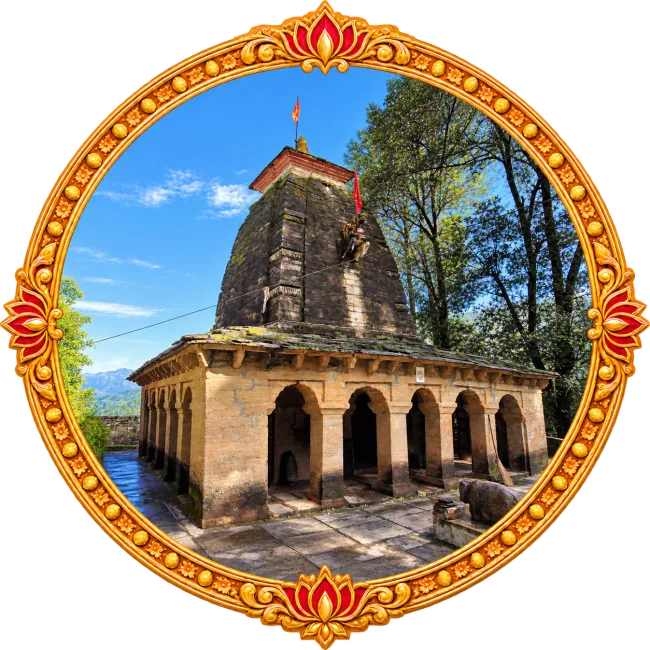
Patal Devi Temple, Almora
Visit Patal Devi Temple in Almora, a historic shrine dedicated to Goddess Patal Devi, also known as Patreshwari Devi. Situated in the Shail area near Almora, the temple forms part of the town’s traditional group of nine shrines dedicated to forms of Goddess Durga.
Its stone architecture, association with the Chand dynasty and neighbouring Anandamayi Ma Ashram make it an important destination for devotees interested in Kumaon’s religious heritage. The temple offers a setting for prayer and an opportunity to explore a lesser-known part of Almora’s history.
About Patal Devi Temple
Patal Devi Temple is located 5–6 kilometres from Almora, in the Shail village area. The principal deity is Maa Patal Devi, revered locally as a manifestation of Goddess Durga.
The temple was built by Sumer Adhikari, a soldier during the reign of Chand ruler Deep Chand, in the eighteenth century. It was subsequently rebuilt during the Gorkha period.
The shrine remains connected with the devotional life of the surrounding community. Its importance extends beyond the building itself to include the nearby Gauri Kund and the spiritual traditions associated with the area.
History of Patal Devi Temple
The temple’s construction is attributed to Sumer Adhikari during King Deep Chand’s reign, dated 1748–1777 in the temple’s heritage account.
The original structure later suffered damage. During the period of Gorkha rule, 1790–1815, the temple was rebuilt.
These two phases connect the shrine with different periods of Kumaon’s history. The original construction belongs to the Chand era, while its rebuilding reflects the continuation of religious worship under a later administration.
The temple’s heritage inscription records this history, preserving the connection between its founder, royal period and reconstruction.
Patal Devi and Almora’s Nine Durga Temples
Patal Devi holds a place among Almora’s traditional nine temples dedicated to forms of Goddess Durga.
These local shrines include Patal Devi or Patreshwari Devi, Nanda Devi, Tripura Sundari and other manifestations of the Divine Mother.
The tradition reflects the importance of Shakti worship in Almora. Different neighbourhoods and communities maintain their relationship with the goddess through these distinct places of worship.
Patal Devi should be understood within this regional tradition rather than automatically identified with one particular form from the commonly recited Navadurga sequence.
Religious Significance of Patal Devi Temple
Goddess Patal Devi is worshipped as a protective and compassionate form of the Divine Mother. Devotees visit with prayers for strength, family well-being and peace of mind.
Worship of the goddess encourages courage, patience and trust during difficult circumstances. For local families, the temple also represents a continuing connection with inherited religious traditions.
Devotees offer prayers for:
Peace and harmony within the family
Courage to face challenges
The well-being of children and elders
Wisdom in important decisions
Spiritual discipline
Gratitude for blessings received
A visit can be meaningful through simple darshan and sincere prayer, without elaborate arrangements.
Main Deity of Patal Devi Temple
The principal deity is Maa Patal Devi or Patreshwari Devi, worshipped as a form of Goddess Durga.
The sanctum also preserves old religious images that contribute to the temple’s historical character. These objects remain part of a living place of worship and should be treated with respect.
Visitors can offer a quiet prayer or recite a familiar Durga mantra:
Om Dum Durgayei Namah
Architecture of Patal Devi Temple
Patal Devi Temple is built primarily from stone. Its historic structure includes a sanctum, a tower above the shrine and a pillared entrance area.
Architectural details include carved stone elements and representations of sacred animals. The building’s proportions and construction reflect its place within the older temple heritage of Kumaon.
Features associated with the complex include:
A stone-built principal shrine
A sanctum containing the goddess’s sacred representation
A raised temple tower
Pillars and openings in the entrance area
Sculptural details
The nearby Gauri Kund
The temple deserves careful attention as both a religious site and a historic structure. Visitors should avoid leaning on old pillars, touching carvings or climbing onto architectural features.
Gauri Kund Near the Temple
Gauri Kund is a historic water tank associated with the temple complex.
It forms part of the site’s cultural heritage and local religious traditions. Its presence reflects the connection between water, ritual and temple life.
Visitors should treat the kund as a heritage feature, keep its surroundings clean and avoid placing offerings or packaging in it.
Patal Devi Temple Timings
Morning Puja and Darshan
A morning visit offers time for darshan before continuing with other religious sites in Almora.
Devotees may bring simple offerings and spend a few moments in prayer. Keep the entrance and sanctum approach clear so that other worshippers can receive darshan comfortably.
During colder months, carry a warm layer for the journey and any time spent outdoors.
Evening Worship
An evening visit provides an opportunity for quiet prayer towards the end of the day.
Those visiting later should allow enough time to complete darshan before closing and arrange their return transport in advance.
During any ceremony, follow the order of worship and avoid photographing or moving through the ritual space.
Connection with Anandamayi Ma Ashram
The Anandamayi Ma Ashram stands near Patal Devi Temple and adds another important spiritual association to the area.
Bhaiji, a close devotee of Anandamayi Ma, has a samadhi within the ashram grounds. A Shiva shrine stands at the samadhi site.
The temple and ashram are distinct places of worship, but their proximity allows visitors to explore both during the same outing. Those entering the ashram should respect its quiet atmosphere and any restrictions on access to particular rooms or spaces.
Offerings at Patal Devi Temple
Simple offerings associated with Devi worship include:
Fresh flowers
Fruit
Sweets
A chunari
Incense or lamps in designated areas
Present offerings according to the temple’s arrangements. Keep plastic bags and wrappers separate from devotional materials.
Do not leave flowers, food or packaging near the kund or on historic stonework. Quiet prayer and considerate behaviour are also meaningful expressions of devotion.
Festivals and Important Religious Occasions
Chaitra Navratri
Chaitra Navratri is an important period of worship dedicated to the Divine Mother. Devotees offer prayers for spiritual strength and family well-being.
Sharad Navratri
Sharad Navratri brings renewed focus on Goddess Durga and her protective forms. The occasion is particularly meaningful at shrines belonging to Almora’s local Devi tradition.
Ashtami and Navami
Ashtami and Navami are significant days within Navratri. Devotees observe them through prayer, fasting and other practices according to their family traditions.
Allow additional time when visiting during major Devi festivals.
How to Reach Patal Devi Temple
By Air
Pantnagar Airport is a practical airport for reaching Almora. Continue by road through the Kumaon foothills towards the town.
By Train
Kathgodam Railway Station is the main railway gateway for the onward road journey to Almora.
By Road
Almora is accessible from Haldwani and Kathgodam through the hill-road network. From Almora, continue towards the Patal Devi area near Shail village.
Local Travel
A local taxi is a convenient option for reaching the temple. Allow some walking time for the final approach and for visiting the neighbouring ashram.
Nearby Places to Visit
Anandamayi Ma Ashram: The spiritual centre close to the temple.
Nanda Devi Temple: An important Devi shrine in Almora.
Kasar Devi Temple: A separate hilltop excursion near Almora.
Chitai Golu Devta Temple: A shrine associated with Kumaon’s deity of justice.
Lala Bazaar: Almora’s historic market area.
The temples outside central Almora require separate travel time and are best planned as part of a wider itinerary.
Important Visitor Guidelines
Wear modest clothing suitable for worship.
Remove footwear at the designated point.
Respect the sanctum and old religious images.
Avoid touching carvings or leaning against historic pillars.
Keep phones silent during prayer.
Seek permission before photographing worship.
Do not enter or place waste in the kund.
Carry drinking water and a warm layer.
Keep children close near steps and uneven surfaces.
Respect the neighbouring ashram’s quiet environment.
Keep the temple grounds clean.
Conclusion
Patal Devi Temple preserves an important part of Almora’s religious and architectural heritage. Its eighteenth-century origins, later reconstruction and place among the town’s nine Durga shrines give it a distinctive identity.
A visit offers an opportunity to worship Maa Patreshwari Devi, appreciate historic stone architecture and explore the spiritual surroundings of the nearby Anandamayi Ma Ashram.