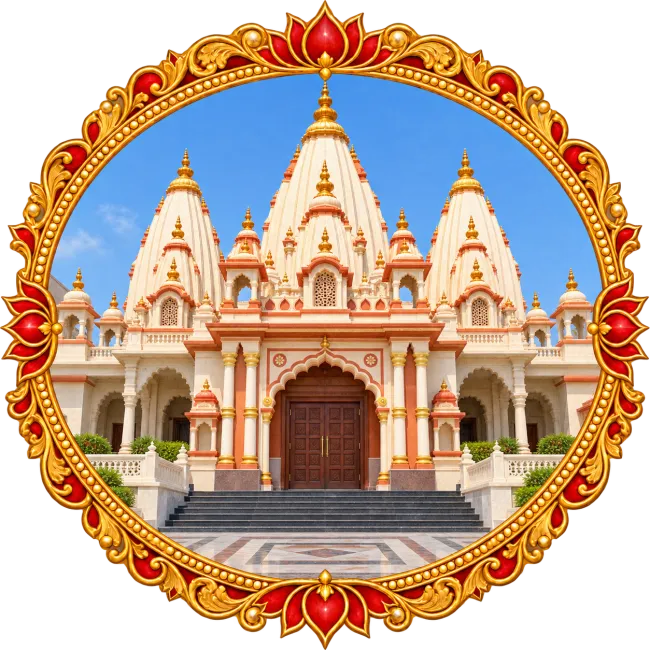
Panki Hanuman Temple Kanpur
Visit Panki Hanuman Temple Kanpur, one of the oldest and most revered Hanuman temples in Uttar Pradesh. Popularly known as Panki Dham and Shri Panchmukhi Hanuman Mandir, this sacred shrine is believed to be approximately 400 years old. It is situated in the Panki area near Panki Dham Railway Station.
The temple is famous for its large sindoor-covered idol of Lord Hanuman, whose facial appearance is believed to change three times during the day. Devotees see the innocent face of Bal Hanuman in the morning, an energetic Brahmachari form in the afternoon and the mature appearance of a Mahapurush in the evening.
Tuesdays, Saturdays, Hanuman Jayanti and Budhwa Mangal attract thousands of devotees. Special Shringar, aartis, Hanuman Chalisa recitation, Sundarkand Path and bhandaras are organised on these occasions.
About Panki Hanuman Temple Kanpur
Panki Hanuman Temple is located on Panki Road in Kanpur, Uttar Pradesh. The temple is also known as Panki Dham, Panki Darbar and Panchmukhi Hanuman Mandir.
It is one of the most important Hanuman temples in Kanpur and is visited by devotees from Uttar Pradesh and neighbouring states. The temple is believed to have existed before the development of modern Kanpur city.
Lord Hanuman is worshipped here as a protector, remover of difficulties and embodiment of courage, devotion and selfless service. Devotees visit the temple to seek blessings for health, employment, business, family welfare and freedom from fear.
The temple is especially known for:
- Its approximately 400-year-old religious tradition
- A tall, sindoor-covered image of Lord Hanuman
- The three changing expressions of the deity
- Tuesday and Saturday worship
- Hanuman Jayanti celebrations
- Budhwa Mangal festival
- Sundarkand and Hanuman Chalisa recitations
- Association with saints and traditional Mahants
- Large bhandaras and prasadam distribution
History of Panki Hanuman Temple
Panki Hanuman Temple is believed to have been established approximately 400 years ago by Shri Shri 1008 Mahant Purushottam Das Ji Maharaj. The temple is considered older than the modern urban development of Kanpur.
According to local tradition, Mahant Purushottam Das Ji was returning from a pilgrimage to Chitrakoot with a group of devotees. The sacred image or stone form associated with Lord Hanuman was being transported in a bullock cart.
When the group reached the present Panki area, the cart suddenly stopped moving. Despite repeated efforts, the bullocks could not pull it forward. Mahant Purushottam Das Ji understood this incident as a divine indication that Lord Hanuman wished to remain at that location.
Another version of the tradition says that Mahant Ji noticed the divine form of Hanuman on a rock at this place. He subsequently decided to establish a shrine and begin regular worship.
A small temple developed at the site and gradually became an important centre of Hanuman devotion. Later Mahants, devotees and local communities contributed to the maintenance and expansion of the shrine.
The Panki area also became closely associated with Neem Karoli Baba, the renowned 20th-century Hanuman devotee and saint. A Hanuman temple and ashram connected with Maharaj Ji were consecrated in Panki in January 1964. His presence and teachings strengthened the area’s identity as a centre of Hanuman worship, Ram Naam and community service.
Connection with Neem Karoli Baba
Neem Karoli Baba, affectionately known as Maharaj Ji, was an ardent devotee of Lord Hanuman. He inspired the establishment and renovation of several Hanuman temples across northern India.
In the early 1960s, he entrusted devotees with the responsibility of developing a Hanuman temple in Panki. A consecration ceremony was held in January 1964.
A famous tradition connected with the ceremony describes a shortage of food and cooking material during a large bhandara. Despite the limited arrangements, thousands of devotees reportedly received prasadam, and sufficient food remained available.
This event is remembered as an example of divine abundance and the importance of feeding people. The principles of Ram Naam, Hanuman devotion and Annadan remain important parts of the spiritual culture associated with Panki.
Three Changing Forms of Hanuman Ji
The most distinctive belief associated with Panki Hanuman Temple concerns the changing appearance of Lord Hanuman’s face.
Morning Form – Bal Hanuman
During the morning, the deity’s expression appears gentle, innocent and radiant. Devotees identify this appearance with Bal Hanuman, the child form of Lord Hanuman.
This form represents purity, fearlessness, curiosity and divine energy.
Afternoon Form – Brahmachari Hanuman
By the afternoon, the face is believed to appear youthful and energetic. This is interpreted as the Brahmachari form of Hanuman Ji.
It symbolises discipline, physical strength, control over the senses and complete dedication to Lord Rama.
Evening Form – Mahapurush Hanuman
During the evening, the deity’s face is believed to appear mature and dignified, like a wise Mahapurush.
This form represents spiritual knowledge, wisdom, compassion and protection.
Changes in natural light, Shringar and the devotee’s viewing angle contribute to the visual experience. For devotees, however, the three appearances carry deep spiritual meaning and represent the different stages of human life.
Religious Significance of Panki Hanuman Temple
Lord Hanuman is regarded as the embodiment of devotion, strength, courage, wisdom and humility. His worship is believed to protect devotees from fear, obstacles and harmful influences.
People visit Panki Dham to pray for:
- Protection from danger
- Freedom from fear and anxiety
- Courage during difficult situations
- Success in employment and examinations
- Progress in business
- Health and physical strength
- Family peace
- Protection during travel
- Relief from negative influences
- Fulfilment of sincere wishes
- Devotion to Lord Rama
- Mental discipline and self-confidence
Devotees recite the Hanuman Chalisa, Bajrang Baan, Sankat Mochan Hanuman Ashtak and Sundarkand at the temple.
Architecture of Panki Hanuman Temple
Panki Hanuman Temple follows traditional North Indian temple architecture. Its sacred flags, bells, gateways and Shikhara create a powerful devotional atmosphere.
The temple has entrances from different directions, allowing crowds to be managed during Tuesdays, Saturdays and major festivals. The principal deity is traditionally described as facing east.
The idol of Lord Hanuman is tall, covered with sindoor and decorated with silver work, garments, flowers and garlands. The silver embellishments and changing Shringar enhance the deity’s distinctive expressions.
The temple complex contains areas for:
- General darshan
- Special pujas
- Hanuman Chalisa recitation
- Sundarkand Path
- Bhajan and kirtan
- Bhandara
- Prasad distribution
- Religious gatherings
- Lighting sacred lamps
The temple is periodically decorated and improved to provide better facilities for pilgrims. Crowd-control barriers, drinking-water facilities, designated parking and security arrangements are installed during important festivals.
Panki Hanuman Temple Kanpur Timings
The regular temple and aarti schedule is:
Tuesday Timings
Tuesday timings may be extended or modified during Hanuman Jayanti, Budhwa Mangal and other major events. Devotees attending a particular aarti should confirm the festival-day schedule at the temple.
Best Time for Darshan
The best time for peaceful darshan is between 6:00 AM and 9:00 AM. Visitors can attend Mangala Aarti or see the deity’s morning Bal Hanuman appearance.
Devotees interested in observing the different expressions may visit during:
- Morning for Bal Hanuman Darshan
- Afternoon for Brahmachari Hanuman Darshan
- Evening for Mahapurush Hanuman Darshan
The period between 6:00 PM and 8:00 PM is ideal for attending Sandhya Aarti and experiencing the illuminated temple.
Tuesday and Saturday are the most crowded days. Those seeking a quieter visit should choose Monday, Wednesday, Thursday or Friday.
Daily Pujas and Aartis
Mangala Aarti
Mangala Aarti is performed at 5:00 AM and marks the beginning of the temple’s daily worship. Bells, lamps and devotional chanting accompany the ritual.
Shringar
Shringar Darshan takes place at 8:30 AM. Lord Hanuman is decorated with sindoor, silver work, flowers, garlands and sacred garments.
Bhog Aarti
Bhog is offered at 12:00 PM. Sweets, fruits and other permitted food items are presented to the deity and later distributed as prasad.
Sandhya Aarti
Sandhya Aarti is performed at 7:00 PM. It is one of the temple’s most popular daily rituals and includes lamps, bells, conch shells and devotional singing.
Shayan Aarti
Shayan Aarti is performed at 9:30 PM before the conclusion of the day’s principal worship.
Hanuman Chalisa Path
Devotees regularly recite the Hanuman Chalisa individually or in groups. Collective recitations are especially common on Tuesdays and Saturdays.
Sundarkand Path
Sundarkand describes Lord Hanuman’s journey to Lanka, his meeting with Mata Sita and his fearless service to Lord Rama. Devotees arrange the recitation for protection, courage and removal of obstacles.
Chola and Sindoor Offering
Special Chola, sindoor and jasmine-oil offerings may be arranged according to temple rules. Devotees should consult authorised priests before making such offerings.
Major Festivals Celebrated
Hanuman Jayanti
Hanuman Jayanti is celebrated with special Shringar, aarti, Hanuman Chalisa, Sundarkand, bhajan programmes and bhandara. Large numbers of devotees arrive from early morning.
Traffic diversions and designated parking arrangements may be introduced across Panki during the celebration.
Budhwa Mangal
Budhwa Mangal is one of the most important Hanuman festivals in Kanpur. Panki Dham receives thousands of visitors, and the entire complex is decorated with flowers and lights.
Special bhog, aarti, kirtan and bhandaras are organised. The festival represents gratitude, devotion and community service.
Ram Navami
Lord Hanuman is the greatest devotee of Lord Rama. Ram Navami is therefore celebrated with Ramcharitmanas recitation, bhajans and special prayers.
Diwali
The temple is illuminated with lamps during Diwali. Devotees remember Lord Rama’s return to Ayodhya and worship Hanuman Ji for protection and prosperity.
Dussehra
Dussehra celebrates the victory of Lord Rama over Ravana. Ramayana-based programmes and special worship may be organised at the temple.
Tuesday and Saturday Worship
Every Tuesday and Saturday is treated as an important worship day. Devotees observe fasts, offer prasad and recite the Hanuman Chalisa.
Offerings and Prasad
Devotees may offer:
- Sindoor
- Jasmine oil
- Red flowers
- Red or saffron cloth
- Sacred Chola
- Boondi laddoo
- Besan laddoo
- Jaggery and roasted gram
- Bananas
- Coconut
- Betel leaves
- Garlands
- Ghee or oil lamps
Boondi and laddoo are commonly distributed as prasad. Bhandaras may include puri, sabzi, halwa, khichdi or other vegetarian preparations.
Visitors should use authorised counters and follow temple rules for offerings placed near the main deity.
Entry Fee and Visit Duration
There is no general entry fee for Panki Hanuman Temple. Ordinary darshan is free for all devotees.
Special pujas, Chola offerings, Sundarkand Path and personal ceremonies may require separate contributions.
A regular visit requires 30 to 60 minutes. On Tuesday and Saturday, devotees should keep one to two hours available. During Hanuman Jayanti and Budhwa Mangal, darshan may take several hours because of long queues and traffic restrictions.
Dress Code and Visitor Guidelines
- Wear clean and modest clothing.
- Remove footwear before entering the temple.
- Follow the designated queue.
- Keep mobile phones on silent mode.
- Maintain silence near the main sanctum.
- Do not touch the principal idol.
- Obtain permission before photography.
- Avoid carrying large bags on crowded days.
- Do not carry tobacco, alcohol or non-vegetarian food.
- Protect wallets, phones and other belongings.
- Use authorised counters for puja and donations.
- Avoid online puja or VIP-darshan claims from unauthorised individuals.
- Keep children and elderly visitors close during festivals.
- Use designated parking areas.
- Follow the instructions of priests, volunteers and police officials.
How to Reach Panki Hanuman Temple Kanpur
By Air
Kanpur Airport is the nearest airport. Taxis and app-based cabs are available from the airport to Panki.
Chaudhary Charan Singh International Airport in Lucknow provides additional flight options. Travellers can reach Kanpur from Lucknow by train, bus or taxi.
By Train
Panki Dham Railway Station is the nearest railway station. The temple can be reached from the station by auto-rickshaw, e-rickshaw or local transport.
Kanpur Central is the nearest major railway junction and is approximately 12–13 kilometres from the temple.
By Metro
Panki Dham is connected to the Kanpur Metro network. Visitors can use the metro for part of the journey and continue towards the temple by auto-rickshaw or e-rickshaw, depending on the operating route and station access.
By Road
The temple is located on Panki Road in Kanpur and is accessible from Vijay Nagar, Bhauti Bypass, Kalpi Road, Kalyanpur and central Kanpur.
City buses, autos, e-rickshaws, taxis and private vehicles are available. During major festivals, visitors must follow the traffic diversions and use designated parking areas.
Nearby Places to Visit
Visitors may also explore:
- ISKCON Temple Kanpur
- JK Temple
- Anandeshwar Temple
- Bara Devi Temple
- Tapeshwari Devi Temple
- Ganga Barrage
- Kanpur Zoological Park
- Valmiki Ashram, Bithoor
- Brahmavart Ghat
- Sudhanshu Ji Maharaj Ashram
- Phool Bagh
- Nana Rao Park
Conclusion
Panki Hanuman Temple is one of Kanpur’s most important centres of Hanuman devotion. Believed to have been established approximately 400 years ago by Mahant Purushottam Das Ji Maharaj, the temple preserves a living tradition that predates the development of modern Kanpur.
Its tall sindoor-covered Hanuman idol, silver decorations, five daily worship rituals and remarkable three-form darshan give the shrine a distinctive spiritual identity. The association of the Panki area with Neem Karoli Baba further strengthens its connection with Ram Naam, Hanuman worship, Annadan and service.
Whether a devotee visits during the calm morning hours, energetic Sandhya Aarti