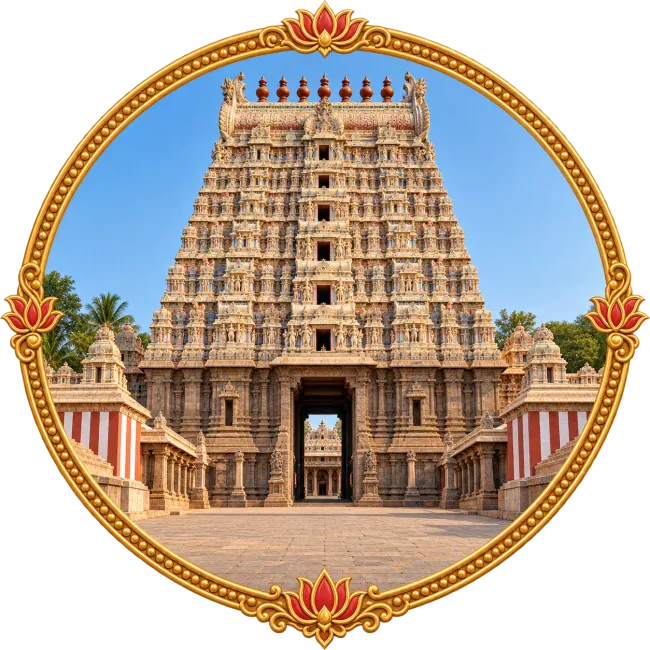
Nellaiappar Temple, Tirunelveli
Nellaiappar Temple in Tirunelveli, Tamil Nadu, is one of South India’s most celebrated Shiva temples. Dedicated to Lord Shiva as Sri Nellaiappar and Goddess Parvati as Sri Kanthimathi Amman, the temple is admired for its spiritual importance, vast complex, magnificent gopurams, musical pillars and detailed stone carvings. It is also one of the prominent Pancha Sabhai temples associated with Lord Nataraja’s cosmic dance.
Spread across a large area in the heart of Tirunelveli, the temple reflects centuries of devotion and Dravidian craftsmanship. Its peaceful courtyards, sacred shrines, ritual music and traditional worship make it an important pilgrimage destination for devotees of Lord Shiva and Goddess Parvati.
About Nellaiappar Temple
Nellaiappar Temple, also known as Arulmigu Nellaiappar–Kanthimathi Amman Temple, is dedicated to Lord Shiva and Goddess Parvati. Lord Shiva is worshipped here as Nellaiappar in the form of a Shiva Lingam, while the Goddess is worshipped as Kanthimathi Amman.
The temple originally consisted of two separate shrines—one for Nellaiappar and another for Kanthimathi Amman. These sections were later connected through the Sangili Mandapam, also known as the Chain Hall. Together, the two shrines form one of the largest and most architecturally significant temple complexes in Tamil Nadu.
The temple is closely connected with the identity and history of Tirunelveli. According to tradition, the name “Tirunelveli” is linked to a miracle performed by Lord Shiva to protect a devotee’s harvested paddy from heavy rain.
Nellaiappar Temple is recognised as a Paadal Petra Sthalam, meaning that it was praised in the sacred Tamil Shaivite hymns known as the Tevaram. The temple was sung about by the revered Nayanmar saints, especially Thirugnana Sambandar.
History of Nellaiappar Temple
The earliest parts of Nellaiappar Temple are associated with the Pandya period. The temple is traditionally believed to have been developed during the reign of the Pandya king Nindraseer Nedumaran in the seventh century. Earlier worship at the sacred site, however, may date back to an even older period.
Several rulers contributed to the temple over the centuries. The Pandyas constructed and expanded important shrines, halls and enclosures. Later Chola rulers supported the temple through donations, inscriptions and ritual arrangements. Subsequent additions were made during the Vijayanagara and Nayak periods.
The separate temples of Nellaiappar and Kanthimathi Amman were connected by the Sangili Mandapam during the seventeenth century. This hall symbolically and physically unites the shrines of Lord Shiva and Goddess Parvati.
Different mandapams, gopurams, sculpted corridors and ceremonial structures were added during successive periods. Consequently, the present complex represents several stages of South Indian temple architecture rather than the work of a single ruler.
Numerous inscriptions found within the complex record royal donations, land grants, religious services, festivals and temple administration. These inscriptions make the temple an important source for understanding the political, social and spiritual history of the Tirunelveli region.
Legend Behind the Name Tirunelveli
According to the most famous temple legend, a devoted priest named Veda Sharma collected paddy to prepare food as an offering to Lord Shiva. He spread the harvested paddy outside and went to bathe in the nearby river.
During his absence, heavy rain began to fall. Veda Sharma feared that the paddy intended for the divine offering would be washed away. When he returned, he witnessed a miracle. Rain had fallen throughout the surrounding area, but the paddy remained completely protected by an invisible boundary created by Lord Shiva.
In Tamil, “nel” means paddy and “veli” means fence or protective boundary. Because the Lord created a sacred fence around the paddy, the place became known as Tirunelveli. Lord Shiva consequently came to be worshipped as Nellaiappar—the divine protector of the paddy and the people of the region.
Bamboo Forest Legend
The area surrounding the temple is traditionally believed to have once been covered by a dense bamboo forest called Venuvanam. A cowherd noticed that one of his cows regularly released its milk at a particular place in the forest.
When the spot was examined, a self-manifested Shiva Lingam was discovered. The Lingam was worshipped, and a shrine was constructed at the sacred location. Because of this legend, Lord Nellaiappar is also associated with the name Venuvananathar, meaning the Lord of the bamboo forest.
A mark connected with the ancient bamboo legend is traditionally identified on the Shiva Lingam. The temple’s sacred tree is also bamboo, preserving the spiritual connection between the shrine and its original forest setting.
Religious Significance
Nellaiappar Temple is one of the important Paadal Petra Sthalams of the Pandya region. These are Shiva temples glorified in the devotional hymns of the Nayanmar saints. Devotees therefore regard the temple as a sacred centre of Tamil Shaivism.
The temple is also one of the Pancha Sabhai temples where Lord Shiva is believed to have performed his cosmic dance. Nellaiappar Temple represents the Tamira Sabhai, or Copper Hall. The other four sacred dance halls are associated with Chidambaram, Madurai, Tiruvalangadu and Courtallam.
Devotees pray to Lord Nellaiappar for courage, protection, good health and relief from obstacles. Kanthimathi Amman is worshipped for family welfare, marital harmony, prosperity and emotional strength.
Married couples visit the temple for a peaceful household, while unmarried devotees seek blessings for a suitable marriage. Special prayers are also performed for children, education, professional progress and relief from planetary difficulties.
Main Deities and Shrines
The principal deity is Lord Nellaiappar, worshipped as a Shiva Lingam inside the main sanctum. The sanctum has a deeply sacred atmosphere, enhanced by traditional lamps, Vedic chanting and daily pujas.
Kanthimathi Amman has a separate and prominent shrine within the complex. She represents the compassionate and protective form of Goddess Parvati. Her shrine receives elaborate decoration during Fridays, Navaratri and other festivals dedicated to the Divine Mother.
Other important shrines and deities within the complex include:
- Lord Nataraja
- Lord Ganesha
- Lord Murugan with Valli and Deivanai
- Dakshinamurthy
- Chandikeswarar
- Bhairava
- Surya and Chandra
- Navagrahas
- Nayanmar saints
- Goddess Saraswati
- Goddess Mahalakshmi
- Saneeswarar
- Various forms of Lord Shiva and Goddess Shakti
The temple also contains the Tamira Sabhai associated with the divine dance of Lord Nataraja.
Architecture of Nellaiappar Temple
Nellaiappar Temple is an outstanding example of Dravidian architecture. Its enormous complex contains towering gopurams, broad corridors, carved halls, sacred tanks, subsidiary shrines and ceremonial spaces.
The entrance towers are decorated with colourful sculptures representing Hindu deities, guardians and mythological scenes. Within the temple, carved pillars depict gods, dancers, animals, warriors and episodes from sacred traditions.
Musical Pillars
The musical pillars are among the temple’s most celebrated architectural features. Located in the Mani Mandapam, these stone pillars produce different musical notes when gently tapped. They demonstrate the remarkable understanding of sound, stone and engineering possessed by traditional temple artisans.
The hall is traditionally associated with 48 subsidiary pillars arranged around a central stone structure. Each was carefully carved so that it could create a distinct resonance.
Sangili Mandapam
The Sangili Mandapam connects the shrines of Nellaiappar and Kanthimathi Amman. Its name refers to a chain and symbolises the sacred union of Lord Shiva and Goddess Parvati. The hall contains elaborately carved pillars and serves as an important passage between the two principal sections.
Thousand-Pillared Hall
The temple’s large ceremonial hall is popularly associated with a thousand pillars. It is used during major celebrations, particularly ceremonies connected with the divine wedding of Nellaiappar and Kanthimathi Amman. Its rows of sculpted pillars create a grand visual effect.
Temple Car
The enormous wooden temple car of Nellaiappar Temple is one of its major ceremonial treasures. Decorated with detailed carvings, it carries the processional deity through the streets during the annual car festival. Large groups of devotees gather to pull the chariot using thick ropes.
Nellaiappar Temple Timings
The regular darshan and puja schedule is as follows:
Timings may be revised on major festival days, during processions and for special temple ceremonies.
Morning Puja and Deepa Aradhana
The day begins at 6:00 AM with the opening of the sanctum and Thiruvananthal worship. The deity is awakened ceremonially, the sacred lamps are lit and the first offerings are made.
Vilaa Puja is performed at 7:00 AM, followed by Kalasanthi Puja at 8:00 AM. These rituals include traditional chanting, flower offerings, incense, sacred lamps and food offerings.
The morning is a suitable period for devotees who wish to experience a quieter atmosphere. Darshan between 7:00 AM and 10:30 AM provides enough time to worship at both the Nellaiappar and Kanthimathi Amman shrines.
Uchikala Puja is performed at 11:30 AM as the main midday worship. Morning darshan concludes at 12:30 PM.
Evening Puja and Deepa Aradhana
The temple reopens at 4:00 PM. Sayaraksha Puja and evening Deepa Aradhana are performed at 5:30 PM. During this ritual, lamps are offered before the deities while bells, devotional music and sacred chants fill the sanctum.
The evening hours are especially beautiful because the illuminated corridors and shrines create a deeply devotional atmosphere. The best evening darshan period is from 5:00 PM to 7:30 PM.
Ardha Jama Puja, the final major worship of the day, is conducted at 8:30 PM. After the concluding rituals, the temple closes at 9:00 PM.
Major Festivals
Aani Car Festival
The Aani festival is one of the grandest annual celebrations at Nellaiappar Temple. It is held during the Tamil month of Aani and includes special pujas, processions, cultural activities and the famous temple car procession.
The decorated deities are taken through Tirunelveli in massive wooden chariots. Thousands of devotees gather to pull the sacred cars and receive blessings.
Thirukalyanam
The divine wedding of Nellaiappar and Kanthimathi Amman is celebrated with elaborate rituals. The festival represents the sacred union of Shiva and Shakti. Married couples attend the ceremony for harmony, while unmarried devotees pray for suitable life partners.
Navaratri
Kanthimathi Amman receives special worship during Navaratri. The Goddess is decorated in different forms on each day, and devotees offer flowers, lamps, sarees and traditional worship materials.
Maha Shivaratri
Maha Shivaratri is observed with night-long pujas, abhishekams, chanting and darshan. Devotees remain awake, chant the names of Lord Shiva and participate in successive worship ceremonies.
Arudra Darshan
Arudra Darshan celebrates the cosmic dance of Lord Nataraja. The ritual has special importance here because the temple is associated with the Tamira Sabhai.
Other celebrations include Pradosham, Tamil New Year, Karthigai Deepam, Vinayaka Chaturthi, Skanda Sashti and monthly full-moon observances.
Sevas and Offerings
Devotees may offer flowers, coconuts, fruits, sacred lamps, garlands and traditional worship materials. Abhishekam and archana can be arranged through the authorised temple counters.
Common offerings include:
- Archana in the devotee’s name
- Abhishekam
- Flower garlands
- Ghee or oil lamps
- Bilva leaves for Lord Shiva
- Sarees for Kanthimathi Amman
- Milk and fruit offerings
- Donations for annadanam
- Contributions toward temple festivals
Devotees should make payments only at designated counters and collect an official receipt.
Prasadam
Sacred ash, kumkum and other blessed items are distributed after worship. Depending on the day and ritual, devotees may also receive food offerings prepared for the deities.
Prasadam should be accepted respectfully with the right hand. Visitors should avoid wasting food or leaving packaging within the temple premises.
Dress Code and Entry Rules
Visitors should wear clean, modest and traditional clothing. Men may wear a dhoti, veshti, kurta-pyjama or full-length trousers with a shirt. Women may wear a saree, salwar kameez or another modest Indian outfit.
Footwear must be removed before entering the temple. Photography may be restricted near the sanctums and ritual areas. Mobile phones should remain silent, and devotees must avoid disturbing pujas or processions.
Leather articles, tobacco, alcohol and non-vegetarian food should not be brought inside the temple.
Entry Fee and Visit Duration
General darshan is normally available without an entry fee. Charges may apply to special darshan arrangements, sevas, abhishekams and other sponsored rituals.
A complete visit requires 1½ to 2 hours. During the Aani festival, Maha Shivaratri, Pradosham and public holidays, devotees should allow additional time because of larger crowds.
Best Time to Visit
The most comfortable season to visit is from October to March, when the weather in Tirunelveli is comparatively pleasant. Early morning and evening are the best periods for worship throughout the year.
Visitors interested in the temple’s grand celebrations may attend the Aani Car Festival, Maha Shivaratri or Thirukalyanam. Those seeking a peaceful experience should choose an ordinary weekday and arrive between 7:00 AM and 9:00 AM.
How to Reach Nellaiappar Temple
By Air
Tuticorin Airport is the nearest airport and is approximately 40 kilometres from Tirunelveli. Taxis and private vehicles are available from the airport. Madurai International Airport is another option for travellers arriving from distant cities.
By Train
Tirunelveli Junction is the nearest major railway station. It is well connected with Chennai, Madurai, Coimbatore, Kanyakumari, Thiruvananthapuram and other important destinations. The temple is approximately 3 kilometres from the railway station.
By Road
Tirunelveli has regular government and private bus services from Madurai, Chennai, Nagercoil, Kanyakumari, Thoothukudi and Thiruvananthapuram. Local buses, auto-rickshaws and taxis are available from the railway station and bus stands.
Nearby Places to Visit
Visitors may also explore:
- Krishnapuram Venkatachalapathy Temple
- Papanasam Temple and waterfalls
- Agasthiyar Falls
- Sankaranarayanar Temple, Sankarankovil
- Courtallam waterfalls
- Thiruchendur Murugan Temple
- Manimuthar Dam
- Ariyakulam Bird Sanctuary
- Kanthimathi–Nellaiappar temple streets and local markets
Visitor Guidelines
Arrive before the scheduled puja if you wish to attend the complete ritual. Keep footwear, bags and electronic items at authorised counters whenever such facilities are available.
Senior citizens and families with children should avoid heavily crowded festival periods unless they are prepared for long queues. Drink sufficient water, particularly during the warmer months, but maintain the cleanliness and sanctity of the temple.
Devotees planning an abhishekam, archana or special offering should contact the official counter after entering the temple. Festival schedules and procession timings should be confirmed locally before the visit.
Conclusion
Nellaiappar Temple is a magnificent centre of Shaivite faith, Tamil culture and Dravidian architecture. Its association with the miraculous protection of paddy, the ancient bamboo-forest legend and the sacred hymns of the Nayanmar saints gives it exceptional religious importance.
The grand shrines of Nellaiappar and Kanthimathi Amman, musical pillars, sculpted halls, Tamira Sabhai and traditional pujas create an unforgettable spiritual experience. Whether one visits for worship, architecture, history or inner peace, Nellaiappar Temple remains one of the most inspiring sacred destinations in Tamil Nadu.