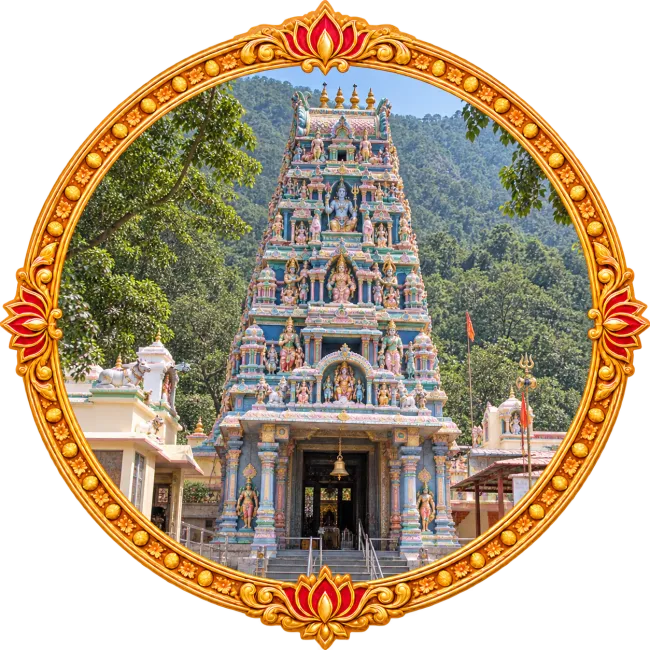
Neelkanth Mahadev Temple, Rishikesh
Visit Neelkanth Mahadev Temple near Rishikesh, a sacred shrine dedicated to Lord Shiva in his blue-throated form. Set amidst forested hills in Uttarakhand, the temple is associated with the legend of Samudra Manthan and Lord Shiva’s sacrifice to protect the universe.
The temple’s colourful mythological sculptures, sacred Shiva Lingam and natural surroundings make it a significant destination for Shiva devotees. Pilgrims come here to offer water, seek blessings and spend time in prayer.
About Neelkanth Mahadev Temple
Neelkanth Mahadev Temple is located in the Pauri Garhwal district of Uttarakhand, near Rishikesh. The road journey from Rishikesh through the barrage route covers approximately 32 kilometres.
The temple is dedicated to Lord Shiva as Neelkanth, meaning “the blue-throated one.” This name refers to the poison he consumed during Samudra Manthan, which turned his throat blue.
Surrounded by the valleys of Manikoot, Brahmakoot and Vishnukoot, the shrine occupies a scenic setting away from the busy streets of Rishikesh. Its location makes the journey an important part of the pilgrimage experience.
History and Sacred Heritage of Neelkanth Mahadev Temple
Neelkanth Mahadev Temple belongs to the longstanding religious heritage of the Rishikesh region. Its significance is closely connected with the traditional belief that Lord Shiva consumed the poison from Samudra Manthan at this sacred place.
The shrine continues the worship of Shiva as a compassionate protector. Its sacred story is also represented through the sculptural decoration of the temple, allowing visitors to connect the place of worship with the legend that gives it its name.
The temple remains an active pilgrimage destination, particularly during the annual celebrations associated with Lord Shiva.
Legend of Samudra Manthan
According to Hindu tradition, the Devas and Asuras churned the cosmic ocean to obtain Amrita, the nectar of immortality.
During the churning, a powerful poison emerged. Its destructive effects threatened the world, and the gods sought Lord Shiva’s protection.
Shiva accepted the poison to save creation. In a popular version of the legend, Goddess Parvati held his throat to prevent the poison from spreading through his body. The poison remained in his throat, turning it blue.
From this event, Lord Shiva became known as Neelkanth.
The temple near Rishikesh is traditionally associated with this episode. For devotees, the story expresses the importance of compassion, courage and accepting responsibility for the welfare of others.
Religious Significance of Neelkanth Mahadev Temple
The Neelkanth form of Lord Shiva symbolises protection and selfless sacrifice. His acceptance of poison is understood as an act of compassion towards all living beings.
Devotees visit the temple with prayers for:
Peace within the family.
Strength during difficult circumstances.
Spiritual growth and discipline.
Courage to overcome fear.
Gratitude for blessings received.
Jalabhishek, the offering of water to the Shiva Lingam, is a prominent expression of devotion here. During Shravan, large numbers of Kanwar pilgrims visit the shrine to offer sacred water to Lord Shiva.
Main Deity of Neelkanth Mahadev Temple
The principal deity is Lord Shiva, worshipped as Neelkanth Mahadev in the form of a Shiva Lingam.
The Lingam stands at the centre of worship within the inner shrine. Devotees approach it for darshan and offerings, while the temple’s exterior tells the story associated with Shiva’s blue-throated form.
Worshippers may spend their time in the queue quietly reciting “Om Namah Shivaya” or offering personal prayers.
Architecture of Neelkanth Mahadev Temple
One of the temple’s most distinctive features is its colourful sculptural representation of Samudra Manthan.
The entrance and decorative surfaces depict mythological figures associated with the churning of the ocean. These images give the temple a recognisable appearance and communicate its sacred story visually.
Important features include:
Sculptures depicting gods and demons.
Decorative scenes connected with Samudra Manthan.
An inner shrine containing the Shiva Lingam.
A natural spring associated with ritual bathing.
Forested hills surrounding the complex.
The detailed exterior decoration contrasts with the devotional focus of the inner shrine. Together, these elements create a setting for both religious reflection and appreciation of temple art.
Jalabhishek and Worship
Offering water to the Shiva Lingam is central to the pilgrimage experience at Neelkanth Mahadev.
For devotees, Jalabhishek represents reverence, surrender and remembrance of Lord Shiva. During the Kanwar pilgrimage, worshippers carry sacred Ganga water to the shrine as an expression of faith.
Visitors should keep their offerings ready before approaching the sanctum and avoid remaining in the darshan passage after completing their prayers. This helps other devotees receive darshan without unnecessary delays.
Traditional Offerings
Offerings associated with worship at Neelkanth Mahadev Temple include:
Water.
Bel leaves.
Flowers.
Milk.
Honey.
Fruits.
Coconut.
These offerings are expressions of devotion rather than a measure of the worshipper’s faith. A simple prayer and a modest offering can form a meaningful part of the visit.
Avoid carrying excessive quantities of materials, and keep plastic packaging away from the shrine and surrounding forest.
Festivals Celebrated at Neelkanth Mahadev Temple
Maha Shivratri
Maha Shivratri is one of the temple’s most important annual festivals. Devotees gather to worship Lord Shiva, offer prayers and observe religious practices associated with the occasion.
Shravan Shivratri
Shravan Shivratri is another significant celebration at the shrine. It falls during the month traditionally associated with special devotion to Shiva.
Kanwar Yatra
Neelkanth Mahadev is an important destination for Kanwar pilgrims travelling through the Haridwar–Rishikesh region.
Devotees carry sacred water for offerings to Lord Shiva, and many undertake the journey on foot. The pilgrimage gives the temple and its approach routes a particularly active devotional atmosphere during Shravan.
The temple’s major annual gatherings are associated with Maha Shivratri and Shravan Shivratri.
How to Reach Neelkanth Mahadev Temple
By Road from Rishikesh
Rishikesh is the main starting point for a road journey to the temple. The route through the barrage covers approximately 32 kilometres.
Private and shared taxis provide access to the shrine. Arrange your return transport before beginning the visit, especially when travelling with children or elderly family members.
By Trekking
A forest walking route also connects the Rishikesh pilgrimage area with the temple. The walking distance is approximately 12 kilometres.
The trek involves sustained walking through hilly terrain. Wear suitable footwear, carry drinking water and allow enough daylight for the journey. Choose road transport if a long uphill walk would be uncomfortable for your group.
Places to Include in Your Rishikesh Itinerary
Gita Bhawan
Gita Bhawan is a spiritual centre associated with religious learning and devotional gatherings. It can be included as a separate stop during a broader Rishikesh visit.
Parmarth Niketan
Parmarth Niketan is an ashram associated with prayer, yoga and spiritual activities.
Trimbakeshwar Temple
Trimbakeshwar Temple is a prominent shrine in the Lakshman Jhula area and another religious destination to include in a Rishikesh itinerary.
These places are in the wider Rishikesh area, rather than immediately beside Neelkanth Mahadev Temple.
Important Visitor Guidelines
Wear clean and modest clothing.
Remove footwear before entering designated worship areas.
Follow the darshan queue without pushing.
Respect restrictions on photography.
Keep mobile phones silent during worship.
Carry only essential belongings.
Keep children and elderly companions close in crowded areas.
Do not leave plastic, food or ritual waste in the forest.
Avoid feeding or approaching wildlife.
Use footwear suitable for slopes and wet surfaces.
Allow extra journey time during major pilgrimage periods.
Avoid unfamiliar forest routes after dark.
Conclusion
Neelkanth Mahadev Temple near Rishikesh brings together Shiva devotion, sacred storytelling and the natural beauty of Uttarakhand.
Its association with Samudra Manthan gives the shrine a special religious identity, while its colourful sculptures help visitors understand the significance of Lord Shiva’s Neelkanth form.
A visit offers an opportunity to pray, reflect on compassion and selflessness, and experience a longstanding pilgrimage tradition in the forested hills beyond Rishikesh.