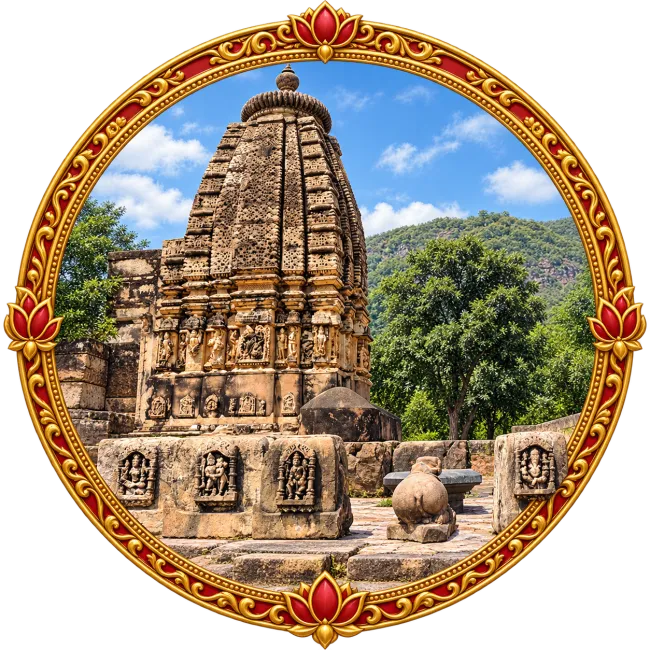
Neelkanth Mahadev Temple, Alwar
Visit Neelkanth Mahadev Temple in Alwar, an ancient Shiva shrine situated amid the remote hills and historic ruins of the Sariska region. Constructed during the Gurjara-Pratihara period and associated with a 961 CE inscription, the temple is dedicated to Lord Shiva in his Neelkanth form. Its ancient stone carvings, Trikuta-style layout, black stone Shiva Lingam and surrounding remains of hundreds of temples make it an important destination for devotees, historians and architecture enthusiasts.
About Neelkanth Mahadev Temple
Neelkanth Mahadev Temple is situated near Tehla village in Rajgarh tehsil of Alwar district, Rajasthan. It stands on an isolated hill within the buffer region of the Sariska Tiger Reserve, surrounded by the ruins of the ancient settlement of Rajorgarh.
The temple is dedicated to Lord Shiva as Neelkanth, meaning “the blue-throated one.” According to Hindu tradition, Lord Shiva received this name after consuming the deadly Halahala poison that emerged during Samudra Manthan.
The temple complex once formed part of a large religious settlement containing numerous Hindu and Jain shrines. Although most of the surrounding structures are now in ruins, the main Neelkanth Mahadev Temple remains an active place of worship.
Its historical inscription, carved pillars, surviving shikhara and peaceful natural surroundings make it one of the most important ancient temples in Alwar district.
History of Neelkanth Mahadev Temple
Neelkanth Mahadev Temple belongs to the early medieval period of Rajasthan. The region surrounding the shrine was historically known as Rajyapura, Rajorgarh or Paranagar and developed as an important religious and administrative centre.
The temple is associated with a Sanskrit inscription dated 961 CE. The inscription connects its construction and consecration with Maharajadhiraja Mathanadeva Bargujar, a feudatory ruler associated with the Gurjara-Pratihara political tradition.
During this period, the region witnessed the construction of numerous temples dedicated to Shiva, Vishnu, Jain Tirthankaras and other deities. The surviving ruins indicate that Rajorgarh was once a thriving temple town.
Over the centuries, political conflicts, natural decay and abandonment damaged most of the structures. Sculptures, pillars, temple foundations and carved architectural fragments remain scattered across the area.
Neelkanth Mahadev Temple survived in a comparatively complete form and continues to be used for worship. Its central shikhara, mandapa, carved pillars and Shiva sanctum remain among the most important surviving elements of the ancient settlement.
Who Built Neelkanth Mahadev Temple?
Neelkanth Mahadev Temple was constructed by Maharajadhiraja Mathanadeva Bargujar, a local ruler connected with the Gurjara-Pratihara Empire.
An inscription dated 961 CE provides important historical evidence concerning the ruler and the temple complex.
Important stages in the temple’s development include:
The temple’s construction reflects the architectural and religious activity that flourished in Rajasthan under the Gurjara-Pratiharas and their regional feudatories.
Main Deity of the Temple
The principal deity is Lord Shiva in the form of Neelkanth Mahadev. A Shiva Lingam is installed inside the central sanctum.
The name Neelkanth is formed from two Sanskrit words:
- Neela – blue
- Kantha – throat
According to Hindu tradition, a dangerous poison called Halahala emerged during the churning of the cosmic ocean. To protect the universe, Lord Shiva consumed the poison. Goddess Parvati stopped it in his throat, causing the throat to turn blue.
Lord Shiva is therefore worshipped as Neelkanth—the divine protector who accepted poison to save creation.
Devotees pray at the temple for:
- Protection from danger
- Relief from illness and suffering
- Mental peace
- Courage during difficult situations
- Family welfare
- Removal of negative influences
- Spiritual growth
- Success in important work
- Liberation from fear and attachment
Religious Significance
Neelkanth Mahadev Temple has remained a centre of Shiva worship for more than a thousand years. The survival of the principal shrine amid the surrounding ruins gives it a special place in local religious tradition.
Lord Shiva is worshipped here as both the compassionate protector and the supreme yogi. Devotees offer water, milk and bilva leaves to the Shiva Lingam.
The isolated hill setting creates a peaceful environment suitable for prayer and meditation. The journey through the forested and rocky landscape is itself considered an important part of the pilgrimage.
The temple receives a larger number of visitors during Mahashivratri, Shravan and important Mondays associated with Lord Shiva.
Architecture of Neelkanth Mahadev Temple
Neelkanth Mahadev Temple is an important example of early medieval temple architecture. It is constructed primarily from stone and follows a Trikuta-style plan.
Trikuta Temple Plan
A Trikuta temple contains three sanctums. The central sanctum of Neelkanth Temple faces west and contains the Shiva Lingam.
The side sanctums formed part of the original architectural design, although their upper portions and shikharas have suffered damage.
The three-sanctum plan indicates that the structure was designed as an elaborate temple rather than a small village shrine.
Garbhagriha
The main garbhagriha houses the Shiva Lingam. It is the most sacred part of the temple, and devotees offer prayers from the designated area.
The central sanctum remains active even though several adjoining sections of the original temple complex are damaged.
Mandapa
A pillared mandapa stands before the sanctum. It was designed as a space for devotees, religious gatherings and ritual performances.
The pillars and capitals contain detailed carvings of divine figures, celestial beings and decorative patterns.
Shikhara
The main shikhara above the central sanctum remains one of the best-preserved features of the temple. It rises in the traditional North Indian Nagara style.
The shikharas above the side sanctums are damaged, but their foundations help visitors understand the original three-shrine arrangement.
Sculptures and Carvings
The temple contains sculptures of:
- Lord Shiva
- Lord Vishnu
- Lord Brahma
- Lord Ganesha
- Lord Surya
- Narasimha
- Apsaras
- Gandharvas
- Musicians
- Dancers
- Mythical creatures
- Floral designs
- Geometric patterns
- Couples and scenes from social life
Some sculptural panels contain intimate human figures similar to artistic themes found at Khajuraho. These carvings formed part of the wider symbolic programme of medieval temple architecture.
Pillars and Capitals
The stone pillars are decorated with floral bands, figures and geometrical arrangements. Their carved capitals support the mandapa’s ceiling and display the craftsmanship of Pratihara-period artists.
Visitors should not touch, climb upon or scratch any of the ancient sculptures.
Ancient Temple Town of Rajorgarh
The area surrounding Neelkanth Mahadev Temple contains the remains of a large ancient settlement. It was historically known by names such as Rajyapura, Rajorgarh and Paranagar.
The scattered remains include:
- Temple foundations
- Broken shikharas
- Carved pillars
- Stone doorways
- Sculptural panels
- Images of Hindu deities
- Jain religious remains
- Fortification walls
- Residential and public structures
The number of ruins indicates that the area was once a major centre of religion, art and settlement.
Visitors should remain on established pathways because some ruins are unstable and the site lies in a forested region.
Legend of the Temple’s Survival
A local tradition states that many temples in the Rajorgarh area were damaged during a medieval military attack. According to the legend, when soldiers approached the principal Neelkanth shrine, a swarm of bees emerged and forced them to retreat.
The story is presented as a local religious tradition associated with the survival of the Shiva temple. The historical monument also endured because devotees continued to maintain the sanctum even after the surrounding settlement declined.
Neelkanth Mahadev Temple Timings
The principal visitor timings are 10:00 AM to 5:00 PM. Access can be affected by forest regulations, weather conditions, road repairs and wildlife movement.
On Mahashivratri and important Shravan Mondays, special worship arrangements may be followed. Visitors should begin their return journey immediately after the temple closes because the route passes through a remote forest and hill region.
Best Time for Darshan
The best time for darshan is between 10:30 AM and 12:30 PM. This gives visitors sufficient daylight to reach the temple, complete darshan, explore the ruins and return safely.
The ideal season is from October to March, when the weather is comfortable for travelling and walking.
The monsoon brings greenery to the Sariska hills, but roads can become muddy, rocky and difficult for ordinary cars. Visitors should check local road conditions before starting their journey.
Summer afternoons are extremely hot, so adequate drinking water and sun protection are necessary.
Daily Puja and Aarti
Daily worship at Neelkanth Mahadev Temple generally includes:
- Cleaning and preparation of the sanctum
- Jalabhishek of the Shiva Lingam
- Offering of milk where permitted
- Application of sandalwood paste
- Offering of bilva leaves
- Flower and garland offerings
- Lighting of incense and lamps
- Recitation of Shiva mantras
- Morning puja and aarti
- Evening puja and aarti
- Closing prayers
Devotees commonly chant:
- Om Namah Shivaya
- Mahamrityunjaya Mantra
- Shiva Panchakshara Mantra
- Rudrashtakam
- Shiva Chalisa
Visitors wishing to perform a special puja should speak with the priest after reaching the temple.
Major Festivals
Mahashivratri
Mahashivratri is the most important festival celebrated at Neelkanth Mahadev Temple. Devotees offer water, milk, bilva leaves, flowers and fruits to Lord Shiva.
Special abhishek, mantra recitation and aarti are performed. The number of visitors increases significantly on this occasion.
Shravan Month
The Hindu month of Shravan is especially sacred to Lord Shiva. Devotees visit the temple for jalabhishek and prayer throughout the month.
Shravan Somvar
Mondays during Shravan attract local devotees for special puja, fasting and Shiva worship.
Pradosh Vrat
Pradosh Vrat is observed in honour of Lord Shiva. Devotees pray for forgiveness, peace and freedom from difficulties.
Kartik Purnima
Kartik Purnima is considered auspicious for temple visits, lamp offerings and religious worship.
Offerings at Neelkanth Mahadev Temple
Devotees may offer:
- Water
- Milk
- Bilva leaves
- White flowers
- Flower garlands
- Sandalwood paste
- Incense
- Ghee lamps
- Fruits
- Sweets
- Coconut
- Sacred thread
- Monetary donations
Visitors should pour water or milk only where permitted. Liquids must not be poured on protected sculptures, pillars or archaeological remains.
Plastic packaging and ritual waste should not be left inside the temple or surrounding forest.
Naugaza Jain Temple and Shantinatha Statue
A major attraction near Neelkanth Mahadev Temple is the surviving Naugaza Jain monument. It contains a colossal Digambara image of Lord Shantinatha, the 16th Jain Tirthankara.
The image is approximately 5.3 metres high and dates to the early 10th century. An inscription connects the monument with 922 CE and mentions the architect Sarvadeva.
The nearby presence of ancient Jain and Shaiva monuments shows that Rajorgarh supported multiple religious traditions.
Visitors should include the Naugaza statue in the same journey because it is situated close to the Neelkanth temple ruins.
Entry Fee and Visit Duration
Forest or vehicle-related charges may apply depending on the route and current local arrangements. These are separate from temple entry.
How to Reach Neelkanth Mahadev Temple
From Alwar
The temple is approximately 70–72 kilometres from Alwar city. The journey generally passes through the Rajgarh or Tehla side of the Sariska region.
A private vehicle, hired taxi or high-ground-clearance vehicle is recommended. The final approach contains narrow, steep and rocky sections.
By Air
Jaipur International Airport is the nearest major airport. It is approximately 105–115 kilometres from the temple, depending on the chosen route.
Visitors can hire a taxi from Jaipur through Dausa, Rajgarh, Bhangarh or Tehla.
By Train
Rajgarh Railway Station is one of the nearest convenient railway stations. It is connected with Alwar, Bandikui, Jaipur and Delhi-route services.
Alwar Junction is the nearest major railway station with wider connectivity. A taxi or private vehicle is required from the station.
By Road
The temple can be approached from:
- Alwar
- Rajgarh
- Tehla
- Dausa
- Jaipur
- Bhangarh
- Thanagazi
The final road may not be suitable for low-ground-clearance vehicles, particularly during the monsoon.
Visitors should download or note the route in advance because mobile connectivity can be weak.
Nearby Places to Visit
The temple journey can be combined with:
- Naugaza Jain Temple
- Rajorgarh temple ruins
- Sariska Tiger Reserve
- Narayani Mata Temple
- Bhangarh Fort
- Ajabgarh Fort
- Rajgarh Fort
- Bhartrihari Temple
- Pandupol Hanuman Temple
- Talvriksha
- Siliserh Lake
- Bala Quila
- Alwar City Palace
Access to Sariska wildlife zones requires compliance with forest department regulations.
Visitor Guidelines
- Travel only during daylight.
- Use a suitable vehicle for the rough approach road.
- Check road and weather conditions before leaving.
- Remove footwear before entering the shrine.
- Wear comfortable and modest clothing.
- Carry sufficient drinking water and basic refreshments.
- Do not leave plastic or food waste at the site.
- Do not touch or climb on ancient sculptures.
- Do not remove stones or fragments from the ruins.
- Avoid entering unstable structures.
- Ask permission before photographing the sanctum.
- Do not use loudspeakers or play loud music.
- Avoid feeding or approaching wild animals.
- Keep children under supervision.
- Follow all forest and heritage regulations.
- Leave before sunset.
- Avoid travelling alone on the final forest route.
- Inform someone about the travel plan before visiting.
Conclusion
Neelkanth Mahadev Temple is one of the most significant ancient religious monuments in Alwar district. Constructed under Maharajadhiraja Mathanadeva Bargujar and associated with a 961 CE inscription, the temple preserves the architectural excellence of the Gurjara-Pratihara period.
Its black stone Shiva Lingam, Trikuta layout, carved pillars, surviving shikhara and surrounding ruins reveal the former grandeur of the Rajorgarh temple settlement. The nearby Naugaza Jain statue further demonstrates the region’s rich and diverse religious heritage.
A visit to Neelkanth Mahadev Temple provides devotees with an opportunity to worship Lord Shiva while allowing travellers to explore one of Rajasthan’s most atmospheric archaeological landscapes. Its remote location requires careful planning, but the combination of spirituality, history, architecture and natural beauty makes the journey memorable.