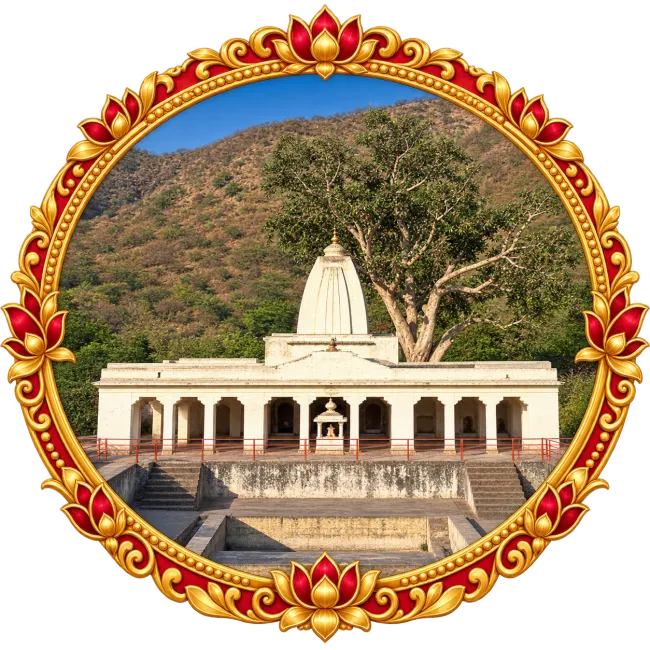
Narayani Mata Temple, Alwar
Visit Narayani Mata Temple in Alwar, an ancient and highly revered shrine situated at the foothills of Barwa Dungri near the Sariska forest region. Dedicated to Narayani Mata, the temple is especially sacred to the Sain or Nai community, whose members worship the goddess as their Kuldevi. Known for its historic architecture, natural water stream, sacred marble kund and annual fair, the temple attracts devotees from Rajasthan and several other parts of India.
About Narayani Mata Temple
Narayani Mata Temple is located in the Rajgarh region of Alwar district, approximately 80 kilometres southwest of Alwar city. The shrine stands amid the peaceful and naturally beautiful surroundings of the Aravalli Hills, close to Sariska and Bhangarh.
The temple is dedicated to Narayani Mata, who is traditionally identified with a devoted woman named Karmeti. Her life story, sacrifice and divine blessings are preserved through the oral traditions of the local community.
Narayani Mata is considered the Kuldevi of the Sain community, also known as the Nai community. Devotees from Rajasthan, Haryana, Uttar Pradesh, Delhi, Maharashtra and other regions visit the temple for family worship, marriage-related rituals and the fulfilment of religious vows.
A natural spring flows behind the temple and supplies water to the marble kund situated in front of the shrine. Devotees consider this water sacred and use it for ritual bathing and purification.
History of Narayani Mata Temple
Narayani Mata Temple is associated with a regional tradition dating to the 10th–11th century. Narayani Mata is traditionally identified as Karmeti, the daughter of Vijayram and Ramvati.
According to local accounts, Vijayram and Ramvati were devoted worshippers of Lord Shiva. After many years of prayer, their daughter Karmeti was born on Chaitra Shukla Navami during Vikram Samvat 1006.
Karmeti was later married to Karmasi, a resident of the Rajorgarh region. While travelling with her husband toward his family home, the couple stopped near Barwa Dungri to rest.
During their journey, Karmasi was bitten by a snake and died. The events that followed became the foundation of the religious tradition through which Karmeti came to be worshipped as Narayani Mata.
The shrine was established at the place associated with these events. The temple structure was developed during the 11th century and displays characteristics of the Pratihara architectural tradition.
According to regional history, Thakur Budh Singh, the jagirdar of Nangal Pawta, supported the establishment of the temple and the construction of its water kund. Maharaja Jai Singh of Alwar later enlarged the kund and improved facilities at the sacred site.
The Sain community subsequently carried out several renovations and additions while preserving the temple’s original religious importance.
Who Built Narayani Mata Temple?
The early temple was established during the 11th century under the patronage of Thakur Budh Singh of Nangal Pawta. Its construction took place within the wider historical and political environment of the Rajgarh region.
Important stages in its development include:
The present complex contains ancient architectural elements as well as additions made during later restoration.
Story of Narayani Mata
According to local tradition, Karmeti was born to Vijayram and Ramvati after they prayed to Lord Shiva for a child. From an early age, she was known for her devotion, purity and compassionate nature.
She was married to Karmasi of Rajorgarh. While travelling to her husband’s home, the couple stopped beneath a tree near Barwa Dungri. During the halt, Karmasi was bitten by a snake and died.
Karmeti requested assistance from people in the area to perform her husband’s last rites. A local herdsman helped her collect firewood and arrange the funeral pyre.
The tradition states that Karmeti blessed the herdsman and the surrounding region. When people expressed concern about the lack of water, she caused a natural spring to appear. The water from this spring continues to flow toward the temple kund.
Following these events, Karmeti came to be worshipped as Narayani Mata. The sacred place connected with the tradition gradually developed into a pilgrimage centre.
The story is preserved as a regional faith tradition and remains central to the identity of the temple.
Religious Significance
Narayani Mata Temple is one of the most important pilgrimage destinations of the Sain community. Devotees worship Narayani Mata as their Kuldevi and seek her blessings during major family occasions.
Families visit the temple for:
- Kuldevi worship
- Blessings after marriage
- Mundan ceremonies
- Naming ceremonies
- Prayers for children
- Family prosperity
- Protection from difficulties
- Fulfilment of religious vows
- Thanksgiving after the completion of a wish
- Peace and harmony within the family
Newly married couples often visit the temple to receive the blessings of Narayani Mata. Families also return after the fulfilment of a vow to offer prayer and express gratitude.
Although the temple has a special connection with the Sain community, devotees from every community are welcome to worship here.
Main Deity
The principal deity is Narayani Mata. Her image is installed inside the garbhagriha and decorated with colourful clothes, jewellery, flowers and traditional ornaments.
The goddess is worshipped as a compassionate mother who protects families, blesses married life and helps devotees overcome difficulties.
During special festivals, the deity receives an elaborate Shringar consisting of:
- Traditional garments
- Jewellery
- Crown
- Flower garlands
- Chunri
- Kumkum and sindoor
- Decorative ornaments
- Seasonal flowers
Devotees offer darshan from the designated area outside the inner sanctum.
Sacred Water Stream and Kund
One of the most distinctive features of Narayani Mata Temple is its natural water stream. Water emerges from the hill behind the shrine and continuously flows toward the marble kund in front of the temple.
The kund generally contains clear spring water and is regarded as sacred by devotees. Many pilgrims bathe in or collect the water before offering prayers.
The spring is traditionally connected with the blessings of Narayani Mata. Devotees believe that she caused water to emerge to help the local people and animals living in the dry region.
The kund was developed and enlarged under royal patronage. Later renovations improved its stone and marble construction.
Visitors should use the water responsibly and avoid introducing soap, shampoo, plastic or other pollutants into the kund. Claims concerning the medicinal benefits of the water should be understood as matters of personal faith.
Architecture of Narayani Mata Temple
The temple is associated with the Pratihara style of temple architecture. Its design combines early medieval features with structures added during subsequent restoration.
Fort-Like Entrance
The entrance has a grand, fort-like appearance. Its strong walls and elevated gateways give the complex a distinctive architectural identity.
The gateway leads pilgrims toward the main courtyard, water kund and temple shrine.
Garbhagriha
The garbhagriha is the innermost and most sacred section of the temple. It houses the image of Narayani Mata.
Only authorized priests may enter the innermost ritual area during worship.
Mandapa
The mandapa serves as a prayer and gathering hall. Devotees stand here for darshan, puja and aarti.
During the annual fair, the surrounding halls and courtyards accommodate larger gatherings of pilgrims.
Shikhara
The temple’s shikhara rises above the main sanctum and indicates the location of the principal deity. It contains traditional decorative elements and sacred symbols.
Guardian Deities
The temple’s architecture includes representations connected with the Ashta Dikpalas—the eight guardian deities associated with the principal directions.
These figures symbolize the protection of the sacred temple space from every direction.
Natural Landscape
The shrine stands at the base of Barwa Dungri and is surrounded by trees and rocky hills. Mango, banana, kachnar and other plants traditionally formed part of the temple’s green surroundings.
The combination of temple architecture, flowing water and forested hills creates a quiet atmosphere suitable for prayer and meditation.
Narayani Mata Temple Timings
The temple generally remains open continuously between 8:00 AM and 8:00 PM. Timings may be extended or changed during the annual fair, Navratri and special community ceremonies.
Visitors travelling from a long distance should plan to arrive before 5:00 PM because roads through the surrounding rural and forest region become quieter after sunset.
Best Time for Darshan
The best time for darshan is between 8:30 AM and 10:30 AM. The temple is comparatively peaceful, and visitors have sufficient time to worship and explore the kund.
Devotees wishing to attend the evening aarti should reach the temple before 6:30 PM.
The most comfortable months are from October to March. The weather remains pleasant for travelling through Alwar, Rajgarh and the Sariska region.
The monsoon months from July to September bring greenery and increase the flow of the natural spring. However, visitors should remain cautious because roads and pathways may become slippery.
Daily Puja and Aarti
Daily worship at Narayani Mata Temple generally includes:
- Opening and cleaning of the sanctum
- Bathing and preparation of the deity
- Application of kumkum and sindoor
- Shringar of Narayani Mata
- Offering of clothes and jewellery
- Morning Mangala Aarti
- Offering of flowers and garlands
- Bhog offering
- Recitation of devotional prayers
- Kuldevi worship
- Evening puja
- Sandhya Aarti
- Distribution of prasad
- Closing prayers
Families visiting for a special Kuldevi ceremony may arrange puja with an authorized priest.
Narayani Mata Fair
The annual Narayani Mata Fair is the most important celebration at the temple. It is held on Vaishakh Shukla Ekadashi, generally falling during April or May.
Devotees from many regions participate in the fair. A large number of pilgrims belonging to the Sain community travel to the temple for Kuldevi worship.
Important activities during the fair include:
- Special darshan
- Morning and evening aarti
- Mata ka Shringar
- Bhajan and kirtan
- Community worship
- Religious processions
- Kuldevi ceremonies
- Prasad distribution
- Community meals
- Cultural programmes
- Temporary religious and local market stalls
Special traffic, parking and crowd-control arrangements may be introduced during the fair.
Other Major Festivals
Chaitra Navratri
Devotees worship Narayani Mata during the nine days of Chaitra Navratri. Special puja, aarti and devotional singing are organized.
Sharad Navratri
Sharad Navratri is celebrated with elaborate Shringar, lamps, flowers and daily worship of the goddess.
Chaitra Shukla Navami
Chaitra Shukla Navami is associated with the traditional birth date of Narayani Mata. Devotees offer special prayers and remember her life story.
Durga Ashtami
Special puja and offerings are made on Durga Ashtami. Devotees seek courage, protection and family welfare.
Diwali
The temple is decorated with lamps during Diwali. Devotees pray for peace, prosperity and happiness.
Offerings at Narayani Mata Temple
Devotees may offer:
- Chunri
- Red flowers
- Flower garlands
- Coconut
- Kumkum
- Sindoor
- Bangles
- Traditional Shringar items
- Sweets
- Fruits
- Incense
- Ghee lamps
- Monetary donations
- Food materials for community meals
Families may also offer clothes and ornaments to the goddess as part of Kuldevi worship.
All offerings should be presented at the designated counter or given to authorized temple priests.
Entry Fee and Visit Duration
Parking and access arrangements may change during the annual fair.
How to Reach Narayani Mata Temple
By Air
Jaipur International Airport is the nearest major airport. The temple is approximately 90 kilometres from Jaipur.
Visitors can hire a taxi from Jaipur through Dausa, Bhangarh or the appropriate local route.
By Train
Rajgarh Railway Station and Dausa Railway Station are convenient railway options depending on the visitor’s route.
Alwar Junction is the major railway station for travellers arriving from Delhi, Rewari, Jaipur and other cities. The temple is approximately 80 kilometres from Alwar.
Taxis and local vehicles are available from Rajgarh, Dausa and Alwar.
By Road
The temple can be reached by road from:
- Alwar
- Rajgarh
- Dausa
- Jaipur
- Thanagazi
- Ajabgarh
- Bhangarh
The temple is approximately 10 kilometres from Bhangarh Fort and about 14 kilometres from the Amanbagh region.
A private car or hired taxi is the most convenient option because public transport may be limited on the final section of the route.
Nearby Places to Visit
Visitors can combine the temple visit with:
- Bhangarh Fort
- Ajabgarh Fort
- Sariska Tiger Reserve
- Neelkanth Mahadev Temple
- Naugaza Jain Temple
- Rajgarh Fort
- Bhartrihari Temple
- Pandupol Hanuman Temple
- Tehla Lake
- Bala Quila
- Siliserh Lake
- Alwar City Palace
Bhangarh Fort is among the closest major attractions and can conveniently be included in the same journey.
Visitor Guidelines
- Remove footwear before entering the shrine.
- Wear modest and respectful clothing.
- Maintain silence near the garbhagriha.
- Do not touch the deity or ritual objects.
- Ask permission before taking photographs.
- Avoid photography during puja and aarti.
- Keep the sacred kund clean.
- Do not use soap or shampoo in the kund.
- Do not throw plastic, flowers or food waste into the water.
- Place offerings only in designated areas.
- Keep children under supervision near the kund.
- Avoid feeding monkeys or wild animals.
- Do not enter restricted forest areas.
- Carry drinking water during summer.
- Travel during daylight because the temple is located in a rural region.
- Follow instructions from priests and local authorities.
- Check road conditions during the monsoon.
- Expect larger crowds during Vaishakh Shukla Ekadashi and Navratri.
Conclusion
Narayani Mata Temple is one of the most important religious and cultural destinations in Alwar district. Situated at the foothills of Barwa Dungri, the temple combines Kuldevi worship, regional history, early medieval architecture and natural beauty.
Its sacred association with Karmeti, the natural spring, marble kund, Pratihara-style structure and annual Vaishakh fair give it a distinctive identity. For the Sain community, the temple is a principal centre of family and ancestral devotion.
A visit to Narayani Mata Temple offers devotees an opportunity to seek the goddess’s blessings, participate in morning or evening aarti and experience the peaceful landscape of the Aravalli Hills near Sariska and Bhangarh.