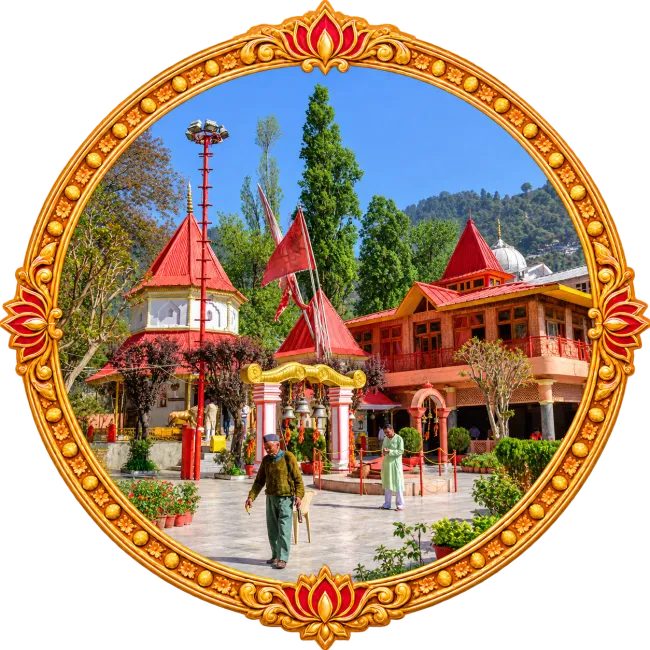
Naina Devi Temple, Nainital
Visit Naina Devi Temple in Nainital, a sacred shrine dedicated to Goddess Naina Devi on the northern shore of Naini Lake. Located in the Mallital area of Uttarakhand’s famous lake town, the temple is an important centre of Shakti worship.
The goddess is represented by two sacred eyes, reflecting the belief that the eyes of Goddess Sati fell at this place. Its lakeside setting, daily Aarti and connection with the religious traditions of Kumaon attract devotees throughout the year.
About Naina Devi Temple
Naina Devi Temple is dedicated to Maa Naina Devi, also affectionately worshipped as Naini Mata. She is revered as the protective goddess of Nainital.
The temple stands at the northern end of Naini Lake, close to the town’s markets and pedestrian areas. Its location makes it an accessible pilgrimage destination for families, elderly visitors and travellers exploring Nainital.
The name Nainital is traditionally associated with the words Naina, meaning eyes, and Tal, meaning lake. This connection links the identity of the town with its presiding goddess.
The present temple was reconstructed in 1883, following the destruction of the earlier shrine in the landslide of 1880.
History of Naina Devi Temple
The temple’s modern history includes the installation of an image of Goddess Naina Devi in 1842, traditionally credited to the devotee Moti Ram Shah.
In 1880, a devastating landslide destroyed the earlier temple. Local devotees subsequently supported its reconstruction, and the shrine was rebuilt in 1883.
The rebuilding reflects the importance of the goddess to the people of Nainital. The temple continued to serve as a centre of worship and community life, preserving its religious identity through a major change in the town’s landscape.
Today, the shrine remains closely associated with Nainital’s devotional traditions and the festivals of the Kumaon region.
Legend of Goddess Sati and Naina Devi
According to Hindu tradition, Goddess Sati attended a sacrificial ceremony organised by her father, King Daksha. Unable to bear the insult directed towards Lord Shiva, she gave up her life.
Overcome with grief, Lord Shiva carried her body across the universe. The places where parts of her body fell became sacred centres of Shakti worship.
Local tradition identifies Nainital as the place where Sati’s eyes fell. The goddess is therefore worshipped as Naina Devi, and her sacred presence is represented through two eyes.
For devotees, these eyes symbolise the compassionate gaze of the Divine Mother, who watches over her children and guides them through difficulties. The temple is revered as a Shakti Peeth in the region’s religious tradition.
Religious Significance of Naina Devi Temple
Naina Devi Temple holds a special place in the spiritual life of Nainital. Residents and visiting pilgrims worship the goddess for protection, courage and family well-being.
Devotees offer prayers for:
Peace and harmony at home
Strength during difficult circumstances
Wisdom in important decisions
The well-being of children and family members
Spiritual growth and devotion
Gratitude for blessings received
The temple also connects individual worship with community celebrations. During major festivals, collective prayers and devotional gatherings bring together people from across the region.
Main Deity of Naina Devi Temple
The principal representation of Maa Naina Devi consists of two sacred eyes, also called netras.
Within the main shrine, the goddess is accompanied by:
Mata Kali, positioned to the left
Lord Ganesha, positioned to the right
This arrangement brings together the worship of divine feminine power and Lord Ganesha, who is revered as the remover of obstacles.
The eye-form of the goddess gives the shrine its distinctive religious identity.
Architecture of Naina Devi Temple
Naina Devi Temple occupies a compact lakeside complex. Its setting allows visitors to combine temple darshan with views of Naini Lake and the surrounding hills.
Two lion figures guard the approach to the main shrine. Within the complex, visitors can also see a Peepal tree and an image of Lord Hanuman.
Important features include:
The central shrine of Maa Naina Devi
The goddess’s symbolic eye representation
Images of Mata Kali and Lord Ganesha
Guardian lion figures
A sacred Peepal tree
A lakeside courtyard and approach
The temple’s appeal comes from the relationship between its devotional spaces and the lake beside it.
Naina Devi Temple Timings
The regular daily schedule is:
The temple remains open throughout the week. Festival ceremonies may affect the regular schedule.
Suggested morning visit: 6:00 AM–8:00 AM, including the morning Aarti.
Suggested evening arrival: 6:30 PM, allowing time to reach the worship area before Aarti.
These suggested visiting windows are planning recommendations, not separate temple sessions.
Morning Puja and Aarti
Morning Aarti takes place at 7:00 AM.
Devotees gather to offer prayers to Maa Naina Devi at the beginning of the day. Attending morning worship can be combined with a quiet walk beside Naini Lake.
Keep offerings ready before entering the darshan queue and allow others enough space to participate in the ceremony.
Evening Puja and Aarti
Evening Aarti takes place at 7:00 PM.
The ceremony is an important part of the temple’s daily worship. Devotees gather for prayer as evening settles over the lake and surrounding town.
Arriving before the ceremony is useful, particularly during weekends and festival periods when the temple area becomes busier.
Offerings at Naina Devi Temple
Devotees commonly bring simple Puja items such as flowers, fruit and sweets. Shops near the temple sell offerings and other devotional materials.
Present offerings only in the designated worship areas. Keep packaging separate and dispose of it responsibly.
Visitors can also express devotion through quiet prayer, participation in Aarti and voluntary contributions towards temple service.
Avoid placing flowers, food or plastic in Naini Lake. Protecting the cleanliness of the surroundings is an important part of respecting this sacred place.
Festivals Celebrated at Naina Devi Temple
Nanda Ashtami and Nanda Devi Festival
Nanda Ashtami is one of the most important religious occasions associated with the temple.
The celebrations include a fair, special worship and community participation. The festival traditionally extends over several days and concludes with ceremonial immersion.
It offers visitors an opportunity to experience the devotional traditions of Kumaon alongside temple worship.
Chaitra Navratri
Chaitra Navratri is dedicated to the worship of the Divine Mother. Devotees visit the temple to offer prayers and seek blessings during the spring festival.
Sharad Navratri
Sharad Navratri is another important period of Shakti worship. The temple attracts increased numbers of devotees for darshan and devotional observances.
Best Time to Visit
March to June offers comfortable conditions for combining temple darshan with sightseeing in Nainital.
September to November is another suitable period for exploring the town and surrounding hills.
Morning visits work well for those wishing to attend Aarti and continue sightseeing afterwards. Evening visits suit devotees who want to participate in worship before spending time beside the lake.
During winter, carry warm clothing. Rainy weather requires extra care on wet steps and mountain roads.
How to Reach Naina Devi Temple
By Air
Pantnagar Airport provides air access to the region. From the airport, continue by road to Nainital and then towards Mallital.
By Train
Kathgodam Railway Station is the main railway gateway for Nainital. Taxis and other road transport connect the station with the town.
By Road
Nainital is accessible by road through Haldwani and Kathgodam. After reaching the town, proceed towards Mallital at the northern end of Naini Lake.
Within Nainital
The final approach to the temple is on foot through the lakeside market area. Visitors staying near Mall Road or Mallital can include temple darshan in a walk around this part of town.
Nearby Places to Visit
Naini Lake: The lake adjoining the temple.
Mall Road: A popular lakeside walking and shopping area.
Tibetan Market: A market close to the temple.
Snow View Point: A viewpoint overlooking the Himalayan landscape.
Eco Cave Gardens: A family sightseeing attraction.
Nainital Zoo: A separate excursion within the town.
St. John in the Wilderness Church: A historic landmark in the Mallital area.
Allow additional travel time for attractions away from the lakefront.
Important Visitor Guidelines
Wear clean, modest clothing.
Remove footwear before entering the designated temple area.
Follow the darshan queue.
Keep mobile phones silent during worship.
Respect photography restrictions inside the shrine.
Avoid blocking entrances during Aarti.
Keep children close in crowded areas.
Place offerings only where permitted.
Do not throw Puja materials or litter into the lake.
Carry a warm layer for an evening visit.
Walk carefully on wet steps and pathways.
Conclusion
Naina Devi Temple brings together devotion to the Divine Mother, the legend of Goddess Sati and the lakeside setting of Nainital.
Its sacred eye-form, reconstruction in 1883 and continuing festival traditions give it an enduring place in Kumaon’s religious heritage. A visit offers time for darshan, Aarti and reflection beside one of Uttarakhand’s best-known lakes.