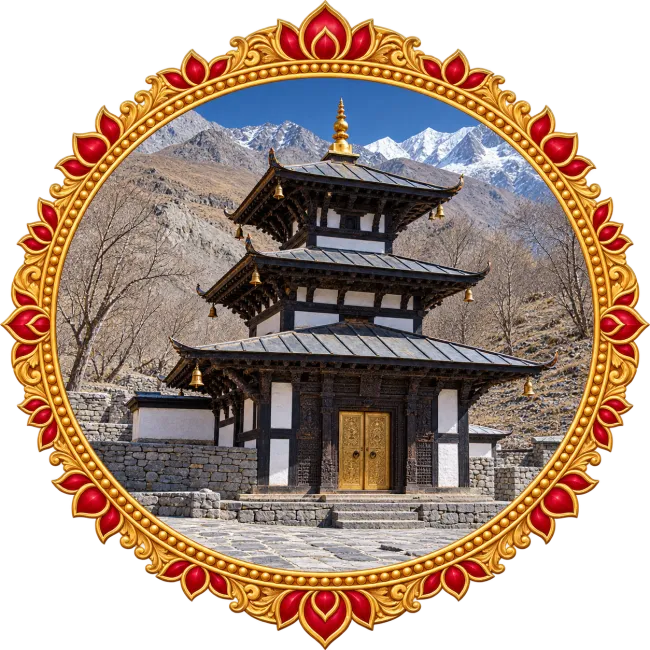
Muktinath Temple, Mustang, Nepal
Visit Muktinath Temple in Mustang, one of Nepal’s most sacred pilgrimage destinations for both Hindus and Buddhists. Situated amid the magnificent Himalayan landscape, the temple is dedicated to Lord Vishnu in his Muktinath form. Devotees believe that worshipping here, bathing under the 108 sacred water spouts and visiting Jwala Mai Temple helps cleanse sins and leads the soul towards moksha.
Located at an altitude of 3,710 metres, Muktinath is renowned for its spiritual atmosphere, snow-covered mountain views, ancient traditions and harmonious combination of Hindu and Buddhist beliefs. The temple is also called Mukti Kshetra by Hindus and Chumig Gyatsa by Tibetan Buddhists.
About Muktinath Temple
Muktinath Temple is situated in Varagung Muktichhetra Rural Municipality of Mustang district, Nepal. It stands close to Ranipauwa village at the foot of the Thorong La mountain pass.
The word “Muktinath” is formed from two Sanskrit words: Mukti, meaning liberation, and Nath, meaning Lord. Therefore, Muktinath means the “Lord of Liberation.” Devotees believe that sincere worship at this sacred place helps a person attain freedom from the cycle of birth and death.
Hindus worship the principal deity as Lord Vishnu, while Buddhists worship the deity as Avalokiteshvara, the Bodhisattva of compassion. Buddhist nuns and Hindu priests both participate in the religious traditions of the temple.
Muktinath is one of the eight sacred Swayam Vyakta Kshetras associated with Lord Vishnu. It is also revered as one of the 108 Divya Desams of the Sri Vaishnava tradition. The temple’s importance is mentioned in Hindu scriptures such as the Skanda Purana, Varaha Purana and Ramayana.
History of Muktinath Temple
The Muktinath region has been considered sacred for centuries. The presence of Shaligram stones in the Kali Gandaki River made the area an important centre of Lord Vishnu worship long before the present temple structure was constructed.
The idol worshipped inside the temple is believed to date from the 16th century, indicating that an earlier shrine probably existed at the site. The present pagoda-style temple was constructed during the beginning of the 19th century. Historical traditions credit Queen Subarna Prabha of Nepal with the temple’s reconstruction in 1815.
Over time, the temple became an important pilgrimage destination for devotees from Nepal, India, Tibet and other Himalayan regions. Hindu saints, Buddhist monks, Vaishnava devotees and local communities contributed to preserving its religious traditions.
Muktinath also lies on the ancient trade and pilgrimage route connecting Nepal with Tibet. Travellers, traders and spiritual teachers used this route for centuries. Guru Padmasambhava, also known as Guru Rinpoche, is traditionally believed to have meditated in this region during his journey towards Tibet.
Religious Significance of Muktinath Temple
Muktinath is known as Mukti Kshetra, meaning the sacred land of liberation. Hindu devotees believe that visiting the temple and worshipping Lord Muktinath helps remove sins accumulated over several births.
Bathing under the 108 Muktidhara water spouts and taking a dip in the two sacred ponds are important parts of the pilgrimage. Devotees then enter the temple to receive the blessings of Lord Vishnu.
Muktinath is especially significant for Vaishnavas because it is associated with Lord Vishnu’s Shaligram form. The naturally formed black fossil stones found in the Kali Gandaki River are worshipped as manifestations of Lord Vishnu.
For Tibetan Buddhists, Muktinath is known as Chumig Gyatsa, meaning “Hundred Waters.” It is regarded as one of the sacred Tantric sites associated with Avalokiteshvara and the goddess Vajrayogini. The peaceful coexistence of Hindu and Buddhist worship makes Muktinath unique.
Mythology of Muktinath Temple
According to Hindu mythology, Goddess Vrinda was married to the powerful demon king Jalandhara. Her devotion and purity protected Jalandhara and made him difficult to defeat.
Lord Vishnu assumed a deceptive form to weaken Vrinda’s spiritual power so that Lord Shiva could defeat Jalandhara. When Vrinda discovered what had happened, she cursed Lord Vishnu to become a stone. Lord Vishnu accepted the curse, and his sacred stone form came to be known as Shaligram.
These Shaligram stones are found in the Kali Gandaki River flowing through Mustang. They contain naturally formed spiral patterns and are regarded as sacred representations of Lord Vishnu.
Another belief connects Muktinath with Lord Vishnu’s penance. It is said that Lord Vishnu performed penance at this place and attained liberation from a curse. Therefore, the deity came to be worshipped as Muktinath, the Lord who grants salvation.
Main Deity of Muktinath Temple
The principal deity of the temple is Lord Shri Muktinath, a manifestation of Lord Vishnu. The idol is made of metal and depicts the deity in a standing position.
The main deity is accompanied by the images of Goddess Lakshmi and Goddess Saraswati. Other divine figures associated with Lord Vishnu and the Hindu tradition are also worshipped inside the sanctum.
The temple is small and simple compared with many large Indian temples, but its isolated Himalayan location and sacred atmosphere make the darshan deeply meaningful.
Architecture of Muktinath Temple
Muktinath Temple is constructed in the traditional Nepalese pagoda style. It has a compact structure with a multi-tiered roof and a peaceful courtyard surrounded by mountains.
The main architectural and spiritual features include:
- Traditional Nepalese pagoda-style structure
- Metal idol of Lord Muktinath
- Images of Goddess Lakshmi and Goddess Saraswati
- Two sacred bathing ponds
- 108 bull-head-shaped water spouts
- Buddhist monasteries and prayer wheels
- Jwala Mai Temple with an eternal flame
- Views of the Annapurna and Dhaulagiri mountain ranges
- Stone pathways and traditional Himalayan buildings
The simplicity of the architecture allows the natural surroundings to remain an important part of the spiritual experience.
Muktinath Temple Timings
The temple follows separate summer and winter Aarti schedules. A one-hour afternoon break is observed every day.
The summer Aarti schedule is followed from 15 March to 15 October. The winter schedule is followed from 16 October to 14 March. These are the timings displayed by the temple’s management body.
Heavy snowfall, strong winds, religious festivals or local weather conditions may affect access to the temple. Pilgrims should complete the journey early in the day.
Morning Puja and Darshan
The temple opens at 7:00 AM with traditional morning worship. The deity is prepared for darshan, and Hindu priests perform puja using flowers, Tulsi leaves, incense, lamps and sacred offerings.
The morning period from 7:00 AM to 10:00 AM is the best time for darshan. The weather is usually clearer during the morning, and devotees get sufficient time to visit the Muktidhara, Mukti Kunda and main sanctum.
Visitors who wish to bathe under the 108 water spouts should do so before entering the main shrine. The water is extremely cold because it comes from Himalayan springs.
Evening Puja and Aarti
The evening Aarti is performed before the temple closes. Oil lamps are offered to Lord Muktinath while priests recite prayers and devotional hymns.
During the summer season, the evening Aarti is performed from 5:00 PM to 6:30 PM. During winter, it is conducted from 4:30 PM to 5:00 PM because daylight hours are shorter and temperatures fall quickly.
Devotees should reach the temple at least 30 minutes before the Aarti begins.
108 Muktidhara
Behind the main temple are 108 sacred water spouts known as Muktidhara. These spouts are arranged in a semicircular formation and are shaped like the heads of bulls.
Cold water from Himalayan springs continuously flows through them. Devotees walk beneath all 108 streams while chanting the names of Lord Vishnu.
In Hindu tradition, the number 108 is considered sacred. It represents spiritual completeness and is connected with prayer beads, sacred names and cosmic calculations.
Bathing beneath the Muktidhara is believed to:
- Cleanse sins from previous births
- Purify the body and mind
- Remove negative karmic influences
- Fulfil spiritual wishes
- Help the devotee progress towards moksha
Elderly pilgrims, children and people with heart, breathing or blood-pressure conditions should not bathe without medical guidance because the water is extremely cold and the temple is located at high altitude.
Mukti Kunda
Two sacred ponds are situated in front of the main temple. They are known as Lakshmi Kunda and Saraswati Kunda.
Many pilgrims take a symbolic dip in these ponds before bathing under the Muktidhara and proceeding for darshan. Devotees believe that bathing in the ponds purifies the soul and prepares a person for worship.
The stone surfaces near the ponds can become slippery. Visitors should use the installed railings and walk carefully.
Jwala Mai Temple
Jwala Mai Temple is one of the most fascinating places within the Muktinath complex. It contains a natural flame that burns continuously near a stream of water.
The flame is produced by natural gas emerging from the ground. Spiritually, it represents the meeting of the five elements—earth, water, fire, air and sky.
Hindus worship the flame as Jwala Mai, while Buddhists regard it as a sacred manifestation of divine energy. The coexistence of fire and water at the same location is considered a powerful spiritual symbol.
Shaligram Stones
The Kali Gandaki River is famous for naturally formed black fossil stones called Shaligrams. These stones have spiral markings and are worshipped as manifestations of Lord Vishnu.
Different patterns are traditionally associated with various forms of Lord Vishnu, including Narayana, Krishna, Narasimha and Sudarshana.
Pilgrims should respect local conservation rules and should not remove stones illegally or purchase them from unauthorized sellers.
Major Festivals Celebrated
Rishi Tarpani and Janai Purnima
Janai Purnima is one of the most important occasions at Muktinath. Devotees visit the temple to perform sacred rituals, change the Janai thread and seek divine blessings.
Ram Navami
Special worship of Lord Vishnu and Lord Rama is performed during Ram Navami. Devotees recite prayers and offer flowers and sweets.
Krishna Janmashtami
Lord Krishna’s birth is celebrated with devotional songs, fasting and special worship.
Buddha Jayanti
Buddhist devotees observe Buddha Jayanti with prayers, lamps and ceremonies at the monasteries near Muktinath.
Dashain and Tihar
Nepal’s major festivals, Dashain and Tihar, are observed with traditional pujas and offerings.
Offerings and Prasad
Devotees can offer:
- Tulsi leaves
- Flowers and garlands
- Fruits
- Incense
- Oil lamps
- Sweets
- Clothes for the deity
- Rice and grains
- Monetary donations
Simple sweets, fruits and dry prasad may be distributed after worship. Visitors should use authorized donation and puja counters.
Entry Fee and Visit Duration
There is no fee for entering the main Muktinath Temple and receiving darshan. However, travellers entering the Annapurna Conservation Area may require an ACAP permit. Trekking visitors may also require additional documentation according to their route and nationality.
A complete temple visit requires two to three hours. This includes bathing at Mukti Kunda and Muktidhara, visiting the main shrine, attending Aarti and exploring Jwala Mai Temple.
Best Time to Visit Muktinath Temple
The best periods for visiting are:
- March to May
- September to November
The weather is clearer during these months, and the roads and flight services are generally more accessible. Nepal Tourism Board identifies Muktinath as a high-altitude pilgrimage site at the foot of the Himalayan ranges and confirms that it is sacred to both Hindus and Buddhists.
December to February brings heavy snowfall and freezing temperatures. The monsoon months can bring landslides, poor road conditions and flight cancellations.
Important Health and Safety Guidelines
Muktinath is located at an altitude of 3,710 metres, so visitors may experience altitude sickness.
Common symptoms include:
- Headache
- Dizziness
- Nausea
- Breathing difficulty
- Extreme tiredness
- Loss of appetite
Pilgrims should:
- Spend time acclimatizing in Jomsom or Kagbeni
- Drink sufficient water
- Avoid alcohol and smoking
- Walk slowly and avoid rushing
- Carry warm clothes, gloves and a cap
- Consult a doctor before travelling with existing health conditions
- Seek immediate medical assistance if symptoms become severe
How to Reach Muktinath Temple
By Air
Fly from Kathmandu to Pokhara and then take a flight from Pokhara to Jomsom. From Jomsom, jeeps are available for Ranipauwa. The final section requires a walk, horse ride or stretcher service.
Flights to Jomsom usually operate in the morning because strong winds develop later in the day.
By Road
The road route is:
Pokhara – Beni – Tatopani – Ghasa – Marpha – Jomsom – Kagbeni – Ranipauwa
Buses and shared jeeps operate on this route. Road conditions can be rough, especially during rain or snowfall.
By Trek
Muktinath lies on the Annapurna Circuit trekking route. Trekkers reach it after crossing Thorong La Pass or travelling through the Kali Gandaki Valley.
From India
Indian pilgrims can travel to Kathmandu or Pokhara by air or enter Nepal through road-border points such as Sunauli–Bhairahawa and Raxaul–Birgunj. From Pokhara, they can continue towards Jomsom and Muktinath.
Indian citizens should carry a valid passport or voter identity card and confirm transportation requirements before departure.
Nearby Places to Visit
- Jwala Mai Temple
- Kagbeni Village
- Kali Gandaki River
- Jomsom
- Marpha Village
- Dhumba Lake
- Tatopani
- Damodar Kunda
- Thorong La Pass
- Narsingh Cave
- Buddhist monasteries of Muktinath
Conclusion
Muktinath Temple is a remarkable Himalayan pilgrimage destination where Hindu and Buddhist traditions come together in harmony. Its association with Lord Vishnu, sacred Shaligram stones, 108 Muktidhara, Mukti Kunda and the eternal flame of Jwala Mai gives it exceptional spiritual importance.
The difficult mountain journey, cold climate and high altitude make the pilgrimage challenging, but devotees regard these hardships as part of their spiritual experience. A visit to Muktinath offers divine darshan, natural beauty, inner peace and a deeper understanding of the shared religious heritage of Nepal.