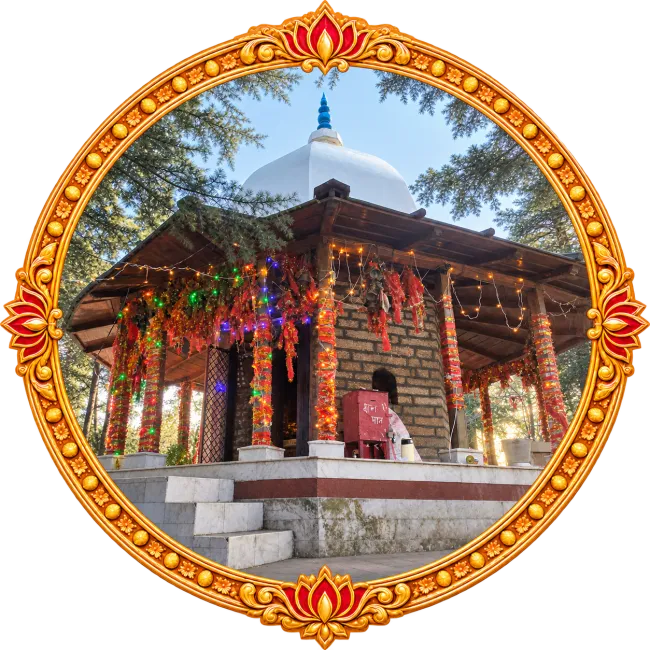
Mukteshwar Mahadev Temple
Visit Mukteshwar Mahadev Temple in Uttarakhand, a hilltop shrine dedicated to Lord Shiva in the Kumaon region. Also known as Mukteshwar Dham, the temple stands above the surrounding settlement and offers a peaceful setting for prayer amidst forests and mountain scenery.
The name Mukteshwar is associated with Lord Shiva as the giver of liberation. The town takes its name from this sacred shrine, making the temple an important part of the area’s religious identity.
About Mukteshwar Mahadev Temple
Mukteshwar Mahadev Temple is situated in the Nainital district of Uttarakhand, approximately 51 kilometres from Nainital. The shrine occupies a rocky hilltop, with views across the surrounding mountain landscape.
Lord Shiva is worshipped here in the form of a Shivling. Devotees visit to offer prayers, perform devotional worship and spend time in quiet reflection.
The surrounding region is known for fruit orchards, forests and Himalayan views. A visit to the temple can be combined with a walk through Mukteshwar and an excursion to the nearby Chauli Ki Jali rock formation.
History of Mukteshwar Mahadev Temple
Mukteshwar Mahadev Temple is traditionally regarded as approximately 350 years old. Its religious importance is closely connected with the development of Mukteshwar’s identity as a place of Shiva worship.
The shrine predates the town’s later reputation as a centre for veterinary research and mountain tourism. Over generations, it has continued to attract local worshippers and pilgrims travelling through Kumaon.
The temple’s history is preserved through its continuing worship, local traditions and association with Lord Shiva as Mukteshwar—the Lord who grants liberation.
Meaning of the Name Mukteshwar
The name Mukteshwar combines the ideas of Mukti, meaning liberation, and Ishwar, meaning Lord or God.
In Hindu philosophy, liberation refers to freedom from spiritual ignorance and the cycle of birth and death. Worship of Shiva as Mukteshwar directs attention towards this deeper purpose of devotional life.
For devotees, the temple offers an opportunity to reflect on attachment, responsibility and inner peace. The quiet mountain setting supports an unhurried visit centred on prayer.
Legend Associated with Mukteshwar Mahadev
A local legend connects the shrine with Lord Shiva granting liberation to a demon after defeating him.
The story expresses both Shiva’s power and his compassion. Although he destroys harmful forces, he is also revered as a deity who grants spiritual release.
This legend is associated with the name Mukteshwar and the belief that sincere devotion to Shiva can guide a person towards liberation. It belongs to the sacred traditions of the site rather than a dated account of the temple’s construction.
Religious Significance of Mukteshwar Mahadev Temple
The temple is a place of Shaiva worship, where devotees honour Lord Shiva as Mahadev and Mukteshwar.
Visitors offer prayers for:
Peace and harmony within the family
Courage during difficult circumstances
Wisdom and clarity in decision-making
Freedom from fear and excessive attachment
Spiritual discipline
Gratitude for blessings received
The setting also encourages reflection on nature. Respecting the forest, keeping the pathways clean and avoiding disturbance to others are practical ways to approach the pilgrimage with care.
Main Deity of the Temple
The principal object of worship is a white marble Shivling.
The Shivling represents Lord Shiva and forms the centre of the temple’s devotional practices. Devotees approach the shrine for darshan and offerings associated with Shiva worship.
Its simple form directs attention towards prayer and the spiritual meaning of the deity.
Architecture and Temple Setting
Mukteshwar Mahadev Temple is a compact hilltop shrine. Its character comes from the relationship between the worship space, rocky terrain and surrounding mountain landscape.
The approach includes an uphill walk and steps. Visitors should allow time for the ascent, especially when travelling with children or elderly family members.
The main sanctum houses the Shivling, while the surrounding area provides space to pause before or after darshan. Unlike a large urban temple complex, the visit involves both worship and movement through a mountain setting.
Nearby viewpoints offer wide views when the weather is clear. Cloud and mist can change visibility quickly.
Mukteshwar Mahadev Temple Timings
The commonly published daily visiting hours are 5:00 AM–7:30 PM. Seasonal arrangements may differ.
These hours describe general visiting access rather than a fixed timetable for individual rituals.
Suggested morning darshan: 7:00 AM–9:00 AM.
Suggested afternoon visit: 3:00 PM–5:00 PM, allowing time for the approach and nearby views before darkness.
These are suggested visiting periods, not separate temple sessions.
Morning Puja and Worship
Morning is a suitable time for Shiva darshan and quiet prayer. Devotees may offer water, flowers and bel leaves through the temple’s worship arrangements.
A simple devotional practice is the recitation of:
Om Namah Shivaya
Keep offerings ready before approaching the shrine and avoid occupying the darshan area for longer than necessary when others are waiting.
Carry a warm layer, as the hilltop can remain cold in the early hours.
Evening Puja and Aarti
Evening worship offers an opportunity to end the day with prayers to Lord Shiva. Devotees attending a ceremony should keep the shrine’s entrance clear and follow the order of worship.
Those combining their visit with sightseeing should leave enough daylight for the return walk. The temple approach and the rocky viewpoints require particular care after rain or in low light.
Offerings at Mukteshwar Mahadev Temple
Traditional offerings associated with Shiva worship include:
Water for Jalabhishek
Bel leaves
Fresh flowers
Fruit
Sweets
Incense and lamps in designated areas
Offerings should be presented according to the temple’s arrangements. Avoid pouring substances on surfaces outside the designated worship area.
Simple prayer and mantra recitation are also meaningful forms of devotion. Elaborate offerings are not necessary for a respectful visit.
Important Religious Occasions
Mahashivratri
Mahashivratri is a principal occasion for worshipping Lord Shiva. Devotees observe the festival through prayer, fasting and remembrance of the deity.
Shravan Month
Shravan holds special importance in Shiva worship. Devotees traditionally offer water and bel leaves, particularly on Mondays.
Mondays and Pradosh
Mondays are associated with Lord Shiva, while Pradosh is observed by devotees through evening worship. These occasions provide opportunities for focused prayer and spiritual reflection.
Best Time to Visit
March to June is suitable for combining temple darshan with walks and sightseeing in Mukteshwar.
October and November can offer comfortable daytime conditions and clear mountain views, although visibility depends on the weather.
During winter, warm clothing is essential. Snow or ice can make the approach slippery. During the monsoon, allow extra travel time and take care on wet steps and mountain roads.
How to Reach Mukteshwar Mahadev Temple
By Air
Pantnagar Airport is approximately 110 kilometres from Mukteshwar. Continue by road towards the hill town.
By Train
Kathgodam Railway Station is approximately 74 kilometres from Mukteshwar. The onward journey is by road.
By Road
Mukteshwar is approximately 51 kilometres from Nainital and 40 kilometres from Bhowali.
A common approach from the plains passes through Haldwani, Kathgodam and Bhowali before continuing towards Mukteshwar.
Final Approach
Vehicles reach the temple approach area, followed by a walk uphill. Wear comfortable shoes and take the steps at a manageable pace.
Nearby Places to Visit
Chauli Ki Jali
A rocky outcrop close to the temple, known for its valley views. Remain within safe visitor areas and avoid approaching exposed cliff edges.
Bhalu Gaad Waterfall
A separate nature excursion involving a walk. Keep additional time for the journey and avoid entering fast-flowing water.
Mukteshwar Viewpoints
The town’s viewpoints offer opportunities to enjoy the surrounding hills and distant Himalayan peaks in clear weather.
Bhimtal
Bhimtal can be included as a separate road excursion or a stop on a wider Kumaon itinerary.
Important Visitor Guidelines
Wear modest clothing suitable for worship.
Remove footwear at the designated point.
Walk carefully on the uphill approach.
Keep mobile phones silent inside the shrine.
Respect photography restrictions.
Present offerings only in permitted areas.
Carry drinking water and warm clothing.
Keep children close near steps and viewpoints.
Avoid littering the temple grounds or forest.
Plan the return walk before darkness.
Conclusion
Mukteshwar Mahadev Temple brings together devotion to Lord Shiva, the spiritual meaning of liberation and the mountain setting of Kumaon.
Its longstanding worship tradition and hilltop location make it a meaningful stop for pilgrims visiting Mukteshwar. A visit offers time for darshan, prayer and reflection amidst the forests and hills of Uttarakhand.