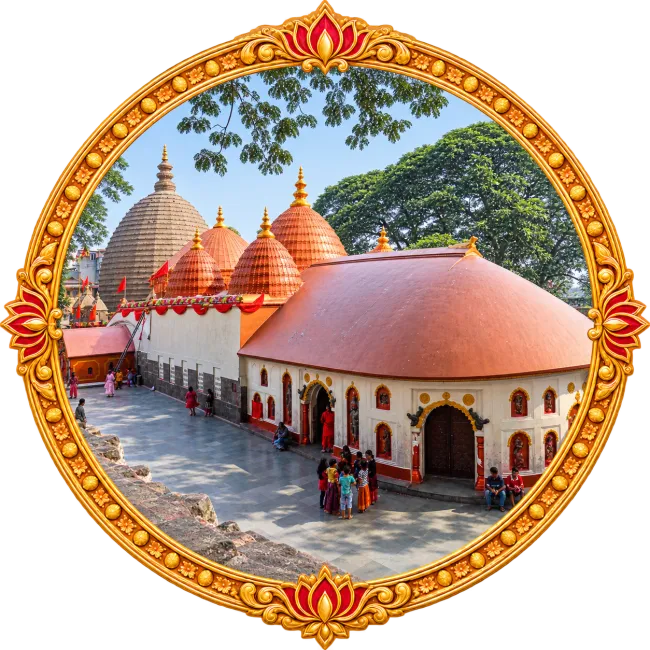
Matangi Temple, Guwahati, Assam
Visit the sacred Matangi shrine at Kamakhya Temple on Nilachal Hill in Guwahati, Assam. Dedicated to Goddess Matangi, the ninth of the ten Mahavidyas, this place of worship is associated with knowledge, speech, music and artistic expression.
The Matangi shrine is located inside the main Kamakhya Temple’s sanctum. Devotees worship her as part of their visit to this sacred Shakti centre, where the presence of different forms of the Divine Mother gives the pilgrimage its distinctive religious character.
About Matangi Temple
Goddess Matangi is worshipped within the Garbhagriha of Kamakhya Temple, alongside the sacred presence of Goddess Kamala. Their seats are situated towards the eastern side of the principal Yoni Peetha.
Matangi is revered as Tantric Saraswati, expressing the Divine Mother’s power through learning and communication. Her worship connects spiritual understanding with the ability to express thoughts clearly and use knowledge meaningfully.
For pilgrims exploring the Mahavidya shrines of Nilachal Hill, Matangi darshan forms part of the main Kamakhya sanctum visit.
History of the Matangi Shrine
The history of Matangi worship at this location belongs to the wider religious history of Kamakhya. Sacred literature, including the Kalika Purana and Yogini Tantra, connects Kamakhya with the worship of the Divine Mother and the Shakta traditions of Assam.
The present Kamakhya temple was rebuilt in 1565 under the patronage of Koch King Naranarayan, incorporating material from an earlier stone temple. This reconstruction is an important milestone in the history of the building that houses the Matangi shrine.
Later royal patronage contributed further additions to the complex. The Natmandir, associated with ceremonial performances, was added in 1759 during the reign of Ahom King Rajeswar Singha. These dates relate to the surrounding Kamakhya structure rather than a separately constructed Matangi temple.
Religious Significance of Goddess Matangi
Matangi is the ninth Mahavidya and is associated with the spoken word, understanding and creative expression. Her worship gives spiritual significance to the ways people think, listen, learn and communicate.
Devotees seek her blessings for:
Clarity of thought and expression.
Progress in learning.
Inspiration in music and the arts.
Confidence in speaking.
Disciplined use of knowledge.
Deeper spiritual understanding.
Her association with speech also invites reflection on responsibility. Words can teach, comfort and encourage others, making thoughtful communication an important devotional ideal.
In this tradition, knowledge becomes meaningful when it is accompanied by understanding and careful expression.
Form of Worship in the Sanctum
At Kamakhya, Matangi is represented through a sacred stone form. The worship follows the Peetha tradition, in which the divine presence is honoured at a sacred seat.
Flowers, cloth and other offerings can cover these sacred forms. Darshan therefore centres on reverence for the consecrated place rather than viewing an elaborate sculpted figure.
The location within the main sanctum connects Matangi worship directly with the central pilgrimage experience at Kamakhya.
Architecture and Temple Setting
The architectural setting of the Matangi shrine is the main Kamakhya temple. Its distinctive Nilachal style combines elements of traditional North Indian temple architecture with a rounded, dome-like superstructure.
The complex contains several connected spaces, including:
Garbhagriha: The sacred inner sanctum.
Antarala: The passage connecting inner sections.
Jagamohan: The principal chamber.
Bhogmandir: The space associated with ritual offerings.
Natmandir: The ceremonial hall.
The different roof forms reflect successive stages of construction and patronage. For visitors seeking Matangi darshan, the most important part of this arrangement is the inner sanctum containing her sacred seat.
Matangi Temple Timings
Since the Matangi shrine is inside Kamakhya’s Garbhagriha, access follows the main temple’s darshan schedule.
The 7:30 PM Aarti is part of Kamakhya’s worship programme; it does not indicate that the inner sanctum reopens for Matangi darshan. Festival arrangements can alter the regular schedule.
Morning Puja and Darshan
The main temple’s morning rituals begin with the ceremonial bathing of the sacred Peetha at 5:30 AM, followed by Nitya Puja at 6:00 AM.
Public entry begins at 8:00 AM. Devotees seeking Matangi darshan enter through the main temple’s darshan arrangements.
Keep offerings ready and follow the movement of the queue. The inner worship area is a shared sacred space, so avoid stopping in a way that prevents others from receiving darshan.
Evening Puja and Aarti
Kamakhya’s evening Aarti takes place at 7:30 PM.
For Matangi darshan inside the sanctum, the relevant afternoon visiting period is 2:30 PM to 5:15 PM. Plan the sanctum visit within this period rather than relying on the later Aarti time.
Offerings to Goddess Matangi
Sweetened rice pudding is traditionally associated with offerings to Goddess Matangi. Her worship also takes place within the established offering practices of the Kamakhya sanctum.
Present offerings only in the designated area. Keep food covered and avoid placing loose packaging, flowers or other materials in passages used by devotees.
A devotional visit can include a simple prayer for wisdom, thoughtful speech and the ability to use learning for a constructive purpose.
Festivals and Important Religious Occasions
Ambubachi
Ambubachi is a major religious observance at Kamakhya, associated with the fertility of the earth and the goddess’s creative power.
The main temple closes for the prescribed observance and reopens after the concluding rituals. Because Matangi’s sacred seat lies within the main sanctum, this closure also affects access to her shrine.
Large numbers of pilgrims gather on Nilachal Hill during the reopening period.
Durga Puja
Durga Puja holds an important place in Kamakhya’s annual worship calendar. The temple follows its traditional extended observance, with special worship of the Divine Mother.
During these ceremonies, the regular daily arrangements may change. The festival places Matangi worship within the broader celebration of Shakti at Kamakhya.
How to Reach Matangi Temple
By Air
Lokpriya Gopinath Bordoloi International Airport serves Guwahati. Continue by road towards Kamakhya Temple on Nilachal Hill.
By Train
Kamakhya Railway Station is the nearest railway access point for the temple area. Guwahati Railway Station is another major option for visitors arriving from other cities.
Taxis and local transport provide onward connections towards Nilachal Hill.
By Road
Guwahati has road connections with other parts of Assam and neighbouring states. From the city, travel towards the Kamakhya temple area by taxi or available local transport.
Reaching the Matangi Shrine
After arriving at Kamakhya, use the main temple’s darshan route to enter the sanctum. Matangi darshan is part of this inner-temple visit.
Nearby Temples to Visit
A visit can also include other Mahavidya shrines around Nilachal Hill:
Tara Temple
Kali Temple
Bhairavi Temple
Chinnamasta Temple
Dhumavati Temple
Bagalamukhi Temple
Bhuvaneshwari Temple
Goddess Kamala’s sacred seat is also inside the main Kamakhya sanctum. The surrounding shrines occupy different parts of the hill, so visiting them involves additional walking and, for some locations, road travel.
Important Visitor Guidelines
Wear modest, comfortable clothing.
Remove footwear at the designated location.
Follow the main temple’s darshan queue.
Walk carefully through the inner passages.
Keep your phone silent during worship.
Respect photography restrictions.
Carry only essential belongings.
Place offerings where directed.
Allow space for elderly visitors and children.
Avoid obstructing the sanctum entrance.
Keep the temple surroundings clean.
Plan additional time during major religious occasions.
Conclusion
The Matangi shrine at Kamakhya connects devotion with knowledge, speech and artistic expression. Its location within the main sanctum gives it an important place in the Mahavidya traditions of Nilachal Hill.
For devotees, the visit offers an opportunity to pray for understanding, thoughtful communication and the wisdom to use their abilities well.