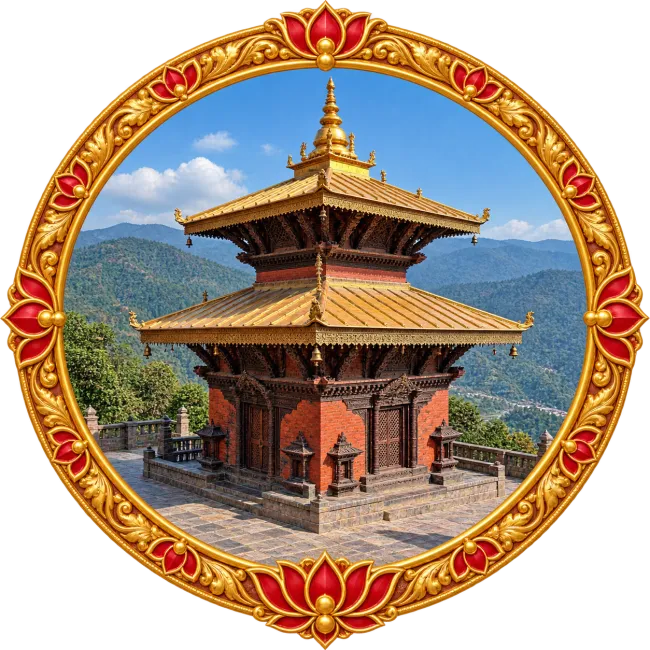
Manakamana Temple, Gorkha, Nepal
Visit Manakamana Temple in Gorkha, one of Nepal’s most revered Shakti temples dedicated to Goddess Bhagwati. Situated on a hilltop surrounded by the beautiful Himalayan landscape, the temple is famous as a sacred place where sincere wishes are believed to be fulfilled.
Devotees from Nepal, India and other countries visit Manakamana Temple to pray for health, marriage, children, family prosperity, professional success and protection from difficulties. The temple can be reached through the Manakamana Cable Car from Kurintar, making the journey both convenient and memorable.
About Manakamana Temple
Manakamana Temple is located in Gorkha district of Gandaki Province, Nepal. It stands on a hill at an elevation of approximately 1,300 metres, overlooking the Trishuli and Marsyangdi river valleys.
The name Manakamana is formed from two words:
Mana means heart or mind.
Kamana means wish or desire.
Therefore, Manakamana means the goddess who fulfils the sincere wishes of the heart.
The presiding deity is Goddess Bhagwati, a powerful manifestation of Adi Shakti. She is also associated with Goddess Durga and Goddess Parvati. Devotees believe that wishes made with a pure heart and complete faith are fulfilled by the goddess.
The temple is particularly crowded on Tuesdays, Saturdays, during Navratri and throughout the Dashain festival. It is one of the most visited pilgrimage destinations in Nepal.
History of Manakamana Temple
The origin of Manakamana Temple is associated with the reign of King Ram Shah of Gorkha during the 17th century. According to temple tradition, Queen Champawati, the wife of King Ram Shah, possessed divine powers and was regarded as a manifestation of Goddess Bhagwati.
Only her spiritual devotee and adviser, Lakhan Thapa, knew about her divine identity. One day, King Ram Shah saw the queen in the form of a goddess and Lakhan Thapa in the form of a lion. Soon after witnessing this divine sight, the king died.
Before leaving her physical body, the queen told Lakhan Thapa that she would reappear in another form and asked him to establish her worship.
Several months later, a farmer was ploughing a field when his plough struck a sacred stone. According to the legend, blood and milk began flowing from the stone. When Lakhan Thapa learned about the miraculous event, he reached the location and performed Tantric rituals.
The sacred flow stopped, and Lakhan Thapa recognized the stone as the divine manifestation of Queen Champawati in the form of Goddess Manakamana. He established a shrine at the site and began worshipping the goddess.
The temple has been renovated several times. It suffered damage during earthquakes, including the major earthquake of 2015, after which it was reconstructed while preserving its traditional pagoda-style design.
Religious Significance of Manakamana Temple
Manakamana Temple is regarded as a wish-fulfilling Shakti Peeth. Devotees believe that Goddess Manakamana listens to prayers made with sincerity, discipline and faith.
Many devotees make a promise before the goddess and return to offer thanks after their wish is fulfilled. Families visit the temple before beginning an important journey, marriage, business, new job or major life event.
Devotees visit Manakamana Temple for:
Fulfilment of sincere wishes
Blessings for marriage
Birth and well-being of children
Good health and recovery from illness
Family happiness and prosperity
Success in education and employment
Growth in business
Protection from enemies and negative energies
Courage during difficult situations
Spiritual peace and strength
The temple also has historical significance because it is located in Gorkha, the region from where King Prithvi Narayan Shah began the unification of modern Nepal. The Shah rulers were devoted to Goddess Manakamana and regularly sought her blessings.
Main Deity of Manakamana Temple
Goddess Manakamana is worshipped inside the sanctum in the form of a sacred stone rather than a conventional human-shaped idol.
The sacred stone represents the divine power of Goddess Bhagwati. Four other sacred stones placed near the principal deity represent:
Lord Bhairav
Lord Ganesha
Goddess Kumari
Betaal
The presence of these deities symbolizes divine protection surrounding Goddess Manakamana.
Devotees offer red flowers, vermilion, clothes, fruits, incense and oil lamps to the goddess. The sanctum has a powerful and traditional atmosphere, and worship is performed according to customs preserved by generations of priests.
Architecture of Manakamana Temple
Manakamana Temple is built in the traditional Nepalese pagoda style. The main shrine stands within a spacious stone-paved courtyard on the hilltop.
Important architectural features include:
Traditional two-tiered pagoda roof
Decorated wooden supports and beams
Metal-covered roof elements
Sacred bells within the courtyard
Carved entrance doors
Stone-paved pathways
Shrines dedicated to associated deities
Panoramic views of the Himalayan mountains
Traditional shops and Dharamshalas nearby
Manakamana Temple Timings
The main temple opens before the cable-car service begins. Devotees staying near the hilltop can attend the early morning worship.
The official local visitor information states that the temple opens at 6:00 AM, Nitya Puja is performed at 8:00 AM and evening Aarti is conducted after sunset.
Morning Puja and Aarti
The temple opens at 6:00 AM. Morning Aarti is performed at 7:00 AM, followed by preparations for the principal daily worship.
Nitya Puja begins at 8:00 AM. During this ritual, the priest worships Goddess Manakamana and the associated deities with traditional offerings.
The offerings used during Nitya Puja may include:
Flowers
Red vermilion
Rice
Fruits
Incense
Oil lamps
Red cloth
Sacred threads
Betel nuts
Coins and monetary offerings
Public darshan proceeds after the principal worship. Visitors arriving by the first cable cars usually reach the temple after 8:00 AM.
Evening Puja and Aarti
Evening Aarti is performed after sunset. The priest lights traditional lamps and offers them before Goddess Manakamana while prayers and sacred mantras are recited.
Because the time of sunset changes between summer and winter, the exact Aarti time changes seasonally. Visitors who wish to attend evening Aarti should arrange accommodation near the temple instead of depending on the final downhill cable-car service.
Manakamana Cable Car Timings
The Manakamana Cable Car connects Kurintar with the temple hilltop. The ride covers approximately 2.8 kilometres and takes about 10 minutes in one direction.
Bali Puja at Manakamana Temple
Manakamana Temple follows ancient Shakti worship traditions. Some devotees perform Bali Puja after the completion of Nitya Puja.
Animal sacrifice is part of the temple’s traditional practice, but it is a personal religious choice and is not compulsory. Devotees who do not wish to participate may offer symbolic or vegetarian items such as:
Coconut
Pumpkin
Fruits
Flowers
Red cloth
Sweets
Incense
Oil lamps
Bali Puja is not performed on:
Ekadashi
Amavasya
Maha Shivaratri
If a restricted lunar date continues for two calendar days, the local temple tradition determines on which day Bali Puja may resume.
Major Festivals Celebrated
Dashain
Dashain is the most important festival celebrated at Manakamana Temple. The goddess is worshipped as a powerful form of Durga, and thousands of devotees visit during the festival.
Special pujas, offerings and traditional rituals are conducted throughout the celebration.
Chaitra Navratri
During Chaitra Navratri, devotees observe fasting and worship the nine forms of Goddess Durga. The temple receives large numbers of pilgrims.
Sharadiya Navratri
Sharadiya Navratri is celebrated before Vijayadashami. The temple is beautifully decorated, and special worship is performed each day.
Vijayadashami
Devotees visit the temple on Vijayadashami to receive blessings for victory, success and protection.
Nag Panchami
Special prayers are offered for protection from snake-related fears and negative influences.
Tuesdays and Saturdays
Tuesday and Saturday are regarded as particularly auspicious for Goddess Manakamana. These are also the busiest regular days for darshan.
Offerings and Prasad
Common offerings made to Goddess Manakamana include:
Red flowers and garlands
Vermilion
Red chunari
Incense sticks
Oil or ghee lamps
Coconut
Fruits and sweets
Rice and grains
Betel nuts
Sacred threads
Jewellery or decorative items
Monetary donations
Devotees may receive flowers, vermilion, fruits and sweets as prasad after worship.
Puja materials are available in the market near the cable-car stations and temple entrance. Visitors should use authorized shops and counters.
Entry Fee and Visit Duration
There is no entry fee for regular darshan at Manakamana Temple. Visitors only need to pay for the cable-car ticket, transportation, special pujas or offerings.
A regular temple visit requires three to four hours, including:
Cable-car journey
Walking from the upper station
Waiting in the darshan queue
Temple worship
Exploring the surroundings
Return cable-car journey
On Tuesdays, Saturdays, Navratri and Dashain, darshan may require several hours because of long queues.
Visitor Guidelines
Wear modest and respectful clothing.
Remove footwear before entering the temple.
Keep mobile phones silent near the sanctum.
Do not photograph the principal deity without permission.
Use the designated queue for darshan.
Keep cable-car tickets safely until the return journey.
Do not carry dangerous or prohibited items in the cable car.
Use authorized counters for puja and donations.
Keep the temple courtyard and hill clean.
Do not disturb devotees performing rituals.
Follow the instructions of priests and security personnel.
Elderly visitors should avoid steep paths without assistance.
Carry a light jacket because hilltop weather can change quickly.
Best Time to Visit Manakamana Temple
The best months to visit are:
February to May
September to November
The weather is generally pleasant during these periods, and clear days offer beautiful Himalayan views.
The monsoon season can bring heavy rain, clouds and slippery pathways. Winter mornings can be cold, but the temple remains accessible.
For shorter queues, visit on a weekday and reach Kurintar before the cable-car gate opens. Tuesdays, Saturdays and major festival days experience the heaviest crowds.
How to Reach Manakamana Temple
By Cable Car
The easiest route is to reach the cable-car base station at Kurintar on the Prithvi Highway. The cable car takes visitors directly to the temple hilltop in approximately 10 minutes.
A short walk from the upper station leads to the main temple.
From Kathmandu
Kurintar is approximately 105 kilometres from Kathmandu. Buses, tourist coaches and private taxis travelling towards Pokhara or Chitwan can stop near the Manakamana Cable Car station.
The road journey normally requires three to four hours, depending on traffic and road conditions.
From Pokhara
Visitors travelling from Pokhara can follow the Prithvi Highway towards Kathmandu and get down at Kurintar. The distance is approximately 95 kilometres.
By Air
The nearest practical airports are:
Bharatpur Airport
Pokhara International Airport
Tribhuvan International Airport, Kathmandu
Visitors must continue by road from the airport to the Kurintar cable-car station.
By Trek
Traditional walking routes lead to the temple from settlements near the Kathmandu–Pokhara highway. The uphill trek requires several hours and is suitable for physically fit pilgrims.
From India
Indian visitors can enter Nepal through border points such as Sunauli–Bhairahawa or Raxaul–Birgunj. They can then travel towards Narayanghat, Mugling and Kurintar.
Indian citizens should carry a valid passport or voter identity card and confirm transportation requirements before travelling.
Nearby Places to Visit
Gorkha Durbar
Gorakhnath Cave
Gorakhkali Temple
Bakreshwar Mahadev Temple
Siddha Gufa
Bandipur
Trishuli River
Marsyangdi River
Kurintar
Mugling
Manaslu viewing points
Conclusion
Manakamana Temple is a powerful centre of Shakti worship and one of the most important pilgrimage destinations in Nepal. Its connection with King Ram Shah, Queen Champawati and the saint Lakhan Thapa gives the temple a unique spiritual and historical identity.
The sacred stone form of Goddess Manakamana, traditional Magar priesthood, hilltop location and beautiful cable-car journey create a memorable pilgrimage experience. Devotees believe that prayers made here with a pure heart, honest intention and complete faith receive the blessings of the wish-fulfilling goddess.