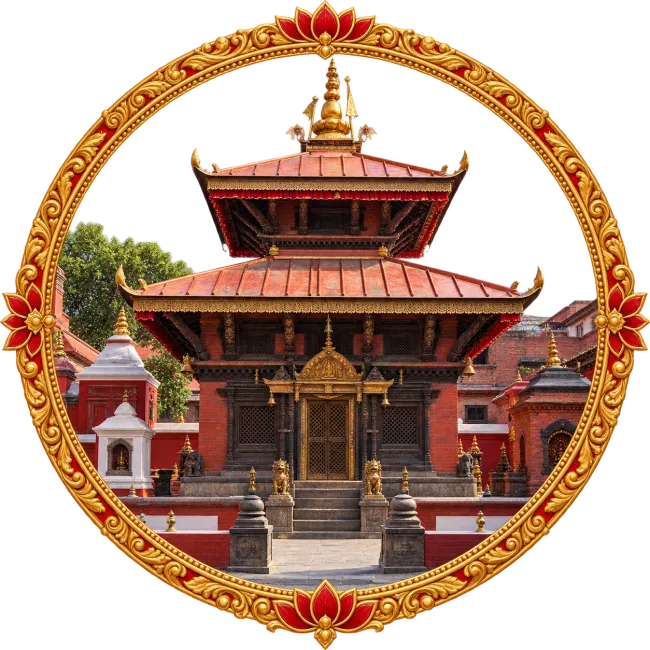
Maitidevi Temple, Kathmandu, Nepal
Visit Maitidevi Temple in Kathmandu, one of the city’s oldest and most revered temples dedicated to the Divine Mother. Located in the Maitidevi neighbourhood, the temple is worshipped as an important centre of Shakti and Tantric traditions.
Goddess Maitidevi is regarded as a protective mother who watches over Kathmandu, its families and children. Devotees visit the temple to pray for marriage, family prosperity, children, protection from negative influences and fulfilment of sincere wishes. Tuesdays, Saturdays, Ashtami dates and the Navratri period are considered especially auspicious.
About Maitidevi Temple
Maitidevi Temple is situated in the Maitidevi area of central Kathmandu. The neighbourhood itself takes its name from the presiding goddess.
The deity is worshipped as a manifestation of Adi Shakti, Durga and Bhagwati. In the traditional Newar belief system, she is also honoured as an Ajima or guardian mother goddess.
The word Maiti refers to a married woman’s maternal home in Nepali culture. Because of this association, the goddess is regarded as a loving daughter as well as a protective mother.
Married women visit the temple to pray for their parental and marital families. Unmarried devotees seek blessings for a suitable marriage, while parents pray for the health and protection of their children.
History of Maitidevi Temple
The religious origin of Maitidevi Temple is associated with the Licchavi period of Nepalese history. Worship at the site is generally traced to the early medieval period, when Kathmandu’s rulers and Tantric practitioners established guardian goddesses around important settlements.
Local religious tradition connects the establishment of Maitidevi with the Licchavi rulers and spiritual teachers active in the Kathmandu Valley. The goddess was worshipped as a protective divine force responsible for guarding residents from disease, conflict and negative influences.
During the Malla period, Shakti and Tantric worship became closely connected with Kathmandu’s royal and community traditions. The Maitidevi shrine was expanded, and formal festivals were organized by local residents.
The temple was repaired and reconstructed several times during the Shah and Rana periods. Its current complex contains architectural elements and worship traditions developed across different historical periods.
After earthquakes affected parts of Kathmandu, local communities and temple organizations carried out further repairs while maintaining its traditional religious identity.
Cultural Meaning of Maitidevi
The word Maiti holds deep cultural importance in Nepal. It refers to the parental home of a married woman—the place where she was born and raised.
Goddess Maitidevi is therefore treated as a daughter returning to her maternal home and as a mother protecting her extended family.
This relationship makes the temple particularly important for women. Devotees pray for:
- Harmony between parental and marital families
- Protection of daughters
- Happy married life
- Suitable marriage partners
- Safe pregnancy
- Health of children
- Family unity
- Emotional strength
The goddess represents the continuing bond between a woman and her maternal family even after marriage.
Mythology of Goddess Maitidevi
According to local tradition, divine feminine energy manifested at this location to protect the residents of Kathmandu.
The goddess appeared as a powerful mother who combined the qualities of Durga, Kali and Bhagwati. She protected devotees from disease, harmful forces and conflict.
Another tradition connects Maitidevi with the ancient Matrika goddesses. The Matrikas are powerful mother deities created to assist Goddess Durga in destroying demons and restoring cosmic balance.
After the demons were defeated, the mother goddesses were established at different places to protect cities, villages and sacred routes.
Maitidevi became one of the protective mother figures associated with Kathmandu. Devotees regard her fierce appearance as a warning to evil forces and her compassionate nature as a blessing for sincere worshippers.
Religious Significance of Maitidevi Temple
Maitidevi Temple is an important Shakti shrine where the goddess is worshipped as a protector of women, children and families.
Devotees believe that worshipping Maitidevi helps remove obstacles connected with marriage, health and family relationships.
People visit the temple for:
- Family peace and prosperity
- Blessings for marriage
- Safe pregnancy and childbirth
- Health and protection of children
- Recovery from illness
- Protection from negative energies
- Courage and confidence
- Success in education and employment
- Removal of obstacles
- Growth in business
- Relief from fear and anxiety
- Fulfilment of sincere wishes
Many families visit the temple before weddings, naming ceremonies and other important occasions.
Main Deity of Maitidevi Temple
The principal deity is Goddess Maitidevi, worshipped as a manifestation of Adi Shakti.
The sacred representation of the goddess is installed within the main sanctum and decorated with:
- Red cloth
- Vermilion
- Red flowers
- Marigold garlands
- Traditional jewellery
- Sacred ornaments
- Metal decorations
- Oil lamps
Red is the principal colour used in worship because it symbolizes fertility, power, courage and divine energy.
The temple complex also contains smaller shrines and images associated with:
- Lord Shiva
- Bhairav
- Lord Ganesha
- Other mother goddesses
- Nag Devta
Devotees generally worship Lord Ganesha before entering the main shrine.
Maitidevi as an Ajima Goddess
In Newar religious culture, Ajima goddesses are treated as ancient grandmothers and protectors of the community.
Maitidevi is worshipped as an Ajima who protects:
- Pregnant women
- Newborn children
- Families
- Traditional neighbourhoods
- Travellers
- Community festivals
- Sacred boundaries
Ajima worship combines Hindu Shakti traditions with local Newar beliefs. The goddess is approached as a close family guardian rather than a distant divine figure.
Architecture of Maitidevi Temple
Maitidevi Temple reflects traditional Nepalese pagoda architecture. The main shrine stands within a courtyard surrounded by smaller religious structures.
Important architectural features include:
- Traditional pagoda-style shrine
- Tiered roof
- Decorated wooden supports
- Carved doors and windows
- Metal roof ornaments
- Sacred bells
- Oil-lamp stands
- Stone-paved courtyard
- Tridents and Shakti symbols
- Smaller shrines dedicated to associated deities
- Ceremonial areas for special worship
The temple is located within a busy urban neighbourhood, but the central courtyard provides a devotional environment for prayer and meditation.
Maitidevi Temple Timings
The temple may follow extended timings during Navratri, Dashain, Chaite Dashain, Teej and Kali Puja.
Tuesdays and Saturdays experience the highest number of regular devotees.
Morning Puja and Aarti
The temple opens at 5:00 AM. Priests clean the sanctum, light oil lamps and prepare the goddess for worship.
Morning Puja begins at 5:30 AM, followed by Aarti at 6:00 AM.
The goddess is worshipped with:
- Red flowers
- Vermilion
- Sacred water
- Incense
- Oil lamps
- Rice and grains
- Fruits and sweets
- Red cloth
- Shakti mantras
The period between 6:00 AM and 9:00 AM is the best time for peaceful darshan.
Special Puja
Special pujas are generally arranged between 6:30 AM and 11:00 AM.
Devotees may arrange a special ceremony for:
- Marriage
- Safe pregnancy
- Health of children
- Family harmony
- Recovery from illness
- Business growth
- Success in employment
- Removal of negative influences
- Fulfilment of wishes
A special Maitidevi Puja may include Sankalp, Kalash worship, Kumkum Archana, Durga Mantra recitation, flower offerings, lamps and Bhog.
Special ceremonies should be arranged through authorized temple priests.
Bhog and Afternoon Darshan
Bhog is offered to Goddess Maitidevi at 12:00 PM. It may contain rice, fruits, sweets and traditional vegetarian preparations.
Afternoon darshan continues after the Bhog ritual. The temple generally remains less crowded during the early afternoon on regular weekdays.
Evening Puja and Aarti
Evening Puja begins at 6:30 PM, followed by Aarti at 7:00 PM.
Oil lamps are offered before the goddess while devotees recite prayers and sing Durga Bhajans. Temple bells are rung during the ceremony.
Visitors should reach before 6:30 PM to attend the complete evening worship. The temple closes at 8:30 PM.
Bali Puja at Maitidevi Temple
Maitidevi Temple follows traditional Shakti worship customs. Bali Puja may be performed on Tuesdays, Saturdays and selected festival days.
Some devotees traditionally offer goats, roosters or ducks after the fulfilment of a religious promise. Such rituals are conducted only in designated areas.
Participation in animal sacrifice is not compulsory. Devotees may make vegetarian or symbolic offerings such as:
- Coconut
- Pumpkin
- Fruits
- Sweets
- Red flowers
- Red cloth
- Vermilion
- Incense
- Oil lamps
Visitors who do not wish to witness Bali Puja should visit on Monday, Wednesday, Thursday or Friday.
Major Festivals Celebrated
Dashain
Dashain is the most important festival celebrated at Maitidevi Temple. The goddess is worshipped as a manifestation of Durga.
Special rituals take place during:
- Ghatasthapana
- Phulpati
- Maha Ashtami
- Maha Navami
- Vijayadashami
Sharadiya Navratri
The nine forms of Goddess Durga are worshipped throughout Navratri. Devotees observe fasting and offer lamps, flowers and red cloth.
Chaitra Navratri
Special Puja, Durga recitation and devotional programmes are organized during Chaitra Navratri.
Chaite Dashain
The goddess is worshipped for courage, protection and victory over difficulties.
Teej
Women visit Maitidevi during Teej to pray for marital happiness and family well-being.
Kali Puja
The temple is illuminated with lamps, and special worship is performed for the fierce form of the Divine Mother.
Ashtami
Every Ashtami is considered auspicious for Shakti worship. The temple receives additional devotees on these dates.
Tuesdays and Saturdays
Tuesday and Saturday are the principal weekly worship days at the temple.
Offerings and Prasad
Common offerings made to Goddess Maitidevi include:
- Red hibiscus flowers
- Marigold garlands
- Red chunari
- Vermilion
- Bangles
- Cosmetic items
- Coconut
- Fruits and sweets
- Rice and grains
- Incense sticks
- Oil or ghee lamps
- Sacred red threads
- Bells and tridents
- Monetary donations
Women often offer Shringar items while praying for marriage, pregnancy and family prosperity.
Prasad may include fruits, sweets, flowers, vermilion and blessed sacred threads.
Entry Fee and Visit Duration
There is no entry fee for regular darshan at Maitidevi Temple. Charges may apply for special Puja and ceremonial arrangements.
A regular visit requires 45–60 minutes. Visitors attending Aarti or performing a special Puja should keep one to two hours.
During Navratri and Dashain, additional time is required because of long queues.
Visitor Guidelines
- Wear modest and respectful clothing.
- Remove footwear before entering the main shrine.
- Follow the designated darshan queue.
- Keep mobile phones on silent mode.
- Ask permission before photographing the sanctum.
- Do not photograph private rituals without consent.
- Use authorized priests for special pujas.
- Do not touch the principal deity or ornaments.
- Keep the temple courtyard clean.
- Respect different forms of traditional worship.
- Avoid carrying large bags during festivals.
- Keep children and elderly devotees under supervision.
- Follow instructions from priests and temple officials.
- Take care while crossing the busy roads near the temple.
Best Time to Visit
October to March is the best period for visiting Maitidevi Temple because Kathmandu experiences pleasant weather.
For peaceful darshan, visit between 6:00 AM and 9:00 AM on a regular weekday.
Navratri and Dashain provide the most vibrant religious experience, but the temple remains heavily crowded.
How to Reach Maitidevi Temple
By Air
Tribhuvan International Airport is the nearest airport. Taxis and private vehicles are available from the airport to Maitidevi.
From Thamel
Maitidevi Temple is approximately 4 kilometres from Thamel. Visitors can use a taxi, local bus or private vehicle.
From Ratna Park
Local buses, taxis and shared vehicles operate between Ratna Park and Maitidevi.
From Pashupatinath Temple
Maitidevi Temple is located a short drive from Pashupatinath. Visitors can combine both temples in the same trip.
By Local Bus
Local buses travelling towards Dillibazar, Gaushala, Old Baneshwar and Maitidevi provide convenient access.
From India
Indian visitors can reach Kathmandu by air or enter Nepal through road-border points such as Raxaul–Birgunj and Sunauli–Bhairahawa.
Indian citizens should carry a valid passport or voter identity card and confirm transportation requirements before departure.
Nearby Places to Visit
- Pashupatinath Temple
- Guhyeshwari Temple
- Kamal Pokhari
- Sankata Temple
- Bhadrakali Temple
- Mahankal Temple
- Rani Pokhari
- Ratna Park
- Boudhanath Stupa
- Kathmandu Durbar Square
- Ason Market
- Indra Chowk
Conclusion
Maitidevi Temple is one of Kathmandu’s oldest and most respected centres of Shakti worship. Its association with the Licchavi period, Ajima guardian traditions and the cultural meaning of Maiti gives it a distinctive identity.
The goddess is worshipped as both a protective mother and a beloved daughter connected with her maternal home. This makes the temple particularly significant for women, children and families.
Morning Puja, evening Aarti and the grand celebrations of Navratri and Dashain provide devotees with a powerful spiritual experience. Worshipping Goddess Maitidevi is believed to bring protection, family harmony and the strength to overcome difficulties.