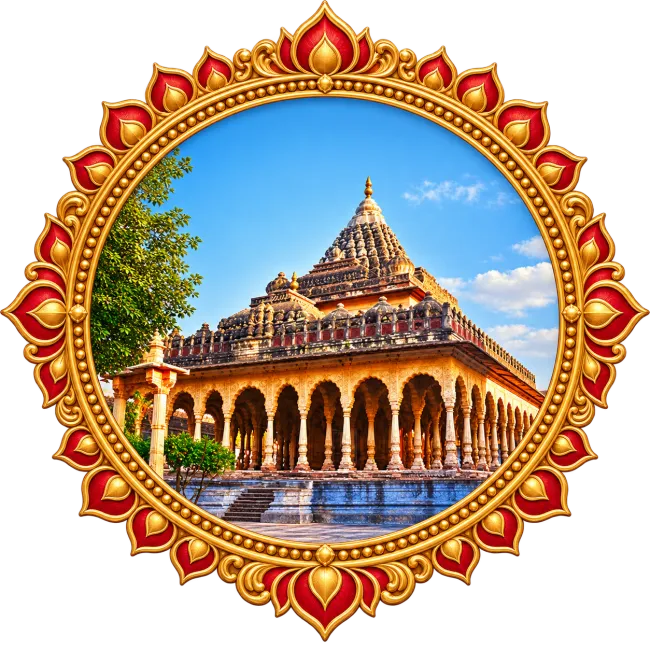
Mahamandir Temple, Jodhpur
Visit Mahamandir Temple in Jodhpur, a historic nineteenth-century shrine associated with Lord Shiva and the Nath tradition. Situated on Mandore Road, the temple is especially famous for its 84 intricately carved pillars, which display traditional motifs and figures performing different yoga postures. Built in 1812 under the patronage of Maharaja Man Singh of Marwar, Mahamandir is an important combination of spirituality, yogic philosophy, royal history and Rajasthani architecture.
About Mahamandir Temple, Jodhpur
Mahamandir Temple is situated in the Mahamandir area of Jodhpur, approximately four kilometres from the city centre. Its name literally means “Great Temple,” reflecting the size and architectural importance of the complex.
The temple is dedicated to Lord Shiva and is closely connected with the Nath Sampradaya. Lord Shiva is regarded as Adiyogi—the first yogi and the original source of yogic knowledge. This belief is represented through sculptures and carvings of different yoga postures on the temple’s pillars and walls.
The shrine is also associated with Jalandharnath or Jalandhar Nath, one of the important spiritual masters of the Nath tradition. For this reason, the temple is sometimes locally identified as Jalandhar Nath Ji Temple.
Mahamandir is recognised as an important seat of the Nath Panth in Rajasthan. It was not only developed as a place of worship but also as a centre for yoga, meditation, spiritual education and the residence of Nath ascetics.
The peaceful courtyards, stone architecture, carved pillars and religious imagery provide a calm environment away from Jodhpur’s crowded markets. Devotees visit the temple to worship Lord Shiva, while travellers come to observe its distinctive architecture and connection with India’s yogic tradition.
History of Mahamandir Temple
Mahamandir Temple was constructed in 1812 during the reign of Maharaja Man Singh of Marwar. Maharaja Man Singh ruled Jodhpur from 1803 to 1843 and had a strong association with the Nath Sampradaya.
The Maharaja received spiritual guidance and political support from Nath yogis during a challenging period of his life. After securing his position as the ruler of Marwar, he extended royal patronage to the Nath tradition and supported the construction of religious institutions connected with it.
Mahamandir was developed as one of the most prominent Nath centres in Jodhpur. The temple complex provided spaces for worship, meditation, yoga, religious discussions and the residence of saints.
The construction incorporated the architectural style of nineteenth-century Marwar. Local stone artisans created numerous carved pillars, ornamental arches, sculptures and painted surfaces. The yogic figures on the pillars emphasised the temple’s connection with Nath philosophy.
Maharaja Man Singh was also a poet and religious scholar. He composed several works related to Nath philosophy, devotion and spiritual knowledge. His patronage helped establish the Nath tradition as an influential religious institution in Jodhpur during the early nineteenth century.
Over time, the surrounding locality also became known as Mahamandir. The temple continues to be a significant religious and architectural landmark despite the growth of the modern city around it.
Who Built Mahamandir Temple?
Mahamandir Temple was built in 1812 under the patronage of Maharaja Man Singh of Marwar. His reign lasted from 1803 to 1843.
Maharaja Man Singh was deeply influenced by Nath spiritual teachers and supported the development of monasteries, temples and educational institutions connected with the tradition. Mahamandir was constructed as a major seat for Nath worship, yogic practice and religious learning.
The temple should not be confused with other Shiva shrines in Jodhpur. Its association with Maharaja Man Singh and the Nath Sampradaya gives it a distinctive identity among the city’s historic temples.
Religious Significance of Mahamandir Temple
Mahamandir Temple is dedicated to Lord Shiva, who is worshipped as Mahadev and Adiyogi. In Hindu tradition, Shiva represents transformation, meditation, self-control and liberation from worldly attachments.
The Nath Sampradaya traces its teachings through accomplished yogis such as Matsyendranath and Gorakhnath. Its spiritual practices place importance on yoga, meditation, discipline, self-realisation and control over the body and mind.
The temple’s carvings of yoga postures are not merely decorative. They represent the belief that spiritual progress can be achieved through disciplined practice, meditation and the guidance of a guru.
Devotees visit Mahamandir to pray for:
- Mental peace
- Good health
- Protection from difficulties
- Spiritual knowledge
- Self-control and concentration
- Family welfare
- Success in meditation and yoga
- Blessings of Lord Shiva and Nath saints
Mondays are considered particularly auspicious for Shiva worship. The temple receives additional devotees during the month of Shravan, Maha Shivaratri and Pradosh Vrat.
Architecture of Mahamandir Temple
Mahamandir Temple is one of Jodhpur’s notable examples of nineteenth-century religious architecture. The complex was constructed using local stone and combines traditional Marwari design with the spiritual symbolism of the Nath tradition.
Its most famous architectural feature is the collection of 84 carved pillars. These pillars support the main structure and are decorated with detailed sculptures, floral patterns, traditional motifs and figures demonstrating yoga postures.
The number 84 has symbolic importance in yogic and Hindu traditions. It is often associated with the 84 classical yoga asanas, 84 Siddhas and the journey of the soul through different forms of existence.
The temple architecture includes:
- Eighty-four carved pillars
- Main Shiva shrine
- Shrine associated with Jalandhar Nath
- Spacious pillared halls
- Courtyards for religious gatherings
- Meditation and yoga spaces
- Small subsidiary shrines
- Traditional gateways and arches
- Sculptures of yogic postures
- Floral and geometric designs
- Residential areas historically used by Nath ascetics
The pillared hall is the most visually impressive section of the complex. Each pillar contributes to the symmetry and spiritual character of the structure. The yogic figures represent discipline, balance and control over the body.
Traditional frescoes and painted surfaces can also be seen in parts of the complex. Although some sections have experienced natural ageing, the surviving details demonstrate the skill of Marwar’s stone carvers and painters.
Main Deity and Other Shrines
The temple’s principal religious tradition is centred on Lord Shiva and Jalandhar Nath. Lord Shiva is worshipped as the supreme yogi and the source of Nath spiritual teachings.
Depending on the accessible section of the complex, visitors may also see smaller shrines or images connected with:
- Lord Ganesha
- Goddess Parvati
- Lord Hanuman
- Guru Gorakhnath
- Matsyendranath
- Jalandhar Nath
- Other Nath Siddhas and spiritual teachers
Lord Ganesha is traditionally worshipped before beginning religious ceremonies. Goddess Parvati represents Shakti, while Lord Hanuman symbolises devotion, strength and service.
The presence of Nath gurus emphasises the importance of the guru-disciple tradition in yogic philosophy.
Mahamandir Temple Timings
The temple follows separate morning and evening darshan sessions. The timings below apply to regular worship access:
Visitors interested mainly in architecture and sightseeing are advised to come between 10:00 AM and 6:00 PM, when the principal public areas are generally accessible.
Darshan and aarti timings may change during Maha Shivaratri, Shravan, Pradosh Vrat and special Nath religious programmes.
Best Time for Darshan
The best time for peaceful darshan is between 6:00 AM and 8:00 AM. The temple is quieter, the temperature is comfortable and devotees can experience the calm morning atmosphere.
Those wishing to attend morning puja and aarti should reach before 5:30 AM. Evening visitors should arrive by 6:30 PM to enter comfortably before the 7:00 PM aarti.
October to March is the most comfortable period for visiting Jodhpur. The weather remains suitable for exploring the temple and nearby attractions.
During summer, morning darshan is preferable because afternoon temperatures can become extremely high. The stone courtyards and pathways may also become hot during the day.
Monday, Pradosh Vrat, Maha Shivaratri and Shravan Mondays attract more devotees. Visitors seeking a quiet architectural tour should choose a weekday other than Monday.
Daily Puja and Aarti
Daily worship begins after the temple opens at 5:00 AM. The principal deity is ceremonially cleaned, decorated and prepared for morning worship.
Morning aarti is performed at 5:30 AM. Priests offer lamps, incense, water, flowers and sacred leaves while reciting Shiva mantras.
Devotees commonly offer water and milk to the Shiva Lingam. Bilva leaves are considered especially sacred because their three leaflets are associated with the three eyes of Lord Shiva.
The evening aarti takes place at 7:00 PM. Lamps are waved before the deity while devotees chant prayers and ring temple bells. The peaceful pillared hall adds a distinctive spiritual atmosphere to the ceremony.
Common prayers recited at the temple include:
- Om Namah Shivaya
- Maha Mrityunjaya Mantra
- Shiva Chalisa
- Shiva Panchakshara Stotram
- Lingashtakam
- Rudrashtakam
- Guru Gorakhnath prayers
- Nath Siddha devotional verses
Major Festivals Celebrated at Mahamandir
Maha Shivaratri
Maha Shivaratri is the most important festival celebrated at Mahamandir. Devotees observe fasts, perform Shiva Abhishek and remain engaged in prayer and chanting.
Special offerings of water, milk, curd, honey, ghee and bilva leaves are made. The temple may remain open for extended hours, and devotional programmes continue into the night.
Shravan Month
The Hindu month of Shravan is dedicated to Lord Shiva. Every Monday during this period attracts a large number of devotees.
Kanwariyas and local worshippers offer sacred water to the Shiva Lingam. Special Rudrabhishek and bhajan programmes may also be organised.
Guru Purnima
Guru Purnima has particular importance because of the temple’s association with the Nath Sampradaya. Devotees honour spiritual teachers and seek blessings for knowledge and self-discipline.
Pradosh Vrat
Pradosh Vrat is observed in honour of Lord Shiva. Evening worship has special importance on these days.
Holi and Diwali
Holi and Diwali are celebrated with traditional puja, decorations and community gatherings. Lamps illuminate the temple during Diwali.
Offerings and Prasad
Devotees commonly offer traditional Shiva puja materials at Mahamandir.
Popular offerings include:
- Water
- Milk
- Bilva leaves
- White flowers
- Fruits
- Coconut
- Sandalwood paste
- Sacred ash
- Incense sticks
- Ghee for lamps
- Rudraksha
- Sweets
Visitors should present offerings according to instructions given by the priests. Certain materials may be restricted inside historic or protected sections of the temple.
Prasad availability depends on the daily worship arrangements. Devotees should not leave food, plastic packets or other waste inside the temple complex.
Yoga and Nath Tradition at Mahamandir
Mahamandir is especially important because of its connection with yoga. The figures displayed on its pillars demonstrate different physical postures and reflect the Nath belief that the body can become a means of spiritual development.
The Nath tradition emphasises:
- Guru-disciple relationship
- Meditation
- Breath control
- Physical discipline
- Detachment from ego
- Control over the senses
- Inner spiritual experience
- Union of individual consciousness with the divine
Historically, the temple complex provided a place where Nath ascetics could meditate, study and teach. Its open halls and peaceful courtyards were suitable for yoga practice and religious discussion.
Today, the carvings provide visitors with a visual connection to India’s long yogic heritage.
Entry Fee and Visit Duration
There is no entry fee for regular darshan at Mahamandir Temple. Visitors may make voluntary donations according to their faith.
A regular darshan requires 30 to 45 minutes. Visitors interested in studying the pillars, sculptures and architectural details should keep one to two hours available.
Access to certain sections may occasionally be restricted because the complex remains an active religious institution.
How to Reach Mahamandir Temple
By Air
Jodhpur Airport is approximately 7 kilometres from the temple. Taxis, auto-rickshaws and app-based cabs are available outside the airport.
By Train
Jodhpur Junction is approximately 4 kilometres from Mahamandir. Local taxis and auto-rickshaws provide convenient transport.
Mahamandir Railway Station is also situated in the locality, but train availability depends on the route and schedule.
By Road
The temple is located on Mandore Road and can be reached by city buses, taxis, auto-rickshaws and private vehicles.
Jodhpur is connected by road with Jaipur, Jaisalmer, Bikaner, Ajmer, Udaipur, Ahmedabad and Delhi.
Nearby Places to Visit
Mandore Gardens
Mandore Gardens contains historic cenotaphs, temples, gardens and monuments connected with the former capital of Marwar.
Mehrangarh Fort
Mehrangarh Fort is one of India’s grandest forts and contains royal palaces, museums, courtyards and Chamunda Mata Temple.
Jaswant Thada
Jaswant Thada is a white-marble memorial built in honour of Maharaja Jaswant Singh II.
Clock Tower and Sardar Market
The Clock Tower area is famous for traditional textiles, handicrafts, spices, sweets and local street food.
Umaid Bhawan Palace
Umaid Bhawan Palace contains a royal residence, heritage hotel and museum displaying objects connected with Jodhpur’s royal family.
Rao Jodha Desert Rock Park
This ecological park preserves native desert plants and the rocky natural landscape surrounding Mehrangarh Fort.
Visitor Guidelines
- Wear modest clothing suitable for a place of worship.
- Remove footwear before entering the shrine.
- Maintain silence near the main deity and meditation spaces.
- Do not touch historic carvings or painted surfaces.
- Follow the instructions of temple priests and caretakers.
- Photography may be restricted in certain areas.
- Avoid using flash near old paintings and sculptures.
- Do not conduct unauthorised yoga sessions or commercial photography.
- Use authorised donation boxes.
- Keep the temple complex clean.
- Carry drinking water during summer.
- Visit early in the morning to avoid heat and traffic.
- Respect Nath saints and residents of the religious complex.
- Confirm accessibility before visiting with a wheelchair, as some sections may contain steps or uneven surfaces.
Conclusion
Mahamandir Temple is one of Jodhpur’s most distinctive religious and architectural landmarks. Constructed in 1812 under the patronage of Maharaja Man Singh, the temple represents the close relationship between the rulers of Marwar and the Nath Sampradaya.
Its 84 carved pillars, yogic sculptures, peaceful courtyards and association with Lord Shiva and Jalandhar Nath make it different from other temples in the city. The structure serves as a visual expression of yoga, meditation, devotion and guru tradition.
Whether visitors come for Shiva worship, evening aarti, architectural study or an interest in yoga, Mahamandir offers a meaningful experience. Its location on Mandore Road also makes it convenient to combine the visit with Mandore Gardens, Mehrangarh Fort, Jaswant Thada and other important attractions of Jodhpur.