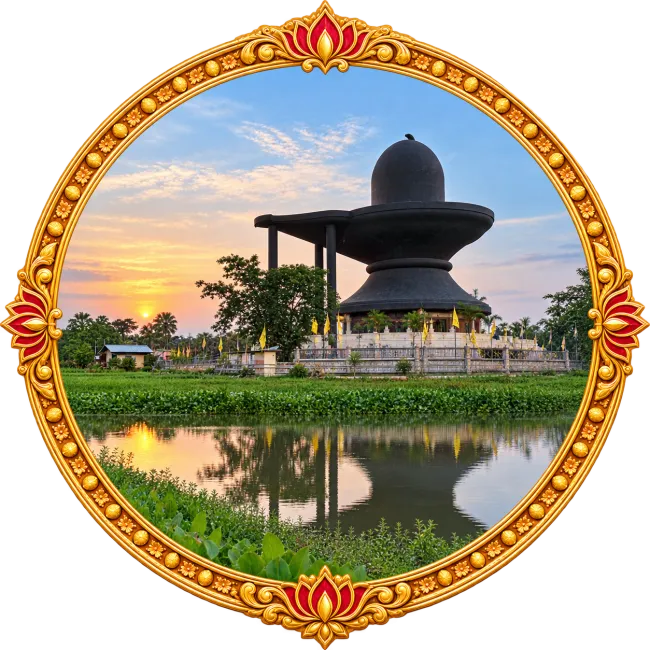
Maha Mrityunjay Temple, Nagaon
Maha Mrityunjay Temple is a prominent modern Shiva shrine located at Puranigudam near Nagaon in Assam. The temple is famous for its enormous Shiva-Lingam-shaped structure, which rises approximately 126 feet above the surrounding landscape.
Dedicated to Lord Shiva as Mahamrityunjaya—the conqueror of death—the temple attracts devotees praying for health, longevity, recovery from illness and protection from danger. Its monumental architecture and large-scale religious ceremonies have made it an important pilgrimage destination in Assam.
About Maha Mrityunjay Temple
The temple is situated at Bherbheri near Puranigudam in the Nagaon district. It is constructed in the form of a giant Shiva Lingam, symbolising the formless and infinite nature of Lord Shiva.
Mahamrityunjaya is the form of Shiva who grants freedom from fear, illness and premature death. The associated Mahamrityunjaya Mantra is one of the most widely recited healing and protection prayers in Hindu tradition.
The temple complex contains the main Shiva shrine, spaces for Yajna and Havan, smaller shrines and facilities for large religious gatherings.
When Was Maha Mrityunjay Temple Built and Who Built It?
The foundation of Maha Mrityunjay Temple was laid in 2003 under the spiritual guidance of Acharya Bhrigu Giri Maharaj.
The project was developed through the efforts of the temple trust, devotees, local supporters and religious organisations. Construction continued for approximately eighteen years because of the structure’s unusual scale and design.
The formal Pran Pratishtha and consecration ceremonies were completed in February 2021. Elaborate Vedic rituals and a large Mahamrityunjaya Yajna formed part of the inauguration.
Unlike Assam’s medieval temples, Maha Mrityunjay Temple is a modern religious monument. Its importance comes from its monumental Lingam-shaped architecture and the revival of the region’s ancient Shiva traditions.
Legend of the Sacred Site
According to local religious tradition, the area is connected with the spiritual practices of Shukracharya, the teacher of the Asuras.
Shukracharya is believed to have performed worship of Lord Shiva and recited the Mahamrityunjaya Mantra in this region. Through his devotion, he received knowledge connected with healing and the restoration of life.
The sacred area is also associated with Narasimha Kshetra in local tradition. The construction of the modern temple was intended to revive the spiritual importance of the site and establish a major centre for Mahamrityunjaya worship.
Mahamrityunjaya Mantra
The Mahamrityunjaya Mantra is dedicated to Lord Shiva and occurs in ancient Vedic tradition. It is recited for spiritual strength, healing and freedom from fear.
The mantra compares spiritual liberation to a ripe fruit naturally separating from its stem. Its deeper purpose is not merely the avoidance of physical death but freedom from ignorance, attachment and fear.
Devotees commonly arrange Mahamrityunjaya Mantra chanting for:
Recovery from illness
Protection during surgery
Long life
Safe travel
Mental peace
Relief from fear
Protection from accidents
Spiritual liberation
Religious worship should support medical care rather than replace professional diagnosis or treatment.
Religious Significance
Lord Mahamrityunjaya is worshipped as the compassionate form of Shiva who protects life and gives courage during illness or danger.
People visit the temple to pray for:
Health and recovery
Longevity
Protection from premature death
Relief from fear
Mental peace
Family welfare
Success in important work
Safe travel
Spiritual discipline
Fulfilment of wishes
The shrine is particularly important for Rudrabhishek, Mahamrityunjaya Mantra Path and large Yajnas.
Architecture of Maha Mrityunjay Temple
The temple’s most distinctive feature is its approximately 126-foot-high Shiva-Lingam-shaped superstructure. It is regarded as one of the largest temple buildings designed in the form of a Shiva Lingam.
The rounded upper structure represents the Lingam, while the broad lower platform represents the Yoni base. The design expresses the union of consciousness and creative energy.
The complex includes:
Main Mahamrityunjaya sanctum
Giant Lingam-shaped temple structure
Yajna Mandap
Havan areas
Nandi image
Smaller shrines
Large courtyard
Pilgrim queue passages
Puja and donation counters
Community gathering spaces
The spacious layout allows large numbers of devotees to participate in collective worship.
Maha Mrityunjay Temple Timings
The temple follows a daily schedule for Puja, Abhishekam, Bhog and Aarti.
Special Yajnas and festival programmes may affect ordinary darshan timings.
Morning Puja and Aarti
The temple day begins with Mangal Puja and cleansing of the sanctum. Morning Aarti is performed at 5:30 AM.
The morning rituals include:
Water Abhishekam
Milk, curd and honey offering
Bilva leaves
White flowers
Sandalwood paste
Sacred ash
Shiva mantra chanting
Incense and lamps
Naivedya
Morning Aarti
Devotees may perform Jalabhishek or sponsor Rudrabhishek according to temple arrangements.
Bhog and Evening Aarti
Bhog is offered to Lord Shiva at noon. Fruits, sweets and Satvik preparations form part of the offering.
Evening Puja begins at 5:30 PM, followed by Aarti at 6:30 PM. Mahamrityunjaya Mantra recitation is conducted at 7:00 PM as part of the evening devotional programme.
Shayan Puja is performed before the temple closes.
Major Festivals
Mahashivratri
Mahashivratri is the largest festival at the temple. Devotees participate in day-long and night-long worship, Abhishekam, Mantra Path and Havan.
Shravan Month
Mondays during Shravan attract large numbers of pilgrims. Special Jalabhishek and Rudrabhishek ceremonies are performed.
Maha Mrityunjay Yajna
Large-scale Mahamrityunjaya Yajnas are organised for peace, health and collective welfare. Priests chant Vedic mantras and perform Havan over several sessions.
Kartik Purnima
Devotees offer lamps and prayers to Lord Shiva.
Makar Sankranti
Special worship and charitable activities are organised during Makar Sankranti.
Puja and Religious Services
Available ceremonies may include:
General Shiva Puja
Jalabhishek
Rudrabhishek
Mahamrityunjaya Mantra Path
Mahamrityunjaya Havan
Health and longevity Puja
Mahashivratri worship
Shravan Monday Puja
Family welfare prayers
Marriage-related Puja
Thanksgiving ceremony
Puja and Yajna arrangements should be completed through authorised temple counters. Devotees should confirm the duration and materials before booking a ceremony.
Offerings and Prasad
Common offerings include:
Water
Milk
Curd
Honey
Bilva leaves
White flowers
Fruits
Coconut
Sandalwood paste
Sacred ash
Incense
Clarified butter
Sweets
Monetary donations
Prasad generally includes sweets, fruits, coconut and blessed flowers.
Dress Code and Temple Rules
There is no rigid dress code, but visitors should wear clean and modest clothing.
Important rules include:
Remove footwear before entering.
Follow the designated queue.
Perform Abhishekam only in permitted areas.
Follow photography restrictions.
Do not interrupt Yajna ceremonies.
Keep the temple clean.
Avoid alcohol and tobacco.
Deposit donations only at authorised counters.
Follow instructions from priests and security personnel.
Seek medical care for illness rather than depending only on religious rituals.
Entry Fee and Darshan Duration
General entry and darshan are free. Charges apply to optional Pujas, Rudrabhishek, Havan and ritual materials.
Ordinary darshan generally requires 30–60 minutes. Visitors participating in a special Mantra Path or Havan should allow two to four hours.
During Mahashivratri and Shravan Mondays, waiting time can extend to several hours.
Best Time to Visit
October to March is the most comfortable period for visiting Nagaon. The weather is suitable for temple visits and road travel.
Early morning between 7:00 AM and 10:00 AM is ideal for peaceful darshan. Mahashivratri offers the grandest devotional experience but attracts very large crowds.
The monsoon brings heavy rain, so visitors should check road conditions before travelling.
How to Reach Maha Mrityunjay Temple
By Air
Lokpriya Gopinath Bordoloi International Airport in Guwahati is approximately 135 kilometres from the temple. Tezpur Airport is another regional option.
By Train
Nagaon Railway Station is the nearest railhead. Chaparmukh Junction provides additional regional connections.
By Road
The temple is accessible from Nagaon, Puranigudam, Tezpur, Kaziranga and Guwahati.
Accommodation and Facilities
Hotels, guest houses and lodges are available in Nagaon. Limited accommodation may be available closer to Puranigudam.
Temple facilities include:
Parking
Drinking water
Toilets
Shoe-storage area
Puja counters
Prasad stalls
Yajna spaces
Resting areas
Food outlets
Security assistance
Nearby Places to Visit
Bordowa Than: The birthplace and sacred institution associated with Srimanta Sankardev.
Laokhowa Wildlife Sanctuary: A protected wetland and forest region.
Kaliabor: A historic and scenic area near the Brahmaputra.
Kaziranga National Park: Famous for the one-horned rhinoceros.
Samaguri Beel: A wetland known for its natural surroundings.
Tezpur: Known for temples, archaeology and Brahmaputra views.
Silghat: A riverside destination near Kaliabor.
Conclusion
Maha Mrityunjay Temple is a prominent modern Shiva shrine distinguished by its approximately 126-foot Lingam-shaped structure. Established under the guidance of Acharya Bhrigu Giri Maharaj, its construction began in 2003 and its major consecration was completed in 2021.
The monumental architecture, Mahamrityunjaya Mantra tradition, daily Aartis and large Yajnas attract devotees from across Assam. Visitors worship Lord Mahamrityunjaya for health, longevity, courage and freedom from fear.