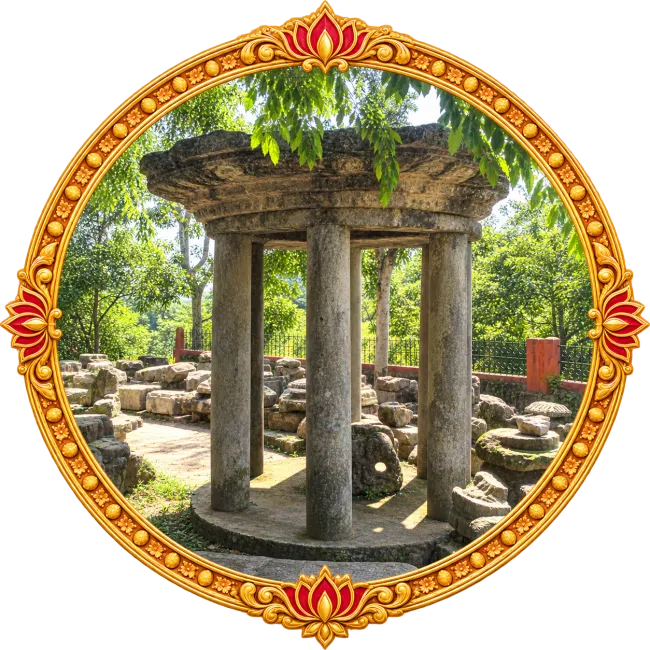
Madan Kamdev Temple, Kamrup
Madan Kamdev is an important archaeological temple complex located near Baihata Chariali in the Kamrup district of Assam. Spread across the forested Dewangiri Hill, the site contains the remains of numerous stone temples, sculptures, foundations and architectural fragments dating from the 9th to the 12th centuries.
The complex is associated with Shaiva and Shakta traditions and is especially known for its sculptures of Shiva, Parvati, Ganesha, Surya, Bhairava and celestial figures. Because of its detailed carvings and representations of love, fertility and divine union, Madan Kamdev is sometimes called the “Khajuraho of Assam.”
The ruins are primarily a protected archaeological site. Regular daily Puja, Bhog and Aarti are not conducted across the main temple remains.
About Madan Kamdev Temple Complex
Madan Kamdev is situated near the village of Madankuri, a short distance from Baihata Chariali. The ruins lie among trees, rocks and low hills, creating a peaceful heritage landscape.
The complex once contained several temples of different sizes. Archaeological remains indicate that it was an important religious centre rather than a single isolated shrine.
The principal surviving sculptures and architectural fragments are associated with:
Lord Shiva
Goddess Parvati
Uma-Maheshvara
Lord Ganesha
Surya
Bhairava
Vidyadharas
Divine couples
Celestial dancers
Lions and mythical animals
The artistic programme celebrates creation, love, spirituality and the relationship between Shiva and Shakti.
When Was Madan Kamdev Built and Who Built It?
The temples at Madan Kamdev were constructed between the 9th and 12th centuries CE. Their development is generally associated with the Pala rulers of ancient Kamarupa.
The complex was not built by one ruler in a single year. Different temples were constructed and expanded across several generations under royal and community patronage.
The Pala kings of Kamarupa supported Hindu religious institutions, particularly Shaiva and Shakta centres. Skilled sculptors created stone temples and images reflecting regional traditions and wider Indian artistic influences.
The complex gradually declined because of political changes, earthquakes, weather and forest growth. Its structures collapsed, and many architectural pieces became buried beneath soil and vegetation.
Archaeological Discovery and Excavation
The remains attracted scholarly attention during the 20th century. Systematic archaeological exploration and excavation revealed temple foundations, carved stones and sculptures spread across the hill.
The discoveries established that Madan Kamdev had once been a large religious complex. Conservation work was undertaken to document and protect the surviving material.
Many sculptures remain displayed or preserved near the site, while others have been recorded for archaeological study.
Legend of Kamadeva
The name Madan Kamdev is associated with Kamadeva, the Hindu god of love and desire. Madan is another name for Kamadeva.
According to mythology, Lord Shiva entered deep meditation after the death of Goddess Sati. At the same time, the demon Tarakasura had become powerful. The gods needed Shiva to marry Parvati because their future son would defeat the demon.
Kamadeva attempted to awaken Shiva by shooting a flower arrow. Shiva opened his third eye and reduced him to ashes.
Kamadeva’s wife, Rati, prayed for his restoration. Shiva eventually allowed Kamadeva to return in a bodiless form. Regional tradition associates his rebirth or renewed divine presence with the ancient Kamrupa region.
The sculptures at Madan Kamdev celebrate love as a force connected with creation rather than merely physical attraction.
Shaiva and Shakta Significance
The complex appears to have been primarily associated with Shiva and Shakti. Numerous sculptures represent the divine couple in different forms.
Uma-Maheshvara images show Shiva and Parvati seated together. Their union symbolises:
Consciousness and energy
Creation and balance
Marriage and harmony
Spiritual and worldly life
Masculine and feminine principles
Bhairava and other fierce forms represent protection and the destruction of ignorance.
Architecture of Madan Kamdev
The temple remains were constructed mainly from stone. Different shrines appear to have included sanctums, Mandapas, decorated doorways and sculpted exterior walls.
Surviving architectural elements include:
Temple foundations
Door jambs
Lintels
Pillar fragments
Sculpted wall panels
Amalakas
Decorative stone blocks
Images of deities
Floral and geometric carvings
The temples followed the regional Nagara tradition, with towered sanctums and carved exteriors. Because most superstructures have collapsed, their complete appearance must be reconstructed through archaeological study.
Sculptures of Madan Kamdev
The sculptures are the site’s most important artistic remains. They depict religious, social and symbolic themes.
Notable subjects include:
Uma-Maheshvara
Four-armed Shiva
Ganesha
Surya
Bhairava
Celestial musicians
Dancers
Loving couples
Floral designs
Lions
Mythical creatures
The figures display detailed jewellery, hairstyles, facial expressions and body postures. They provide valuable information about the art and culture of medieval Assam.
The intimate couple sculptures symbolise fertility, prosperity and the creative union of cosmic forces. Visitors should view them within their religious and artistic context.
Madan Kamdev Visiting Hours
Madan Kamdev follows daytime heritage-site hours rather than a temple ritual schedule.
Hours may change during conservation work, severe weather or administrative restrictions.
Why Regular Puja and Aarti Are Not Conducted
The principal temples survive as archaeological ruins. Their original sanctums, complete towers and many presiding deities no longer remain in an active ritual condition.
Oil, fire, incense, water, sindoor and direct handling can damage ancient stone. Visitors should therefore not conduct independent rituals against the sculptures or temple foundations.
Any worship at a separate active shrine near the site follows local arrangements and should not be confused with the archaeological ruins.
Entry Fee and Visit Duration
General entry is usually free or subject to the access rules displayed at the site. Visitors should check the entrance notice for current arrangements.
A normal visit requires one to two hours. Students of art, architecture and archaeology may need additional time to examine the sculptures and foundations.
Hiring a knowledgeable local guide can help visitors understand fragments that might otherwise be difficult to identify.
Best Time to Visit
October to March is the best period for visiting Madan Kamdev. The weather is comparatively cool and suitable for walking through the archaeological complex.
Morning between 9:00 AM and 11:30 AM provides comfortable conditions and good natural light for studying the carvings.
The monsoon brings heavy rainfall, slippery pathways and dense vegetation. Visitors should wear shoes with a firm grip and avoid unstable areas.
Photography Guidelines
Personal photography is generally suitable in open sections, subject to local rules.
Visitors should:
Avoid touching sculptures while taking photographs.
Keep tripods away from fragile foundations.
Avoid climbing onto ruins.
Obtain permission for commercial photography.
Do not move fragments for a better photograph.
Respect barriers and conservation signs.
Avoid disruptive or disrespectful poses near sacred images.
Visitor and Conservation Rules
Madan Kamdev is a fragile heritage site. Visitors must follow these rules:
Do not touch or climb on sculptures.
Do not write names on stones.
Do not apply oil, sindoor or paint.
Do not light lamps or incense against the ruins.
Do not remove stone fragments.
Do not disturb the soil.
Keep food and plastic away from monuments.
Follow marked paths.
Do not disturb wildlife.
Supervise children closely.
Follow instructions from site personnel.
How to Reach Madan Kamdev
By Air
Lokpriya Gopinath Bordoloi International Airport in Guwahati is approximately 50 kilometres from the site.
By Train
Rangiya Junction is the nearest major railway station. Guwahati Railway Station provides wider connectivity.
By Road
Madan Kamdev is accessible from Baihata Chariali by local road. Taxis and private vehicles are the most convenient options.
The final approach may pass through village roads, so local directions can be helpful.
Accommodation and Facilities
Visitor facilities at the archaeological site are limited. Basic shops and services are available near surrounding settlements and Baihata Chariali.
Visitors should carry:
Drinking water
Sun protection
Insect repellent
Essential medicines
Comfortable walking shoes
Hotels and guest houses are available in Guwahati, Rangiya and Hajo.
Nearby Places to Visit
Hayagriva Madhava Temple: A historic Vishnu temple at Hajo.
Kedareswara Temple: A Shiva shrine on Madanachala Hill.
Poa Mecca: An important Islamic pilgrimage site at Hajo.
Dirgheswari Temple: A Shakti shrine in North Guwahati.
Doul Govinda Temple: A Krishna temple at Rajaduar.
Aswaklanta Temple: A historic Vishnu shrine overlooking the Brahmaputra.
Sualkuchi: A traditional silk-weaving centre.
Kamakhya Temple: Guwahati’s principal Shakti Peetha.
Importance for Students and Researchers
Madan Kamdev is valuable for studying:
Medieval Assam’s temple architecture
Pala-period royal patronage
Shaiva and Shakta iconography
Sculptures of divine couples
Development of regional Nagara temples
Stone-carving techniques
Ancient Kamrupa’s cultural connections
Conservation of forest-covered ruins
Conclusion
Madan Kamdev is one of Assam’s most important archaeological temple complexes. Built between the 9th and 12th centuries under the Pala rulers of Kamarupa, it preserves remarkable evidence of medieval Shaiva and Shakta worship.
Its sculptures of Shiva, Parvati, Ganesha, Surya and divine couples celebrate spirituality, fertility and cosmic creation. As regular Puja and Aarti are not conducted at the ruins, visitors should approach Madan Kamdev as a protected heritage landscape and help preserve its ancient stone art.