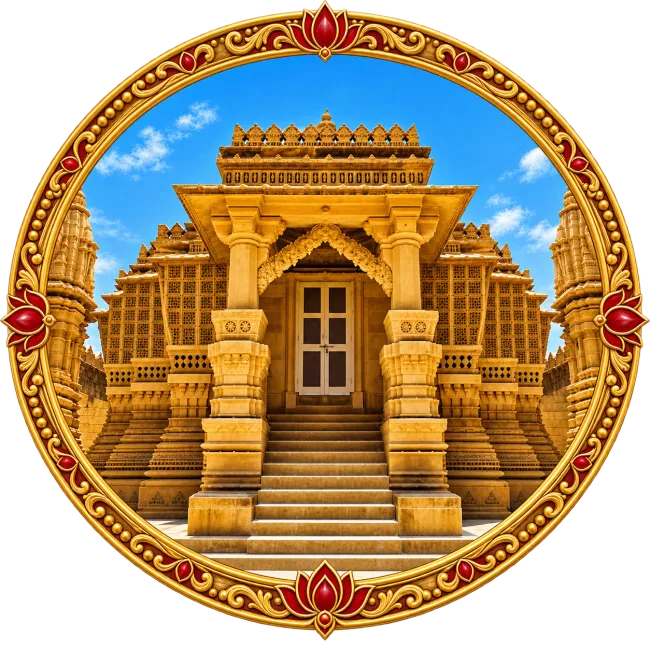
Lodhruva Jain Temple
Visit Lodhruva Jain Temple near Jaisalmer, one of Rajasthan’s most beautiful and historically important Jain pilgrimage sites. Dedicated to Lord Parshvanatha, the 23rd Jain Tirthankara, the temple is famous for its thousand-hooded black marble idol, intricately carved yellow-stone architecture, ornamental gateways and sacred Kalpavriksha. Surrounded by the ruins of the ancient capital of the Bhati Rajputs, the temple offers a peaceful combination of spirituality, history and desert beauty.
About Lodhruva Jain Temple
Lodhruva Jain Temple, also written as Lodurva, Lodrawa or Lodarva Jain Temple, is situated in Lodhruva village, approximately 15 kilometres from Jaisalmer in Rajasthan. The temple belongs to the Shwetambara tradition of Jainism and is primarily dedicated to Lord Parshvanatha.
The principal deity is worshipped as Shri Sahasraphana Chintamani Parshvanatha. The name “Sahasraphana” refers to the elaborate canopy of numerous serpent hoods above the idol of Lord Parshvanatha. This distinctive image makes the temple an important pilgrimage destination for Jain devotees.
Lodhruva was once a prosperous settlement and the capital of the Bhati Rajputs. Although much of the ancient city disappeared following attacks and the transfer of the capital to Jaisalmer, the Jain temple was reconstructed and preserved as a reminder of Lodhruva’s former religious and cultural importance.
History of Lodhruva Jain Temple
The history of Lodhruva Jain Temple is closely connected with the early history of Jaisalmer. Lodhruva was established as a major settlement and capital of the Bhati rulers during the 8th or 9th century. Its location on an ancient desert trade route helped the city become an important centre of commerce.
Jain traders and merchants living in the region contributed to its economic and religious development. An early Jain temple dedicated to Lord Parshvanatha was constructed here, and Lodhruva gradually became an important centre of Jain worship.
However, the city’s exposed geographical position made it vulnerable to attacks. Lodhruva was attacked more than once, and the ancient temple suffered extensive destruction during the medieval period.
Rawal Jaisal subsequently established the fortified city of Jaisalmer on Trikuta Hill in 1156 CE and transferred his capital from Lodhruva to Jaisalmer. The relocation offered the rulers greater protection, but it gradually led to the decline of the old city.
The ruined Jain temple was reconstructed in 1615 CE by Seth Tharu Shah, a wealthy Jain merchant and devotee. Further additions and improvements were made during 1675 and 1687. The surviving structure therefore contains a combination of ancient religious traditions and later architectural reconstruction.
Who Built Lodhruva Jain Temple?
The original Jain temple at Lodhruva is believed to have been established during the early medieval development of the city, which began under the Bhati rulers in the 8th–9th century.
The precise name of the individual who commissioned the earliest temple structure has not been preserved consistently in historical accounts. The present temple is primarily associated with Seth Tharu Shah, who reconstructed it in 1615 CE after the earlier shrine had been destroyed.
Important stages in the temple’s history include:
- Lodhruva developed as a Bhati capital during the 8th–9th century.
- An early Jain shrine was constructed during the development of the city.
- The temple was damaged and destroyed during medieval invasions.
- Rawal Jaisal shifted the capital to Jaisalmer in 1156 CE.
- Seth Tharu Shah reconstructed the temple in 1615 CE.
- Additional construction and decorative work took place in 1675 and 1687.
- Conservation and restoration work was undertaken during the modern period.
Therefore, the temple seen today is a restored historic shrine rather than the complete original structure.
Main Deity of Lodhruva Jain Temple
The temple’s principal deity is Lord Parshvanatha, the 23rd Tirthankara of Jainism. The sacred idol is made of black stone and is protected by an elaborate canopy of serpent hoods.
Lord Parshvanatha is traditionally represented with a serpent canopy because Jain tradition associates him with protection by Dharanendra, the serpent deity. At Lodhruva, the elaborate hooded form has given the deity the name Sahasraphana Chintamani Parshvanatha.
The idol is considered one of the prominent Parshvanatha images worshipped in the Shwetambara Jain tradition. Devotees visit the shrine to pray for spiritual wisdom, peace, protection and freedom from negative karmic influences.
Religious Significance
Lodhruva Jain Temple is an important Jain pilgrimage site in western Rajasthan. Its significance is associated with its ancient history, revered Parshvanatha idol and connection with the Jaisalmer Jain pilgrimage circuit.
The temple represents the Jain principles of:
- Ahimsa or non-violence
- Satya or truth
- Aparigraha or non-attachment
- Self-discipline
- Compassion for all living beings
- Freedom from anger, pride, deceit and greed
- Liberation from the cycle of birth and death
Devotees meditate before the idol and recite the Navkar Mantra. Many pilgrims also perform Chaityavandan and circumambulation of the sacred area.
Lodhruva forms part of the wider Jaisalmer Jain pilgrimage tradition, which also includes the Jain temples inside Jaisalmer Fort, Amar Sagar Jain Temple and other historic shrines in the surrounding region.
Architecture of Lodhruva Jain Temple
Lodhruva Jain Temple is an excellent example of Maru-Gurjara architecture, a style known for detailed carvings, symmetrical layouts, ornamental pillars and decorative gateways.
The temple is primarily constructed from golden-yellow sandstone. When sunlight falls on the building, the carved surfaces appear to glow with different shades of gold.
Ornamental Torana
One of the most impressive features is the beautifully carved torana at the entrance. This ornamental arch contains floral patterns, sacred figures and detailed decorative elements.
The torana creates an impressive visual passage into the temple and reflects the exceptional skill of Rajasthan’s traditional stone craftsmen.
Carved Pillars and Ceilings
The prayer hall contains carved pillars supporting decorated ceilings and arches. Floral patterns, geometric arrangements and religious symbols can be observed throughout the interior.
The ceilings contain concentric designs that gradually become smaller toward the centre, creating an appearance similar to a carved stone lotus.
Stone Jali Work
The temple’s perforated stone screens allow natural light and air to enter the interior. These jalis create changing patterns of light and shadow during the day.
Despite being carved from solid sandstone, the screens appear delicate and lace-like.
Folded Exterior Walls
Sections of the outer walls have a folded or projected design that produces alternating areas of light and shadow. This gives the structure visual depth and distinguishes it from simple rectangular temple buildings.
Shikhara and Sanctum
The main sanctum is crowned by a richly decorated shikhara. The vertical form of the tower directs attention toward the sky and symbolizes the spiritual journey toward liberation.
Inside the sanctum, the black idol of Lord Parshvanatha forms a striking contrast with the temple’s golden-coloured sandstone.
Sacred Kalpavriksha
A distinctive attraction of Lodhruva Jain Temple is the beautifully created Kalpavriksha, or wish-fulfilling tree. Its branches, leaves and decorative forms display remarkable craftsmanship.
The Kalpavriksha is considered a symbol of abundance, spiritual fulfilment and divine grace. Devotees offer prayers near it and seek blessings for peace, wisdom and the fulfilment of righteous wishes.
The tree should be treated as a sacred religious feature. Visitors should not touch, climb upon or damage any part of it.
Lodhruva Jain Temple Timings
The general visiting hours are commonly observed from 6:00 AM to 6:00 PM. Morning worship is conducted after the temple opens. The exact sequence of abhishek, puja, Chaityavandan and evening worship may change on festival days or during special religious ceremonies.
Best Time for Darshan
The best time for darshan is between 8:00 AM and 10:00 AM. The weather is comparatively pleasant, the temple is less crowded and the morning sunlight highlights the golden sandstone carvings.
The most comfortable months to visit are from October to March. Jaisalmer experiences extremely high temperatures during summer, particularly from April to June. If visiting during warmer months, devotees should plan their journey early in the morning.
Daily Puja and Worship
Daily worship at Lodhruva Jain Temple follows Shwetambara Jain traditions. The ritual sequence may differ on special occasions, but common practices include:
- Opening and preparation of the sanctum
- Darshan of Lord Parshvanatha
- Abhishek or ceremonial cleansing
- Application of sandalwood and saffron
- Chaityavandan
- Recitation of the Navkar Mantra
- Ashtaprakari Puja
- Meditation and silent prayer
- Circumambulation of the sanctum
- Lamp offering where permitted
The Ashtaprakari Puja traditionally involves eight symbolic offerings: water, sandalwood, flowers, incense, lamp, rice, food and fruit. Each offering represents a spiritual quality and reminds devotees of the path toward liberation.
Visitors should remember that full ritual worship may be permitted only according to the temple’s religious rules.
Major Festivals
Mahavir Jayanti
Mahavir Jayanti commemorates the birth of Lord Mahavira, the 24th Jain Tirthankara. Special prayers, processions, scripture readings and charitable activities may be organized.
Paryushan Parva
Paryushan is one of the most sacred periods in Jainism. Devotees observe fasting, meditation, spiritual study and self-discipline.
Samvatsari
Samvatsari is dedicated to forgiveness and self-reflection. Jain devotees seek forgiveness from others for any harm caused knowingly or unknowingly.
Diwali
In Jain tradition, Diwali marks the nirvana of Lord Mahavira. Devotees light lamps, recite prayers and study religious teachings.
Kartik Purnima
Kartik Purnima is considered an auspicious occasion for pilgrimage, temple visits and religious worship.
Pausha Festival
A religious gathering is traditionally held during the month of Pausha. The occasion attracts devotees for darshan and special worship of Lord Parshvanatha.
Offerings at Lodhruva Jain Temple
Depending on temple rules, devotees may offer:
- Rice grains
- Sandalwood paste
- Saffron
- Flowers
- Incense
- Lamps
- Fruits
- Monetary donations
- Contributions toward temple maintenance
- Donations for religious and charitable activities
Food offerings and religious materials should be presented only in accordance with the instructions of the temple attendants. Visitors should not leave packaged food or unsuitable items inside the temple.
Local Belief Associated with the Temple
A local religious tradition associates the temple with a serpent believed to reside near the sacred complex. According to the belief, the serpent is connected with Lord Parshvanatha, who is commonly depicted beneath a protective serpent hood.
Some devotees consider witnessing the serpent an auspicious experience. However, this remains a matter of local faith and should not be treated as a guaranteed occurrence.
Visitors should never attempt to locate, touch or feed any snake or other wild animal in the area.
Entry Fee and Visit Duration
Entry and camera arrangements may change during festivals, conservation work or special ceremonies. Visitors should follow the instructions displayed at the entrance.
How to Reach Lodhruva Jain Temple
By Air
Jaisalmer Airport is the nearest airport. Taxis and private vehicles are available from the airport to Lodhruva. Flight operations can be seasonal, so travellers should check availability before planning their journey.
Jodhpur Airport is a major alternative and is approximately 280 kilometres from Jaisalmer.
By Train
Jaisalmer Railway Station is the nearest railway station. It is connected with cities such as Jodhpur, Jaipur and Delhi.
Lodhruva can be reached from the railway station by taxi or private vehicle.
By Road
The temple is approximately 15 kilometres from Jaisalmer city and is easily accessible by road. Visitors can hire:
- Taxi
- Auto-rickshaw
- Private car
- Tourist vehicle
- Local sightseeing cab
The drive from Jaisalmer generally takes 25–35 minutes, depending on the starting point and road conditions.
Nearby Places to Visit
Visitors can combine Lodhruva Jain Temple with the following attractions:
- Amar Sagar Jain Temple
- Amar Sagar Lake
- Jaisalmer Fort
- Jain Temples inside Jaisalmer Fort
- Patwon Ki Haveli
- Nathmal Ki Haveli
- Salim Singh Ki Haveli
- Gadisar Lake
- Bada Bagh
- Kuldhara Village
- Vyas Chhatri
- Sam Sand Dunes
Amar Sagar Jain Temple can conveniently be included in the same trip because it lies on the route between Jaisalmer and Lodhruva.
Visitor Guidelines
- Remove footwear before entering the temple.
- Wear modest clothing covering the shoulders and legs.
- Do not carry leather items into restricted temple areas.
- Avoid carrying non-vegetarian food, alcohol or tobacco.
- Maintain silence near the sanctum.
- Do not touch the idol or religious objects.
- Ask permission before taking photographs.
- Photography may be prohibited inside the main sanctum.
- Do not touch or scratch the sandstone carvings.
- Avoid disturbing devotees during puja and meditation.
- Follow instructions given by priests and temple attendants.
- Carry drinking water when travelling during hot weather.
- Do not feed or approach wild animals.
- Help maintain cleanliness within the temple complex.
Conclusion
Lodhruva Jain Temple is a remarkable combination of Jain spirituality, medieval history and Rajasthan’s celebrated stone craftsmanship. Dedicated to Shri Sahasraphana Chintamani Parshvanatha, the temple preserves the religious legacy of Lodhruva, the ancient capital that existed before the establishment of Jaisalmer.
Its black Parshvanatha idol, ornamental torana, carved pillars, delicate jalis, golden sandstone walls and sacred Kalpavriksha make it one of the most memorable religious destinations near Jaisalmer.
A visit to Lodhruva Jain Temple offers devotees a peaceful environment for prayer and meditation while allowing travellers to experience the architectural and cultural heritage of Rajasthan’s desert region.