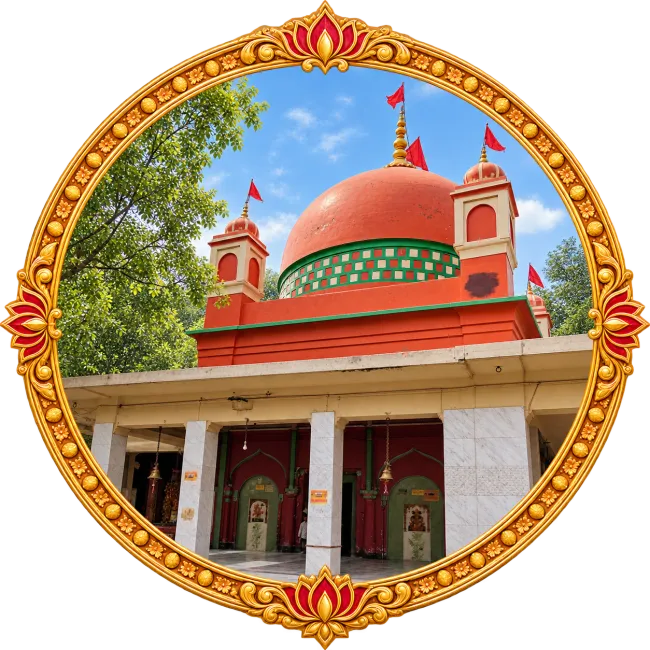
Lalita Devi Temple, Prayagraj, Uttar Pradesh
Lalita Devi Temple is one of the most revered Shakti shrines in Prayagraj, Uttar Pradesh. Situated in the Meerapur locality of the city, the temple is dedicated to Goddess Lalita Devi, a graceful and powerful manifestation of Goddess Durga. It is traditionally counted among the sacred Shakti Peethas associated with Goddess Sati.
The temple attracts devotees seeking protection, prosperity, family welfare and spiritual strength. Its importance increases during Navratri, when thousands of worshippers visit the shrine to participate in special Puja, Aarti, Havan and devotional programmes.
About Lalita Devi Temple
Lalita Devi Temple is located in Meerapur, close to the religious centre of Prayagraj. Goddess Lalita is worshipped as an embodiment of beauty, compassion, prosperity and supreme spiritual energy.
The word Lalita means graceful, beautiful or playful. In Shakta philosophy, Lalita Devi is identified with Lalita Tripurasundari, the Divine Mother who governs the three worlds and represents the highest form of beauty, wisdom and consciousness.
The temple is commonly called Maa Lalita Devi Shakti Peeth. Devotees worship the Goddess as the protective mother of Prayagraj. The shrine is also an important destination during pilgrimages to the Triveni Sangam and other sacred places in the city.
The principal deity is richly decorated with flowers, jewellery, a crown, red clothes and traditional Shringar materials. Smaller shrines dedicated to other Hindu deities are also present within the temple complex.
When Was Lalita Devi Temple Built and Who Built It?
Lalita Devi Temple is an ancient sacred site whose origin belongs to the early Shakti tradition. No single historical king or patron is associated with the establishment of the original shrine.
According to religious tradition, worship began at the location after a body part of Goddess Sati fell there. A simple shrine was established around the sacred spot and was gradually expanded by devotees and local patrons.
The structure underwent several phases of renovation as the number of pilgrims increased. The present temple was developed through the efforts of local devotees, priests and temple administrators. Its modern construction includes an ornate entrance, elevated spires, a larger prayer hall and facilities for managing pilgrim queues.
The temple therefore represents both an ancient place of worship and a continuously developed modern pilgrimage complex.
Lalita Devi Temple as a Shakti Peetha
The religious importance of Lalita Devi Temple is connected with the story of Goddess Sati and Lord Shiva.
Sati was the daughter of King Daksha and the wife of Lord Shiva. Daksha disapproved of their marriage and organised a grand yajna without inviting them.
Sati attended the ceremony despite the absence of an invitation. When Daksha publicly insulted Lord Shiva, she was unable to tolerate the humiliation and entered the sacrificial fire.
Lord Shiva was overcome with grief and lifted Sati’s body onto his shoulders. He travelled across the universe while performing the destructive Tandava.
To protect creation, Lord Vishnu used his Sudarshana Chakra to divide Sati’s body. Her body parts and ornaments fell at different locations, which became sacred Shakti Peethas.
According to the tradition followed at Lalita Devi Temple in Prayagraj, a finger of Goddess Sati fell at this location. The sacred place consequently became associated with Goddess Lalita.
Goddess Lalita Tripurasundari
Goddess Lalita is closely identified with Tripurasundari, one of the ten Mahavidyas. The name Tripurasundari means “the most beautiful Goddess of the three worlds.”
She represents:
Divine beauty
Spiritual wisdom
Compassion
Creative energy
Prosperity
Protection
Harmony
Supreme consciousness
Unlike fierce manifestations of Shakti, Lalita Devi is commonly depicted in a calm and graceful form. However, she possesses the complete power of the Divine Mother and destroys evil whenever necessary.
Devotees believe that her worship brings balance to family life, strengthens relationships and supports spiritual growth.
Religious Significance
Lalita Devi Temple is regarded as one of Prayagraj’s principal Devi shrines. Devotees visit the temple before or after bathing at the Triveni Sangam.
People worship Maa Lalita Devi for:
Protection from danger
Peace within the family
Marriage and children
Good health
Prosperity and financial stability
Success in education and employment
Relief from fear and negative influences
Courage during difficult situations
Fulfilment of wishes
Spiritual wisdom and devotion
The Goddess is especially worshipped by devotees observing Navratri fasts. Many families visit the shrine for Mundan, marriage-related prayers and thanksgiving ceremonies.
Architecture of Lalita Devi Temple
Lalita Devi Temple displays modern North Indian temple architecture. Its decorative entrance and prominent spires make it an easily recognisable landmark in Meerapur.
The exterior is decorated in bright colours with images and symbols associated with Goddess Durga. The main temple tower rises above the Garbhagriha, where the sacred image of Maa Lalita Devi is installed.
The sanctum is decorated with:
Flowers and garlands
Silver and golden ornaments
Red clothes
Decorative crowns
Lamps
Bells
Sacred symbols
Traditional Shringar materials
The complex also contains smaller shrines dedicated to Lord Shiva, Lord Ganesha, Hanuman, Bhairav and other Hindu deities.
The main sections include:
Sanctum of Goddess Lalita Devi
Prayer hall
Havan area
Smaller shrines
Queue passages
Offering counters
Shoe-storage area
Administrative space
Lalita Devi Temple Timings
The temple follows seasonal opening and closing schedules. During Chaitra Navratri, Sharadiya Navratri and important festival days, darshan hours may be extended.
Summer Timings
Winter Timings
The daily schedule displayed at the temple entrance should be followed because special ceremonies can temporarily affect general darshan.
Morning Puja and Aarti
The temple day begins with Mangal Puja. Priests open and clean the sanctum before preparing the deity for morning Shringar.
The morning ceremonies include:
Ceremonial purification
Offering of fresh clothes
Flower and garland decoration
Application of sindoor and sandalwood
Crown and jewellery decoration
Mantra chanting
Incense offering
Lighting of lamps
Naivedya
Morning Aarti
Morning Aarti is performed at 6:00 AM during summer and 6:30 AM during winter. General darshan continues after completion of the ceremony.
Bhog Puja
Bhog is offered to Goddess Lalita Devi at noon. It generally consists of Satvik food, fruits, sweets, dry fruits and other traditional preparations.
General darshan may be briefly suspended while the offering and midday Puja are performed. The consecrated food is distributed as prasad according to temple arrangements.
Evening Puja and Aarti
The evening ceremony begins with the lighting of lamps and incense. Priests offer flowers, recite sacred prayers and perform Aarti before Maa Lalita Devi.
Evening Aarti is performed at 7:00 PM during summer and 6:00 PM during winter. Devotees participate through hymns, prayers and the chanting of the Goddess’s name.
Shayan Puja is performed shortly before closing and marks the conclusion of the day’s worship.
Major Festivals
Chaitra Navratri
Chaitra Navratri is celebrated during March or April. The temple is decorated with flowers and lights, and special prayers are offered during all nine days.
Sharadiya Navratri
Sharadiya Navratri is the largest annual celebration at Lalita Devi Temple. Special Shringar, Aarti, Durga Saptashati recitation, Havan and Kanya Pujan are organised.
Durga Ashtami
Durga Ashtami is observed with elaborate Puja and offerings. Many devotees complete their Navratri fast and participate in Kanya Pujan.
Lalita Panchami
Lalita Panchami is dedicated to Goddess Lalita Tripurasundari. The day is marked by special worship, mantra chanting and offerings to the Divine Mother.
Diwali
The shrine is illuminated with lamps during Diwali. Devotees pray for prosperity, happiness and family welfare.
Magh Mela and Kumbh Period
The number of visitors increases during the Magh Mela and Kumbh gatherings in Prayagraj. Pilgrims frequently combine a visit to Lalita Devi Temple with bathing at the Triveni Sangam.
Puja and Religious Services
Devotees may arrange different forms of worship according to temple procedures:
General Puja
Special Puja
Lalita Sahasranama recitation
Durga Saptashati Path
Chandi Path
Havan
Navratri Puja
Kanya Pujan
Mundan ceremony
Marriage-related prayers
Child-blessing Puja
Family welfare Puja
Thanksgiving ceremony
Puja arrangements and donations should be completed through authorised priests or designated temple counters.
Offerings at Lalita Devi Temple
Traditional offerings include:
Red chunri
Flowers and garlands
Coconut
Sindoor
Bangles
Sweets
Fruits
Dry fruits
Incense
Clarified butter
Mata’s Shringar items
Sacred thread
Monetary donations
Red flowers, chunri and Shringar materials are particularly associated with the worship of the Goddess.
Prasad
Prasad generally consists of laddoo, peda, coconut, mishri and dry fruits. Devotees may also arrange cooked Bhog according to temple customs.
Prepared Puja plates and packaged prasad are available from shops surrounding the temple. Prices and contents should be confirmed before purchase.
Dress Code and Entry Rules
There is no strict ceremonial dress code, but devotees should wear clean and modest clothing.
Important rules include:
Remove footwear before entering.
Follow the designated queue.
Maintain silence near the sanctum.
Do not obstruct other devotees.
Follow photography restrictions.
Do not touch the main deity.
Avoid alcohol, tobacco and non-vegetarian food.
Keep the temple clean.
Deposit donations only at authorised counters.
Protect valuables in crowded areas.
Entry Fee and Darshan Duration
General entry and darshan are free. Charges may apply to optional special Pujas, Havan, ritual materials and Bhog offerings.
On regular weekdays, darshan generally requires 20–45 minutes. On Tuesdays, Fridays, weekends and public holidays, the waiting time may increase.
During Navratri, Kumbh and Magh Mela periods, devotees should allow several hours for traffic, security checks and queue movement.
Best Time to Visit
October to March is the most comfortable period for visiting Prayagraj. The cooler weather is suitable for combining the temple visit with the Triveni Sangam and other religious destinations.
Chaitra and Sharadiya Navratri are the best periods for experiencing the temple’s major celebrations, but these festivals attract large crowds.
Visitors seeking a peaceful darshan should choose an ordinary weekday and arrive between 7:00 AM and 9:00 AM.
Summers in Prayagraj are extremely hot. Those visiting from April to June should complete darshan early in the morning.
How to Reach Lalita Devi Temple
By Air
Prayagraj Airport is the nearest airport. It is approximately 15 kilometres from the temple. Taxis and app-based cab services are available.
Lal Bahadur Shastri International Airport in Varanasi is another option for travellers requiring additional flight connections.
By Train
Prayagraj Junction is the nearest major railway station. It is approximately 5 kilometres from the temple.
Prayagraj Rambagh and Prayag railway stations also provide regional train connections. Auto-rickshaws, e-rickshaws and taxis are available from the stations.
By Road
Prayagraj is connected by road with Varanasi, Ayodhya, Lucknow, Kanpur, Mirzapur and other cities.
Local buses, auto-rickshaws, e-rickshaws and taxis provide access to the Meerapur area.
Accommodation and Facilities
Hotels, guest houses, Dharamshalas and budget lodges are available throughout Prayagraj. Accommodation can be found near Prayagraj Junction, Civil Lines, Sangam and the old city.
Facilities near the temple include:
Drinking water
Toilets
Shoe-storage counters
Prasad shops
Vegetarian food outlets
Parking in designated areas
Medical shops
Police and security assistance
Public transport
Religious-item shops
Advance booking is essential during Navratri, Magh Mela and Kumbh gatherings.
Nearby Places to Visit
Triveni Sangam: The sacred confluence of the Ganga, Yamuna and the invisible Saraswati.
Alopi Devi Temple: An important Shakti shrine in Prayagraj.
Kalyani Devi Temple: Another prominent Goddess temple in the city.
Bade Hanuman Ji Temple: A famous reclining Hanuman shrine near the Sangam.
Mankameshwar Temple: An ancient Shiva temple near the Yamuna.
Akshayavat: A sacred banyan tree within the Prayagraj Fort area.
Patalpuri Temple: An underground temple associated with several Hindu deities.
Nag Vasuki Temple: A sacred temple situated near the Ganga.
Anand Bhavan: A historic house and museum connected with India’s freedom movement.
Visitor Guidelines
Carry a valid identity document, drinking water and essential medicines. Wear comfortable footwear because visitors may need to walk through busy market lanes.
During Navratri and major gatherings, follow traffic diversions and queue arrangements. Take care of children, elderly family members and personal belongings in crowded areas.
Confirm Puja charges before engaging a priest and make donations only through authorised channels.
Conclusion
Lalita Devi Temple is an important Shakti Peetha where the Divine Mother is worshipped as the graceful and powerful Goddess Lalita. Its association with Goddess Sati, Lalita Tripurasundari and the spiritual heritage of Prayagraj gives it profound religious significance.
The sacred image, daily Aartis, Navratri celebrations and proximity to the Triveni Sangam make the temple an important destination for pilgrims. Devotees visit Maa Lalita Devi to seek protection, prosperity, family happiness and spiritual wisdom.