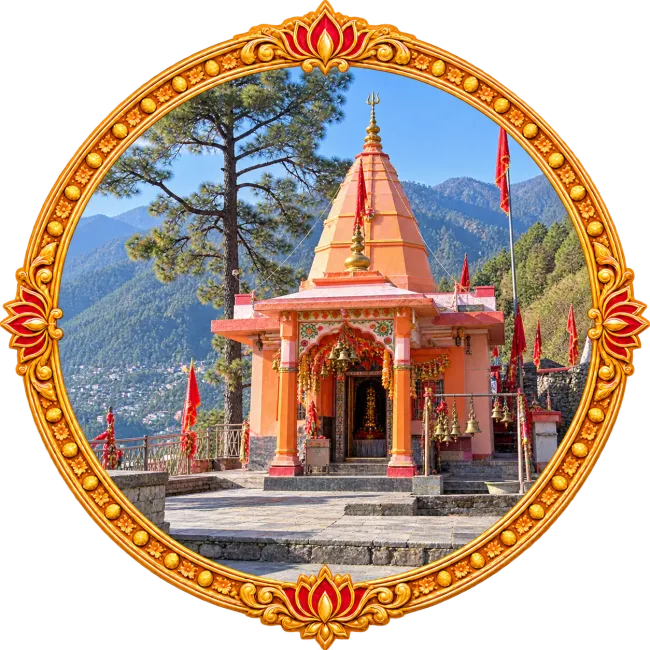
Kuteti Devi Temple, Uttarkashi
Visit Kuteti Devi Temple in Uttarkashi, a revered shrine dedicated to Goddess Kuteti Devi. Set above the Bhagirathi Valley, the temple combines local goddess-worship traditions with a peaceful hillside setting.
The shrine is especially known for its connection with a princess of Kota and the legend of three sacred stones. Devotees visit to seek the goddess’s blessings, offer prayers and experience the religious heritage of Uttarkashi beyond its central temple complex.
About Kuteti Devi Temple
Kuteti Devi Temple is situated near Uttarkashi town in the Garhwal region of Uttarakhand. The goddess is revered as a guardian deity by several local families and communities.
The shrine’s importance comes from this continuing relationship between the deity and her devotees. For families who worship Kuteti Devi, visiting the temple is an expression of gratitude, belonging and faith passed between generations.
Its elevated surroundings also offer views of the valley and nearby hills, making the approach part of the experience.
History of Kuteti Devi Temple
The temple’s founding tradition is associated with the daughter of the Maharaja of Kota and her husband.
According to this tradition, the couple established the shrine after discovering three stones believed to represent the presence of Goddess Kuteti Devi. The temple was built at the place where the stones were found.
This account remains central to the shrine’s identity, connecting a royal family from Rajasthan with the religious traditions of Uttarkashi.
Legend of the Princess of Kota
According to local tradition, the Maharaja of Kota lost a bag of money while travelling on pilgrimage to Gangotri. Unable to continue comfortably, he returned to Uttarkashi and prayed at Vishwanath Temple.
He vowed that, if the money was recovered, he would arrange his daughter’s marriage to a suitable local man. A priest found the missing bag inside the temple with its contents intact, and the king fulfilled his promise.
After her marriage, the princess worried about being separated from her family deity, Kuteti Devi. She and her husband prayed for the goddess’s help.
The goddess is said to have appeared in their dreams and promised to remain near them in stone form. The couple subsequently discovered three fragrant stones, and a temple was established at that location.
Religious Significance of Kuteti Devi Temple
Kuteti Devi is worshipped as a protective goddess, particularly by families who recognise her as their guardian deity.
The temple’s founding legend expresses a reassuring idea: devotion can continue even when a person moves away from their original home. For worshippers, the princess’s story represents the enduring relationship between a devotee and the divine.
People visit with prayers for family well-being, courage and peace. Some come to express gratitude, while others seek a quiet setting for reflection.
The shrine also preserves an important aspect of Garhwal’s religious culture, in which local deities remain closely connected with family and community life.
Main Deity and the Three Sacred Stones
The principal deity is Goddess Kuteti Devi. The tradition of three sacred stones distinguishes this shrine from temples whose identity centres entirely on a sculpted image.
The stones are understood in the founding legend as a manifestation of the goddess’s presence. Their significance lies in the devotion associated with their discovery and the establishment of worship at the site.
For visitors, understanding this tradition adds meaning to darshan and explains why the temple remains important to its worshipping communities.
Architecture and Temple Setting
Kuteti Devi Temple is a modest hillside shrine. Its character comes from the relationship between the worship space, its elevated position and the surrounding valley.
The approach includes an uphill walk and steps. Visitors should take their time, particularly when the path is wet or when travelling with elderly companions.
The setting offers an opportunity to appreciate the landscape before or after darshan. Keep the entrance clear while resting or taking photographs so that worshippers can move through comfortably.
Darshan and Worship
Darshan at Kuteti Devi Temple centres on prayer to the goddess and respect for the shrine’s traditions.
A simple visit can include quiet prayer, an expression of gratitude and a few moments of reflection. There is no need to turn the visit into a hurried sequence of activities.
For a comfortable itinerary, plan the approach and return during daylight. Allow additional time for the uphill section and keep the visit suited to the pace of everyone in your group.
Festivals and Devotional Gatherings
Navratri
Navratri is an important period of goddess worship. At Kuteti Devi Temple, it provides an occasion for devotees to gather and offer prayers to the divine mother.
The festival emphasises devotion, spiritual discipline and the protective power of the goddess.
Family and Community Worship
The shrine’s role as a guardian-deity temple gives family visits particular importance. Such occasions help sustain the connection between the goddess and the communities that worship her.
Visitors should respect local ceremonies and avoid interrupting families or priests engaged in worship.
Offerings and Devotional Etiquette
Keep offerings modest and easy to carry on the approach to the temple. Place them only in the designated worship areas.
Avoid leaving flowers, food or packaging on the steps, hillside or nearby paths. Do not touch sacred objects or enter restricted areas without permission.
A considerate visit includes:
Waiting patiently for darshan.
Speaking quietly near the shrine.
Giving other worshippers sufficient space.
Keeping photography separate from active ceremonies.
Leaving the surroundings clean.
Best Time to Plan Your Visit
Choose a clear day when the approach is comfortable for walking. Daylight allows you to appreciate the valley setting and negotiate steps more easily.
Allow 45 minutes to one hour as a practical planning allowance for the approach, darshan and a short rest. Your visit may take longer depending on your walking pace or ceremonies taking place.
Avoid rushing to fit the temple between long road journeys. A relaxed local visit provides more time to understand its traditions and enjoy the surroundings.
How to Reach Kuteti Devi Temple
By Air
Jolly Grant Airport in Dehradun serves travellers continuing towards Uttarkashi. From the airport, proceed by road to the town.
By Train
Rishikesh is a rail access point for the journey to Uttarkashi. Continue by bus or taxi through the mountain road network.
By Road
Reach Uttarkashi first, then arrange local transport towards Kuteti Devi Temple. Use the temple’s full name when discussing the destination with your driver.
Final Approach
The final approach involves walking uphill and using steps. Wear comfortable footwear with a firm grip, carry drinking water and take breaks as needed.
Nearby Places to Visit
Kashi Vishwanath Temple
Located in central Uttarkashi, Kashi Vishwanath Temple is dedicated to Lord Shiva. It also features in the founding legend of Kuteti Devi Temple.
Shakti Temple
Shakti Temple stands opposite Vishwanath Temple and is known for its monumental sacred trident. The two shrines can be visited together during a separate stop in town.
Bhagirathi Riverfront
The riverfront forms part of Uttarkashi’s religious landscape. Use established paths and remain clear of fast-flowing water.
Uttarkashi Town
Exploring the town provides context for its identity as the “Kashi of the North” and its longstanding importance as a Himalayan pilgrimage centre.
Important Visitor Guidelines
Wear clean, modest clothing.
Remove footwear at the designated place.
Walk carefully on steps and uneven surfaces.
Keep children close on the hillside approach.
Carry only essential belongings.
Respect restrictions on photography.
Keep phones silent near the shrine.
Avoid interrupting local worship.
Do not touch or move sacred objects.
Carry all packaging back with you.
Take extra care during wet weather.
Plan your return before darkness.
Conclusion
Kuteti Devi Temple offers a glimpse into the family and community traditions that sustain goddess worship in Uttarkashi.
Its association with the princess of Kota, the three sacred stones and the surrounding hillside gives the shrine a distinctive identity. A visit provides an opportunity for prayer, gratitude and appreciation of a local tradition that continues across generations.