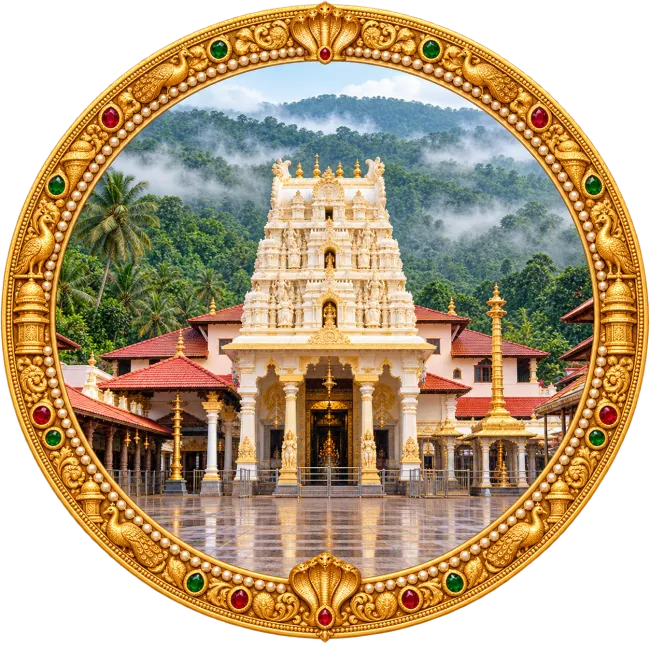
Kukke Subramanya Temple, Subramanya
Kukke Subramanya Temple in Karnataka is one of India’s most revered temples dedicated to Lord Subramanya, also known as Kartikeya, Murugan and Skanda. Situated in the village of Subramanya in Dakshina Kannada district, the temple is surrounded by the dense forests and mountains of the Western Ghats.
Lord Subramanya is worshipped here as the protector of serpents, along with Vasuki and Adishesha. The temple is especially famous for Sarpa Samskara, Ashlesha Bali and Naga Pratishtha—rituals performed for relief from Sarpa Dosha, Naga Dosha and difficulties associated with serpent-related karmic beliefs.
About Kukke Subramanya Temple
Kukke Subramanya Temple is situated near the Kumaradhara River at the base of Kumara Parvatha. The temple’s natural setting of rivers, forests and mountains contributes to its powerful spiritual atmosphere.
The principal deity is Lord Subramanya. Within the sanctum, Lord Subramanya is worshipped with Vasuki and Adishesha. According to tradition, Vasuki is present below the Lord, while Adishesha is worshipped at a lower level.
The sacred images are viewed through the sanctum entrance. Devotees seek the blessings of Subramanya for courage, good health, marriage, children and protection from negative influences.
The temple is one of Karnataka’s most important centres for Naga worship. Thousands of families visit specifically to perform rituals connected with Sarpa Dosha and ancestral obligations.
When and Who Built Kukke Subramanya Temple?
Kukke Subramanya is an ancient pilgrimage centre whose origin is associated with Puranic traditions rather than one documented construction event.
The worship of Lord Subramanya and Vasuki at this location is believed to have existed for many centuries. The temple’s religious traditions developed around the sacred Kumaradhara River, Kumara Parvatha and the forest caves associated with Vasuki.
Sri Madhvacharya visited Kukke Subramanya during the thirteenth century. The area subsequently became closely connected with the Madhva tradition and Subramanya Matha. Sri Vishnu Tirtha, Madhvacharya’s brother and disciple, is associated with the monastic tradition established here.
The present temple complex developed through support from regional rulers, including the Keladi Nayakas, local chieftains and later Karnataka administrations. Different structures, halls and facilities for pilgrims were added over time.
The current temple is therefore the result of centuries of worship, renovation and patronage rather than the work of one ruler.
Legend of Lord Subramanya and Vasuki
According to mythology, Vasuki, the king of serpents, was constantly threatened by Garuda, the divine eagle and vehicle of Lord Vishnu.
Seeking protection, Vasuki performed severe penance to Lord Shiva in the caves near Kumara Parvatha. Pleased with his devotion, Shiva assured him that his son Subramanya would provide protection.
After defeating the demon Tarakasura, Lord Subramanya arrived in the region. He granted refuge to Vasuki and promised to remain with him.
Vasuki and other serpents then took shelter beneath Lord Subramanya. This is why the deity at Kukke is worshipped as Subramanya accompanied by Vasuki and Adishesha.
Devotees believe that worshipping this combined form provides relief from serpent-related fears, doshas and karmic difficulties.
Legend of Tarakasura
Tarakasura was a powerful demon who had received a boon that he could be killed only by a son of Lord Shiva.
After Shiva and Parvati were united, Lord Subramanya was born with the purpose of defeating Tarakasura. He became the commander of the divine army and destroyed the demon in battle.
Following his victory, Subramanya came to Kumara Parvatha and washed his divine weapon in the sacred river. The river became known as Kumaradhara—the stream of Kumara.
According to tradition, the divine wedding of Lord Subramanya and Devasena was also celebrated in this region. Sacred waters from different rivers were used during the ceremony.
Meaning of the Name Kukke Subramanya
The word “Kukke” is associated with a basket, cave or protective enclosure in which sacred serpent images were preserved.
One tradition states that the Shiva Lingam and serpent images were carried or protected in a basket. Another connects the name with the caves in the surrounding hills where Vasuki sought shelter.
“Subramanya” is one of the principal names of Kartikeya, the son of Shiva and Parvati. The complete name identifies the sacred location where Lord Subramanya protects the serpent deities.
Religious Significance
Kukke Subramanya Temple is especially important for devotees experiencing problems traditionally associated with Sarpa Dosha, Naga Dosha or Kala Sarpa Dosha.
People visit the temple to pray for:
Relief from Sarpa Dosha
Blessings for children
Marriage and marital harmony
Good health and recovery from illness
Protection from poisonous creatures
Relief from repeated obstacles
Family peace and prosperity
Success in education and employment
Freedom from fear and anxiety
Protection from negative influences
Spiritual courage
Fulfilment of vows
Those performing Sarpa Samskara or Ashlesha Bali should follow the prescribed rules regarding food, dress, reporting time and accommodation.
Main Deity and Other Shrines
Lord Subramanya
Lord Subramanya is the principal deity and is worshipped as the divine protector of Vasuki and the serpent community.
The sanctum symbolically presents three levels:
Lord Subramanya at the upper level
Vasuki at the middle level
Adishesha at the lower level
Lord Ganesha
Lord Ganesha is worshipped before beginning major rituals. Devotees seek his blessings for the removal of obstacles.
Uma Maheshwara
Lord Shiva and Goddess Parvati are worshipped as the divine parents of Subramanya.
Other important deities and sacred places include:
Kukke Lingam
Bhairava
Vedavyasa Samputa Narasimha
Hosaligamma
Adi Subramanya
Naga deities
Sri Madhvacharya
Sri Vishnu Tirtha
Adi Subramanya Temple
Adi Subramanya Temple is situated near the main shrine and is an essential part of the pilgrimage.
A large anthill is worshipped here as the ancient residence of Vasuki and other serpent deities. Devotees offer milk, turmeric and prayers according to temple regulations.
Those performing Naga-related rituals generally visit Adi Subramanya as part of the prescribed ceremony.
Visitors should not disturb the anthill or make unauthorised offerings. All rituals must be performed under temple supervision.
Architecture of Kukke Subramanya Temple
The temple reflects the traditional architectural style of coastal Karnataka. Its design is suitable for the heavy rainfall and humid climate of the Western Ghats.
Main Sanctum
The sanctum houses Lord Subramanya with Vasuki and Adishesha. Traditional lamps illuminate the interior, creating a solemn and devotional atmosphere.
Access to the innermost section is restricted according to temple customs. Devotees receive darshan from the designated viewing area.
Entrance and Courtyard
The entrance leads into a spacious courtyard used by devotees waiting for darshan or participating in rituals. The structure includes sloping tiled roofs, wooden elements and stone foundations.
Garuda Pillar
A silver-covered Garuda pillar stands between the entrance and sanctum. According to local belief, the pillar protects devotees from the intense energy associated with Vasuki and the serpent deities.
Pilgrims traditionally walk around the pillar and offer prayers before approaching the sanctum.
Subramanya Matha
The nearby Subramanya Matha preserves the Madhva tradition and conducts religious activities, Vedic studies and worship.
Kukke Subramanya Temple Timings
The regular daily schedule is:
The schedule may be reorganised during Champa Shashti, Subramanya Shashti, special Ashlesha Nakshatra days and other crowded occasions.
Morning Puja and Mahamangalarathi
The temple opens at 5:00 AM with Gopuja and the ceremonial opening of the sanctum.
Suprabhata and morning Puja are conducted from 5:30 AM. Morning Abhishekam is performed from 6:00 AM to 7:00 AM.
Mahamangalarathi is offered at 7:00 AM. The best morning darshan period is from 6:30 AM to 9:30 AM.
Devotees who have booked Sarpa Samskara, Ashlesha Bali or another Seva should report at the time mentioned on their ticket rather than joining the general darshan queue first.
Madhyahna Mahapuja
Madhyahna Mahapuja is performed at 11:00 AM. The ceremony includes Archana, sacred lamps, flowers and Vedic chanting.
Madhyahna Naivedyam is offered at 12:00 PM. Food is ceremonially presented to Lord Subramanya and later treated as sacred prasadam.
The morning session ends at 1:30 PM, after which the temple closes for the afternoon break.
Evening Puja and Deepa Aradhana
The temple reopens at 3:30 PM. Evening Puja and Deepa Aradhana are performed at 6:30 PM.
The best evening darshan period is from 4:30 PM to 6:30 PM. Visitors can attend Deepa Aradhana before completing the remaining shrines.
Night Mahamangalarathi is offered at 8:00 PM. The temple closes at 8:30 PM.
Sarpa Samskara
Sarpa Samskara is the most important remedial ritual performed at Kukke Subramanya. It is traditionally undertaken for relief from Sarpa Dosha or karmic consequences associated with harm to serpents.
The ritual is normally conducted over two days. Participants must report at the prescribed time and follow instructions regarding dress, meals and religious discipline.
The ceremony includes Sankalpa, purification rites, offerings, Homa and worship of the serpent deities. Its exact sequence is conducted by authorised temple priests.
Participants should:
Book the Seva in advance
Carry valid identification
Arrive before the reporting time
Follow the prescribed vegetarian diet
Avoid alcohol and tobacco
Wear traditional clothing
Remain present for the complete ritual
Devotees should not leave before the priest confirms that the ceremony is complete.
Ashlesha Bali
Ashlesha Bali is performed to seek blessings from the Naga deities and reduce the effects associated with Sarpa Dosha.
The ritual is especially popular on days connected with Ashlesha Nakshatra. It includes Sankalpa, offerings and prayers to Lord Subramanya and the serpent deities.
The morning session is conducted between 7:00 AM and 9:00 AM. Reporting requirements may be earlier than the actual Puja time.
Ashlesha Nakshatra days attract large crowds, so advance booking and early arrival are recommended.
Naga Pratishtha
Naga Pratishtha involves the ceremonial installation or worship of serpent deities. It may be performed for family welfare, children and relief from Naga-related concerns.
The ritual should be arranged through authorised temple counters. Devotees should not install Naga stones independently or make offerings in unapproved areas.
Major Festivals
Champa Shashti
Champa Shashti is the most important annual festival at Kukke Subramanya. It celebrates Lord Subramanya’s victory over Tarakasura.
The festival includes processions, Rathotsava, special Puja and cultural programmes.
Subramanya Shashti
Subramanya Shashti is observed with fasting, Abhishekam, Archana and devotional worship.
Laksha Deepotsava
Thousands of lamps are lit throughout the temple complex. The illuminated shrine creates a magnificent devotional atmosphere.
Narasimha Jayanti
Special worship is conducted in connection with the Vedavyasa Samputa Narasimha tradition.
Nagara Panchami
Serpent deities receive special worship on Nagara Panchami. Devotees offer turmeric, flowers and prayers.
Other festivals include Deepavali, Ugadi, Ganesh Chaturthi and Makara Sankranti.
Sevas and Offerings
Important temple Sevas include:
Sarpa Samskara
Ashlesha Bali
Naga Pratishtha
Abhishekam
Panchamrita Abhishekam
Sahasranama Archana
Mahapuja
Deepa Seva
Vahana Puja
Tulabhara Seva
Annadanam donation
Festival sponsorship
Flowers, coconuts, fruits, turmeric and sacred lamps are common offerings.
All Seva tickets must be purchased through authorised counters or the approved booking system.
Prasadam and Annadanam
Sacred ash, kumkum and blessed items are distributed after worship. Food prasadam may be included with selected Sevas.
The temple provides free vegetarian meals to pilgrims in the designated dining hall. Those performing Sarpa Samskara should follow the specific meal arrangements provided for participants.
Devotees should accept food respectfully and avoid wastage.
Kumaradhara River
Pilgrims traditionally bathe in the Kumaradhara River before visiting the temple. The river is connected with Lord Subramanya’s victory over Tarakasura.
Visitors should use designated bathing ghats and follow safety instructions. River currents can become strong during the monsoon.
Those unable to bathe may wash their hands and feet before entering the temple. Clean, dry clothes should be worn for darshan.
Dress Code and Temple Rules
Traditional Indian clothing is recommended, particularly for Sarpa Samskara and Ashlesha Bali.
Men may wear a dhoti or traditional lower garment. Women may wear a saree, salwar kameez or another modest traditional outfit.
Men entering selected ritual areas may be required to remove shirts and upper garments.
Footwear must be removed before entering. Mobile phones, cameras and large bags may be restricted inside. Photography is prohibited near the sanctum.
Alcohol, tobacco, leather articles and non-vegetarian food must not be carried into the temple.
Entry Fee and Visit Duration
General darshan is available without an entry fee. Separate charges apply to Sarpa Samskara, Ashlesha Bali, Naga Pratishtha, Abhishekam and other Sevas.
A regular visit requires 1½ to 2 hours. Ashlesha Bali participants should reserve half a day, while Sarpa Samskara requires attendance over two days.
Waiting time is longer on Ashlesha Nakshatra days, weekends and festival occasions.
Best Time to Visit
October to February is the most comfortable period for visiting Kukke Subramanya. The weather is suitable for darshan and exploring the Western Ghats.
For peaceful darshan, visit between 6:30 AM and 9:00 AM on a weekday. Evening darshan from 4:30 PM to 6:30 PM is also convenient.
The monsoon brings heavy rainfall. The forests become beautiful, but roads, river ghats and trekking routes may become slippery.
How to Reach Kukke Subramanya Temple
By Air
Mangaluru International Airport is the nearest major airport. Taxis and buses are available from Mangaluru to Subramanya.
By Train
Subrahmanya Road Railway Station is the nearest station. It is located outside the temple town, and local buses, taxis and shared vehicles are available.
The station lies on the railway route connecting Mangaluru, Bengaluru, Mysuru and other destinations.
By Road
Kukke Subramanya is connected with Mangaluru, Bengaluru, Mysuru, Hassan, Dharmasthala and Madikeri.
Government and private buses operate regularly. Roads pass through hilly sections of the Western Ghats, so monsoon travellers should allow additional travel time.
Nearby Places to Visit
Visitors may also explore:
Adi Subramanya Temple
Kumaradhara River
Biladwara Cave
Subramanya Matha
Kashikatte Ganapati Temple
Vedavyasa Samputa Narasimha Temple
Kumara Parvatha
Bisle Ghat Viewpoint
Dharmasthala Manjunatha Temple
Southadka Mahaganapati Temple
Mallalli Falls
Madikeri
Visitor Guidelines
Book Sarpa Samskara and Ashlesha Bali in advance. Carry the booking confirmation and valid identification.
Arrive before the specified reporting time. Do not depend on unauthorised agents for Seva arrangements.
Take a bath or wash hands and feet before entering. Wear clean, dry and traditional clothing.
Follow all dietary and behavioural rules prescribed for multi-day rituals. Do not leave a ceremony before receiving instructions from the priest.
Avoid entering forest areas or trekking Kumara Parvatha without permits, preparation and suitable weather conditions.
Conclusion
Kukke Subramanya Temple is one of Karnataka’s most powerful centres of Lord Subramanya and Naga worship. Its association with Vasuki, Adishesha, Kumara Parvatha and the sacred Kumaradhara River gives it exceptional religious importance.
The temple’s Sarpa Samskara, Ashlesha Bali and Naga Pratishtha traditions attract devotees seeking protection, children, family welfare and relief from repeated obstacles. A visit to Kukke Subramanya offers an opportunity to experience devotion, natural beauty and the protective blessings of Lord Subramanya.