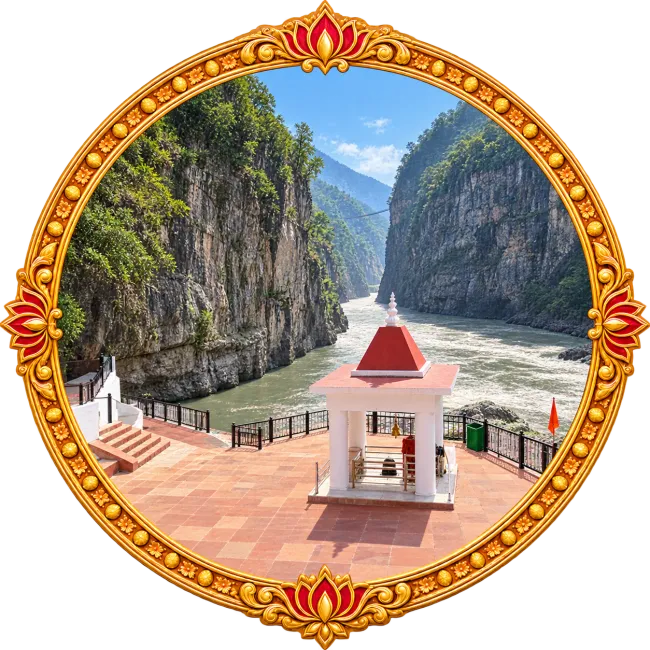
Koteshwar Mahadev Temple, Rudraprayag, Uttarakhand
Koteshwar Mahadev Temple is an ancient cave shrine dedicated to Lord Shiva. It is located on the banks of the Alaknanda River, approximately 3 kilometres from Rudraprayag town in Uttarakhand. The temple is known for its naturally formed Shiva Lingams, rocky cave and connection with Lord Shiva’s journey towards Kedarnath.
Surrounded by forested hills and the flowing Alaknanda, the shrine offers a peaceful environment for prayer and meditation. It is especially important during Mahashivratri and the month of Shravan.
About Koteshwar Mahadev Temple
Koteshwar Mahadev Temple is situated inside a natural cave beside the Alaknanda River. A descending pathway and stone steps connect the road with the cave entrance.
The name Koteshwar means the Lord of Crores or countless divine manifestations. The cave contains numerous natural rock formations that devotees worship as forms of Lord Shiva.
The principal Shiva Lingam is regarded as Swayambhu, meaning naturally manifested. Water naturally drips from the cave roof onto some of the sacred formations, creating an atmosphere resembling continuous Abhishekam.
The cave remains cool and damp throughout the year. Visitors must walk carefully because the stone floor can become slippery.
When Was Koteshwar Mahadev Temple Built and Who Built It?
Koteshwar Mahadev is a natural cave shrine rather than a temple constructed by a single historical ruler. Its worship tradition developed around the naturally formed Shiva Lingams inside the cave.
The site has been revered since ancient times because of its association with Lord Shiva and the Kedarnath region. Local rulers, priests, residents and devotees later developed the entrance, steps and worship areas.
Modern additions include protective railings, a paved approach, smaller structures and facilities for pilgrims. The natural cave and sacred rock formations remain the spiritual centre of the shrine.
Legend of Lord Shiva
According to local tradition, Lord Shiva meditated inside the Koteshwar cave while travelling towards Kedarnath.
The Pandavas were searching for Shiva after the Mahabharata war because they wanted forgiveness for the destruction caused during the conflict. Shiva did not wish to meet them immediately and travelled through the Himalayan region.
He rested and meditated in this cave before continuing towards Kedarnath. The natural Shiva Lingams are believed to preserve his divine presence.
Another tradition states that Lord Shiva used the cave as a place of meditation after receiving prayers from gods and sages.
Meaning of the Natural Formations
The cave contains several naturally shaped stones resembling Shiva Lingams. Devotees interpret them as countless manifestations of Mahadev.
The formations symbolise:
Shiva’s infinite nature
Divine presence in the natural world
Spiritual unity behind different forms
Protection from fear and suffering
Continuous creation and dissolution
Visitors should not touch, scratch or remove pieces from the cave formations.
Religious Significance
Devotees visit Koteshwar Mahadev to pray for:
Health and longevity
Protection from danger
Relief from fear
Forgiveness for past actions
Marriage and children
Family welfare
Safe Himalayan travel
Mental peace
Spiritual discipline
Fulfilment of wishes
Pilgrims travelling towards Kedarnath frequently include Koteshwar in their journey.
Architecture and Cave Interior
The shrine’s architecture is shaped primarily by the natural cave. Human construction is limited to the entrance, platforms, pathways and worship arrangements.
Important features include:
Natural cave chamber
Swayambhu Shiva Lingam
Multiple sacred rock formations
Dripping cave water
Stone worship platform
Small Mandapa near the entrance
River-facing steps
Protective railings
Smaller shrines
The cave has limited space, so visitors must move carefully and avoid crowding.
Alaknanda River
The Alaknanda flows directly beside the temple. Its sound contributes to the shrine’s peaceful atmosphere.
Devotees may touch the river water or perform prayers from designated areas. Entering the river is dangerous because the current can be extremely strong.
During the monsoon, the river level can rise rapidly. Access to lower steps and the cave may be restricted for safety.
Koteshwar Mahadev Temple Timings
The temple follows separate summer and winter schedules.
Summer Timings
Winter Timings
River conditions, heavy rain or maintenance can temporarily restrict entry to the cave.
Morning Puja and Aarti
The day begins with purification of the worship area and Mangal Puja. Morning Aarti is followed by Abhishekam of the sacred Shiva form.
The rituals include:
Water Abhishekam
Milk and curd
Honey
Bilva leaves
White flowers
Sandalwood
Sacred ash
Shiva mantra chanting
Incense and lamps
Morning Aarti
Because this is a natural cave, offerings should be made only in designated areas.
Bhog and Evening Aarti
Bhog is offered at noon. Fruits, sweets and simple Satvik preparations form part of the ceremony.
Evening Puja is followed by Aarti with lamps, incense and Shiva hymns. Visitors should leave the riverbank before darkness because the descending steps can be difficult to navigate at night.
Major Festivals
Mahashivratri
Mahashivratri is the largest festival at Koteshwar Mahadev. Devotees perform Abhishekam, observe fasting and participate in special Aarti.
Shravan Month
Mondays during Shravan attract many Shiva devotees. Water, milk and Bilva leaves are offered to Mahadev.
Kartik Purnima
Devotees offer lamps and prayers beside the Alaknanda.
Makar Sankranti
Special worship and charitable activities are organised.
Kedarnath Yatra Season
The temple receives additional visitors when the Kedarnath pilgrimage route is active.
Puja and Religious Services
Available ceremonies may include:
General Shiva Puja
Jalabhishek
Rudrabhishek
Mahamrityunjaya Mantra Path
Mahashivratri Puja
Shravan Monday worship
Health and protection prayers
Family welfare Puja
Journey-safety Puja
Havan
Puja arrangements should be made through authorised priests.
Offerings and Prasad
Traditional offerings include:
Water
Milk
Bilva leaves
White flowers
Fruits
Coconut
Sandalwood
Sacred ash
Incense
Clarified butter
Sweets
Monetary donations
Visitors should avoid excessive liquid offerings that can make the cave floor unsafe.
Dress Code and Temple Rules
Wear modest clothing and footwear suitable for wet stone steps.
Important rules include:
Remove footwear at the designated point.
Walk slowly inside the cave.
Use handrails.
Do not touch or damage natural formations.
Do not enter the river.
Follow photography restrictions.
Avoid alcohol and tobacco.
Keep plastic and ritual waste away from the river.
Deposit donations only at authorised counters.
Follow safety closures during heavy rain.
Entry Fee and Darshan Duration
General entry and darshan are free. Charges apply only to optional Pujas and ritual materials.
A normal visit requires 30–60 minutes. Additional time may be needed for the descent, ascent and riverside prayer.
Senior citizens and visitors with mobility difficulties should take extra care on the steps.
Best Time to Visit
March to June and September to November are suitable periods. The weather remains comfortable, and river conditions are usually safer.
The July–August monsoon can bring landslides, strong river currents and temporary access restrictions. Winter visits are possible but require warm clothing.
Morning between 7:00 AM and 10:00 AM is best for peaceful darshan.
How to Reach Koteshwar Mahadev Temple
By Air
Jolly Grant Airport near Dehradun is the nearest major airport.
By Train
Rishikesh, Yog Nagari Rishikesh and Haridwar are the nearest convenient railway stations.
By Road
Koteshwar is connected with Rudraprayag by a short mountain road. Taxis and local vehicles are available.
Accommodation and Facilities
Hotels, guest houses and Dharamshalas are available in Rudraprayag. Facilities near the cave are limited.
Visitors can find parking, Puja shops, basic refreshments and resting spaces near the approach. Wider medical and accommodation facilities are available in Rudraprayag town.
Nearby Places to Visit
Rudraprayag Sangam
Rudranath Temple, Rudraprayag
Dhari Devi Temple
Agasteshwar Mahadev Temple
Guptkashi Vishwanath Temple
Kalimath Temple
Omkareshwar Temple, Ukhimath
Triyuginarayan Temple
Kedarnath Temple
Kartik Swami Temple
Conclusion
Koteshwar Mahadev Temple is a sacred natural cave shrine connected with Lord Shiva’s journey towards Kedarnath. Its Swayambhu Lingams, dripping cave water and location beside the Alaknanda create a powerful spiritual environment.
Devotees visit the shrine to seek forgiveness, health, protection and peace. Careful walking, respect for the natural cave and attention to river conditions are essential for a safe and meaningful visit.