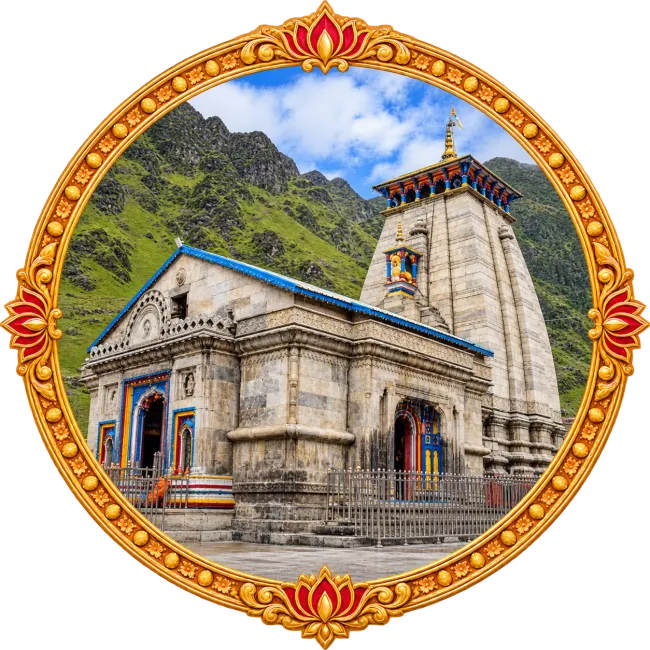
Kedarnath Temple, Uttarakhand
Kedarnath Temple is one of India’s most sacred Shiva temples. Situated in the Garhwal Himalayas of Uttarakhand, the shrine stands near the Mandakini River at an elevation of approximately 3,583 metres. It is one of the twelve Jyotirlingas, the most important shrine among the Panch Kedar temples and part of the Chota Char Dham pilgrimage.
Surrounded by snow-covered mountains, glaciers and dramatic valleys, Kedarnath Temple represents faith, endurance and spiritual surrender. Devotees undertake a demanding mountain journey to worship Lord Shiva in the form of a naturally shaped stone Lingam.
About Kedarnath Temple
Kedarnath Temple is located in the Rudraprayag district near the source of the Mandakini River. The shrine is dedicated to Lord Shiva as Kedarnath, meaning the Lord of the Field or sacred region.
The presiding deity is an irregular, triangular stone worshipped as the hump of Lord Shiva. Unlike conventional cylindrical Shiva Lingams, the natural form at Kedarnath is broad and uneven.
The temple remains accessible for only six months each year. Heavy snowfall makes the region inaccessible during winter. After the temple closes, the ceremonial image of Lord Kedarnath is taken to Omkareshwar Temple in Ukhimath, where winter worship continues.
When Was Kedarnath Temple Built and Who Built It?
According to Hindu tradition, the original shrine was established by the Pandavas after the Mahabharata war. They are believed to have constructed the first temple while seeking forgiveness from Lord Shiva.
The present stone temple is traditionally associated with Adi Shankaracharya, who revived the shrine during the 8th century CE. He re-established Kedarnath as an important centre of Shiva worship and helped strengthen the Himalayan pilgrimage tradition.
The structure has undergone repairs under different rulers, religious organisations and temple administrations. Its massive stone construction has allowed it to survive centuries of harsh Himalayan weather.
Legend of the Pandavas
After the Mahabharata war, the Pandavas felt guilty for the destruction and deaths caused during the conflict. They travelled to Kashi to seek forgiveness from Lord Shiva, but the Lord avoided them.
Shiva took the form of a bull and travelled to the Garhwal Himalayas. The Pandavas followed him and eventually recognised the bull near Guptkashi.
Bhima attempted to stop it, but Shiva began disappearing into the earth. Bhima caught the bull by its hump. Different parts of the divine bull then appeared at five locations:
Hump at Kedarnath
Arms at Tungnath
Face at Rudranath
Navel at Madhyamaheshwar
Hair at Kalpeshwar
These five temples became known as Panch Kedar. The Pandavas built shrines at each location and received Lord Shiva’s forgiveness.
Jyotirlinga Significance
Kedarnath is one of the twelve Jyotirlingas, where Shiva is worshipped as an infinite pillar of divine light.
The shrine is also considered the highest of the twelve Jyotirlinga temples. Devotees believe that worship at Kedarnath helps free a person from past karmic burdens and grants spiritual liberation.
Architecture of Kedarnath Temple
Kedarnath Temple is built from large grey stone slabs placed on a raised platform. The massive blocks fit together without extensive use of mortar.
The structure contains:
Garbhagriha
Mandapa
Entrance porch
Stone tower
Golden Kalasha
Nandi statue
Sculptures of Hindu deities
Images associated with the Pandavas
The sanctum houses the triangular stone form of Lord Kedarnath. The Mandapa contains images of Parvati, Krishna, Nandi, Veerabhadra, the Pandavas and other deities.
Behind the temple is the Samadhi associated with Adi Shankaracharya.
Kedarnath Temple Opening Season
Kedarnath Temple generally opens during April or May on an auspicious date declared before the pilgrimage season. Its doors close after Diwali, usually on Bhai Dooj.
The exact opening and closing dates are announced annually according to Hindu calendrical calculations. The temple remains closed to visitors throughout winter.
Kedarnath Temple Timings
The following schedule applies during the regular pilgrimage season. Weather, crowd management and special ceremonies can affect access.
Visitors should check the schedule displayed at Kedarnath after arrival because extreme weather or administrative restrictions can alter darshan arrangements.
Morning Puja and Aarti
The temple opens at 4:00 AM for Maha Abhishekam and special Puja. During morning worship, the sacred stone is bathed and worshipped with traditional offerings.
Morning rituals include:
Water Abhishekam
Milk and curd
Honey and clarified butter
Bilva leaves
Flowers
Sacred ash
Sandalwood
Shiva mantra chanting
Morning Aarti
During selected morning Puja arrangements, devotees may receive closer access to the sacred form according to temple rules.
Evening Puja and Aarti
In the evening, the natural stone form is cleaned and decorated with flowers, sandalwood, ornaments and sacred coverings.
Evening Aarti is performed between 6:00 PM and 7:30 PM. The sound of bells and Shiva hymns creates a powerful devotional atmosphere amid the Himalayan mountains.
Major Festivals
Opening-Day Ceremony
The arrival of Lord Kedarnath’s ceremonial image from Ukhimath marks the beginning of the pilgrimage season. The temple is decorated with flowers, and special Puja is conducted.
Badri-Kedar Utsav
This festival celebrates the sacred traditions of the Badrinath and Kedarnath regions through religious and cultural programmes.
Shravan Month
Special Shiva worship is performed during Shravan. Mondays are particularly important.
Raksha Bandhan
A traditional fair and special worship associated with Annakoot are organised during the pilgrimage season.
Closing-Day Ceremony
Before winter closure, special Puja is performed, and the ceremonial image is carried to Omkareshwar Temple in Ukhimath.
Mahashivratri
Because Kedarnath remains inaccessible during winter, Mahashivratri worship connected with Lord Kedarnath is conducted at the winter seat in Ukhimath.
Puja and Religious Services
Available services during the pilgrimage season may include:
Maha Abhishekam
Rudrabhishek
Laghu Rudrabhishek
Shodashopachar Puja
Mahamrityunjaya Mantra Path
Shiva Sahasranama
Morning Puja
Evening Aarti
Family welfare Puja
Health and protection prayers
Puja bookings should be completed through authorised temple arrangements.
Offerings and Prasad
Traditional offerings include:
Bilva leaves
Flowers
Water
Milk
Honey
Clarified butter
Sandalwood
Sacred ash
Dry fruits
Monetary donations
Because of the remote location, pilgrims should carry only small quantities of permitted offerings. Packaged prasad can be obtained near the shrine.
Dress Code and Temple Rules
Visitors should wear modest clothing suitable for extreme cold. Thermal layers, waterproof jackets, gloves and woollen caps are strongly recommended.
Important rules include:
Carry valid Yatra registration and identification.
Follow security and queue instructions.
Do not photograph restricted areas.
Remove footwear before entering.
Avoid touching sacred objects without permission.
Do not carry alcohol, tobacco or non-vegetarian food.
Do not litter on the trek.
Follow weather and evacuation announcements.
Do not continue trekking during unsafe conditions.
Entry Fee and Darshan Duration
General darshan is free. Charges apply to optional special Pujas and services.
Regular darshan may require one to three hours depending on crowds. During opening week, weekends and holidays, queues can take longer.
Pilgrims should reserve sufficient time for acclimatisation, rest and unpredictable mountain weather.
Best Time to Visit
May to June and September to October are the most suitable periods.
May and June provide comparatively moderate daytime conditions but attract heavy crowds. September and October offer clearer views and fewer monsoon disruptions, although temperatures are lower.
The July–August monsoon brings landslides, heavy rain and route interruptions. Kedarnath remains closed during winter.
How to Reach Kedarnath Temple
By Air
Jolly Grant Airport near Dehradun is the nearest major airport. Seasonal helicopter services operate from designated helipads near Guptkashi, Phata and Sersi, subject to weather and official bookings.
By Train
Rishikesh, Yog Nagari Rishikesh and Haridwar are the nearest convenient railway stations.
By Road
Road transport is available to Sonprayag. Pilgrims continue by authorised local vehicle to Gaurikund.
Trek from Gaurikund
The trek from Gaurikund to Kedarnath is approximately 16–18 kilometres, depending on the operational route. Available travel options include:
Walking
Pony
Palki
Pithoo
Helicopter service to nearby helipads
Accommodation and Facilities
Basic accommodation is available at Kedarnath, including guest houses, tents and dormitories. Facilities are also available in Guptkashi, Phata, Sonprayag and Gaurikund.
Pilgrim services include:
Medical posts
Drinking water
Toilets
Food stalls
Cloakrooms
Police and disaster-response assistance
Pony and Palki counters
Helicopter services
Emergency shelters
Nearby Places to Visit
Bhairavnath Temple
Adi Shankaracharya Samadhi
Retas Kund
Gandhi Sarovar
Vasuki Tal
Gaurikund Temple
Triyuginarayan Temple
Guptkashi Vishwanath Temple
Omkareshwar Temple, Ukhimath
Madhyamaheshwar Temple
Tungnath Temple
Conclusion
Kedarnath Temple is a sacred Jyotirlinga, the principal Panch Kedar shrine and one of the most important destinations in the Chota Char Dham pilgrimage. Its association with the Pandavas and Adi Shankaracharya gives it profound mythological and historical significance.
The massive stone architecture, triangular Shiva form and Himalayan surroundings create an extraordinary spiritual experience. With proper registration, physical preparation and respect for mountain conditions, devotees can undertake a safe and meaningful Kedarnath Yatra.