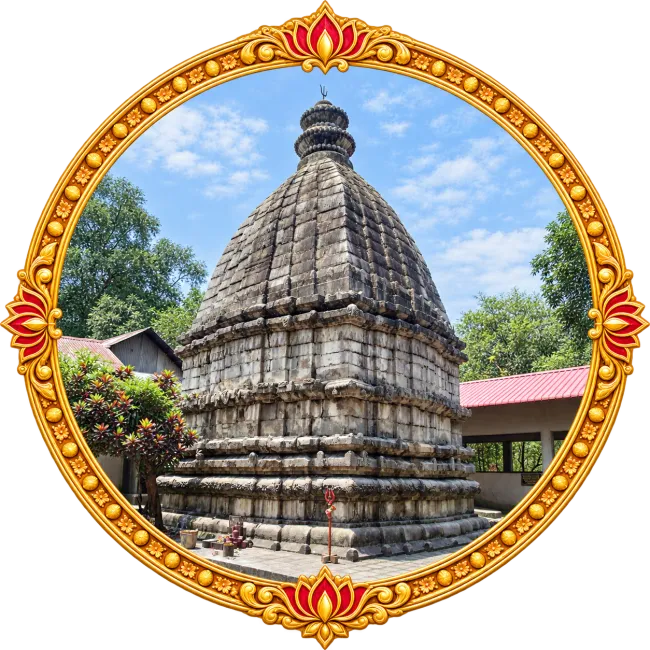
Kedareswara Temple, Hajo
Kedareswara Temple is a historic Shiva shrine situated on Madanachala Hill in Hajo, Assam. Dedicated to Lord Shiva in his Kedara form, the temple is an important part of Hajo’s multi-religious pilgrimage landscape.
The existing stone shrine was constructed during the 18th century under Ahom king Rajeswar Singha. Its self-manifested Shiva Lingam, hilltop location and association with Ardhanarishvara make it one of Assam’s notable Shaiva temples.
About Kedareswara Temple
Kedareswara Temple is located on Madanachala Hill, close to the other sacred sites of Hajo. A series of stone steps leads visitors from the lower approach to the temple.
The principal deity is a Shiva Lingam worshipped as Kedareswara Mahadev. The Lingam is traditionally regarded as Swayambhu, meaning it manifested naturally rather than being carved and installed by human hands.
The sacred Lingam is also associated with Ardhanarishvara, the combined form of Lord Shiva and Goddess Parvati. This form represents the unity of masculine and feminine energies and the inseparable relationship between Shiva and Shakti.
The temple is especially important on Mondays, Mahashivratri and during the month of Shravan.
When Was Kedareswara Temple Built and Who Built It?
The sacred site predates the present structure. The existing Kedareswara Temple was constructed during the reign of Ahom king Rajeswar Singha in the 18th century.
Rajeswar Singha ruled Assam from 1751 to 1769 and was an important patron of temples. He arranged for the construction of a permanent shrine around the ancient Shiva Lingam and granted land for its maintenance and daily worship.
The temple was constructed using stone and brick according to the architectural traditions followed by the Ahom kingdom. It later underwent repairs because of earthquakes, weather and age.
Modern additions include protective railings, improved steps and basic pilgrim facilities. The sanctum continues to preserve the sacred Lingam and its traditional form of worship.
Legend of Kedareswara Mahadev
According to local tradition, Lord Shiva established his presence on Madanachala Hill to bless the sages and devotees performing spiritual practices in the sacred region of Hajo.
The naturally formed Lingam became known as Kedareswara, connecting it symbolically with Lord Kedarnath of the Himalayas. Devotees who cannot undertake the difficult pilgrimage to Kedarnath sometimes worship Kedareswara Mahadev with the same devotion.
The shrine is also believed to represent Hara-Gauri—the united presence of Shiva and Parvati. Worshippers therefore pray here for marital harmony, family stability and spiritual balance.
Ardhanarishvara Significance
Ardhanarishvara represents Shiva and Shakti united in one divine form. One half symbolises Lord Shiva, while the other represents Goddess Parvati.
The form communicates several spiritual ideas:
Masculine and feminine energies are complementary.
Creation requires both consciousness and power.
Shiva and Shakti cannot be separated.
Spiritual balance arises through unity.
All apparent opposites originate from one divine reality.
Married couples visit Kedareswara Temple to pray for mutual understanding, stability and family happiness.
Religious Significance
Devotees worship Kedareswara Mahadev for:
Good health and longevity
Protection from danger
Marital harmony
Marriage and children
Family welfare
Relief from fear and stress
Success in work and education
Freedom from negative influences
Spiritual discipline
Fulfilment of wishes
The temple is part of the wider Hajo pilgrimage, which includes Hindu, Buddhist and Islamic sacred places.
Architecture of Kedareswara Temple
The temple reflects the architectural style of Assam’s Ahom period. It has a stone base, thick masonry walls and a dome-shaped superstructure.
The Garbhagriha contains the sacred Shiva Lingam. A metal covering is traditionally placed over the Lingam to protect it and regulate ritual offerings.
Architectural features include:
Stone and brick construction
Dome-like temple tower
Compact sanctum
Pillared entrance area
Stone steps
Temple courtyard
Ancient carvings
Smaller sacred structures
Hilltop viewpoints
A Nandi image faces the sanctum, following the traditional arrangement of Shiva temples.
Kedareswara Temple Timings
The temple follows a daily schedule for Puja, Abhishekam and Aarti.
During Mahashivratri and Shravan Mondays, extended darshan and special Abhishekam arrangements may be introduced.
Morning Puja and Aarti
The day begins with Mangal Puja and purification of the sanctum. Morning Aarti is performed at 6:00 AM.
The principal rituals include:
Water Abhishekam
Milk offering
Curd, honey and clarified butter
Bilva leaves
Flowers and sandalwood
Sacred ash
Shiva mantra chanting
Incense and lamps
Naivedya
Morning Aarti
Devotees may participate in Jalabhishek and other offerings according to instructions from the priests.
Bhog and Evening Aarti
Bhog is offered to Lord Kedareswara at noon. Fruits, sweets and Satvik food are presented to the deity.
Evening Puja begins at 5:30 PM, followed by Aarti at 6:30 PM. Devotees participate through the chanting of “Om Namah Shivaya” and traditional Shiva hymns.
Shayan Puja is performed before the shrine closes.
Major Festivals
Mahashivratri
Mahashivratri is the largest festival at Kedareswara Temple. Devotees offer water, milk, honey, flowers and Bilva leaves to the Shiva Lingam.
Special Abhishekam, Rudra Path, Aarti and devotional programmes are organised.
Shravan Month
Every Monday during Shravan is considered auspicious. Pilgrims perform Jalabhishek and observe fasting.
Kartik Purnima
Devotees light lamps and offer prayers to Lord Shiva and Goddess Parvati.
Makar Sankranti
Special worship and charitable activities are organised during Makar Sankranti.
Navratri
Because the sacred Lingam is associated with Ardhanarishvara, devotees also honour the Shakti aspect during Navratri.
Puja and Religious Services
Available ceremonies may include:
General Shiva Puja
Jalabhishek
Rudrabhishek
Mahamrityunjaya Mantra Path
Mahashivratri Puja
Shravan Monday Puja
Ardhanarishvara Puja
Marriage-related prayers
Family welfare Puja
Health and protection prayers
Havan
Puja arrangements should be made through authorised priests or temple representatives.
Offerings and Prasad
Traditional offerings include:
Water
Milk
Curd
Honey
Bilva leaves
White flowers
Fruits
Coconut
Sandalwood paste
Sacred ash
Incense
Clarified butter
Sweets
Monetary donations
Prasad generally includes fruits, coconut, sweets and blessed flowers.
Dress Code and Temple Rules
There is no rigid dress code, but visitors should wear clean and modest clothing. Comfortable footwear is recommended for climbing the hill, although shoes must be removed before entering.
Important rules include:
Follow the designated path.
Be cautious on wet or uneven steps.
Do not touch the Lingam without permission.
Follow photography restrictions.
Do not damage ancient carvings.
Keep the hill and temple clean.
Avoid alcohol, tobacco and non-vegetarian food.
Deposit donations only at authorised counters.
Follow instructions from priests and temple staff.
Entry Fee and Darshan Duration
General entry and darshan are free. Charges apply only to optional Pujas, Abhishekam and ritual materials.
Darshan generally requires 20–40 minutes. Visitors should allow additional time for climbing the steps and exploring the hilltop.
During Mahashivratri and Shravan Mondays, waiting time can extend to several hours.
Best Time to Visit
October to March is the most comfortable period for visiting Hajo. The weather remains suitable for climbing Madanachala Hill.
Early morning between 7:00 AM and 10:00 AM is ideal for peaceful darshan. Mahashivratri provides the grandest devotional atmosphere but attracts the largest crowds.
The monsoon makes the surroundings green, but the stone steps can become slippery.
How to Reach Kedareswara Temple
By Air
Lokpriya Gopinath Bordoloi International Airport in Guwahati is approximately 35 kilometres from Hajo.
By Train
Guwahati Railway Station is the nearest major railway station. Buses and taxis are available for Hajo.
By Road
Hajo is connected with Guwahati, North Guwahati, Nalbari and nearby towns by road.
Accommodation and Facilities
Basic guest houses and lodges are available in Hajo. Guwahati provides a larger selection of hotels.
Facilities near the temple include:
Parking
Drinking water
Shoe-storage space
Puja shops
Basic toilets
Resting areas
Local transport
Prasad stalls
Nearby Places to Visit
Hayagriva Madhava Temple: A major Vishnu shrine on Monikut Hill.
Poa Mecca: A historic Islamic pilgrimage site.
Ganesha Temple: A local shrine on the Hajo pilgrimage route.
Madan Kamdev: An archaeological complex containing ancient sculptures.
Doul Govinda Temple: A Krishna shrine in North Guwahati.
Dirgheswari Temple: A historic Shakti shrine.
Aswaklanta Temple: A Vishnu temple overlooking the Brahmaputra.
Conclusion
Kedareswara Temple is an important Shaiva shrine combining ancient sacred tradition with the architectural heritage of the Ahom kingdom. Constructed under King Rajeswar Singha, the temple protects a self-manifested Lingam associated with Kedara Shiva and Ardhanarishvara.
The hilltop setting, daily Abhishekam, Mahashivratri celebrations and spiritual atmosphere attract devotees throughout the year. Visitors worship Kedareswara Mahadev for health, marital harmony, protection and inner peace.