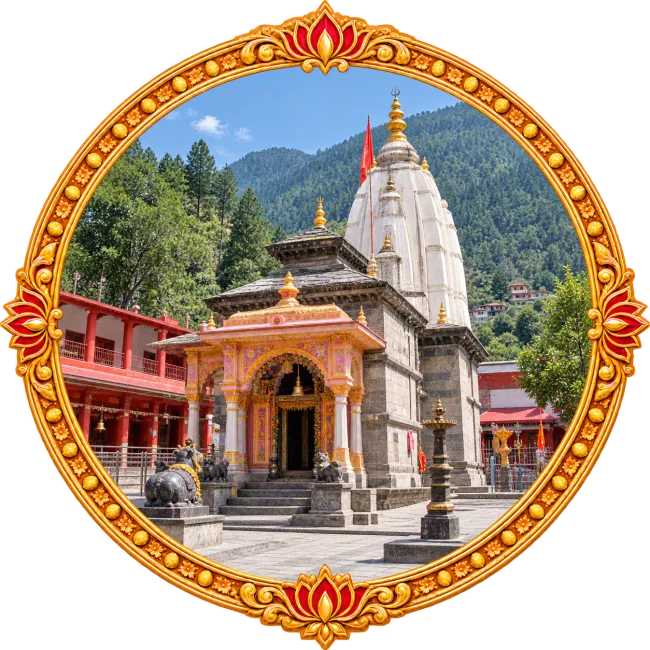
Kashi Vishwanath Temple, Uttarkashi
Visit Kashi Vishwanath Temple in Uttarkashi, a revered shrine dedicated to Lord Shiva in the Garhwal region of Uttarakhand. Situated in the town’s central area, the temple is an important destination for devotees travelling through the Bhagirathi Valley towards Gangotri.
The shrine is known for its Shiva Lingam, longstanding worship traditions and the Shakti Temple standing opposite it. Together, these sacred spaces form an important part of Uttarkashi’s religious identity as the “Kashi of the North.”
About Kashi Vishwanath Temple
Kashi Vishwanath Temple is located in Uttarkashi town, within the Himalayan landscape of the Bhagirathi Valley. Lord Shiva is worshipped here as Vishwanath, meaning “Lord of the Universe.”
The temple is a place of daily worship for local residents as well as pilgrims visiting the region. Its central location makes it accessible without the long mountain trek required to reach some of Uttarakhand’s higher-altitude shrines.
Opposite the main temple stands the Shakti Temple, distinguished by its enormous sacred trident. Visitors commonly include both shrines in the same visit.
History of Kashi Vishwanath Temple
Local religious tradition associates the original establishment of the shrine with Sage Parashurama.
A significant later restoration took place in 1857, when Maharani Khaneti, the wife of Tehri ruler Sudarshan Shah, renovated the temple. This restoration helped preserve the shrine as an active centre of Shiva worship.
The sacred complex also preserves an older historical connection through the inscription on the Shakti Temple’s trident. The inscription associates the construction of Vishwanath Temple with King Ganeshwar and the installation of the trident with his son Guh.
These accounts describe different aspects of the site’s heritage: its traditional origin, historical patronage and subsequent renovation.
Why Uttarkashi Is Called the Kashi of the North
The name Uttarkashi combines “Uttar,” meaning north, with “Kashi,” the sacred name associated with Varanasi.
The town’s religious character is closely connected with Lord Shiva, its riverfront setting and longstanding traditions of pilgrimage. Kashi Vishwanath Temple stands at the centre of this identity.
For devotees, visiting the shrine is an opportunity to experience Vishwanath worship in a Himalayan setting. The surrounding town remains closely connected with the pilgrimage routes leading towards Gangotri.
Religious Significance of Kashi Vishwanath Temple
Lord Shiva is worshipped as a compassionate protector and a guide towards spiritual understanding. Devotees come to the temple with prayers for peace, courage, family well-being and strength during difficult circumstances.
The temple supports both personal devotion and collective worship. A visit may involve quiet darshan, prayer before the Shiva Lingam or participation in the devotional atmosphere of the evening ceremonies.
Its importance also lies in continuity. Daily worship keeps the shrine connected with the lives of Uttarkashi’s residents, while visiting pilgrims become part of the same tradition.
Main Deity of the Temple
The principal deity is Lord Shiva, worshipped in the form of a Shiva Lingam within the sanctum.
The Lingam has a distinctive southward inclination. Images of Goddess Parvati and Lord Ganesha are also associated with the inner shrine, while Nandi occupies a position in the outer chamber.
These sacred figures connect the main shrine with the wider traditions of Shiva and his divine family. Devotees may offer a simple prayer or quietly recite “Om Namah Shivaya” while waiting for darshan.
Shakti Temple and the Sacred Trident
The Shakti Temple stands directly opposite Vishwanath Temple within the sacred courtyard. It is dedicated to the divine feminine power represented by Goddess Shakti.
Its most distinctive feature is a massive trident rising above the shrine. The trident is both an object of worship and an important historical feature because of the inscription it carries.
The presence of Shiva and Shakti shrines facing each other gives the complex a distinctive religious character. Devotees can offer prayers at both without making a separate journey.
Architecture of Kashi Vishwanath Temple
The temple has a compact layout centred on the sanctum and its Shiva Lingam. The approach through the courtyard allows visitors to appreciate the relationship between the Vishwanath and Shakti shrines.
Important features of the complex include:
The principal sanctum dedicated to Lord Shiva.
The outer chamber containing Nandi.
Images associated with Shiva’s divine family.
The facing Shakti Temple.
The large trident forming a prominent courtyard landmark.
The building’s religious character comes primarily from its active worship spaces and sacred objects. Visitors should allow time to observe the complex respectfully rather than treating it only as a brief photography stop.
Kashi Vishwanath Temple Timings
The regular visiting hours are 6:00 AM to 8:00 PM.
Festival ceremonies can affect the regular daily arrangements. Plan enough time for darshan at both the Vishwanath and Shakti shrines.
Morning Puja and Darshan
Morning offers an opportunity to begin the day with worship of Lord Vishwanath. Visitors can arrive during the morning darshan period, offer prayers and spend a few quiet moments in the temple courtyard.
Keep offerings ready before entering the queue and avoid stopping in narrow passages. Families travelling together should complete their prayers without blocking access for other devotees.
Evening Puja and Aarti
Evening worship is a distinctive part of the temple’s devotional atmosphere. Bells and the chanting of mantras accompany the priests’ ceremonies.
For visitors staying in Uttarkashi, evening worship can provide a meaningful conclusion to the day. Maintain silence near the sanctum and follow the arrangements made for those attending the ceremony.
Festivals and Religious Occasions
Maha Shivratri
Maha Shivratri is an important occasion for worship at the temple. Devotees gather to pray to Lord Shiva and participate in the festival’s devotional practices.
Shravan
The month of Shravan holds particular significance for Shiva devotees. The temple receives worshippers offering prayers during this sacred period, especially on Mondays.
Magh Mela
Uttarkashi’s Magh Mela brings religious activity and community gatherings to the town. A visit to Vishwanath Temple can form part of the pilgrimage experience during this period.
Offerings and Devotional Etiquette
Keep offerings simple and manageable. Present them only in the designated worship areas and avoid placing materials on passageways or historic features.
Do not leave flowers, food or packaging in the courtyard or near the river. Treat the sacred trident and other objects of worship respectfully, following the arrangements for approaching them.
A meaningful visit can consist of quiet darshan, prayer and a few moments of reflection without elaborate rituals.
How to Reach Kashi Vishwanath Temple
By Air
Jolly Grant Airport in Dehradun provides air access for travellers continuing towards Uttarkashi. The remaining journey is by road.
By Train
Rishikesh is a railway access point for the journey to Uttarkashi. Continue by bus or taxi through the mountain road network.
By Road
Uttarkashi lies on the route towards Gangotri. The temple is centrally located and can be reached with a short local walk from the town’s bus-stand area.
When arranging transport, specify Kashi Vishwanath Temple, Uttarkashi to identify the destination correctly.
Nearby Places to Visit
Shakti Temple
Located opposite the main shrine, Shakti Temple is the closest sacred stop and is known for its monumental trident.
Kuteti Devi Temple
Kuteti Devi Temple is another religious destination associated with Uttarkashi. Its local legend includes a connection with worship at Vishwanath Temple.
Bhagirathi Riverfront
The riverfront provides another setting for appreciating Uttarkashi’s religious landscape. Remain on established paths and avoid entering fast-flowing water.
Important Visitor Guidelines
Wear clean, modest clothing.
Remove footwear before entering designated sacred areas.
Keep your phone silent during worship.
Respect photography restrictions.
Follow the darshan queue.
Avoid obstructing the courtyard and shrine entrances.
Treat the sacred trident with care.
Keep children close during crowded periods.
Allow extra time during Shiva festivals.
Dispose of packaging responsibly.
Follow instructions from temple staff.
Plan mountain-road travel during daylight.
Conclusion
Kashi Vishwanath Temple is an important expression of Uttarkashi’s identity as the Kashi of the North.
Its Shiva shrine, historical restoration and connection with the facing Shakti Temple give the complex religious and cultural significance. Whether visited during a journey to Gangotri or as part of a stay in Uttarkashi, it offers an opportunity for prayer and reflection within the living traditions of the Bhagirathi Valley.