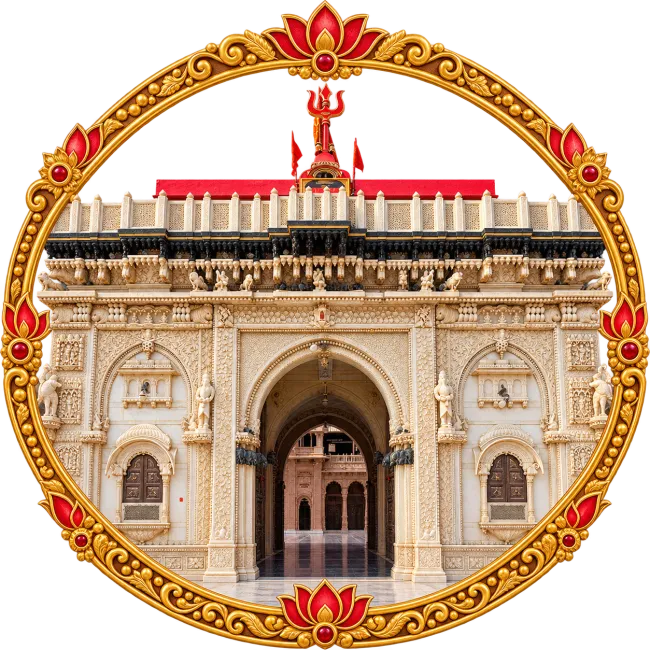
Karni Mata Temple, Deshnok
Visit Karni Mata Temple in Deshnok, one of Rajasthan’s most distinctive and revered Shakti shrines. Situated approximately 30 kilometres south of Bikaner, the temple is dedicated to Karni Mata, a respected Charan spiritual figure worshipped as an incarnation of Goddess Durga. The temple is internationally known for the thousands of sacred rats called kabas that live freely within its premises. Its present white-marble structure was developed in the early twentieth century under Maharaja Ganga Singh of Bikaner.
About Karni Mata Temple, Deshnok
Karni Mata Temple is situated in the town of Deshnok in Rajasthan’s Bikaner district. It is also called Madh Deshnok and is regarded as the principal centre of Karni Mata worship.
Karni Mata is revered as a manifestation of Shakti and the Kuldevi of the Rathore rulers of Bikaner and Jodhpur. She is remembered as a spiritual leader who worked for social welfare, protected local communities and guided the rulers of Marwar and Bikaner.
The temple is popularly known as the “Rat Temple” because thousands of small rats live inside the complex. Local devotees respectfully call them kabas rather than ordinary rats. They are protected, fed and treated as members of the sacred temple community.
The primary worship at the temple is dedicated to Karni Mata. The kabas are cared for because of religious traditions connecting them with Mata Ji’s followers and descendants.
White kabas are particularly significant. Devotees consider seeing one an auspicious sign and a special blessing from Karni Mata. Visitors often wait patiently near feeding areas in the hope of seeing a white kaba.
History of Karni Mata Temple
Karni Mata was a respected Charan sage who lived between the fourteenth and sixteenth centuries. She followed an ascetic life and became known for helping poor, vulnerable and distressed people.
She is traditionally regarded as an incarnation of Goddess Durga. Her influence extended across the kingdoms of Marwar and Bikaner, where rulers sought her advice and blessings.
Karni Mata founded the settlement of Deshnok in 1419. The town gradually developed as an important centre for her followers and members of the Charan community.
She had close historical and spiritual connections with the Rathore rulers. Traditional accounts associate her with Rao Jodha, the founder of Jodhpur, and Rao Bika, the founder of Bikaner. She is also connected through local tradition with the foundation ceremonies of Mehrangarh Fort and the early Bikaner fort.
After Karni Mata’s Mahaprayan, a shrine was established at Deshnok near the place associated with her spiritual presence. The earliest temple was comparatively small and centred on the main sanctum.
Over the following centuries, devotees and the rulers of Bikaner expanded the shrine. The present marble structure was completed in the early twentieth century under the patronage of Maharaja Ganga Singh of Bikaner, who ruled from 1888 to 1943.
Maharaja Ganga Singh commissioned the grand marble façade and magnificent silver doors. Later patrons and devotees contributed additional decorations and facilities.
Today, Karni Mata Temple is administered by a local temple trust, while the traditional puja and aarti are performed by priests belonging to Karni Mata’s Depawat lineage.
Who Built Karni Mata Temple?
The original shrine at Deshnok developed after the lifetime of Karni Mata during the early sixteenth century. It was gradually expanded by her followers, the Charan community and the rulers of Bikaner.
The present grand marble structure was commissioned and completed during the early twentieth century by Maharaja Ganga Singh of Bikaner. He contributed significantly to the temple’s white-marble façade, silver doors and overall development.
Therefore, the sacred tradition and earliest shrine are several centuries old, while much of the structure visible today dates from the reign of Maharaja Ganga Singh.
Religious Significance of Karni Mata Temple
Karni Mata is worshipped as an incarnation of Goddess Durga and the protective deity of the Rathore rulers. She represents courage, compassion, justice, protection and service to society.
Devotees pray to Karni Mata for:
- Protection from difficulties
- Courage and mental strength
- Family welfare
- Marriage and children
- Success in important work
- Relief from fear
- Peace and prosperity
- Fulfilment of sincere wishes
- Protection during travel
Newly married couples frequently visit the temple to seek blessings for a happy married life. Families also bring newborn children for blessings and traditional ceremonies.
The temple has special importance for members of the Charan community and Rathore families, but devotees belonging to many communities visit throughout the year.
Why Are Rats Considered Sacred?
The kabas living inside Karni Mata Temple are associated with several religious traditions. The most widely followed story concerns Laxman, the son or stepson of Karni Mata.
According to the legend, Laxman died after drowning while attempting to drink water. Karni Mata requested Yama, the god of death, to restore his life. Yama initially refused but later granted a special arrangement through which Karni Mata’s male descendants would be reborn as kabas before returning to human life.
Another tradition regards the kabas as departed members of Karni Mata’s community who remain under her protection.
The kabas are provided with milk, grains, coconuts and sweets in large containers. They move freely through the courtyards, passages and areas near the sanctum.
Seeing a white kaba is considered especially auspicious. White kabas are traditionally associated with Karni Mata and her close family members.
Visitors must walk carefully to avoid accidentally stepping on a kaba. According to temple custom, if someone accidentally kills one, that person may be expected to offer a silver replica as an act of atonement.
Architecture of Karni Mata Temple
Karni Mata Temple displays traditional Rajput architecture with decorative marble work and selected Mughal influences. The present structure was primarily developed under Maharaja Ganga Singh.
White-Marble Façade
The front portion of the temple is constructed from white marble. Detailed carvings of flowers, animals, religious symbols and decorative patterns can be seen on its surface.
Silver Doors
The temple is famous for its solid silver doors. Different panels portray legends and religious scenes associated with Karni Mata.
Main Sanctum
The main sanctum houses the sacred image of Karni Mata. The deity is decorated with a crown, jewellery, flowers, colourful garments and sacred ornaments.
Only designated priests following the traditional system are permitted to enter the innermost section of the sanctum.
Courtyards and Kaba Areas
The open courtyards contain feeding vessels and bowls of milk for the kabas. Protective mesh has been installed above certain areas to prevent birds of prey from entering and harming them.
Lion Figures
Lion figures can be seen near the temple entrance. The lion is traditionally associated with Goddess Durga and represents courage and divine power.
Karni Mata Temple Timings
The temple remains open daily from early morning until night.
Temple timings may be extended or modified during Chaitra Navratri, Sharadiya Navratri and special religious ceremonies.
Best Time for Darshan
The best time for a peaceful darshan is between 5:00 AM and 7:00 AM. The temple is less crowded, and the kabas are generally more active during the cooler morning hours.
Devotees wishing to attend Mangala Aarti should arrive before 4:30 AM in summer and before 5:00 AM in winter.
The evening period before Sandhya Aarti is also suitable. However, weekends and festival days receive larger crowds.
October to March is the most comfortable season for travelling to Deshnok. Early morning is preferable during summer because the afternoon temperature can become extremely high.
Chaitra and Sharadiya Navratri provide the grandest devotional atmosphere, but visitors should expect long queues and extensive crowd-control arrangements.
Daily Puja and Aarti
Daily worship begins with Mangala Aarti. The sanctum is opened, and the deity is prepared for the first darshan.
Mangala Aarti
Mangala Aarti is performed at 4:30 AM in summer and 5:00 AM in winter. Lamps, incense, flowers and devotional hymns are offered to Karni Mata.
Bhog Aarti
Bhog Aarti takes place at 8:00 AM. Food is ceremonially offered to Mata Ji before being distributed or used according to temple customs.
Shringar Aarti
Shringar Aarti is performed at 3:45 PM. The deity is adorned with garments, jewellery, flowers and decorative ornaments.
Sandhya Aarti
Sandhya Aarti takes place at 7:00 PM in summer and 6:00 PM in winter. Devotees gather for collective prayer, lamps and traditional devotional singing.
Shayan Aarti
Shayan Aarti is the final major ceremony of the day and takes place at 9:00 PM. It symbolically prepares the deity for the night’s rest.
Major Festivals Celebrated at the Temple
Chaitra Navratri Fair
The first annual Karni Mata fair is held during Chaitra Navratri in March or April. It begins on Chaitra Shukla Pratipada and continues through Navratri.
Thousands of devotees travel to Deshnok, many completing part of their pilgrimage on foot.
Sharadiya Navratri Fair
The second major fair takes place during Sharadiya Navratri in September or October. Special puja, aarti, devotional singing and community programmes are organised.
Durga Ashtami and Navami
Ashtami and Navami are among the busiest days at the temple. The deity receives special shringar, and large numbers of devotees offer chunari and coconuts.
Karni Mata Jayanti
Karni Mata Jayanti is celebrated with special worship, bhajans, religious processions and community gatherings.
Oran Parikrama
The sacred Oran associated with Deshnok extends across a protected traditional landscape. During Navratri, devotees participate in a long parikrama connected with Karni Mata’s environmental and religious traditions.
Offerings and Prasad
Devotees offer prayers to Karni Mata and also provide food for the kabas.
Common offerings include:
- Milk
- Sweets
- Grains
- Coconut
- Flowers and garlands
- Red chunari
- Sindoor
- Fruits
- Ghee for lamps
- Mata Ji’s shringar items
Large bowls and containers are placed inside the temple for feeding the kabas. Visitors should use designated feeding areas rather than scattering food across walking paths.
Food touched or shared by a kaba is considered sacred by many devotees. Participation in this custom is a matter of personal religious belief.
Entry Fee and Photography
There is no entry fee for regular darshan at Karni Mata Temple. Voluntary donations can be made through authorised counters or donation boxes.
A small fee may apply for photography or videography. Photography can be restricted near the sanctum and during important rituals.
Visitors should obtain permission before using professional cameras, tripods or recording equipment.
A normal visit requires 45 minutes to one hour. During Navratri, darshan may take several hours.
How to Reach Karni Mata Temple
By Air
Nal Airport, also known as Bikaner Airport, is the nearest airport and is approximately 40–45 kilometres from Deshnok.
Jodhpur Airport is another major option for travellers arriving from cities not connected directly with Bikaner.
By Train
Deshnok Railway Station is approximately 500 metres from the temple. Passenger and selected express trains connect Deshnok with Bikaner and other regional destinations.
Bikaner Junction is approximately 30 kilometres from the temple and has better rail connectivity with Delhi, Jaipur, Jodhpur, Ahmedabad and other cities.
By Road
Deshnok is approximately 30 kilometres south of Bikaner and is connected by a good road.
Government buses, private buses, taxis and shared vehicles operate between Bikaner and Deshnok. The road journey generally takes 40–60 minutes depending on traffic.
Parking facilities are available near the temple, but access may be regulated during Navratri.
Nearby Places to Visit
Karni Mata Panorama
Karni Mata Panorama contains sculptures, paintings and displays portraying important events from the life of Karni Mata.
Nehri Ji Temple
Nehri Ji Temple is associated with the early settlement and spiritual traditions of Karni Mata in Deshnok.
Junagarh Fort
Junagarh Fort in Bikaner contains royal palaces, courtyards, weapons, paintings and museum galleries.
Shri Lakshminath Temple
This historic temple is dedicated to Lord Vishnu and Goddess Lakshmi and was closely connected with the rulers of Bikaner.
Bhandasar Jain Temple
Bhandasar Jain Temple is known for its frescoes, gold-leaf paintings, mirror work and red-sandstone architecture.
Shivbari Temple
Shivbari Temple, also known as Laleshwar Mahadev Mandir, is a nineteenth-century Shiva shrine built by Maharaja Dungar Singh.
Visitor Guidelines
- Remove footwear before entering the temple.
- Walk slowly and carefully because kabas move freely across the floor.
- Do not kick, chase, frighten or intentionally touch the kabas.
- Keep children close and explain the temple rules before entering.
- Do not carry leather items into restricted worship areas.
- Use designated places for feeding milk, grains or sweets.
- Do not scatter food on busy walking routes.
- Avoid using flash near animals and the sanctum.
- Follow instructions issued by priests and temple staff.
- Maintain silence near the main deity.
- Do not touch the deity or silver doors without permission.
- Use authorised donation boxes.
- Wash your hands after feeding or touching surfaces used by the kabas.
- Visitors with allergies or compromised immunity should take suitable health precautions.
- Arrive early during Navratri to avoid peak crowds.
- Wear clothing that covers the body respectfully.
- Carry socks only if permitted under current temple rules, as footwear must be removed.
Conclusion
Karni Mata Temple in Deshnok is one of Rajasthan’s most distinctive places of worship. Its importance comes from the spiritual legacy of Karni Mata, her connection with the Rathore rulers and the unusual tradition of protecting thousands of sacred kabas.
The original shrine developed during the early sixteenth century, while the present marble structure was completed under Maharaja Ganga Singh in the early twentieth century. Its carved marble façade, silver doors, sacred sanctum and living community of kabas create a religious environment unlike any other temple.
A visit to Karni Mata Temple offers an opportunity to understand Rajasthan’s Shakti worship, Charan traditions, royal history and respect for living beings. Visitors who follow temple customs and walk carefully can experience this remarkable shrine in a peaceful and respectful manner.