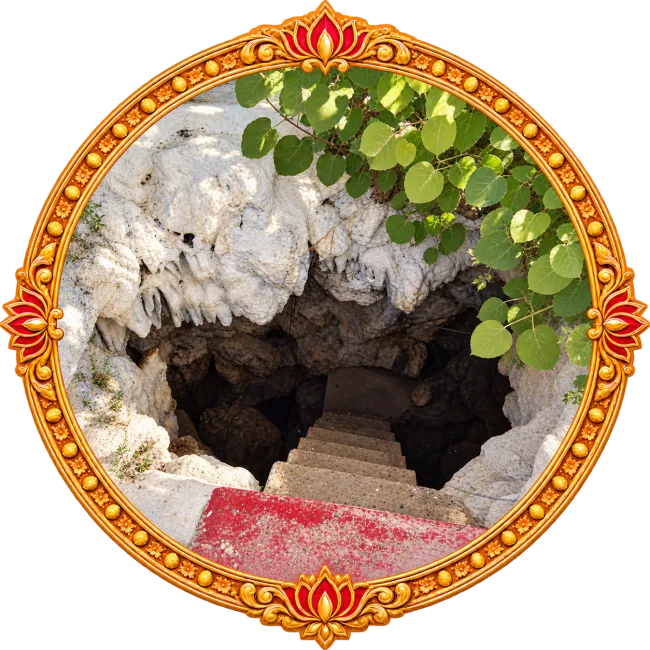
Kapileshwar Mahadev Temple, Pithoragarh
Visit Kapileshwar Mahadev Temple in Pithoragarh, a sacred cave shrine dedicated to Lord Shiva. Situated on a hillside near Ancholi, the temple combines Shiva worship with the natural surroundings of Uttarakhand’s Soar Valley.
The shrine is located inside a cave, where a natural rock formation is worshipped as Kapileshwar Mahadev. Its association with Sage Kapil, narrow cave passages and views of the surrounding mountains make it a distinctive pilgrimage destination near Pithoragarh.
About Kapileshwar Mahadev Temple
Kapileshwar Mahadev Temple is situated approximately 3 kilometres from Pithoragarh, with the actual approach depending on the starting point and route.
The temple lies within a natural cave on a hill near Ancholi village. Reaching it involves an uphill walk followed by entry through a narrow passage.
Lord Shiva is worshipped here in a natural rock form. The hillside outside the cave offers views across the Soar Valley, also spelt Saur Valley, and towards the Himalayan ranges in clear weather.
History and Spiritual Tradition
The temple’s religious identity is closely associated with Sage Kapil, also known as Kapil Muni.
According to local tradition, the sage meditated in this cave. His association with the place is reflected in the name Kapileshwar.
The shrine’s significance centres on the natural cave, its sacred rock formation and the continuation of Shiva worship. Its setting recalls the Himalayan tradition of caves serving as places for meditation and spiritual discipline.
For devotees, visiting the temple is an opportunity to honour Lord Shiva and remember the contemplative life associated with Kapil Muni.
Legend of Sage Kapil
Kapil Muni is revered in Hindu tradition as a great sage and is associated with the teachings of Sankhya philosophy. Some traditions regard him as an incarnation of Lord Vishnu.
The local account places his meditation within the Kapileshwar cave. The secluded surroundings are believed to have provided a suitable setting for deep spiritual practice.
This association gives the temple a character connected with meditation, self-knowledge and devotion. The story belongs to the site’s religious tradition rather than a dated account of its construction.
Religious Significance of Kapileshwar Mahadev Temple
Lord Shiva is worshipped as Mahadev, the great deity associated with spiritual transformation, compassion and liberation.
At Kapileshwar, the cave setting encourages visitors to slow down and concentrate on prayer. The journey uphill and into the shrine forms part of the devotional experience.
Devotees offer prayers for:
Peace and well-being within the family
Courage during difficult circumstances
Patience and self-discipline
Clarity in important decisions
Spiritual growth
Gratitude for blessings received
A simple visit can include darshan, quiet prayer and the recitation of Om Namah Shivaya.
Main Deity of the Temple
The principal object of worship is a natural rock formation associated with Lord Shiva, situated inside the cave.
Devotees revere this form as Kapileshwar Mahadev. The natural surroundings are central to the shrine’s identity, with the cave itself forming the sacred space around the deity.
Visitors should approach the worship area carefully and avoid touching surrounding formations or ritual materials without permission.
Cave Structure and Temple Approach
The cave extends more than 25 feet below its entrance level. Reaching the inner shrine involves passing through confined sections.
The uphill approach can take approximately an hour, depending on the starting point, walking pace and conditions. Allow additional time for entering the cave and returning downhill.
Important features of the visit include:
An uphill approach to the shrine
A natural cave containing the sacred rock formation
Narrow passages leading towards the worship space
Uneven surfaces requiring careful footing
Views of the valley from the hillside outside
The cave interior and the outdoor viewpoint offer different experiences: worship takes place within the enclosed shrine, while the wider scenery is enjoyed outside.
Kapileshwar Mahadev Temple Timings
Visits are generally described as taking place between sunrise and sunset. A fixed daily opening, closing or Aarti time is not sufficiently established to present as an exact temple schedule.
These are suggested visiting periods, not official temple opening or ceremony times. They allow time for the climb, cave darshan and return in daylight.
Morning Puja and Darshan
A morning visit allows devotees to complete the approach and receive darshan with ample daylight remaining.
Keep offerings small and easy to carry. Inside the cave, allow sufficient space between visitors and avoid blocking the narrow passage.
After darshan, visitors can spend a few quiet moments outside, where there is more space for personal prayer and reflection.
Evening Worship
Devotees visiting later in the day should leave enough time for both cave access and the descent.
The hill path and confined interior require greater care when natural light is fading. An early afternoon visit is a practical option for those who cannot arrive in the morning.
During any worship taking place inside, follow the order of entry and avoid crowding the ritual area.
Offerings at Kapileshwar Mahadev Temple
Simple offerings associated with Shiva worship include:
Water
Bel leaves
Fresh flowers
Fruit
Sweets
Present offerings only through the temple’s designated arrangements. Avoid pouring liquids on walking surfaces, where they can make the rock slippery.
Do not light personal candles or incense inside confined passages. Keep packaging and waste with you until a suitable disposal point is available.
Festivals and Important Religious Occasions
Mahashivratri
Mahashivratri is an important occasion at Kapileshwar Mahadev Temple. Devotees gather for Shiva worship, and accounts of the temple describe a fair and night vigil associated with the festival.
Shravan Month
Shravan is a significant period in Shiva devotion. Worshippers traditionally offer water and bel leaves and observe prayers or fasting according to their family practices.
Mondays
Monday is traditionally dedicated to Lord Shiva. Devotees may choose the day for darshan, mantra recitation and personal prayer.
Festival visits require extra time because the cave passage limits the number of people who can move through comfortably.
Best Time to Visit
March to June and September to November are suitable periods for combining temple darshan with sightseeing in Pithoragarh.
Choose a dry day when possible. Rain can make the approach and cave surfaces more slippery.
Carry a warm layer during colder months. Even when the town feels comfortable, shaded hill paths and cave interiors can feel cooler.
How to Reach Kapileshwar Mahadev Temple
By Air
Naini Saini Airport is the local airport serving Pithoragarh. The district administration places it approximately 10 kilometres from the shrine area. Flight availability determines whether this is a practical option for a particular journey.
By Train
Tanakpur and Kathgodam are railway gateways for the onward road journey to Pithoragarh. The most convenient choice depends on the traveller’s starting city and available connections.
By Road
Reach Pithoragarh town and continue towards the Ancholi area. Local transport can take visitors towards the walking approach.
Final Approach
The final section requires an uphill walk. Vehicles do not provide direct access to the inner cave shrine.
Wear shoes with a firm grip and carry only essential belongings.
Nearby Places to Visit
Pithoragarh Fort: A historic landmark in the town.
Chandak: A hill area visited for views and outings.
Mostamanu Temple: A religious destination in the Pithoragarh region.
Dhwaj Temple: A separate hill pilgrimage requiring additional walking.
Nakuleshwar Temple: Another Shiva shrine that can form part of a wider itinerary.
These destinations are separate excursions rather than stops within the cave complex.
Important Visitor Guidelines
Wear modest clothing and shoes with good grip.
Carry drinking water and a small torch.
Walk slowly on uneven or wet surfaces.
Avoid entering the narrow passage alone.
Keep enough space between visitors inside the cave.
Do not force your way through a confined section.
Consider the narrow access when planning a visit with elderly people or anyone uncomfortable in enclosed spaces.
Avoid touching or damaging cave formations.
Respect photography restrictions near the deity.
Keep the cave and hillside free from litter.
Complete the return walk before darkness.
Conclusion
Kapileshwar Mahadev Temple offers a distinctive form of Shiva pilgrimage through its natural cave setting and association with Kapil Muni.
The sacred rock formation, hillside approach and views across the Soar Valley connect devotion with Pithoragarh’s landscape. A carefully planned daytime visit allows time for darshan, reflection and a comfortable return journey.