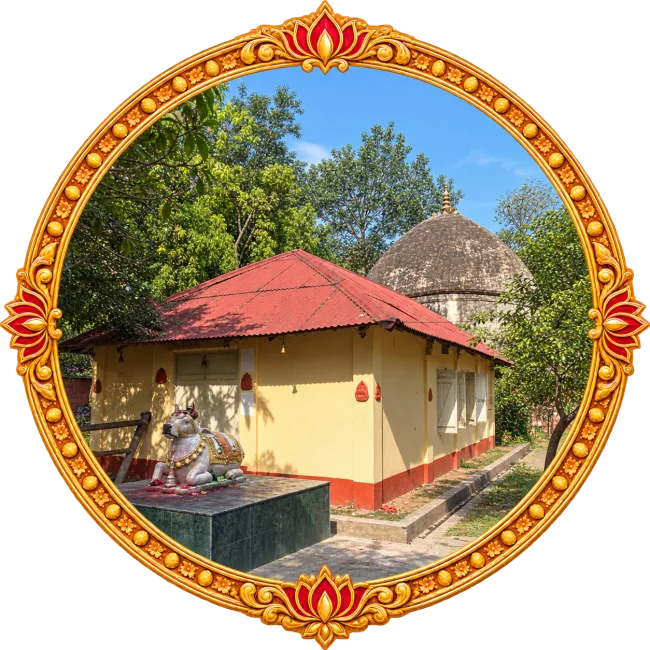
Kameswar Temple, Guwahati, Assam
Visit Kameswar Temple on Nilachal Hill in Guwahati, a sacred shrine dedicated to Lord Shiva within the Kamakhya temple complex. Also written as Kameshwar or Kameswara Temple, it forms part of the Shiva worship tradition that exists alongside the hill’s celebrated Shakti shrines.
Situated close to Chinnamasta Temple, Kameswar offers devotees an opportunity to include Shiva worship in their Kamakhya pilgrimage. Its religious importance lies in this close relationship between devotion to Lord Shiva and the Divine Mother.
About Kameswar Temple
Kameswar Temple is located within the main Kamakhya temple complex on Nilachal Hill in western Guwahati. The presiding deity is Lord Shiva, worshipped as Kameswar.
The shrine belongs to the group of Shiva temples associated with Nilachal Hill. Together with the Mahavidya shrines, these temples form a wider sacred landscape visited by pilgrims coming to Kamakhya.
This is the Kameswar shrine at Kamakhya in Guwahati, distinct from the similarly named Kameswar Temple at Hajo. Its location beside the Chinnamasta shrine helps identify the correct temple when planning a visit.
History of Kameswar Temple
Kameswar Temple has a historical connection with the Ahom period. An inscription associated with the shrine names Ahom King Siva Singha and carries the date Saka 1640, corresponding to 1718 CE.
This inscription provides a dated record of the temple’s association with Ahom royal patronage. It is an important historical detail connecting the shrine with the religious life of eighteenth-century Assam.
The date belongs to the inscription and should not automatically be treated as the temple’s original construction year. Its significance is that it documents the shrine’s place within the historical development of the Nilachal religious complex.
Religious Significance of Kameswar Temple
Kameswar Temple represents the Shaiva tradition within a pilgrimage centre widely known for goddess worship. Its presence shows how devotion to Shiva and Shakti forms part of the same sacred landscape.
In Hindu spiritual understanding, Shiva and Shakti are closely connected. Shiva is associated with consciousness, while Shakti expresses divine energy and creative power. Worshipping them together encourages reflection on their inseparable relationship.
Devotees may offer prayers for:
Peace of mind.
Family harmony.
Strength during difficulties.
Freedom from excessive attachment.
Spiritual discipline.
Wisdom in making decisions.
These prayers express faith and personal devotion rather than a promise of particular outcomes.
Lord Shiva as Kameswar
The name Kameswar is commonly understood as “Lord of Desire.” In a devotional interpretation, it invites reflection on the place of desire in human life.
Desires can motivate effort, responsibility and care for others. Spiritual practice encourages people to pursue them with restraint and understanding.
A visit to the temple can therefore become an occasion to pray for clarity about personal wishes and the strength to act thoughtfully. Quiet remembrance of Lord Shiva offers a simple way to approach the shrine.
Connection with Kamakhya Temple
Kameswar belongs to the Shiva shrines of Nilachal Hill, while Kamakhya and the surrounding Mahavidya temples represent different forms of the Divine Mother.
This combination gives the hill its distinctive religious character. A pilgrimage can include both the principal goddess shrine and nearby places of Shiva worship.
Other Shiva temples associated with Nilachal include Siddheswar, Amratokeswar, Aghor and Kautilinga. Their presence broadens the pilgrimage beyond the central Kamakhya temple.
Temple Setting and Sacred Surroundings
Kameswar Temple stands within an active pilgrimage area containing shrines, passages and places used for worship. Its proximity to Chinnamasta Temple makes the two useful landmarks when exploring this part of the complex.
The experience of visiting is closely connected with the surroundings: devotees moving between shrines, preparations for offerings and the continuing religious activity of Nilachal Hill.
Take time to appreciate the temple’s setting without obstructing entrances or pathways. Older temple surfaces and inscriptions should be treated carefully and left untouched.
Worship and Offerings
A visit can include darshan, quiet prayer and remembrance of Lord Shiva. Devotees may mentally recite “Om Namah Shivaya” while waiting or standing in the designated prayer area.
Bilva leaves, flowers and water are customary offerings in Shiva worship generally. Any offering or Abhishek at this shrine should follow the arrangements in place at the temple.
For a respectful visit:
Keep offerings simple and easy to carry.
Place them only in designated areas.
Avoid pouring liquids independently.
Keep packaging away from the worship space.
Allow other devotees room to pray.
A sincere prayer does not require elaborate arrangements.
Religious Occasions
Mahashivratri
Mahashivratri holds particular importance in the worship of Lord Shiva. Devotees traditionally observe it through prayer, fasting, mantra recitation and remembrance of the deity.
For someone planning a Shiva pilgrimage, the occasion gives special devotional meaning to visiting shrines such as Kameswar.
Shravan and Mondays
The month of Shravan and Mondays are traditionally associated with Shiva worship. Devotees often dedicate these occasions to prayer, self-discipline and acts of devotion.
Ambubachi at Kamakhya
Ambubachi is a major gathering in the surrounding Kamakhya pilgrimage area. Large numbers of visitors travel to Nilachal Hill during this period, affecting movement and crowd levels around its temples.
The observance belongs to Kamakhya’s religious calendar; it should not be treated as a separate Kameswar festival schedule.
How to Reach Kameswar Temple
By Air
Lokpriya Gopinath Bordoloi International Airport serves Guwahati. From the airport, continue by road towards Kamakhya Temple on Nilachal Hill.
By Train
Kamakhya Railway Station provides convenient railway access to the temple area. Guwahati Railway Station is another major arrival point for travellers coming from other cities.
Continue towards Nilachal Hill using available local transport or a taxi.
By Road
Guwahati is connected by road with other parts of Assam and neighbouring states. From the city, travel towards the Kamakhya temple complex.
Final Approach
After reaching the Kamakhya area, continue on foot towards Kameswar Temple near the Chinnamasta shrine. Choose Kamakhya, Nilachal Hill, Guwahati as the destination when arranging transport to avoid confusion with Hajo.
Nearby Temples to Visit
The surrounding pilgrimage area includes:
Kamakhya Temple: The principal Shakti shrine.
Chinnamasta Temple: Located beside Kameswar Temple.
Tara Temple: Dedicated to Goddess Tara.
Kali Temple: Associated with Mahakali worship.
Bhairavi Temple: Dedicated to Goddess Bhairavi.
Dhumavati Temple: Part of the Mahavidya pilgrimage.
Bagalamukhi Temple: Dedicated to Goddess Bagalamukhi.
Bhuvaneshwari Temple: Situated on a higher part of Nilachal Hill.
Matangi and Kamala are worshipped within the main Kamakhya sanctum. Visiting the different shrines may involve additional walking and steps.
Important Visitor Guidelines
Wear modest, comfortable clothing.
Remove footwear at the designated place.
Walk carefully on steps and uneven surfaces.
Keep your phone silent during worship.
Respect photography restrictions.
Avoid touching inscriptions and older structural details.
Keep entrances clear for other devotees.
Assist children and elderly companions.
Place offerings only where permitted.
Do not leave plastic or food waste in the complex.
Carry drinking water for the hill visit.
Allow extra time during major pilgrimage gatherings.
Conclusion
Kameswar Temple is an important Shiva shrine within Guwahati’s Kamakhya pilgrimage area. Its association with Ahom-period history and its place beside the Shakti temples of Nilachal Hill give it both historical and religious significance.
A visit offers devotees time for prayer, reflection and appreciation of the connected traditions of Shiva and Shakti worship in Assam.