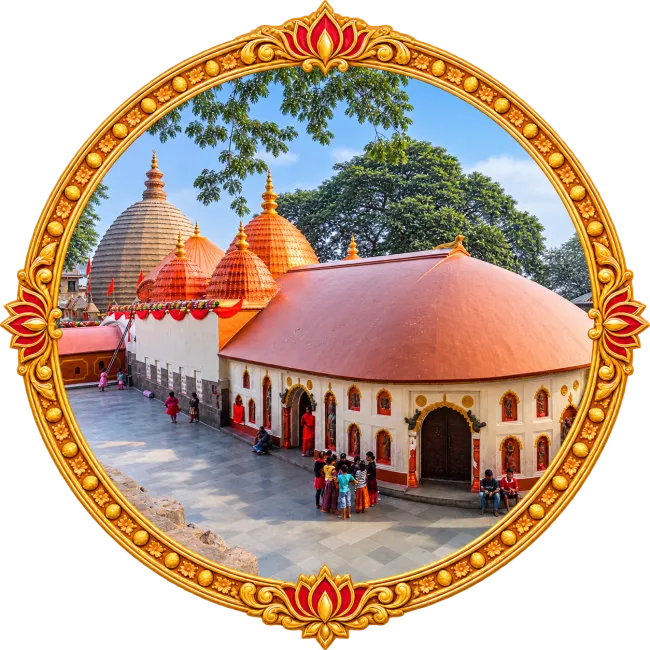
Kamala Temple, Guwahati, Assam
Visit the sacred Kamala shrine at Kamakhya Temple on Nilachal Hill in Guwahati, Assam. Dedicated to Goddess Kamala, the tenth of the ten Mahavidyas, this place of worship represents prosperity, nourishment, beauty and spiritual fulfilment.
Goddess Kamala’s sacred seat is located inside the main Kamakhya Temple’s Garbhagriha. Her darshan forms part of the main sanctum visit, together with the worship of Goddess Kamakhya and Goddess Matangi.
About Kamala Temple
Goddess Kamala, also known as Kamalatmika, is revered as the Tantric form of Goddess Lakshmi. Her sacred seat lies within Kamakhya’s inner sanctum, towards the eastern side of the principal Yoni Peetha.
The name Kamala means lotus. This flower symbolises purity, spiritual unfolding and beauty. The goddess is associated with abundance that supports life, including nourishment, well-being and the ability to appreciate the sacred in everyday existence.
Pilgrims seeking Kamala darshan enter through the main Kamakhya temple’s darshan arrangements. Her shrine belongs to the Mahavidya tradition that gives Nilachal Hill its distinctive religious importance.
History of the Kamala Shrine
Kamala worship at Nilachal Hill is part of the religious heritage of Kamakhya. The sacred landscape is connected with Shakta traditions that honour the Divine Mother in different manifestations.
Texts such as the Kalika Purana and Yogini Tantra are associated with the religious significance of Kamakhya. Over time, royal patronage and continuing worship helped shape the temple complex.
The present Kamakhya temple, which houses the Kamala shrine, was rebuilt in 1565 under Koch King Naranarayan. The reconstruction incorporated remains of an earlier stone temple.
Further additions followed under the Ahom rulers. The Natmandir was added in 1759 during the reign of King Rajeswar Singha. These dates describe the development of the main temple building containing Kamala’s sacred seat.
Religious Significance of Goddess Kamala
Kamala is the tenth Mahavidya and expresses the nourishing, generous aspect of the Divine Mother. Her association with prosperity includes both material well-being and a deeper appreciation of life.
In devotional understanding, abundance carries responsibility. Gratitude, generosity and the thoughtful use of resources give prosperity a spiritual purpose.
Devotees approach the goddess with prayers for:
Family well-being and nourishment.
Prosperity through sincere effort.
Gratitude and contentment.
Wisdom in using material resources.
Harmony in household life.
Spiritual growth alongside worldly responsibilities.
Her lotus symbolism encourages devotees to remain connected with spiritual values while participating in everyday life.
Traditional Form of Goddess Kamala
In traditional religious imagery, Goddess Kamala is portrayed seated upon a lotus. She holds lotus flowers and displays gestures associated with blessings and reassurance.
Her form is adorned with ornaments and a crown. Elephants ceremonially pouring water over the goddess express auspiciousness and abundance.
These descriptions refer to her traditional iconography. At Kamakhya, her divine presence is worshipped through a sacred stone representation within the sanctum.
Architecture and Sacred Setting
The Kamala shrine forms part of the architectural setting of Kamakhya Temple. The main structure is recognised for its Nilachal style, which combines North Indian temple features with a distinctive rounded superstructure.
The building includes the inner sanctum and connected chambers used for worship, offerings and ceremonial activities. Its architectural development reflects different periods of royal patronage.
For Kamala darshan, the central feature is the Garbhagriha. The approach into this sacred interior brings devotees close to the consecrated seats that form the focus of worship.
Kamala Temple Timings
Access to the Kamala shrine follows the main Kamakhya Temple’s sanctum darshan schedule.
Evening Aarti is part of Kamakhya’s worship programme and does not mean that the sanctum reopens for Kamala darshan. Special religious occasions can change the regular schedule.
Morning Puja and Darshan
The temple’s daily worship begins with the ritual bathing of the sacred Peetha at 5:30 AM, followed by Nitya Puja at 6:00 AM.
Public darshan starts at 8:00 AM. Devotees visiting Kamala’s sacred seat follow the main temple queue and the movement of worshippers through the sanctum.
Keep offerings ready before entering and allow others space to receive darshan.
Evening Puja and Aarti
The afternoon sanctum visiting period runs from 2:30 PM to 5:15 PM. Devotees seeking Kamala darshan should complete their visit during this session.
The main temple’s evening Aarti takes place at 7:30 PM. This ceremony belongs to the shared worship programme of Kamakhya.
Offerings and Devotional Practices
A visit to the Kamala shrine can include a simple prayer for family well-being, gratitude and the responsible use of prosperity.
Present offerings within the established arrangements of the main sanctum. Keep them manageable and place them only in the designated worship area.
Devotees can make their visit meaningful through:
Quiet prayer and remembrance of the goddess.
Gratitude for food, shelter and family support.
A commitment to generosity.
Respectful participation in worship.
Considerate behaviour towards fellow pilgrims.
Avoid leaving food packaging, flowers or other materials in passages or around the sacred seats.
Festivals and Important Religious Occasions
Ambubachi
Ambubachi is a major observance at Kamakhya, associated with the goddess’s creative power and the fertility of the earth.
The main temple closes for the prescribed observance and reopens after the concluding rituals. Access to the Kamala shrine is affected because her sacred seat is within the same sanctum.
The reopening attracts large numbers of devotees to Nilachal Hill.
Durga Puja
Durga Puja is another important occasion in Kamakhya’s religious calendar. The temple follows an extended traditional observance dedicated to the Divine Mother.
Special worship and festival arrangements give the pilgrimage a different rhythm from an ordinary visiting day.
How to Reach Kamala Temple
By Air
Lokpriya Gopinath Bordoloi International Airport serves Guwahati. From the airport, continue by road towards Kamakhya Temple on Nilachal Hill.
By Train
Kamakhya Railway Station is the nearest railway access point for the temple area. Guwahati Railway Station is another major option for visitors arriving from other Indian cities.
Local transport and taxis provide onward connections.
By Road
Guwahati is connected by road with other parts of Assam and neighbouring states. Visitors can travel from the city towards the Kamakhya temple area by taxi or available local transport.
Reaching the Sacred Seat
After arriving at Kamakhya, enter through the main temple’s darshan arrangements. The Kamala shrine is reached during the inner sanctum visit.
Nearby Temples to Visit
Nilachal Hill contains several other shrines associated with the Mahavidyas:
Tara Temple.
Kali Temple.
Bhairavi Temple.
Chinnamasta Temple.
Dhumavati Temple.
Bagalamukhi Temple.
Bhuvaneshwari Temple.
Goddess Matangi’s sacred seat is also inside the main Kamakhya sanctum. The surrounding temples occupy different parts of the hill and require additional walking or road travel.
Important Visitor Guidelines
Wear modest, comfortable clothing.
Remove footwear at the designated location.
Follow the main temple’s darshan queue.
Walk carefully through the inner passages.
Keep mobile phones silent during worship.
Respect photography restrictions.
Carry only essential belongings.
Avoid blocking the sanctum entrance.
Help children and elderly companions move safely.
Place offerings only in the designated areas.
Keep the temple surroundings clean.
Allow additional time during major festivals.
Conclusion
The Kamala shrine at Kamakhya brings together devotion to the Divine Mother and reflection on prosperity, nourishment and gratitude. Its position within the main sanctum gives it an important place in the Mahavidya pilgrimage of Nilachal Hill.
A visit offers devotees an opportunity to pray for well-being while remembering the value of generosity, contentment and spiritual understanding.