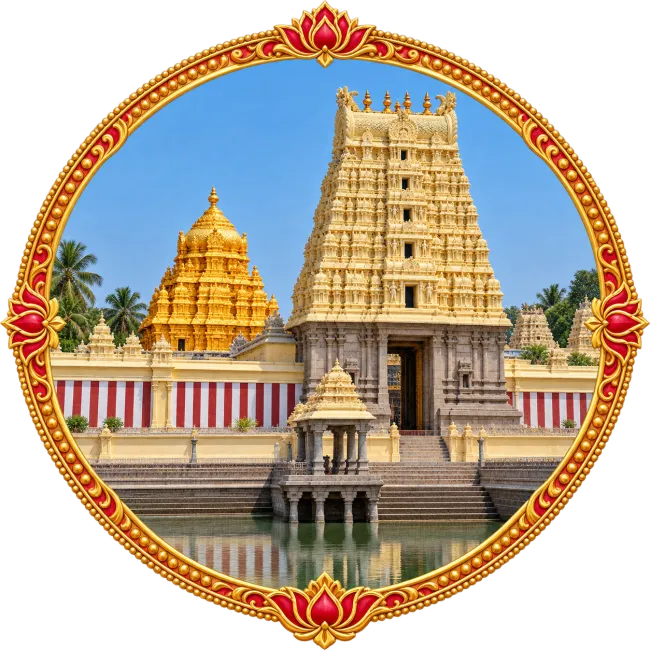
Kamakshi Amman Temple, Kanchipuram
Visit Kamakshi Amman Temple in Kanchipuram, one of India’s most sacred Shakti temples and an important centre of Sri Vidya worship. The temple is dedicated to Goddess Kamakshi, a compassionate manifestation of Goddess Parvati, Lalita Tripurasundari and Adi Shakti.
Goddess Kamakshi is shown seated in Padmasana, holding a sugarcane bow, five flower arrows, Pasha and Ankusha. The temple is also revered as a Shakti Peetha and is closely associated with Adi Shankaracharya, who is believed to have installed the sacred Sri Chakra before the goddess.
About Kamakshi Amman Temple
Kamakshi Amman Temple is located in the historic temple city of Kanchipuram, Tamil Nadu. The presiding deity is Goddess Kamakshi, regarded as the principal goddess of Kanchipuram.
The name Kamakshi can be understood as:
- Kama refers to love, desire and divine intention.
- Akshi means eyes.
Kamakshi therefore means “the goddess whose compassionate eyes fulfil righteous desires.”
Another interpretation connects the syllables of her name with three divine goddesses:
- Ka represents Goddess Saraswati.
- Ma represents Goddess Lakshmi.
- Akshi represents divine vision.
Goddess Kamakshi is therefore regarded as the combined power of knowledge, prosperity and spiritual strength.
History of Kamakshi Amman Temple
The religious history of Kamakshi Amman Temple extends back to the Pallava period. The Pallava rulers developed Kanchipuram as a major centre of Hinduism, Buddhism, Jainism, philosophy and temple architecture.
The original shrine is traditionally associated with the Pallavas between the 6th and 8th centuries. The temple was later expanded and renovated by:
- Chola rulers
- Vijayanagara kings
- Nayaka chiefs
- Local religious institutions
These dynasties contributed Mandapams, corridors, Gopurams, jewellery, land and funds for daily worship.
Kamakshi Amman Temple became an important centre of Sri Vidya and Shakta philosophy. Its history is closely connected with Adi Shankaracharya and the Kanchi Kamakoti tradition.
The temple has undergone several repairs while preserving its traditional Dravidian architecture and ancient rituals.
Kamakshi as the Principal Goddess of Kanchipuram
Kanchipuram contains numerous temples dedicated to Lord Shiva, but Kamakshi Amman is regarded as the common divine consort associated with them.
Many Shiva temples in Kanchipuram do not contain a large independent shrine for Goddess Parvati because Kamakshi is worshipped as the central Shakti of the entire sacred city.
The annual wedding traditions connect Goddess Kamakshi with Lord Ekambareswarar. She is also spiritually associated with Kanchipuram’s other Shaiva shrines.
This gives Kamakshi Amman Temple a central position in the sacred geography of Kanchipuram.
Shakti Peetha Significance
Kamakshi Amman Temple is revered as an important Shakti Peetha. According to temple tradition, the navel or Nabhi of Goddess Sati fell at Kanchipuram.
The navel represents the centre of creation, nourishment and divine energy. Therefore, Kamakshi is worshipped as the universal mother from whom all forms of life and spiritual power emerge.
The temple is also associated with the concept of Kamakoti Peetha, the sacred seat representing the fulfilment of righteous desires and the highest state of divine consciousness.
Mythology of Goddess Kamakshi
According to temple tradition, Goddess Parvati performed severe penance in Kanchipuram to unite with Lord Shiva.
She created a Shiva Lingam from sand and worshipped it beneath a mango tree. When the nearby river flooded, Parvati embraced the Lingam to prevent it from dissolving.
Lord Shiva became pleased with her devotion and accepted her as his consort.
In another tradition, Goddess Kamakshi appeared as Lalita Tripurasundari to destroy the demon Bhandasura. The demon had become powerful and was causing suffering throughout the universe.
The goddess appeared with a sugarcane bow and five flower arrows. She defeated Bhandasura and restored cosmic balance.
Adi Shankaracharya and Sri Chakra
Goddess Kamakshi was traditionally worshipped in an intense Ugra or fierce form. Her spiritual energy was considered extremely powerful.
Adi Shankaracharya visited Kanchipuram and installed the Sri Chakra before the goddess. Through sacred rituals and prayers, he transformed her intense energy into the peaceful and compassionate form worshipped today.
The Sri Chakra represents the complete universe and the union of Shiva and Shakti. It consists of interlocking triangles symbolizing divine consciousness and creative energy.
Devotees worship the Sri Chakra for:
- Spiritual progress
- Prosperity
- Knowledge
- Protection
- Family harmony
- Fulfilment of righteous wishes
The Sri Chakra remains one of the most sacred elements within the temple.
Main Deity of Kamakshi Amman Temple
Goddess Kamakshi is shown seated in Padmasana, the lotus posture associated with meditation and spiritual control.
She holds:
- Sugarcane bow
- Five flower arrows
- Pasha or noose
- Ankusha or goad
The sugarcane bow represents the mind. The five flower arrows represent the five senses.
The Pasha symbolizes attachment, while the Ankusha represents the divine power that guides devotees towards discipline and liberation.
Unlike fierce standing forms of Durga, Kamakshi remains peacefully seated, demonstrating complete control over desire, senses and cosmic energy.
Gayatri Mandapam
The principal sanctum is situated within the Gayatri Mandapam. The Mandapam is traditionally associated with the 24 syllables of the Gayatri Mantra.
Its architectural and spiritual arrangement reflects the relationship between sacred sound, divine knowledge and Goddess Kamakshi.
Devotees should maintain silence while entering this area and follow the queue arranged by temple authorities.
Architecture of Kamakshi Amman Temple
The temple is constructed in the traditional Dravidian style.
Important architectural features include:
- Entrance Gopurams
- Golden Vimana above the sanctum
- Gayatri Mandapam
- Sri Chakra
- Stone-pillared halls
- Temple corridors
- Sacred tank
- Shrines dedicated to associated deities
- Utsava Mandapam
- Carved sculptures
- Traditional temple kitchen
The golden Vimana above the sanctum is one of the temple’s most recognizable features.
Pancha Ganga Temple Tank
The sacred temple tank is known as Pancha Ganga Tirtham. It is associated with ritual purification and important festival ceremonies.
Devotees should enter the tank only when permitted by temple authorities. Throwing waste, food or ritual packaging into the water should be avoided.
Kamakshi Amman Temple Timings
Friday, full-moon and festival schedules may include additional worship and extended darshan.
Morning Abhishekam and Deepa Aradhana
The temple opens at 5:30 AM with Suprabhata Seva.
Morning Abhishekam begins at 6:00 AM. The goddess or designated ritual deity is worshipped with:
- Sacred water
- Milk
- Turmeric
- Sandalwood
- Rose water
- Flowers
- Kumkum
- Traditional fragrances
Morning Deepa Aradhana is performed at 7:00 AM, followed by Kalasanthi Puja at 8:00 AM.
The period between 7:00 AM and 9:00 AM is ideal for peaceful darshan.
Kumkum Archana and Special Sevas
Kumkum Archana and other special Sevas are generally conducted between 8:30 AM and 11:00 AM.
Important Sevas may include:
- Kumkum Archana
- Lalitha Sahasranama Archana
- Trishati Archana
- Sri Chakra Puja
- Abhishekam
- Saree offering
- Flower garland Seva
- Ghee-lamp offering
- Annadanam
- Special Naivedyam
Seva availability depends on the day and temple calendar. Bookings should be made through official counters.
Uchikala Puja
Uchikala Puja is performed at 11:30 AM. Naivedyam, incense, flowers and lamps are presented before Goddess Kamakshi.
The morning session closes at 12:00 PM.
Devotees wishing to attend Uchikala Puja should enter before 11:15 AM.
Evening Puja and Deepa Aradhana
The temple reopens at 4:00 PM.
Sayaraksha Puja is performed at 6:00 PM, followed by evening Deepa Aradhana at 6:30 PM.
Ardha Jama Puja, the final worship of the day, is conducted at 8:00 PM. The temple closes at 8:30 PM.
Friday Worship
Friday is considered especially auspicious for Goddess Kamakshi.
Devotees commonly perform:
- Kumkum Archana
- Lalitha Sahasranama recitation
- Ghee-lamp offering
- Saree offering
- Bangles and turmeric offering
- Sri Chakra worship
- Marriage prayers
The temple remains more crowded on Friday, particularly during the Rahu Kala period and evening Deepa Aradhana.
Major Festivals Celebrated
Annual Brahmotsavam
The annual Brahmotsavam is one of the temple’s grandest festivals. Goddess Kamakshi is taken in processions upon different Vahanas.
The festival includes:
- Flag hoisting
- Special Alankarams
- Vahana processions
- Temple chariot
- Vedic chanting
- Sri Vidya worship
- Cultural programmes
- Distribution of Prasadam
Navratri
Navratri is celebrated for nine nights with different forms and decorations of the goddess.
Special programmes include:
- Daily Alankaram
- Lalitha Sahasranama
- Devi Mahatmyam recitation
- Kumkum Archana
- Music and dance
- Saraswati Puja
- Vijayadashami ceremonies
Panguni Uthiram
The divine wedding of Goddess Kamakshi and Lord Ekambareswarar is celebrated with elaborate rituals.
Aadi Pooram
Aadi Pooram honours the divine feminine power with special Abhishekam and decoration.
Vasanta Utsavam
The spring festival includes processions and worship in the Vasanta Mandapam.
Theppotsavam
The Utsava deity is taken on a decorated float in the temple tank.
Full-Moon Puja
Purnima is important for Sri Chakra and Lalita Tripurasundari worship.
Offerings and Prasadam
Common offerings include:
- Kumkum
- Turmeric
- Lotus flowers
- Red flowers
- Sarees
- Bangles
- Mangalsutra items
- Coconut
- Fruits and sweets
- Ghee lamps
- Sandalwood
- Monetary donations
Temple Prasadam may include:
- Kumkum
- Turmeric
- Sakkarai Pongal
- Puliyodarai
- Curd rice
- Sundal
- Laddu
- Fruits
Women commonly offer sarees, turmeric and bangles while praying for marriage and family prosperity.
Dress Code and Entry Rules
Visitors should wear clean, traditional and modest clothing.
Recommended clothing includes:
- Dhoti, Veshti or full-length trousers for men
- Saree, half-saree, Salwar Kameez or modest traditional clothing for women
- Traditional attire for children
Shorts, sleeveless outfits and revealing clothing should be avoided.
Photography and videography are restricted inside the temple, especially near the sanctum and Sri Chakra.
Entry into selected inner areas follows traditional Hindu temple rules.
Entry Fee and Visit Duration
General darshan is free. Paid special-darshan and Seva tickets may be available.
A normal visit requires one to two hours. On Fridays, Purnima and Navratri, darshan may require several hours.
Visitors wishing to perform Kumkum Archana or Sri Chakra Puja should keep additional time.
Visitor Guidelines
- Remove footwear at the designated stand.
- Wear traditional and modest clothing.
- Follow the darshan queue.
- Maintain silence near the Sri Chakra and sanctum.
- Keep mobile phones silent.
- Follow photography restrictions.
- Do not touch ritual objects.
- Use official counters for Sevas and donations.
- Do not purchase darshan access from unauthorized agents.
- Accept Kumkum and Prasadam respectfully.
- Keep the temple and tank clean.
- Avoid carrying large bags.
- Keep children and elderly devotees under supervision.
- Follow instructions from priests and security personnel.
Best Time to Visit
November to February is the best period for visiting Kanchipuram because the weather remains pleasant.
For peaceful darshan, visit between 7:00 AM and 9:00 AM on a regular weekday.
Evening visitors should arrive between 5:00 PM and 6:00 PM to attend Sayaraksha Puja and Deepa Aradhana.
Navratri and Brahmotsavam provide the grandest devotional experience but attract large crowds.
How to Reach Kamakshi Amman Temple
By Air
Chennai International Airport is the nearest major airport, approximately 75 kilometres from Kanchipuram.
By Train
Kanchipuram Railway Station is located close to the temple. Rail services connect the town with Chennai, Chengalpattu, Arakkonam and nearby cities.
By Bus
Regular government and private buses connect Kanchipuram with Chennai, Tirupati, Vellore, Bengaluru and other destinations.
By Road
Taxis, auto-rickshaws and private vehicles are available throughout Kanchipuram. Vehicle access may be restricted near the temple during festivals.
Nearby Places to Visit
- Ekambareswarar Temple
- Varadaraja Perumal Temple
- Kailasanathar Temple
- Kumarakottam Murugan Temple
- Kanchi Kamakoti Peetham
- Vaikunta Perumal Temple
- Ulagalanda Perumal Temple
- Kachapeshwarar Temple
- Chitragupta Temple
- Pandava Thoothar Perumal Temple
- Kanchipuram Silk Markets
- Vilakkoli Perumal Temple
Conclusion
Kamakshi Amman Temple is the spiritual centre of Shakti worship in Kanchipuram. Its ancient Pallava heritage, Sri Chakra and association with Adi Shankaracharya give it exceptional religious and philosophical importance.
The seated form of Goddess Kamakshi represents complete control over the mind and senses, while her compassionate eyes are believed to fulfil righteous desires.
A visit to the temple offers devotees blessings for marriage, family prosperity, wisdom and spiritual progress. It also provides a profound experience of Sri Vidya traditions and South India’s ancient goddess worship.