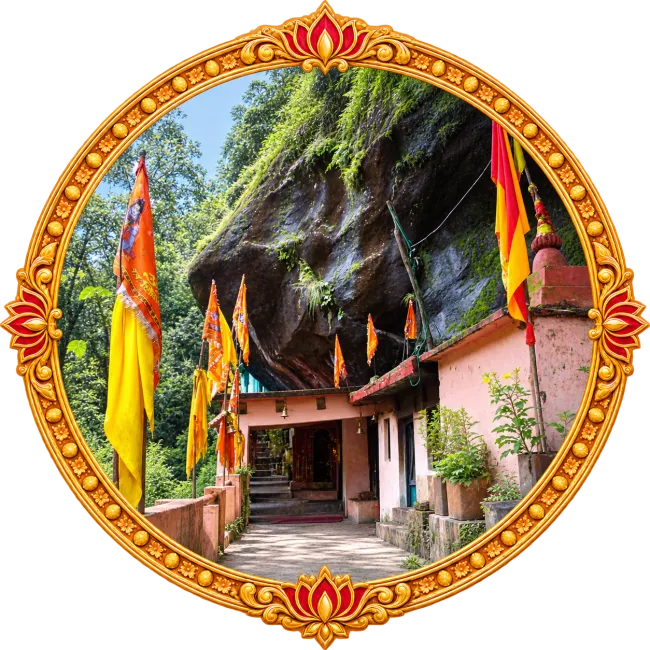
Kalpeshwar Temple, Urgam Valley, Uttarakhand
Kalpeshwar Temple is an ancient Shiva cave shrine situated in the beautiful Urgam Valley of Chamoli district, Uttarakhand. It is one of the five Panch Kedar temples and the only Panch Kedar shrine that remains accessible throughout the year.
At Kalpeshwar, Lord Shiva is worshipped in the form of his Jata or matted hair. The natural cave, peaceful valley, forests and traditional Himalayan villages create a deeply meditative pilgrimage environment.
About Kalpeshwar Temple
Kalpeshwar Temple is situated at an elevation of approximately 2,200 metres near Devgram in Urgam Valley. The shrine is reached through a short mountain walk from the nearest road access.
The name Kalpeshwar combines:
Kalpa – divine time, spiritual fulfilment or the wish-fulfilling Kalpavriksha
Ishwar – Lord Shiva
The presiding sacred form is called Jateshwar or Jateshwar Mahadev because Shiva’s matted hair is believed to have appeared here.
Unlike Kedarnath, Tungnath, Rudranath and Madhyamaheshwar, Kalpeshwar remains open during winter.
When Was Kalpeshwar Temple Built and Who Built It?
According to Hindu tradition, Kalpeshwar Temple was established by the Pandavas after the Mahabharata war. They built shrines at the five places where different parts of Lord Shiva’s bull form appeared.
The cave shrine later became connected with the Himalayan pilgrimage tradition revived by Adi Shankaracharya during the 8th century CE.
Regional priests, local communities and devotees developed the approach, worship platform and smaller structures around the natural cave. The sacred rock formation remains the centre of worship.
Kalpeshwar is therefore a natural cave shrine rather than a monumental temple constructed by a single historical ruler.
Panch Kedar Legend
After the Mahabharata war, the Pandavas sought forgiveness from Lord Shiva. Shiva avoided them and assumed the form of a bull.
Bhima recognised the bull and attempted to catch it. Shiva disappeared into the earth, and his body parts appeared at five places:
The Pandavas constructed temples at these places and worshipped Lord Shiva. Kalpeshwar became the sacred shrine of Shiva’s Jata.
Legend of Sage Durvasa
Sage Durvasa is believed to have meditated in Urgam Valley beneath the wish-fulfilling Kalpavriksha.
Durvasa was known for his intense spiritual power and strict temperament. His meditation made the region spiritually significant.
The connection with the sage and the Kalpavriksha contributed to the name Kalpeshwar. Devotees visit the shrine seeking control over anger, patience and spiritual discipline.
Legend of Lord Indra
According to another tradition, Lord Indra lost his position as king of the gods because of a curse.
He came to this region and worshipped Lord Shiva. Pleased with his devotion, Shiva blessed him and helped him regain his strength and heavenly position.
This legend connects Kalpeshwar with restoration, hope and the fulfilment of righteous wishes.
Religious Significance
Shiva’s Jata symbolises spiritual power, control and the flow of sacred energy. The River Ganga is also traditionally associated with Shiva’s matted hair.
Devotees visit Kalpeshwar to pray for:
Forgiveness for past actions
Mental peace
Control over anger
Health and longevity
Family welfare
Protection from danger
Fulfilment of wishes
Spiritual discipline
Freedom from fear
Liberation from karmic burdens
The quiet cave is particularly suitable for meditation and mantra recitation.
Architecture and Cave Interior
Kalpeshwar Temple is located inside a natural rock cave. Visitors enter through a narrow passage leading to the sacred formation.
The shrine contains:
Natural Jata-shaped rock
Shiva Lingam
Stone worship platform
Small Mandapa
Bells
Oil lamps
Images of other deities
Cave passage
River and forest surroundings
The cave has limited space, and visitors should move carefully without obstructing other devotees.
Kalp Ganga
The stream flowing through Urgam Valley is known as Kalp Ganga. It eventually joins the Alaknanda near Helang.
The river adds to the sacred and natural character of the pilgrimage. Visitors should not throw plastic, food or ritual waste into the water.
Kalpeshwar Temple Timings
The temple remains open throughout the year. Winter snowfall can affect the higher roads, but the shrine itself continues regular worship.
Summer Timings
Winter Timings
Heavy rain, landslides or snow on approach roads can temporarily affect access.
Morning Puja and Aarti
The morning begins with purification of the cave shrine and Mangal Puja. The sacred Shiva form receives Abhishekam before general darshan.
The rituals include:
Water Abhishekam
Milk and curd
Honey
Bilva leaves
Flowers
Sandalwood
Sacred ash
Shiva mantra chanting
Incense and lamps
Morning Aarti
Offerings should be made only in designated areas because excessive liquids can make the cave floor slippery.
Bhog and Evening Aarti
Bhog is offered at noon. Fruits, sweets and simple Satvik preparations are presented to Lord Shiva.
Evening Puja is followed by Aarti with lamps, incense and Shiva hymns. Visitors who are not staying in Devgram should leave before darkness.
Major Festivals
Mahashivratri
Mahashivratri is the largest festival at Kalpeshwar. Special Abhishekam, Rudra Path, fasting and night worship are organised.
Shravan Month
Mondays during Shravan attract many devotees. Water, milk and Bilva leaves are offered to Mahadev.
Kartik Purnima
Devotees light lamps and offer prayers for spiritual peace.
Makar Sankranti
Special worship and community religious activities are organised.
Panch Kedar Pilgrimage
Pilgrims completing the Panch Kedar circuit visit Kalpeshwar as the final shrine.
Puja and Religious Services
Available ceremonies may include:
General Shiva Puja
Jalabhishek
Rudrabhishek
Mahamrityunjaya Mantra Path
Panch Kedar Puja
Mahashivratri worship
Shravan Monday Puja
Health and protection prayers
Family welfare Puja
Thanksgiving worship
Puja arrangements should be made through authorised priests.
Offerings and Prasad
Traditional offerings include:
Water
Milk
Bilva leaves
White flowers
Fruits
Dry fruits
Sandalwood
Sacred ash
Incense
Sweets
Monetary donations
Prasad generally includes sweets, fruits, dry items and blessed flowers.
Dress Code and Temple Rules
Visitors should wear modest clothing and carry warm layers.
Important rules include:
Remove footwear before entering.
Walk carefully inside the cave.
Do not damage natural rock formations.
Follow photography restrictions.
Avoid excessive liquid offerings.
Do not litter along the trail.
Avoid alcohol and tobacco.
Keep Kalp Ganga clean.
Deposit donations only at authorised counters.
Follow weather and road advisories.
Entry Fee and Darshan Duration
General darshan is free. Charges apply only to optional Pujas and ritual materials.
Darshan generally requires 20–45 minutes. Including the walk from the road, visitors should reserve two to three hours.
Trek and Route through Urgam Valley
The road from Helang enters Urgam Valley and passes through traditional villages and terraced fields.
Vehicles can reach Devgram or the nearest operational road point. From there, pilgrims complete a short walk of approximately 1–2 kilometres to the cave temple.
Road conditions can change after monsoon rain, so travellers should use a suitable vehicle and obtain local information.
Best Time to Visit
March to June and September to November offer the most comfortable weather.
The temple can also be visited in winter with proper clothing. July and August bring heavy monsoon rain and landslide risk.
Morning between 7:00 AM and 10:00 AM is best for peaceful darshan.
How to Reach Kalpeshwar Temple
By Air
Jolly Grant Airport near Dehradun is the nearest major airport.
By Train
Rishikesh, Yog Nagari Rishikesh and Haridwar are the nearest convenient railway stations.
By Road
Travellers follow the Badrinath highway to Helang and then take the mountain road into Urgam Valley.
Accommodation and Facilities
Homestays and basic guest houses are available in Urgam and Devgram. More hotels are available in Joshimath.
Local facilities include simple meals, drinking water, basic shops and limited transport. Pilgrims should carry cash, medicines and essential supplies.
Nearby Places to Visit
Urgam Valley
Dhyan Badri Temple
Joshimath Narasimha Temple
Vishnuprayag
Auli
Bhavishya Badri
Yogadhyan Badri
Badrinath Temple
Rudranath Temple
Nanda Devi region
Conclusion
Kalpeshwar Temple is the fifth Panch Kedar shrine and the sacred place where Lord Shiva’s matted hair is worshipped. Its connection with the Pandavas, Sage Durvasa and Lord Indra gives the natural cave profound religious significance.
As the only Panch Kedar temple accessible throughout the year, Kalpeshwar provides devotees with a peaceful Himalayan pilgrimage in every season. Proper footwear, warm clothing and respect for the cave environment are essential for a safe and meaningful visit.