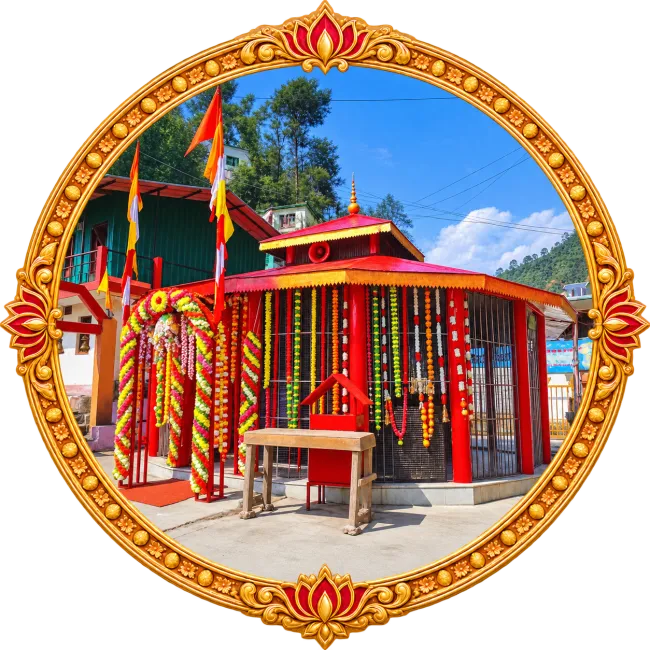
Kalimath Temple, Uttarakhand
Kalimath Temple is a revered Shakti shrine situated in Kalimath village in the Rudraprayag district of Uttarakhand. Located near the banks of the Saraswati River amid the Garhwal Himalayas, the temple is dedicated to Goddess Kali and is regarded as a powerful Siddha Peetha.
Unlike most Kali temples, the main shrine does not contain a conventional sculpted idol. Goddess Kali is worshipped through a sacred Sri Yantra concealed within an underground pit. The Yantra is ceremonially uncovered only during a special annual ritual associated with Sharadiya Navratri.
About Kalimath Temple
Kalimath lies in the Kedarnath region near Ukhimath and Guptkashi. The village is surrounded by mountains, forests, agricultural terraces and river valleys.
The temple complex contains three principal shrines dedicated to:
Goddess Kali
Goddess Mahalakshmi
Goddess Mahasaraswati
These three Goddesses represent power, prosperity and wisdom. Their presence makes Kalimath an important centre for the worship of the complete feminine divine energy.
The shrine is particularly sacred to followers of Shaktism and devotees undertaking pilgrimages to Kedarnath, Madhyamaheshwar and the surrounding Himalayan temples.
When Was Kalimath Temple Built and Who Built It?
Kalimath is an ancient sacred site connected with the early Shakti traditions of the Garhwal Himalayas. Its origin belongs to religious tradition rather than a single dated royal construction.
The original place of worship developed around the underground sacred spot where Goddess Kali is believed to have disappeared after defeating the demons.
Regional Garhwal rulers, local communities and priests gradually developed the shrines dedicated to Kali, Lakshmi and Saraswati. The temple complex underwent repeated repairs because of earthquakes, floods and the harsh Himalayan climate.
The existing buildings represent several phases of construction while preserving the ancient underground worship tradition.
Legend of Goddess Kali and Raktabeej
According to Hindu mythology, Raktabeej was a powerful demon with a special boon. Whenever a drop of his blood touched the ground, another demon identical to him emerged.
The gods and other forms of the Goddess found it difficult to defeat him because every wound produced more enemies.
Goddess Kali entered the battle and spread her tongue across the ground. She drank every drop of blood before it could fall and create another demon. She then destroyed Raktabeej and his forces.
After the victory, Kali’s fierce energy remained uncontrollable. At Kalimath, she is believed to have entered the earth and assumed a hidden form.
The underground Sri Yantra represents her concealed but continuously active divine power.
Connection with Dhari Devi
A regional tradition connects Kalimath with Dhari Devi Temple near Srinagar Garhwal.
The upper portion of the Goddess is worshipped as Dhari Devi, while the lower portion is believed to reside at Kalimath. The two shrines are consequently regarded as complementary manifestations of the same Shakti.
Some devotees visit both temples to complete their worship of the Divine Mother.
Kalimath as a Siddha Peetha
Kalimath is regarded as a Siddha Peetha—a sacred place where spiritual practices are believed to produce profound results.
The shrine is associated with:
Shakti worship
Sri Yantra Puja
Mantra recitation
Meditation
Navratri practices
Protection rituals
Spiritual discipline
Advanced Tantric practices should only be undertaken under the guidance of a qualified Guru. Visitors should avoid unauthorised individuals offering secret rituals or guaranteed results.
Religious Significance
Devotees visit Kalimath to pray for:
Protection from danger
Courage and strength
Relief from fear
Good health
Family welfare
Prosperity
Knowledge and wisdom
Victory over obstacles
Freedom from negative influences
Spiritual awakening
The presence of Kali, Lakshmi and Saraswati allows devotees to worship three principal powers of the Divine Mother in one complex.
Architecture of Kalimath Temple
The temple displays traditional Garhwali architecture adapted to the Himalayan climate. Stone walls, sloping roofs and compact sanctums form the principal design.
The Kali shrine contains the sacred underground pit covered by a silver plate. The Sri Yantra remains concealed beneath this covering throughout most of the year.
The complex includes:
Goddess Kali shrine
Mahalakshmi Temple
Mahasaraswati Temple
Underground Sri Yantra
Havan area
Temple courtyard
Smaller shrines
Prayer spaces
Riverbank ritual areas
The simple architecture allows the natural Himalayan environment to remain an important part of the pilgrimage experience.
Kalimath Temple Timings
The temple remains open throughout the year, subject to weather and road conditions.
Summer Timings
Winter Timings
Navratri ceremonies can extend worship hours and temporarily alter general darshan.
Morning Puja and Aarti
The day begins with purification of the shrines and Mangal Puja. Morning Aarti is followed by separate offerings to Kali, Mahalakshmi and Mahasaraswati.
The worship includes:
Sanctum purification
Red flowers and cloth
Sindoor
Mantra chanting
Incense and lamps
Naivedya
Sri Yantra worship
Morning Aarti
The underground Yantra remains covered during normal daily worship.
Bhog and Evening Aarti
Bhog is offered at noon. It generally consists of fruits, sweets, rice and Satvik preparations.
Evening Puja includes lamps, flowers, incense and devotional hymns. Aarti is performed before the three principal shrines.
Sharadiya Navratri and Ashtami Ritual
Sharadiya Navratri is the most important festival at Kalimath. The nine forms of Goddess Durga are worshipped through special Puja, fasting, mantra recitation and Havan.
On the night of Maha Ashtami, a special ritual is conducted at the Kali shrine. The silver plate covering the underground Sri Yantra is ceremonially opened by authorised priests.
The worship is performed according to traditional rules, after which the sacred space is covered again. General visitors must follow all access restrictions during this ceremony.
Other Major Festivals
Chaitra Navratri
Special Puja, Durga Saptashati recitation and Havan are organised.
Kali Puja
Goddess Kali is worshipped through lamps, flowers and special evening ceremonies.
Diwali
The temple complex is illuminated, and devotees pray for protection and prosperity.
Durga Ashtami
Devotees perform special worship, fasting and Kanya Pujan.
Saraswati Puja
The Mahasaraswati shrine receives special worship for knowledge and education.
Lakshmi Puja
Devotees worship Mahalakshmi for prosperity and household welfare.
Puja and Religious Services
Available ceremonies may include:
General Devi Puja
Kali Puja
Sri Yantra Puja
Mahalakshmi Puja
Saraswati Puja
Navratri Puja
Durga Saptashati Path
Chandi Path
Havan
Protection prayers
Family welfare Puja
Thanksgiving worship
Pujas should be arranged only through authorised priests.
Offerings and Prasad
Traditional offerings include:
Red flowers
Red chunri
Sindoor
Coconut
Fruits
Sweets
Bangles
Incense
Clarified butter
Shringar materials
Monetary donations
Prasad generally includes sweets, coconut, fruits and blessed flowers.
Dress Code and Temple Rules
Visitors should wear clean, modest and weather-appropriate clothing.
Important rules include:
Remove footwear before entering.
Do not touch or attempt to uncover the silver plate.
Follow photography restrictions.
Respect private Tantric rituals.
Keep the river and temple clean.
Avoid alcohol, tobacco and non-vegetarian food.
Deposit donations only at authorised counters.
Follow instructions from priests and temple staff.
Entry Fee and Darshan Duration
General darshan is free. Charges apply to optional Pujas, Havan and ritual materials.
A regular visit requires 45–90 minutes. During Navratri and Maha Ashtami, waiting time can extend for several hours.
Best Time to Visit
March to June and September to November are the most suitable periods.
Navratri offers the grandest spiritual atmosphere but attracts the largest crowds. Winter is peaceful but cold, while monsoon rain can cause landslides and road delays.
How to Reach Kalimath Temple
By Air
Jolly Grant Airport near Dehradun is the nearest major airport.
By Train
Rishikesh, Yog Nagari Rishikesh and Haridwar are the nearest convenient railway stations.
By Road
Kalimath is connected with Guptkashi and Ukhimath by mountain roads.
Accommodation and Facilities
Guest houses, homestays and basic lodges are available in Kalimath. More accommodation is available in Guptkashi and Ukhimath.
Facilities include parking, drinking water, Puja shops, simple restaurants, toilets and basic medical assistance.
Nearby Places to Visit
Dhari Devi Temple
Omkareshwar Temple, Ukhimath
Guptkashi Vishwanath Temple
Ardhanarishwar Temple
Madhyamaheshwar Temple
Kedarnath Temple
Triyuginarayan Temple
Chopta
Tungnath Temple
Deoria Tal
Conclusion
Kalimath Temple is a powerful Siddha Peetha where Goddess Kali is worshipped through a concealed underground Sri Yantra. Its association with the defeat of Raktabeej and its connection with Dhari Devi give it profound religious significance.
The combined presence of Kali, Mahalakshmi and Mahasaraswati represents power, prosperity and wisdom. Devotees visit Kalimath to seek protection, courage, spiritual growth and the blessings of the Divine Mother.