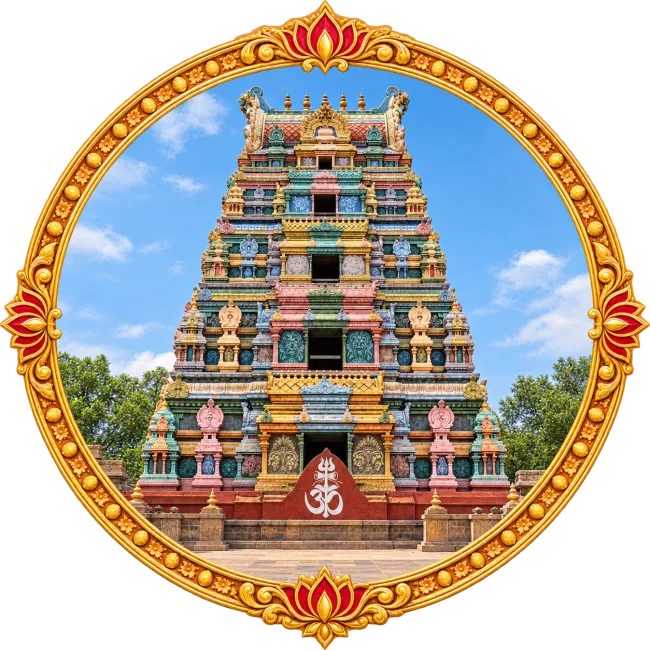
Jogulamba Temple, Alampur
Jogulamba Temple in Alampur, Telangana, is one of India’s eighteen Maha Shakti Peethas. The temple is dedicated to Goddess Jogulamba, a fierce manifestation of Shakti who is worshipped as a powerful Yogini and protector of devotees.
Located near the ancient Bala Brahmeswara and Nava Brahma temples, Jogulamba Temple makes Alampur an important centre of both Shakti and Shiva worship. The sacred town stands near the Tungabhadra River and is traditionally known as Dakshina Kashi and the western gateway to Srisailam.
About Jogulamba Temple
Jogulamba Temple is situated in Alampur in Jogulamba Gadwal district, Telangana. Goddess Jogulamba is worshipped in a fierce seated form.
The deity is traditionally depicted with symbols such as a scorpion, frog, lizard and owl associated with her hair or surrounding iconography. These unusual symbols represent her control over poisonous creatures, fear, darkness and destructive natural forces.
The name Jogulamba is connected with the word “Yogula” or “Jogula,” referring to Yoginis and female spiritual practitioners. She represents intense spiritual power, protection and the destruction of negative influences.
The temple is located near Bala Brahmeswara Temple, where the original Jogulamba deity was protected for centuries after the older shrine was destroyed.
When and Who Built Jogulamba Temple?
The original Jogulamba shrine developed during the Badami Chalukya period, when Alampur became an important centre of temple construction between the seventh and eighth centuries.
The Chalukya rulers constructed the Nava Brahma temples and supported the worship of Shiva and Shakti throughout the region.
The original Jogulamba Temple was destroyed during an invasion in 1390. Priests and devotees protected the principal images by moving them to Bala Brahmeswara Temple.
The sacred images remained there for more than six centuries while regular worship continued.
A new Jogulamba Temple was constructed near the original sacred location and consecrated in 2005. The deity was ceremonially brought from Bala Brahmeswara Temple and reinstalled.
The present structure therefore preserves an ancient spiritual tradition within a modern reconstructed temple.
Jogulamba Shakti Peetha Legend
According to Shakti Peetha tradition, Goddess Sati was the daughter of King Daksha and the wife of Lord Shiva.
Daksha organised a grand Yajna but deliberately refused to invite Shiva and Sati. Sati attended the ceremony and was deeply hurt when her father insulted Lord Shiva.
Unable to tolerate the humiliation, she gave up her body in the sacrificial fire.
Shiva became overwhelmed with grief and carried Sati’s body across the universe. To restore cosmic balance, Lord Vishnu used the Sudarshana Chakra to divide the body.
The places where parts and ornaments of Sati fell became Shakti Peethas.
At Alampur, the upper teeth of Goddess Sati are traditionally believed to have fallen. The Goddess manifested as Jogulamba, while Lord Shiva is worshipped as Bala Brahmeswara.
Goddess Jogulamba’s Fierce Form
Jogulamba is not represented as a gentle royal Goddess. She appears in an intense Yogic and protective form.
Her appearance is associated with:
Spiritual power
Control over fear
Protection from poisonous creatures
Destruction of negative energy
Mastery over death and darkness
Yogic discipline
Transformation of suffering
Protection of families and sacred land
The presence of a scorpion, frog, lizard and owl in her iconography reflects her authority over creatures commonly associated with dark, abandoned or dangerous places.
Devotees worship her with discipline and respect rather than fear.
Religious Significance
Jogulamba Temple is spiritually important because it is both a Shakti Peetha and part of the sacred Alampur temple complex.
Devotees visit to pray for:
Protection from negative influences
Courage and mental strength
Relief from fear and anxiety
Good health
Marriage and marital harmony
Blessings for children
Family peace and prosperity
Victory over enemies and injustice
Relief from repeated obstacles
Success in education and employment
Spiritual power
Fulfilment of sincere wishes
Tuesdays, Fridays, Navaratri and full-moon days are considered especially auspicious for Goddess worship.
Main Deity and Other Shrines
Goddess Jogulamba
The principal deity is Goddess Jogulamba in her fierce Yogini form. She is decorated with flowers, silk garments, kumkum and ornaments.
Bala Brahmeswara
Lord Shiva is worshipped as Bala Brahmeswara, the Bhairava associated with the Jogulamba Shakti Peetha.
The Bala Brahmeswara Temple is also the principal shrine among the Nava Brahma group.
Lord Ganesha
Ganesha is worshipped before major rituals for the removal of obstacles.
Other deities and sacred figures include:
Goddess Durga
Navadurga forms
Veerabhadra
Nandi
Navagrahas
Guardian deities
Various manifestations of Shiva and Shakti
Devotees should visit both Jogulamba and Bala Brahmeswara to complete the pilgrimage.
Bala Brahmeswara Temple
Bala Brahmeswara Temple is one of the most important ancient temples at Alampur. It belongs to the group known as the Nava Brahma temples.
When the original Jogulamba shrine was destroyed, the sacred images were moved to Bala Brahmeswara Temple for protection.
The deity was worshipped there until the new Jogulamba Temple was consecrated in 2005.
The temple contains early Chalukya sculptures, stone pillars and architectural details. It continues to function as an active Shiva shrine.
Nava Brahma Temples
The Nava Brahma temples are a group of nine ancient Shiva temples constructed under the Badami Chalukyas.
The group includes:
Bala Brahma Temple
Swarga Brahma Temple
Padma Brahma Temple
Garuda Brahma Temple
Kumara Brahma Temple
Arka Brahma Temple
Veera Brahma Temple
Vishwa Brahma Temple
Taraka Brahma Temple
These temples are dedicated to different forms of Lord Shiva. Their names contain the word Brahma, but the principal deities are Shiva Lingams.
The group is important for understanding the early development of South Indian temple architecture.
Why Is Alampur Called Dakshina Kashi?
Alampur is called Dakshina Kashi because it contains an important Shakti Peetha, numerous Shiva temples and sacred river traditions.
Like Kashi, it combines the worship of Shiva and Shakti. Pilgrims perform sacred bathing, ancestral prayers and temple visits throughout the area.
Alampur is also known as the western gateway to Srisailam. Devotees historically passed through this region while travelling to the Mallikarjuna Jyotirlinga.
Architecture of Jogulamba Temple
The present Jogulamba Temple was designed to preserve the appearance and sacred identity of an ancient Shakti shrine.
Main Sanctum
The sanctum houses the fierce image of Goddess Jogulamba. Traditional lamps, kumkum, flowers and red-coloured decorations emphasise her Shakti form.
Temple Tower
The entrance tower contains sculptures of Hindu deities, Yoginis and mythological figures.
Water Arrangement
Water surrounds or flows near important sections of the shrine. This feature is traditionally interpreted as a cooling element for the fierce energy of the Goddess.
Red Stone Construction
The structure uses stone and colours that visually connect it with the ancient Chalukya monuments of Alampur.
Ritual Mandapams
Separate spaces are available for Archana, Kumkum Puja, Homam and festival activities.
Jogulamba Temple Timings
The regular daily schedule is:
Timings may be extended or reorganised during Navaratri, Maha Shivaratri, Bonalu and other important festivals.
Morning Puja and Aarti
The temple opens at 7:00 AM with Suprabhata prayers and the ceremonial opening of the sanctum.
Morning Abhishekam is performed from 7:15 AM to 8:00 AM. The deity is worshipped according to the temple’s Shakti traditions.
Morning Puja and Aarti are conducted at 8:00 AM. Kumkumarchana and other special Pujas continue through the morning.
The best morning darshan period is from 7:30 AM to 10:00 AM.
Ucha Puja
Ucha Puja and Naivedyam are performed at 12:00 PM. Food, flowers, kumkum and sacred lamps are offered to Goddess Jogulamba.
Madhyahna Aarti takes place at 12:30 PM. The morning session ends at 1:00 PM.
Visitors should reach the temple before noon if they want to attend the complete midday ceremony.
Evening Puja and Aarti
The temple reopens at 2:00 PM. Evening Puja and Deepa Aradhana are performed at 6:30 PM.
Evening Aarti follows at 7:00 PM. The best evening darshan period is from 4:30 PM to 7:00 PM.
Night Puja is performed at 8:00 PM, and the temple closes at 8:30 PM.
Navaratri Celebrations
Navaratri is the most important festival celebrated at Jogulamba Temple.
The Goddess is worshipped in different forms through:
Special Alankaram
Kumkumarchana
Chandi Homam
Devi Mahatmyam recitation
Processions
Cultural programmes
Deepa Aradhana
Annadanam
Durga Ashtami, Maha Navami and Vijayadashami attract the largest crowds.
Maha Shivaratri
Maha Shivaratri is celebrated at Bala Brahmeswara and the other Nava Brahma temples.
Devotees offer Abhishekam, bilva leaves and prayers to Lord Shiva. Many pilgrims combine Jogulamba darshan with night worship at Bala Brahmeswara.
Bonalu and Telangana Traditions
Bonalu celebrations honour the Goddess as the protector of communities.
Women carry decorated pots containing food offerings and present them to the Goddess. Traditional music, processions and regional rituals may accompany the celebration.
Visitors should follow the crowd-control and ritual instructions announced for the festival.
Major Festivals
Other important occasions include:
Ugadi
Bathukamma
Deepavali
Karthika month
Full-moon worship
Tuesdays and Fridays
Shakti Peetha festival observances
Temple consecration anniversary
Special Puja arrangements may operate on these dates.
Sevas and Offerings
Important temple Sevas include:
Kumkumarchana
Abhishekam
Sahasranama Archana
Chandi Homam
Navavarana Puja
Lalita Sahasranama Puja
Deepa Seva
Saree offering
Vahana Puja
Annadanam donation
Festival sponsorship
Flowers, turmeric, kumkum, coconuts, fruits, sarees and sacred lamps are common offerings.
Seva tickets should be purchased only through authorised counters.
Prasadam
Devotees may receive:
Kumkum
Turmeric
Flowers
Laddu
Pulihora
Sacred sandalwood paste
Other blessed food offerings
Prasadam should be collected only from designated counters and treated respectfully.
Dress Code and Temple Rules
Visitors should wear clean and modest clothing.
Men may wear a dhoti, kurta-pyjama or full-length trousers with a shirt. Women may wear a saree, half-saree, salwar kameez or another modest outfit.
Traditional clothing is recommended for special Sevas.
Footwear must be removed before entering. Mobile phones, cameras and large bags may be restricted near the sanctum.
Photography and videography are prohibited in designated worship areas.
Alcohol, tobacco, leather articles and non-vegetarian food must not be carried inside.
Entry Fee and Visit Duration
General darshan is available without an entry fee. Separate charges apply to Abhishekam, Kumkumarchana, Homam and other Sevas.
A regular visit to Jogulamba Temple requires 1 to 1½ hours.
Visitors exploring Bala Brahmeswara, all Nava Brahma temples and the archaeological museum should keep 3 to 4 hours available.
Waiting times are longer on Tuesdays, Fridays, Navaratri and public holidays.
Best Time to Visit
October to February is the most comfortable period for visiting Alampur.
For peaceful darshan, visit between 7:30 AM and 10:00 AM on a weekday. Evening darshan between 4:30 PM and 7:00 PM provides an opportunity to attend Deepa Aradhana.
Summers can be extremely hot, so visitors should avoid extended outdoor exploration during the afternoon.
How to Reach Jogulamba Temple
By Air
Rajiv Gandhi International Airport in Hyderabad is the nearest major airport with extensive connectivity.
Taxis and buses can be used for the onward journey to Alampur.
By Train
Alampur Road Railway Station is the nearest local station. Kurnool City and Gadwal are convenient major railway stations depending on the traveller’s route.
Taxis, buses and local vehicles are available from these stations.
By Road
Alampur is connected with Hyderabad, Kurnool, Gadwal, Mahbubnagar and Srisailam.
Government and private buses operate through the region. The town is situated near the Hyderabad–Bengaluru highway.
Nearby Places to Visit
Visitors may also explore:
Bala Brahmeswara Temple
Nava Brahma Temples
Alampur Archaeological Museum
Sangameswara Temple
Tungabhadra River
Krishna–Tungabhadra confluence region
Kurnool
Gadwal Fort
Beechupally Anjaneya Swamy Temple
Srisailam Mallikarjuna Temple
Alampur Fort remains
Alampur Archaeological Museum
The archaeological museum preserves sculptures, inscriptions and architectural fragments recovered from the Alampur region.
The collection includes images of Shiva, Vishnu, Surya, Ganesha, Shakti and other deities.
Museum timings may differ from temple timings. Visitors should check the displayed schedule at the site.
Visitor Guidelines
Visit both Jogulamba and Bala Brahmeswara to complete the traditional pilgrimage.
Carry drinking water and sun protection when exploring the Nava Brahma temples.
Do not touch sculptures, inscriptions or protected architectural fragments. Follow all barriers and conservation instructions.
Purchase Puja tickets only through authorised counters. Avoid unauthorised agents.
During Navaratri, arrive early and follow the separate queue arrangements for general darshan and special Sevas.
Conclusion
Jogulamba Temple at Alampur is one of India’s most important Shakti Peethas. Its fierce Yogini deity, association with Sati’s upper teeth and connection with Bala Brahmeswara give it exceptional spiritual significance.
The temple’s survival after the destruction of the original shrine and the reinstallation of the deity in 2005 represent the strength of a centuries-old worship tradition.
Together with the Nava Brahma temples, Jogulamba Temple makes Alampur an outstanding destination for devotion, history and early Chalukya architecture. A visit offers devotees an opportunity to seek courage, protection and the powerful blessings of Goddess Jogulamba.