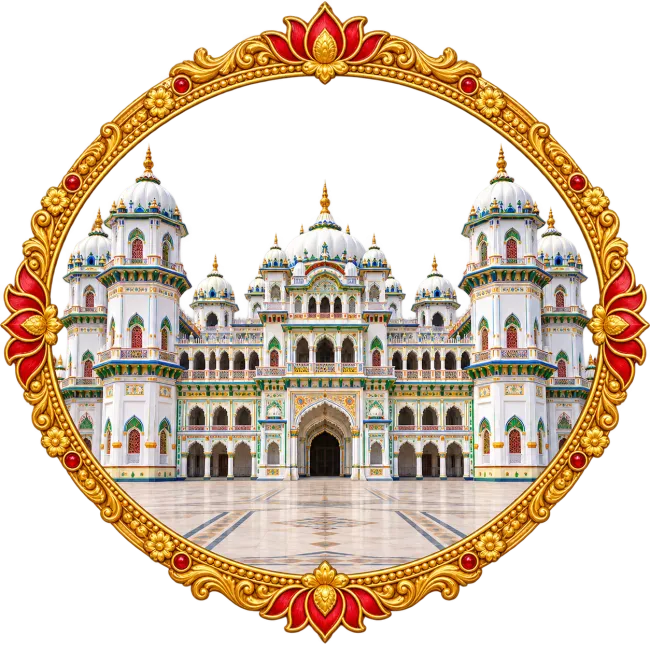
Janaki Mandir, Janakpur, Nepal
Visit Janaki Mandir in Janakpur, one of Nepal’s most revered Hindu temples dedicated to Goddess Sita. Located in the ancient Mithila region, the temple is associated with the birthplace of Mata Sita and the divine marriage of Goddess Sita and Lord Rama. Its magnificent white façade, colourful domes, carved windows and spacious courtyards make it one of the most beautiful religious monuments in Nepal.
Also known as Nau Lakha Mandir, Janaki Mandir attracts devotees from Nepal, India and other countries. The temple becomes especially vibrant during Vivah Panchami, when the wedding ceremony of Lord Rama and Goddess Sita is recreated with traditional rituals, processions, devotional music and cultural celebrations.
About Janaki Mandir
Janaki Mandir is located in Janakpurdham in the Dhanusha district of Madhesh Province, Nepal. The temple is dedicated to Goddess Sita, who is lovingly worshipped as Janaki because she was the daughter of King Janaka.
Janakpur is traditionally identified with Mithila, the ancient kingdom ruled by King Janaka. According to the Ramayana, Goddess Sita was born in this sacred region and later married Lord Rama after he lifted and broke the divine bow of Lord Shiva.
The temple is one of the largest and most important Hindu temples in Nepal. Its three-storeyed structure, large courtyards, numerous rooms and decorated gateways resemble a royal palace.
Janaki Mandir is an important pilgrimage destination for devotees following the Ramayana tradition. People visit the temple to seek blessings for a happy marriage, family prosperity, love between husband and wife and peace within the household.
History of Janaki Mandir
The present Janaki Mandir was built by Queen Vrisha Bhanu Kunwari of Tikamgarh, India. Construction was completed in 1910. The temple’s construction cost is traditionally believed to have been nine lakh rupees, which gave it the popular name Nau Lakha Mandir.
The religious history of the site is older than the present structure. According to temple tradition, the saint Shurkishor Das discovered a golden image of Goddess Sita at this location in 1657. He was a devoted follower of Mata Sita and played an important role in developing Janakpur as a centre of Janaki worship.
An earlier shrine was established to preserve and worship the sacred image. As the number of pilgrims increased, Queen Vrisha Bhanu decided to construct a grand temple at the site. The completed building combined Hindu, Rajput, Mughal and regional Koiri architectural features.
The temple has since become a symbol of the cultural relationship shared by Nepal and India. Devotees from Ayodhya, Sitamarhi, Bihar, Uttar Pradesh, Madhya Pradesh and other regions frequently visit Janakpur.
Mythology of Janaki Mandir
According to the Ramayana, King Janaka once found an infant girl while ploughing a field during a sacred ceremony. The child appeared from the earth and was accepted by King Janaka as his daughter.
She was named Sita because the Sanskrit word Sita refers to the furrow made by a plough. She was also called Janaki, the daughter of Janaka, and Vaidehi, the princess of Videha.
As Sita grew older, King Janaka decided that she would marry the prince capable of lifting and stringing the divine bow of Lord Shiva. Kings and warriors from many regions attended her Swayamvar, but none could lift the powerful bow.
Lord Rama arrived in Mithila with his brother Lakshmana and Sage Vishwamitra. When Lord Rama lifted the bow, it broke into two pieces. King Janaka then arranged the marriage of Lord Rama and Goddess Sita.
The divine wedding was attended by the royal families of Ayodhya and Mithila. This sacred event is commemorated every year during Vivah Panchami in Janakpur.
Religious Significance of Janaki Mandir
Janaki Mandir represents the purity, courage, sacrifice and devotion of Goddess Sita. Devotees worship her as an ideal daughter, wife, queen and embodiment of Goddess Lakshmi.
Married couples visit the temple to pray for mutual love, respect and a peaceful family life. Unmarried devotees seek blessings for a suitable life partner and a happy marriage.
The temple also holds special importance for followers of Lord Rama. Images of Lord Rama and Goddess Sita are worshipped together, symbolising dharma, loyalty, love and responsibility.
Devotees visit Janaki Mandir for:
- Blessings for a happy married life
- Harmony between husband and wife
- Family peace and prosperity
- Removal of obstacles in marriage
- Blessings for children
- Spiritual strength and patience
- Success in important responsibilities
- Protection from family disputes
- Devotion to Lord Rama and Goddess Sita
Main Deities of Janaki Mandir
The principal deities are Goddess Sita and Lord Rama. They are worshipped together with Lakshmana and other members of the divine family.
The temple preserves sacred images associated with Janaki worship. Devotees offer flowers, garlands, clothes, vermilion, sweets and traditional Mithila offerings to the deities.
The sight of Mata Janaki and Lord Rama dressed in colourful garments and ornaments is the main spiritual attraction of the temple.
Architecture of Janaki Mandir
Janaki Mandir is a grand three-storeyed structure built using stone and marble. The temple covers an area of approximately 1,480 square metres and contains about 60 rooms.
Its architectural design combines Hindu, Koiri, Rajput and Mughal influences. The predominantly white exterior is decorated with colourful borders, floral patterns and ornamental details.
Important architectural features include:
- Three-storeyed palace-like structure
- White stone and marble exterior
- Colourful domes and small towers
- Arched doors and windows
- Decorative balconies and verandas
- Spacious inner courtyards
- Carved pillars and ornamental designs
- Mithila-style artistic elements
- Multiple prayer rooms and shrines
- Beautifully decorated entrance gateways
The temple appears particularly magnificent during the evening when lights illuminate its domes, windows and courtyards.
Janaki Mandir Timings
Janaki Mandir remains closed during the afternoon break and reopens for evening darshan.
The regular darshan windows are 5:30 AM–11:00 AM and 4:00 PM–8:30 PM.
Morning Puja and Aarti
Morning worship begins after the temple opens at 5:30 AM. The priests prepare the deities with fresh clothes, ornaments, flowers and garlands.
Morning Aarti is performed at 6:00 AM. Devotees sing prayers dedicated to Mata Janaki and Lord Rama while lamps, incense and sacred offerings are presented before the deities.
The period between 6:00 AM and 9:00 AM is ideal for peaceful darshan. The temple courtyard remains cooler, and devotees have sufficient time to visit the nearby shrines.
Evening Puja and Aarti
The temple reopens for evening darshan at 4:00 PM. Evening Aarti is performed from 6:00 PM to 7:00 PM.
During Aarti, the sanctum is illuminated with oil lamps. Devotees participate in devotional singing and chant the names of Sita and Rama. The palace-like temple looks especially beautiful after sunset when decorative lights illuminate the building.
Visitors should reach the temple before 5:30 PM to attend the complete evening Aarti.
Vivah Mandap
Vivah Mandap is situated close to Janaki Mandir and commemorates the marriage of Lord Rama and Goddess Sita. The beautifully decorated pavilion contains images representing the divine wedding ceremony.
It depicts Lord Rama, Goddess Sita, King Janaka, King Dasharatha and the four divine couples:
- Lord Rama and Goddess Sita
- Lakshmana and Urmila
- Bharata and Mandavi
- Shatrughna and Shrutakirti
Vivah Mandap is an important part of the Janakpur pilgrimage. Married couples often visit it to seek blessings for a stable and loving relationship.
Major Festivals Celebrated
Vivah Panchami
Vivah Panchami is the biggest festival celebrated at Janaki Mandir. It commemorates the divine marriage of Lord Rama and Goddess Sita.
A ceremonial wedding procession representing Lord Rama’s Baraat travels through Janakpur. The deities are taken to the Vivah Mandap, where traditional marriage rituals are performed.
The festival includes:
- Ram-Sita wedding procession
- Traditional Mithila wedding rituals
- Bhajans and Ramayana recitation
- Cultural performances
- Decorative lights and floral arrangements
- Religious discourses
- Distribution of prasad
- Participation by pilgrims from Nepal and India
Ram Navami
Ram Navami celebrates the birth of Lord Rama. Devotees observe fasting, recite the Ramayana and participate in special pujas.
Sita Navami
Sita Navami, also called Janaki Navami, celebrates the appearance of Goddess Sita. Special worship, processions and devotional programmes are organized.
Diwali and Tihar
The temple is illuminated with lamps during Diwali and Tihar. Goddess Lakshmi, Lord Rama and Mata Sita are worshipped with devotion.
Chhath Puja
Chhath is widely celebrated in the Mithila region. Devotees offer prayers to the Sun God at sacred ponds such as Ganga Sagar and Dhanush Sagar.
Holi
Janakpur celebrates Holi with devotional songs, colours and traditional Mithila customs.
Offerings and Prasad
Common offerings made at Janaki Mandir include:
- Flowers and garlands
- Red or yellow chunari
- Vermilion and cosmetic items
- Fruits and sweets
- Incense sticks
- Oil or ghee lamps
- Clothes for the deities
- Mithila-style wedding items
- Rice, turmeric and sacred threads
- Monetary donations
Devotees may receive sweets, fruits and dry offerings as prasad after worship.
Married women often offer vermilion, bangles and chunari to Mata Janaki while praying for the well-being of their families.
Entry Fee and Visit Duration
There is no entry fee for regular darshan at Janaki Mandir. Special pujas and ceremonial offerings may have separate charges.
Visitors generally need one to two hours to explore the main temple, courtyards and Vivah Mandap. A complete Janakpur pilgrimage, including nearby temples and sacred ponds, requires four to six hours.
Photography is generally permitted in the outer courtyard, but visitors should ask temple authorities before photographing the sanctum or ongoing rituals.
Visitor Guidelines
- Wear modest and respectful clothing.
- Remove footwear before entering the temple area.
- Maintain silence near the main sanctum.
- Do not touch the deities or ceremonial objects.
- Follow separate queues during crowded festivals.
- Keep mobile phones on silent mode.
- Avoid carrying alcohol, tobacco and non-vegetarian food.
- Use authorized counters for donations and puja arrangements.
- Ask permission before photographing religious ceremonies.
- Keep the temple and sacred ponds clean.
- Take care of personal belongings during festivals.
- Respect local Mithila customs and traditions.
Best Time to Visit Janaki Mandir
October to March is the best period for visiting Janakpur because the weather remains pleasant.
Vivah Panchami is the most spiritually significant time to visit, but the temple and surrounding streets become extremely crowded. Devotees seeking peaceful darshan should visit on a regular weekday between 6:00 AM and 9:00 AM.
Sita Navami and Ram Navami are also excellent occasions for experiencing the temple’s religious traditions.
How to Reach Janaki Mandir
By Air
Janakpur Airport is the nearest airport, located approximately 4 kilometres from the temple. Regular flights connect Janakpur with Kathmandu.
Taxis, auto-rickshaws and local vehicles are available from the airport.
By Train
Janakpur is connected with Jaynagar in Bihar through the India–Nepal cross-border railway. Trains operate between Jaynagar and the Janakpur–Kurtha region.
Janakpur Railway Station is located close to the main city, and local vehicles are available for the temple.
By Road
Janakpur is connected with Kathmandu, Birgunj, Biratnagar and other Nepalese cities by road.
Travellers from India can enter Nepal through the Bhitthamore–Jaleshwar border, which is convenient for passengers travelling from Sitamarhi and nearby parts of Bihar.
From Kathmandu
Janakpur is approximately 225 kilometres from Kathmandu. Buses, private taxis and domestic flights are available. A flight is the fastest option, while the road journey provides views of Nepal’s hills and plains.
Indian citizens should carry a passport or voter identity card and confirm the latest transportation requirements before travelling.
Nearby Places to Visit
Vivah Mandap
A ceremonial pavilion representing the divine marriage of Lord Rama and Goddess Sita.
Ram Mandir
An ancient temple dedicated to Lord Rama, located near Janaki Mandir.
Rajarshi Janak Mandir
A temple dedicated to King Janaka, the father of Goddess Sita.
Dhanush Sagar
A sacred pond associated with the divine bow of Lord Shiva and the Swayamvar of Goddess Sita.
Ganga Sagar
One of Janakpur’s most important sacred ponds, known for evening Aarti and Chhath Puja.
Dhanushadham
A religious site associated with a fragment of Lord Shiva’s bow, located outside Janakpur.
Sankat Mochan Temple
A popular temple dedicated to Lord Hanuman.
Ratna Sagar Temple
A peaceful religious site located near the sacred Ratna Sagar pond.
Conclusion
Janaki Mandir is a magnificent symbol of devotion, Mithila culture and the sacred relationship between Lord Rama and Goddess Sita. Built in 1910 by Queen Vrisha Bhanu of Tikamgarh, the temple is admired for its palace-like architecture, colourful domes, marble courtyards and deep connection with the Ramayana.
The daily Aartis, Vivah Mandap, sacred ponds and grand celebration of Vivah Panchami make Janakpur an unforgettable pilgrimage destination. A visit to Janaki Mandir allows devotees to experience the virtues represented by Mata Sita—purity, courage, patience, devotion and unconditional love.