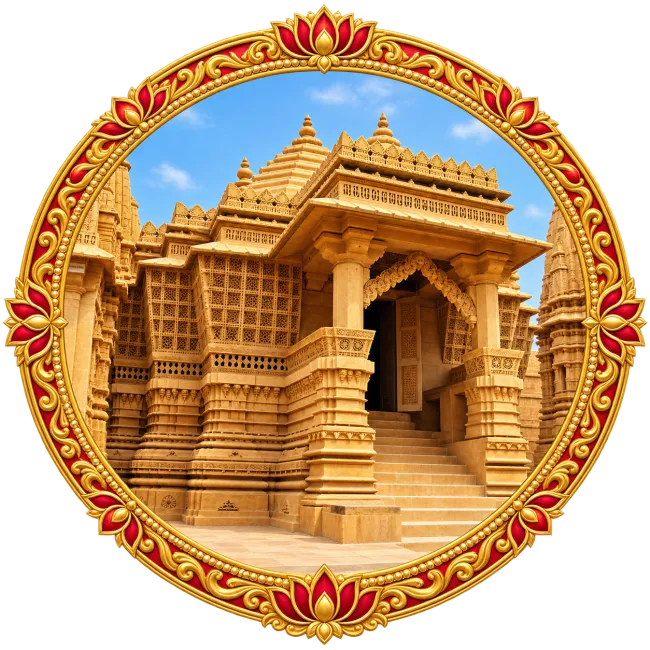
Jain Temples Inside Jaisalmer Fort
The Jain Temples inside Jaisalmer Fort are among Rajasthan’s finest examples of religious architecture and intricate stone craftsmanship. Built from golden-yellow sandstone, these temples form a connected complex of seven sacred shrines dedicated to different Jain Tirthankaras. Their delicately carved pillars, decorated ceilings, ornamental gateways and peaceful sanctums attract pilgrims, historians, photographers and architecture enthusiasts from across the world.
Located within the narrow lanes of the living Jaisalmer Fort, the temples offer visitors an opportunity to experience Jain spirituality alongside the rich history and culture of the Golden City.
About the Jain Temples Inside Jaisalmer Fort
The Jain temple complex is situated inside Jaisalmer Fort in Jaisalmer, Rajasthan. It consists of seven interconnected Shwetambara Jain temples dedicated to prominent Tirthankaras, including Lord Parshvanatha, Lord Chandraprabhu, Lord Rishabhanatha and Lord Shantinatha.
These temples were constructed between the 12th and 16th centuries under the patronage of wealthy Jain merchants and community leaders. The merchants of Jaisalmer played an important role in the trade routes that connected Rajasthan with Gujarat, Sindh, Punjab and Central Asia. Their prosperity contributed greatly to the construction and maintenance of these temples.
The entire complex is built primarily from the same golden sandstone used in Jaisalmer Fort. This creates a beautiful visual harmony between the temples, houses, palaces and defensive walls of the fort.
History of the Jain Temples
The Jain temples inside Jaisalmer Fort were built gradually between the 12th and 16th centuries. Therefore, the complex cannot be attributed to one ruler or one builder. Different temples were commissioned by Jain merchants, community leaders and influential families who lived in Jaisalmer.
Jaisalmer became an important commercial centre because of its location on ancient caravan routes. Jain merchants involved in the trade of silk, spices, precious stones and other goods became highly influential in the city. They used part of their wealth to build temples, preserve manuscripts and support religious institutions.
Several inscriptions found inside the temple complex record renovations, donations and additions made by Jain families. The inscriptions associated with the Parshvanatha and Sambhavanatha temples indicate that major construction and restoration work took place during the 15th century.
The Chandraprabhu Temple is traditionally dated to 1509 CE. The Sambhavanatha Temple is associated with Askaran Chopra of Merta, who is credited with supporting its construction. Other shrines were built or expanded by different merchant families over several generations.
Who Built the Jain Temples?
The seven temples were constructed by different members of Jaisalmer’s prosperous Jain community. There was no single founder of the entire complex.
Important historical details include:
- The temple complex developed between the 12th and 16th centuries.
- The Chandraprabhu Temple was built in 1509 CE.
- The Sambhavanatha Temple is associated with Askaran Chopra of Merta.
- Several Jain merchant families funded the construction, expansion and restoration of the temples.
- Local craftsmen carved the temples from Jaisalmer’s golden sandstone.
- Some inscriptions record temple-related work during the reigns of Jaisalmer’s Bhati rulers.
The rulers of Jaisalmer allowed the Jain community to construct and maintain these temples within the protected fort complex.
Seven Jain Temples Inside Jaisalmer Fort
The complex contains seven principal temples dedicated to the following Jain Tirthankaras:
The temples are connected through corridors, courtyards, staircases and narrow passages. Visitors can move from one shrine to another while observing changes in the carvings, layouts and religious iconography.
Parshvanatha Temple
The Parshvanatha Temple is one of the largest and most important shrines in the complex. It is dedicated to Lord Parshvanatha, the 23rd Jain Tirthankara.
The principal idol is generally represented beneath a multi-headed serpent hood, one of the identifying symbols of Lord Parshvanatha. The temple contains an elaborately carved entrance, ornamental pillars, decorated ceilings and numerous smaller images.
A group of subsidiary shrines surrounds the main sanctum, creating a sacred architectural arrangement. The temple is particularly admired for its detailed stonework and balanced proportions.
Chandraprabhu Temple
The Chandraprabhu Temple is among the first major shrines encountered while entering the complex. Dedicated to Lord Chandraprabhu, the eighth Jain Tirthankara, it is traditionally dated to 1509 CE.
Its mandapa, or pillared prayer hall, contains beautifully carved columns and an ornamental ceiling. The temple’s yellow sandstone surfaces are decorated with floral patterns, geometrical designs, divine figures and symbolic representations.
Natural light entering through carved openings enhances the fine details of the interior.
Rishabhanatha Temple
The Rishabhanatha Temple is dedicated to Lord Rishabhanatha, also known as Adinatha, the first Jain Tirthankara.
Lord Rishabhanatha holds a particularly important position in Jainism because he is regarded as the first spiritual teacher of the present cosmic cycle. His symbol is the bull, which may be seen in associated Jain artwork and iconography.
The temple contains a beautifully installed image of the Tirthankara along with carved pillars, religious motifs and smaller sacred figures.
Sambhavanatha Temple and Gyan Bhandar
The Sambhavanatha Temple is dedicated to Lord Sambhavanatha, the third Jain Tirthankara. Its construction is traditionally associated with Askaran Chopra of Merta.
The temple contains hundreds of Jain images and is also connected with the historic Gyan Bhandar, or repository of knowledge. This underground library preserved valuable handwritten manuscripts during periods of political disturbance and invasion.
The collection includes manuscripts written on palm leaves and paper, some protected by painted wooden covers. The subjects include Jain philosophy, religious rituals, grammar, literature, astronomy, astrology and traditional knowledge.
Access to the manuscript collection may be restricted because the documents are fragile and require careful preservation.
Shantinatha and Kunthunatha Temples
The Shantinatha and Kunthunatha temples are closely connected and are admired for their sculpted interiors. They are dedicated to Lord Shantinatha and Lord Kunthunatha, the 16th and 17th Jain Tirthankaras.
The temples contain intricately carved pillars, domed ceilings, decorative brackets and carefully arranged sacred images. Their quiet interiors create a meditative atmosphere suitable for prayer and contemplation.
Architecture of the Jain Temples
The architecture of these temples is one of their most impressive features. Although constructed primarily from sandstone rather than marble, their highly detailed workmanship is often compared with the famous Dilwara Jain temples of Mount Abu.
Important architectural features include:
- Golden-yellow sandstone construction
- Ornamental entrance gateways
- Carved pillars and arches
- Decorated mandapas
- Domed and concentric ceilings
- Delicate stone latticework
- Sculptures of Tirthankaras
- Floral and geometric designs
- Figures of celestial beings, musicians and dancers
- Representations of animals and mythological forms
- Interconnected corridors and courtyards
- Smaller shrines surrounding the principal sanctums
The sandstone carvings are extremely fine and sometimes resemble woodwork or ivory carving. Every pillar, ceiling and doorway has been designed with careful attention to symmetry and spiritual symbolism.
Religious Significance
The temple complex is an important place of pilgrimage for followers of Shwetambara Jainism. Each shrine honours a Jain Tirthankara who attained spiritual liberation and showed humanity the path of truth, non-violence, self-discipline and detachment.
Devotees visit the temples to pray for inner peace, wisdom and freedom from negative karma. The peaceful surroundings encourage meditation and reflection on the central Jain principles of ahimsa, truthfulness, non-attachment and compassion toward every living being.
These are active places of worship and not merely historical monuments. Visitors should therefore maintain silence and respect religious customs while exploring them.
Jain Temples Inside Jaisalmer Fort Timings
The public visiting period is limited mainly to the morning. Religious ceremonies may begin before tourist entry, but their precise schedule can differ among the seven shrines.
Temple timings can be changed temporarily during festivals, religious ceremonies, conservation work or special community events.
Best Time for Darshan
The best time to visit the temples is between 8:00 AM and 10:00 AM. The complex is usually quieter during the first two hours of public entry, allowing visitors to appreciate the sanctums and carvings peacefully.
The cooler months from October to March are ideal for visiting Jaisalmer. Morning temperatures are comfortable, making it easier to walk through the fort’s lanes and explore the interconnected shrines.
Visitors should avoid reaching close to noon because entry may stop before they can complete the entire temple circuit.
Daily Worship and Rituals
Daily worship follows Shwetambara Jain traditions. Rituals may differ slightly in each shrine, but common devotional practices include:
- Morning cleansing and preparation of the sanctum
- Darshan of the Tirthankara
- Chaityavandan
- Recitation of the Navkar Mantra
- Snatra Puja on designated occasions
- Ashtaprakari Puja
- Meditation and silent prayer
- Reading of Jain scriptures
- Offering lamps and incense where permitted
Unlike many Hindu temples, Jain worship focuses on honouring the spiritual qualities and teachings of the Tirthankaras rather than seeking material favours.
Major Festivals
Important Jain festivals observed at the temple complex include:
Mahavir Jayanti
Mahavir Jayanti celebrates the birth of Lord Mahavira, the 24th Jain Tirthankara. Special prayers, scripture readings and community programmes are organized.
Paryushan Parva
Paryushan is one of the most sacred periods in the Jain calendar. Devotees practise fasting, self-discipline, meditation and spiritual study.
Samvatsari
Samvatsari is observed at the conclusion of Paryushan. Devotees seek forgiveness from others for any harm caused knowingly or unknowingly.
Diwali
In Jain tradition, Diwali commemorates the nirvana of Lord Mahavira. Lamps, prayers and religious discourses form part of the observance.
Kartik Purnima
Kartik Purnima is considered auspicious for pilgrimage and worship. Devotees may visit the temples for special darshan and prayer.
Offerings at the Jain Temples
Depending on temple rules, devotees may make traditional offerings used in Jain worship, including:
- Rice grains
- Sandalwood paste
- Saffron
- Flowers
- Incense
- Lamps
- Fruits
- Monetary donations for temple maintenance
Visitors should not carry leather objects, non-vegetarian food, alcohol or tobacco inside the temple complex. Some forms of ritual worship may be reserved for Jain devotees or performed only under the guidance of temple priests.
Entry Fee and Visit Duration
Indian visitors are generally allowed to enter for worship without a standard temple admission fee. Charges may apply for foreign visitors, mobile phones, still cameras or video cameras. Current charges are displayed at the temple entrance and should be confirmed before entering.
A complete visit usually takes between one and two hours. Architecture enthusiasts may require additional time to observe the carvings and explore all seven shrines.
How to Reach the Jain Temples
By Air
Jaisalmer Airport is the nearest airport. Taxis are available from the airport to Jaisalmer city and the entrance of the fort. Flight availability may vary according to season.
Jodhpur Airport is another major option and is approximately 280 kilometres from Jaisalmer.
By Train
Jaisalmer Railway Station is approximately 2–3 kilometres from Jaisalmer Fort. Auto-rickshaws and taxis are available outside the station.
By Road
Jaisalmer is connected by road with Jodhpur, Bikaner, Barmer, Jaipur and other Rajasthan cities. Government and private buses operate to Jaisalmer.
From Jaisalmer Fort Entrance
Visitors can take an auto-rickshaw or taxi to the base of the fort. From the entrance, the Jain temples are reached on foot through the fort’s narrow lanes. Comfortable footwear is recommended because the pathways include slopes, steps and uneven stone surfaces.
Nearby Places to Visit
Visitors can combine the temple visit with the following attractions:
- Jaisalmer Fort Palace Museum
- Lakshminath Temple
- Patwon Ki Haveli
- Nathmal Ki Haveli
- Salim Singh Ki Haveli
- Gadisar Lake
- Bada Bagh
- Lodurva Jain Temple
- Amar Sagar Jain Temple
- Vyas Chhatri
- Sam Sand Dunes
Visitor Guidelines
- Reach before 10:00 AM to explore the entire complex.
- Remove footwear before entering the temple area.
- Wear modest clothing covering the shoulders and legs.
- Do not carry leather items inside the sacred sections.
- Maintain silence near the sanctums.
- Follow photography restrictions carefully.
- Do not photograph worshippers without permission.
- Never touch the idols, carvings or manuscripts.
- Do not carry food, tobacco or alcohol into the temples.
- Follow instructions given by temple priests and caretakers.
- Avoid damaging the sandstone surfaces by leaning against or scratching them.
- Confirm camera charges and entry rules at the counter.
Conclusion
The Jain Temples inside Jaisalmer Fort represent a remarkable combination of devotion, history, artistic excellence and community heritage. Constructed over several centuries by Jaisalmer’s prosperous Jain families, the seven interconnected shrines preserve some of Rajasthan’s finest golden-sandstone carvings.
From the magnificent Parshvanatha and Chandraprabhu temples to the sacred Gyan Bhandar associated with the Sambhavanatha Temple, every part of the complex reflects the Jain ideals of knowledge, non-violence, discipline and spiritual liberation.
A morning visit offers not only darshan of the revered Tirthankaras but also an unforgettable journey through the religious and architectural history of Jaisalmer.