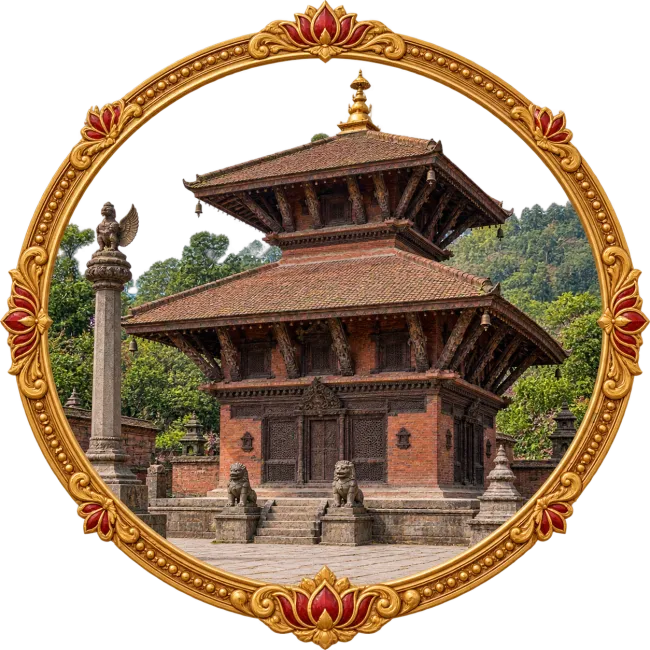
Ichangu Narayan Temple, Ichangu, Kathmandu
Visit Ichangu Narayan Temple in Kathmandu, one of the four sacred Narayan temples protecting the Kathmandu Valley. Located within the peaceful Ichangu area near the Nagarjun hills, the temple is dedicated to Lord Vishnu in his Narayan form.
The temple is known for its traditional Newari architecture, sacred stone image of Lord Vishnu and quiet surroundings. Devotees visit Ichangu Narayan to pray for protection, family prosperity, good health and spiritual progress. Haribodhini Ekadashi is the most important festival celebrated at the temple.
About Ichangu Narayan Temple
Ichangu Narayan Temple is situated in the Ichangu Narayan area west of central Kathmandu. It lies close to the green hills of Nagarjun and away from the busiest sections of the city.
The presiding deity is Lord Vishnu, worshipped as Ichangu Narayan. Lord Vishnu is the protector and preserver of the universe within the Hindu Trinity.
Ichangu Narayan forms part of the four sacred Narayan temples of the Kathmandu Valley:
- Changu Narayan
- Ichangu Narayan
- Bishankhu Narayan
- Shesh Narayan
These four temples are traditionally believed to guard the Kathmandu Valley from different directions. Devotees who visit all four shrines undertake a spiritually important Narayan pilgrimage.
History of Ichangu Narayan Temple
Ichangu Narayan Temple is associated with the Licchavi period of Nepalese history. Its original establishment is traditionally attributed to King Hari Datta Varma during the fourth century.
King Hari Datta Varma is believed to have established four Narayan temples at strategic locations surrounding the Kathmandu Valley. The temples created a sacred protective boundary centred on Lord Vishnu.
The original structure at Ichangu was repaired and reconstructed several times because of age, earthquakes and natural deterioration.
During the Malla period, the temple received its traditional Newari pagoda-style architectural character. Local rulers and communities contributed to its maintenance and daily worship.
Further renovations took place during the Shah and Rana periods. Local residents and Guthi organizations continue to preserve the temple, its festivals and Vaishnava rituals.
Char Narayan Tradition of Kathmandu Valley
The four Narayan temples form an important sacred pilgrimage circuit.
Changu Narayan
Located to the east, Changu Narayan is known for its Licchavi-period inscriptions and ancient Vishnu sculptures.
Ichangu Narayan
Located to the west, Ichangu Narayan protects the western side of the valley and the Nagarjun region.
Bishankhu Narayan
Located towards the southeastern side of the valley, Bishankhu Narayan is situated near a sacred cave.
Shesh Narayan
Located near Pharping, Shesh Narayan is associated with Lord Vishnu resting upon Sheshnag.
Devotees believe that visiting all four Narayan temples provides divine protection and the complete blessings of Lord Vishnu.
Mythology of Ichangu Narayan Temple
According to local tradition, the Ichangu region was once covered with forests and agricultural fields. Lord Vishnu manifested at this peaceful location to protect the western side of the Kathmandu Valley.
The deity was worshipped by local residents who sought protection from disease, conflict and natural dangers.
Another tradition associates the sacred image with a divine discovery. Residents found the image at the present location and understood that Lord Narayan wished to remain there.
A shrine was constructed, and the deity became known as Ichangu Narayan after the surrounding settlement.
The temple’s location near the Nagarjun hills reinforces its connection with nature, meditation and protection.
Religious Significance of Ichangu Narayan Temple
Ichangu Narayan Temple is an important Vaishnava shrine. Lord Vishnu is worshipped as the divine protector who preserves Dharma and maintains balance within the universe.
Devotees visit the temple for:
- Protection from danger
- Family peace and prosperity
- Recovery from illness
- Success in education
- Growth in employment and business
- Blessings for marriage and children
- Removal of obstacles
- Relief from fear and anxiety
- Safe travel
- Spiritual progress
- Freedom from negative influences
- Fulfilment of sincere wishes
Worshipping Lord Narayan on Ekadashi is considered especially auspicious.
Main Deity of Ichangu Narayan Temple
The principal deity is Lord Vishnu in his Narayan form. The sacred stone image is installed inside the main sanctum.
Lord Vishnu is represented with his traditional four divine attributes:
- Sudarshana Chakra
- Panchajanya Shankha
- Kaumodaki Gada
- Padma
These objects represent divine protection, cosmic order, strength and spiritual purity.
The deity is decorated with:
- Yellow or white garments
- Tulsi garlands
- Flowers
- Sandalwood paste
- Traditional jewellery
- Sacred ornaments
- Metal decorations
Images associated with Goddess Lakshmi, Garuda, Lord Ganesha and other deities can also be seen within the temple complex.
Garuda at Ichangu Narayan Temple
Garuda is the divine vehicle of Lord Vishnu. A sacred representation of Garuda faces the main Narayan shrine.
Garuda symbolizes:
- Devotion
- Courage
- Speed
- Protection
- Victory over harmful forces
- Freedom from poisonous influences
Devotees offer prayers to Garuda before receiving darshan of Lord Vishnu. Some pilgrims also pray for protection from snake-related fears and illnesses.
Architecture of Ichangu Narayan Temple
Ichangu Narayan Temple reflects traditional Newari pagoda architecture. The main shrine stands within a stone-paved courtyard surrounded by smaller religious structures.
Important architectural features include:
- Multi-tiered pagoda-style shrine
- Traditional Newari brick construction
- Carved wooden doors and windows
- Decorated wooden supports
- Metal roof ornaments and pinnacle
- Sacred Garuda image
- Stone-paved courtyard
- Prayer bells
- Oil-lamp stands
- Smaller shrines
- Ancient stone sculptures
- Views of the surrounding hills
The temple’s relatively quiet location allows visitors to appreciate its architecture and spiritual atmosphere without the large crowds seen at central Kathmandu temples.
Ichangu Narayan Temple Timings
The temple may remain open for extended hours during Haribodhini Ekadashi, Harishayani Ekadashi, Krishna Janmashtami and other major Vaishnava festivals.
Morning Puja and Aarti
The temple opens at 5:30 AM. Priests clean the sanctum and prepare Lord Ichangu Narayan with fresh garments, flowers and Tulsi garlands.
Morning Puja begins at 6:00 AM, followed by Aarti at 6:30 AM.
Lord Vishnu is worshipped with:
- Tulsi leaves
- Yellow flowers
- Lotus flowers
- Sandalwood paste
- Sacred water
- Incense
- Oil lamps
- Fruits and sweets
- Rice and grains
- Vishnu mantras
The period between 6:30 AM and 9:00 AM is suitable for peaceful darshan.
Vishnu Archana and Special Puja
Vishnu Archana and special pujas are generally arranged between 7:00 AM and 11:00 AM.
Devotees may perform special worship for:
- Family prosperity
- Health
- Marriage
- Children
- Education
- Employment
- Business growth
- Safe travel
- Spiritual progress
- Removal of obstacles
The ceremony may include Sankalp, Vishnu Sahasranama recitation, Tulsi Archana, flower offerings, lamps and Bhog.
Special pujas should be arranged through authorized temple priests.
Bhog and Afternoon Darshan
Bhog is offered to Lord Ichangu Narayan at 12:00 PM. The offering may contain rice, lentils, fruits, sweets and traditional vegetarian preparations.
Afternoon darshan continues after the Bhog ritual. Devotees may perform circumambulation of the temple and visit the smaller shrines.
Evening Puja and Aarti
Evening Puja begins at 5:30 PM, followed by Aarti at 6:00 PM.
Oil lamps are offered before Lord Narayan while devotees recite Vishnu prayers and devotional hymns.
The quiet surroundings and views of the nearby hills create a peaceful atmosphere during evening worship.
Visitors should reach before 5:30 PM to attend the complete ceremony. The temple closes at 7:00 PM.
Haribodhini Ekadashi Festival
Haribodhini Ekadashi is the most important festival celebrated at Ichangu Narayan Temple.
It marks the awakening of Lord Vishnu after the four-month Chaturmas period. Devotees observe fasting and visit Narayan temples throughout the Kathmandu Valley.
The celebration includes:
- Special Abhishek
- Vishnu Sahasranama recitation
- Tulsi offerings
- Oil lamps
- Bhajans
- Fasting
- Religious processions
- Distribution of prasad
- Tulsi Vivah ceremonies
Large numbers of devotees visit all four Narayan temples during this occasion.
Other Major Festivals
Harishayani Ekadashi
Harishayani Ekadashi marks the beginning of Lord Vishnu’s cosmic rest. Devotees observe fasting and offer Tulsi leaves.
Vaikuntha Ekadashi
Special prayers are offered for liberation, forgiveness and spiritual progress.
Krishna Janmashtami
The birth of Lord Krishna is celebrated with fasting, Bhajans and special worship.
Ram Navami
Lord Rama’s birth is observed through Ramayana recitation and Puja.
Tulsi Vivah
The ceremonial marriage of Goddess Tulsi and Lord Vishnu is celebrated after Haribodhini Ekadashi.
Ekadashi
Every Ekadashi is considered sacred for Vishnu worship. Devotees may observe fasting and visit the temple.
Offerings and Prasad
Common offerings made to Lord Ichangu Narayan include:
- Tulsi leaves and garlands
- Yellow flowers
- Lotus flowers
- Sandalwood paste
- Yellow or white cloth
- Fruits and sweets
- Coconut
- Rice and grains
- Incense sticks
- Oil or ghee lamps
- Sacred threads
- Monetary donations
Tulsi is considered the most important offering for Lord Vishnu.
Prasad may include fruits, sweets, Tulsi leaves, flowers and blessed sacred threads.
Entry Fee and Visit Duration
There is no entry fee for regular darshan at Ichangu Narayan Temple. Charges may apply for special Puja and ceremonial arrangements.
A regular visit requires one to two hours. Visitors exploring the surrounding village and nearby hills should keep two to three hours.
During Haribodhini Ekadashi, darshan may require additional time because of large crowds.
Visitor Guidelines
- Wear modest and respectful clothing.
- Remove footwear before entering the main shrine.
- Maintain silence near the sanctum.
- Keep mobile phones on silent mode.
- Ask permission before photographing the deity.
- Do not touch ancient sculptures or carvings.
- Offer Tulsi leaves only in the designated manner.
- Use authorized priests for special pujas.
- Do not carry alcohol, tobacco or non-vegetarian food.
- Keep the courtyard and surrounding village clean.
- Walk carefully on stone paths during rain.
- Respect local Newar traditions.
- Keep children and elderly visitors under supervision.
- Follow instructions from temple caretakers.
Best Time to Visit
October to March is the best period for visiting Ichangu Narayan Temple because Kathmandu experiences pleasant weather.
Spring from March to May is also suitable, and the surrounding hills remain green and colourful.
For peaceful darshan, visit between 6:30 AM and 9:00 AM. Haribodhini Ekadashi offers the most important religious experience, but the temple remains crowded.
How to Reach Ichangu Narayan Temple
By Air
Tribhuvan International Airport is the nearest airport. Visitors can hire a taxi or private vehicle to Ichangu.
From Central Kathmandu
Ichangu Narayan Temple is located west of central Kathmandu. Taxis, local buses and private vehicles are available.
From Thamel
The temple is approximately 7 kilometres from Thamel. Visitors can travel through the western parts of Kathmandu towards Ichangu.
From Swayambhunath
Ichangu Narayan is located a short drive from Swayambhunath. Both temples can be included in the same trip.
By Local Bus
Local buses and shared vehicles operate towards Ichangu and nearby western neighbourhoods. The final section may require a short walk.
From India
Indian visitors can reach Kathmandu by air or enter Nepal through road-border points such as Raxaul–Birgunj and Sunauli–Bhairahawa.
Indian citizens should carry a valid passport or voter identity card and confirm transportation requirements before departure.
Nearby Places to Visit
- Swayambhunath Temple
- Nagarjun Forest
- Jamacho Monastery
- White Gumba
- Balaju Water Garden
- Shobha Bhagwati Temple
- Bijeshwari Temple
- Kathmandu Durbar Square
- Hanuman Dhoka Palace
- Thamel
- Ason Market
- Indra Chowk
Conclusion
Ichangu Narayan Temple is one of the four sacred Narayan temples protecting the Kathmandu Valley. Its association with King Hari Datta Varma, the Licchavi period and the Char Narayan tradition gives it exceptional religious importance.
The temple’s traditional Newari architecture, peaceful hill surroundings and ancient worship of Lord Vishnu create a calm spiritual experience.
Worshipping Ichangu Narayan is believed to provide protection, family prosperity and spiritual progress. A visit to the temple also offers devotees an opportunity to explore one of Kathmandu’s quieter and historically important Vaishnava shrines.