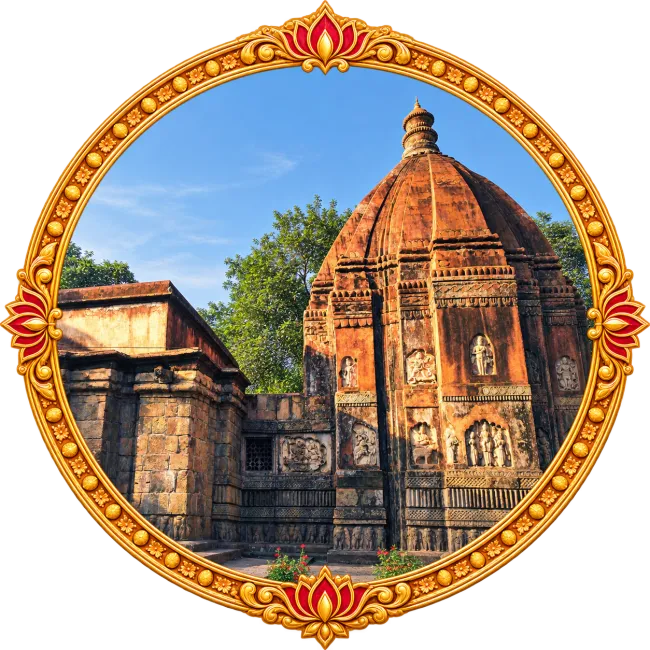
Hayagriva Madhava Temple, Hajo
Hayagriva Madhava Temple is an ancient Vaishnava shrine situated on Monikut Hill at Hajo in Assam. Dedicated to Lord Vishnu in his Hayagriva form, the temple is one of the most important religious and architectural monuments in the state.
The present stone temple was constructed in 1583 CE under Koch ruler Raghudeva Narayan. The shrine is revered by Hindus and is also respected by sections of the Buddhist community, making Hajo an important centre of interfaith pilgrimage.
About Hayagriva Madhava Temple
Hayagriva Madhava Temple is located in Hajo, approximately 30 kilometres from Guwahati. Visitors reach the shrine by climbing a long series of stone steps leading to the top of Monikut Hill.
The principal deity is Lord Vishnu in the Hayagriva Madhava form. Hayagriva is traditionally represented with a human body and the head of a horse. The name combines:
Haya, meaning horse
Griva, meaning neck
Madhava, a name of Lord Vishnu
Inside the sanctum, Lord Vishnu is worshipped with associated divine figures. The temple follows Vaishnava traditions, including daily Puja, Bhog, Aarti, Naam-Kirtan and festival processions.
When Was Hayagriva Madhava Temple Built and Who Built It?
The sacred site has origins older than the existing building. An earlier shrine is believed to have stood on Monikut Hill before the medieval period.
The present stone temple was built in 1583 CE by Raghudeva Narayan, a ruler of the Koch dynasty. He reconstructed the shrine after the earlier structure had suffered destruction or deterioration.
Later rulers supported the temple and added gateways, subsidiary structures, walls and facilities for regular worship. The Ahom kings also contributed to its maintenance and religious activities.
The complex has undergone repairs because of earthquakes, weather and age, but it retains the basic character of its 16th-century stone construction.
Legend of Lord Hayagriva
According to Hindu tradition, Hayagriva is a manifestation of Lord Vishnu associated with knowledge, wisdom and the restoration of the Vedas.
One legend states that two demons stole the Vedas and hid them in the cosmic ocean. Lord Vishnu assumed the Hayagriva form, defeated the forces of ignorance and restored the sacred knowledge.
Another tradition connects the site with a powerful demon named Hayagriva. Lord Vishnu defeated the demon and established his divine presence on Monikut Hill.
Hayagriva therefore represents the victory of knowledge over ignorance and divine order over chaos.
Connection with Buddhism
Hayagriva Madhava Temple is also respected by Buddhist pilgrims. Some Buddhist traditions associate the sacred image with the final earthly form of the Buddha.
Visitors from Bhutan, Tibet and other Himalayan regions have historically visited Hajo and offered prayers. The image’s facial features and the ancient religious connections of the region contributed to this shared reverence.
The temple remains a Hindu Vaishnava shrine, but its importance to Buddhist visitors reflects Hajo’s wider identity as a meeting place of Hindu, Buddhist and Islamic traditions.
Religious Significance
Lord Hayagriva Madhava is worshipped as the protector of sacred knowledge and a form of Vishnu who removes ignorance.
Devotees pray for:
Wisdom and success in education
Mental clarity
Protection from danger
Good health
Family welfare
Marriage and children
Prosperity
Success in employment
Relief from obstacles
Spiritual devotion
Students and families often visit the shrine before examinations, new ventures and important life events.
Architecture of Hayagriva Madhava Temple
The temple is constructed from stone and reflects the medieval architectural traditions of Assam. Its solid walls, sculptural panels and elevated position give it the appearance of a fortified sacred structure.
The Garbhagriha houses the principal image of Hayagriva Madhava. The exterior contains carvings of elephants, horses, lions, flowers and divine figures.
A row of sculpted elephants around the lower section is one of the temple’s most distinctive architectural features.
The complex includes:
Main sanctum
Mandapa
Temple courtyard
Stone stairway
Smaller shrines
Festival structures
Bhog preparation area
Offering counters
Hilltop viewpoints
Madhava Pukhuri
A sacred pond known as Madhava Pukhuri is situated near the temple. It forms an important part of the shrine’s landscape and ritual environment.
The pond contains fish and turtles traditionally protected by temple customs. Visitors may feed them only suitable food and must not throw plastic or harmful materials into the water.
Hayagriva Madhava Temple Timings
The temple follows separate morning and evening darshan sessions. Festival arrangements may extend or alter these hours.
The daily schedule displayed at the temple should be followed because special Bhog and festival rituals can affect queue movement.
Morning Puja and Aarti
The day begins with purification of the sanctum and Mangal Puja. Morning Aarti is performed at 6:00 AM.
The morning rituals include:
Sanctum cleaning
Ceremonial bathing of the deity
Fresh clothes and ornaments
Tulsi and flower offering
Sandalwood application
Mantra chanting
Incense and lamps
Naivedya
Morning Aarti
General morning darshan continues after Shringar and the principal Puja have been completed.
Bhog and Evening Aarti
Bhog is offered to Lord Madhava at 11:30 AM. It generally includes rice, lentils, vegetables, Kheer and other vegetarian preparations.
The temple closes after the midday rituals and reopens at 3:00 PM. Evening Puja begins at 6:00 PM, followed by Aarti at 6:30 PM.
Shayan Puja concludes the day’s worship before closing.
Major Festivals
Doul Utsav
Doul Utsav is one of the largest festivals at Hayagriva Madhava Temple. It celebrates the divine love and joyful play of Krishna.
The ceremonial deity is placed on a decorated platform, and devotees participate in Naam-Kirtan, processions and traditional colour celebrations.
Krishna Janmashtami
Janmashtami is celebrated with fasting, Bhajan, Bhagavata recitation and special night worship.
Bihu
Temple celebrations during important Bihu periods reflect the connection between Vaishnava devotion and Assamese culture.
Rasa Purnima
The Rasa Lila of Lord Krishna is commemorated through worship, music and devotional performances.
Vaikuntha Ekadashi
Devotees observe fasting and offer special prayers to Lord Vishnu.
Puja and Religious Services
Available services may include:
General Vishnu Puja
Hayagriva Puja
Tulsi offering
Vishnu Sahasranama recitation
Bhagavata Path
Naam-Kirtan
Bhog offering
Janmashtami Puja
Doul Utsav offerings
Education and knowledge prayers
Family welfare Puja
Thanksgiving worship
Puja and Bhog arrangements should be made through authorised temple counters.
Offerings and Prasad
Common offerings include:
Tulsi leaves
Flowers and garlands
Fruits
Coconut
Sweets
Sandalwood paste
Incense
Clarified butter
Clothes for the deity
Monetary donations
Cooked Bhog and sweets are distributed as prasad according to temple arrangements.
Only vegetarian offerings should be brought into the temple.
Dress Code and Temple Rules
There is no rigid dress code, but visitors should wear clean and modest clothing. Comfortable footwear is recommended for climbing the steps.
Important rules include:
Remove footwear before entering.
Follow the designated queue.
Do not touch the principal deity.
Do not damage the ancient sculptures.
Follow photography restrictions.
Keep the hill and pond clean.
Do not feed animals unsuitable food.
Avoid alcohol, tobacco and non-vegetarian food.
Deposit donations only at authorised counters.
Respect both Hindu and Buddhist pilgrims.
Entry Fee and Darshan Duration
General entry and darshan are free. Charges may apply to special Pujas, Bhog and ritual materials.
Darshan usually requires 30–45 minutes. Visitors should allow additional time for climbing the steps, exploring the architecture and visiting the pond.
Doul Utsav and Janmashtami attract large crowds, and waiting time can extend to several hours.
Best Time to Visit
October to March is the best period for visiting Hajo. The weather is comfortable for climbing Monikut Hill and exploring nearby religious sites.
For peaceful darshan, visitors should arrive between 8:00 AM and 10:00 AM on a weekday.
The monsoon makes the surrounding landscape green, but the stone steps can become slippery.
How to Reach Hayagriva Madhava Temple
By Air
Lokpriya Gopinath Bordoloi International Airport in Guwahati is approximately 35 kilometres from Hajo.
By Train
Guwahati Railway Station is the nearest major railway station. Road transport is available from Guwahati to Hajo.
By Road
Government buses, shared vehicles, taxis and private vehicles connect Hajo with Guwahati, Nalbari and North Guwahati.
Accommodation and Facilities
Basic guest houses and lodges are available in and near Hajo. Guwahati offers a much wider range of accommodation.
Facilities near the temple include:
Parking
Drinking water
Toilets
Shoe-storage area
Puja shops
Food stalls
Resting spaces
Local transport
Prasad counters
Nearby Places to Visit
Poa Mecca: A historic Islamic pilgrimage site in Hajo.
Madan Kamdev: An archaeological complex containing ancient temple sculptures.
Kedareswara Temple: A Shiva shrine in Hajo.
Ganesha Temple: A local shrine on the Hajo pilgrimage route.
Doul Govinda Temple: A Krishna temple in North Guwahati.
Dirgheswari Temple: A historic Shakti shrine.
Aswaklanta Temple: An Ahom-period Vishnu shrine overlooking the Brahmaputra.
Conclusion
Hayagriva Madhava Temple is an important Vaishnava shrine combining Hindu devotion, Buddhist reverence and Assam’s medieval architectural heritage. Rebuilt by Koch ruler Raghudeva Narayan in 1583 CE, the temple preserves a sacred tradition connected with Lord Vishnu and the restoration of divine knowledge.
The stone carvings, Monikut Hill setting, daily Bhog and Doul Utsav create a memorable pilgrimage experience. Devotees visit Hayagriva Madhava to seek wisdom, protection, prosperity and spiritual devotion.