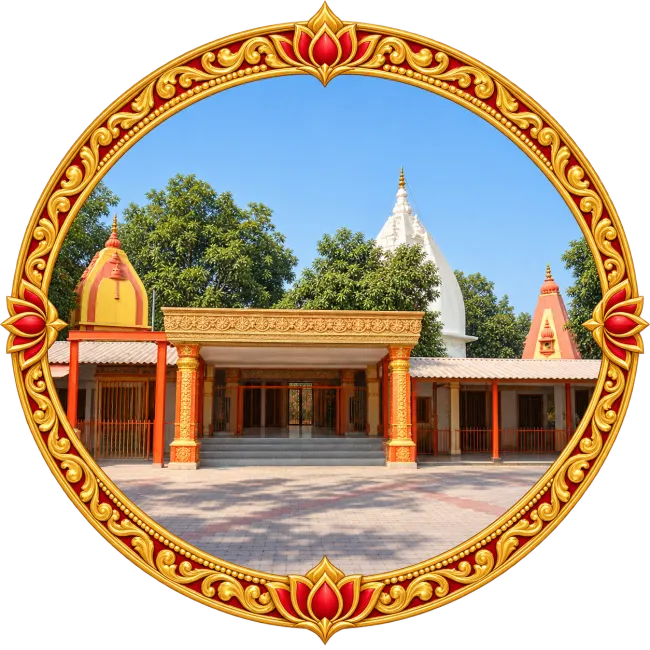
Hanuman Setu Temple, Lucknow
Visit Hanuman Setu Temple in Lucknow, one of the city’s most revered temples dedicated to Lord Hanuman. Located near Lucknow University on the bank of the Gomti River, the temple was established under the guidance of the renowned saint Baba Neem Karoli Maharaj. Known for its life-size white marble idol of Lord Hanuman, regular aartis, prasadam distribution and peaceful spiritual atmosphere, the temple attracts thousands of devotees every week.
About Hanuman Setu Temple
Hanuman Setu Temple, officially known as Shri Sankat Mochan Hanuman Temple, is situated on University Road near the Gomti River in Lucknow, Uttar Pradesh. The temple is also connected with the Lucknow Ashram of Baba Neem Karoli Maharaj.
The principal deity is Lord Hanuman in the Sankat Mochan form—the remover of difficulties and protector of devotees. The temple’s famous white marble idol depicts Hanuman opening his chest to reveal Lord Rama and Goddess Sita residing within his heart.
The temple complex contains two Hanuman idols, two Shivlings and two idols of Baba Neem Karoli Maharaj. Separate shrines dedicated to Lord Ganesha, Goddess Lakshmi, Lord Shiva, Goddess Durga and Ram Darbar are also present.
Devotees visit the temple for strength, courage, protection, good health and the fulfilment of sincere wishes. Tuesdays and Saturdays are the most important weekly worship days, while Bada Mangal and Hanuman Janmotsav attract exceptionally large crowds.
History of Hanuman Setu Temple
The history of Hanuman Setu Temple is closely connected with Baba Neem Karoli Maharaj, also known as Neeb Karori Baba. Before the present temple was constructed, Baba had a small ashram and Hanuman shrine on the bank of the Gomti River.
In 1960, Lucknow experienced a severe flood. The rising water of the Gomti damaged the old bridge and swept away the earlier riverside shrine. Following the flood, residents living close to the river were advised to vacate the dangerous area.
The Uttar Pradesh government later began constructing a new bridge over the Gomti River. The construction work was assigned to a builder from Kolkata, but the project reportedly experienced repeated technical difficulties.
According to temple tradition, the builder approached Baba Neem Karoli Maharaj and requested his guidance. Baba advised him to construct a temple dedicated to Lord Hanuman before proceeding with the bridge.
Temple construction and bridge construction then continued together. Devotees believe that the obstacles disappeared through Lord Hanuman’s blessings and both projects were completed successfully.
The present Hanuman Setu Temple was inaugurated on 26 January 1967. Baba Neem Karoli Maharaj installed the life-size white marble idol of Lord Hanuman in the newly constructed shrine.
As the temple became increasingly popular, additional shrines and facilities were developed. The association of the temple with the nearby bridge eventually gave it the popular name “Hanuman Setu.”
Who Built Hanuman Setu Temple?
Hanuman Setu Temple was established by Baba Neem Karoli Maharaj with the assistance of devotees and the builder working on the adjacent Gomti bridge.
The foundation and spiritual direction of the temple are attributed to Baba Neem Karoli Maharaj. The present shrine was completed and formally opened for devotees on 26 January 1967.
Baba’s idol was installed in the temple complex during 1993, allowing devotees to worship the saint alongside Lord Hanuman.
Baba Neem Karoli Maharaj and Hanuman Setu
Baba Neem Karoli Maharaj was a renowned twentieth-century saint and a devoted worshipper of Lord Hanuman. His followers respectfully called him Maharaj Ji.
He established and inspired the construction of numerous Hanuman temples and ashrams across India. Kainchi Dham in Uttarakhand, Vrindavan Ashram and Lucknow’s Hanuman Setu Temple are among the most prominent spiritual centres associated with him.
Baba regarded Lord Hanuman as the highest example of selfless devotion and service. He emphasized simple principles such as loving everyone, serving people, remembering God and feeding the hungry.
According to the ashram tradition, Baba referred to Sankat Mochan Hanuman at Lucknow as the “Governor General of all Hanumans.” Devotees interpret this description as an expression of the deity’s powerful and wish-fulfilling form.
Baba Neem Karoli Maharaj attained Mahasamadhi in September 1973. His teachings and spiritual presence remain central to the religious life of Hanuman Setu Temple.
Religious Significance of Hanuman Setu Temple
Lord Hanuman represents courage, physical and mental strength, discipline, wisdom, devotion and selfless service. He is worshipped as Sankat Mochan because devotees believe he protects them from danger and helps them overcome difficulties.
People visit Hanuman Setu Temple to pray for:
- Protection from problems and negative influences
- Courage and emotional strength
- Success in education and competitive examinations
- Progress in employment and business
- Good health and recovery
- Family peace and prosperity
- Freedom from fear and anxiety
- Removal of obstacles
- Relief from harmful habits
- Devotion to Lord Rama
- Fulfilment of righteous wishes
Students from nearby Lucknow University and other educational institutions frequently visit the temple before examinations and important career events.
Architecture of Hanuman Setu Temple
Hanuman Setu Temple has a simple and spacious design that reflects the spiritual principles associated with Baba Neem Karoli Maharaj. The temple does not depend upon excessive decoration; its devotional atmosphere and sacred idols form its main attraction.
The principal white marble idol depicts Lord Hanuman opening his chest. Images of Lord Rama and Goddess Sita can be seen within his heart, symbolizing Hanuman’s complete devotion to them.
The complex contains:
- Two idols of Lord Hanuman
- Two Shivlings
- Two idols of Baba Neem Karoli Maharaj
- Ram Darbar
- Lord Ganesha
- Goddess Lakshmi
- Goddess Durga
- Other sacred Hindu images
Murals within the temple depict scenes from the Ramayana, including Lord Rama and Goddess Sita, as well as Lord Rama, Lakshmana, Hanuman and the Vanara army constructing the bridge to Lanka.
The temple complex also houses facilities for religious study, prasadam preparation, bhandaras and devotional gatherings.
Hanuman Setu Temple Timings
The temple timings were revised from 16 February 2025. The current regular schedule is:
Monday, Wednesday, Thursday, Friday and Sunday
Tuesday and Saturday
The temple remains open continuously during the afternoon on Tuesday and Saturday because these days are dedicated to Lord Hanuman and receive larger numbers of devotees.
Bada Mangal Timings
During Bada Mangal, Hanuman Janmotsav and other major occasions, the temple schedule may be extended for crowd management.
Daily Puja and Aarti
Daily worship begins with the Mangala Aarti at 06:00 AM. The idols are cleaned and decorated with fresh garments, flowers, garlands and sacred ornaments.
The principal daily rituals include:
- Mangala Aarti
- Hanuman Chalisa recitation
- Ram Naam chanting
- Sindoor and jasmine oil offering
- Flower decoration
- Noon bhog and aarti
- Sundarkand recitation
- Evening aarti
- Prasadam distribution
- Shayan Puja
Devotees regularly sit inside the temple and recite the Hanuman Chalisa, Bajrang Baan, Ram Raksha Stotra and Sundarkand.
Tradition of Sending Letters to Hanuman Ji
One of the most distinctive traditions of Hanuman Setu Temple is the practice of sending letters to Lord Hanuman.
According to temple tradition, Baba Neem Karoli Maharaj said that devotees who were unable to visit could express their sincere wishes through a letter addressed to Hanuman Ji.
Even today, letters containing prayers and wishes are received at the temple, particularly during Bada Mangal. These letters are respectfully presented before Lord Hanuman. They are later disposed of through a dignified religious process instead of being treated as ordinary waste.
Devotees believe that a prayer written with sincerity and devotion reaches Sankat Mochan Hanuman even when the person cannot visit the temple physically.
Offerings at Hanuman Setu Temple
Devotees may offer:
- Boondi laddoo
- Besan laddoo
- Jaggery and roasted gram
- Bananas and seasonal fruits
- Red flowers
- Flower garlands
- Sindoor
- Jasmine oil
- Red or saffron cloth
- Coconut
- Incense sticks
- Ghee lamps
- Sacred flag
Offerings should be submitted at the authorized counter or handed to the designated temple priest. Devotees should avoid purchasing puja services from unauthorized individuals.
Prasadam and Bhandara
Prasadam distribution is an important part of Hanuman Setu Temple’s spiritual tradition. The ashram is especially known for feeding devotees and distributing the blessed food offered to Lord Hanuman.
During annual celebrations, thousands of laddoos are prepared and distributed. Bhandaras may include:
- Puri and sabzi
- Halwa
- Khichdi
- Kheer
- Fruits
- Laddoos
- Sweetened water or sharbat
Bhandara service reflects Baba Neem Karoli Maharaj’s teaching that feeding people is a form of worship and service to God.
Major Festivals and Celebrations
Bada Mangal
Bada Mangal is the most important Hanuman celebration in Lucknow. It is observed on every Tuesday of the Hindu month of Jyeshtha.
Hanuman Setu Temple is decorated with flowers and lights, while additional arrangements such as fans, coolers, drinking water and barricades are made for devotees.
Special worship includes midnight aarti, Mangala Aarti at 06:00 AM, bhog, evening aarti and continuous darshan. Numerous bhandaras are organized throughout Lucknow during the festival.
Hanuman Janmotsav
Hanuman Janmotsav is celebrated with Panchamrit Abhishek, new garments, special shringar, Hanuman Chalisa, Sundarkand and aarti.
A large number of devotees visit the temple from morning until night, and special prasadam is distributed.
Temple Foundation Day
The temple’s foundation anniversary is celebrated on 26 January. Special Panchamrit Abhishek and Shodashopachar Puja are performed for Lord Ganesha, Lord Hanuman and Baba Neem Karoli Maharaj.
The celebration may include Vedic chanting, bhajans, Guruvandana, Sankirtan and bhandara.
Baba Neem Karoli Maharaj Prakatya Utsav
Baba’s Prakatya Utsav is celebrated with Akhand Ramayana Path, bhajans, special shringar, aarti and prasadam distribution.
Mahasamadhi Bhandara
A Mahasamadhi Bhandara is organized in memory of Baba Neem Karoli Maharaj. Devotees participate in prayers, Ram Naam Sankirtan and community meals.
Ram Navami
Ram Navami is significant because Lord Hanuman is regarded as the greatest devotee of Lord Rama. Ram Darbar is decorated, and Ramcharitmanas and Sundarkand are recited.
Vedic and Sanskrit Education
The temple complex is associated with the teaching of Sanskrit and the Vedas. Students receive religious education and training in Vedic chanting, rituals and traditional scriptures.
During major ceremonies, Vedic scholars and students participate in mantra recitation, Panchamrit Abhishek and Shodashopachar Puja.
Best Time to Visit
October to March is the most comfortable period for visiting Lucknow. The weather is pleasant and suitable for combining temple darshan with city sightseeing.
For peaceful darshan, visit between 07:00 AM and 09:00 AM on Monday, Wednesday, Thursday, Friday or Sunday.
Tuesday and Saturday are more crowded. Bada Mangal and Hanuman Janmotsav provide the most vibrant spiritual experience but involve long queues.
A regular visit takes 30–60 minutes. On Tuesday, Saturday and major festivals, visitors should keep additional time.
How to Reach Hanuman Setu Temple
By Metro
KD Singh Babu Stadium is the nearest major Lucknow Metro station. The temple can be reached from the station by auto-rickshaw, e-rickshaw or taxi.
By Train
Daliganj Railway Station and Lucknow City Railway Station are nearby local stations. Lucknow Junction and Charbagh Railway Station are the main stations for long-distance travellers.
The temple is approximately five to six kilometres from the Charbagh railway area. Autos, taxis and city buses are readily available.
By Road
The temple is located on University Road near Lucknow University and Hanuman Setu Bridge. It is easily accessible from Hazratganj, Daliganj, Nishatganj, Kaiserbagh and other areas of Lucknow.
Traffic restrictions may apply during Bada Mangal, Hanuman Janmotsav and other crowded occasions.
By Air
Chaudhary Charan Singh International Airport is the nearest airport. It is approximately 16–18 kilometres from the temple. Metro services, prepaid taxis and app-based cabs are available from the airport.
Nearby Places to Visit
- Lucknow University
- Gomti River and Hanuman Setu
- Mankameshwar Temple
- KD Singh Babu Stadium
- Hazratganj
- Lucknow Residency
- Bara Imambara
- Chota Imambara
- Rumi Darwaza
- Lucknow Zoo
- Sikandar Bagh
Entry Fee and Visit Duration
There is no entry fee for general darshan at Hanuman Setu Temple.
A regular visit takes 30–60 minutes. On Tuesday and Saturday, one to two hours may be required. During Bada Mangal and Hanuman Janmotsav, waiting time can be considerably longer.
Visitor Guidelines
- Wear clean and respectful clothing.
- Remove footwear before entering the temple.
- Follow the designated darshan queue.
- Maintain silence near the sanctum.
- Do not touch the idols or sacred objects without permission.
- Submit offerings only at authorized counters.
- Avoid plastic bags and disposable materials.
- Obtain permission before taking photographs.
- Keep children close during crowded festivals.
- Take extra care of elderly visitors on Tuesdays and Bada Mangal.
- Park vehicles only in authorized areas.
- Be cautious of unauthorized online donation or VIP-darshan claims.
- Keep the temple and Gomti River surroundings clean.
Conclusion
Hanuman Setu Temple is one of Lucknow’s most important centres of Hanuman worship. Established under the guidance of Baba Neem Karoli Maharaj, the present temple was inaugurated on 26 January 1967 after the earlier riverside shrine was affected by the devastating Gomti flood of 1960.
Its life-size white marble Hanuman idol, showing Lord Rama and Goddess Sita within the deity’s heart, beautifully represents complete devotion. The additional shrines, Neem Karoli Baba Ashram, Vedic education, regular prasadam distribution and community bhandaras further enhance the temple’s spiritual importance.
The tradition of sending letters to Hanuman Ji gives the temple a distinctive identity. Whether one attends the Mangala Aarti, recites the Hanuman Chalisa or participates in Bada Mangal, a visit to Hanuman Setu Temple offers an uplifting experience of courage, service and devotion.