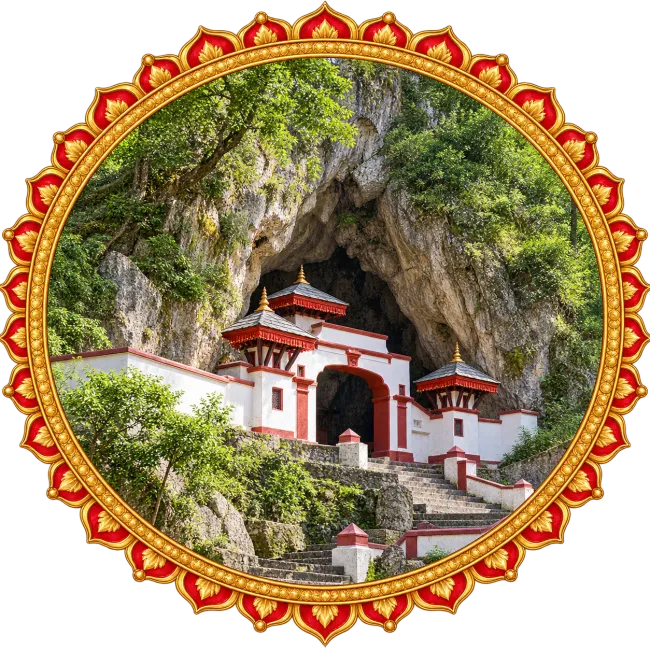
Halesi Mahadev Temple, Khotang, Nepal
Visit Halesi Mahadev Temple in Khotang, one of eastern Nepal’s most sacred cave temples dedicated to Lord Shiva. Situated inside a naturally formed limestone cave, the temple is revered by Hindus, Buddhists and followers of the indigenous Kirati tradition.
Hindus worship the cave as the abode of Lord Shiva and often call it the Pashupatinath of eastern Nepal. Tibetan Buddhists know the sacred site as Maratika, where Guru Padmasambhava and Princess Mandarava are believed to have performed meditation. Kirati communities also regard the caves and surrounding hills as part of their ancestral spiritual landscape.
About Halesi Mahadev Temple
Halesi Mahadev Temple is located in Halesi Tuwachung Municipality of Khotang district, Koshi Province, Nepal. It stands at an elevation of approximately 1,350 metres.
The principal shrine is situated deep inside a large natural cave. Devotees descend stone steps to reach the sacred formations worshipped as Lord Shiva, Goddess Parvati and other Hindu deities.
The temple is known by several names:
Halesi Mahadev Temple
Halesi Maratika
Maratika Cave
Halesi Cave Temple
Pashupatinath of Eastern Nepal
The cave is not only a religious monument but also an impressive natural formation. Openings in the cave allow sunlight and air to enter, creating a mysterious and spiritually powerful atmosphere.
History of Halesi Mahadev Temple
Halesi Mahadev is an ancient natural cave shrine rather than a temple constructed by a particular king or royal family. Its religious history developed through the worship traditions of local Kirati communities, Hindu devotees and Tibetan Buddhists.
Local communities worshipped the caves, natural rocks and surrounding landscape long before permanent structures were built. Hindu traditions later identified the cave as a place where Lord Shiva remained hidden from the demon Bhasmasura.
Between the eighth and ninth centuries, the cave also became important within Tibetan Buddhism because of its association with Guru Padmasambhava and Princess Mandarava.
As the number of pilgrims increased, stone steps, railings, entrance structures and smaller shrines were constructed. Monasteries, Dharamshalas and facilities for visitors were also developed near the cave.
The natural formations within the cave remain the principal objects of worship. The site continues to preserve Hindu, Buddhist and Kirati traditions without losing its identity as a natural sacred place.
Bhasmasura Legend of Halesi Mahadev
The most popular Hindu legend associated with Halesi Mahadev concerns Lord Shiva and the demon Bhasmasura.
According to the story, Bhasmasura performed intense penance to please Lord Shiva. Impressed by his devotion, Shiva appeared before him and granted him a boon.
Bhasmasura requested the power to burn anyone to ashes by placing his hand upon that person’s head. Lord Shiva granted the boon.
After receiving this power, Bhasmasura became arrogant and decided to test the boon on Lord Shiva himself. Shiva escaped and travelled through different regions while the demon chased him.
Lord Shiva reached Halesi and hid inside the cave. To protect Shiva, Lord Vishnu appeared in the form of the beautiful Mohini. Mohini persuaded Bhasmasura to imitate her dance movements.
During the dance, Mohini placed her hand upon her own head. Bhasmasura copied the movement and touched his head, causing himself to burn to ashes.
Lord Shiva was freed from danger and blessed the Halesi cave as his sacred abode. Devotees therefore worship the natural stone formations inside the cave as manifestations of Mahadev.
Buddhist Significance of Maratika Cave
Tibetan Buddhists know Halesi as Maratika, one of the most important pilgrimage places associated with Guru Padmasambhava.
According to Buddhist tradition, Guru Padmasambhava and Princess Mandarava meditated inside the cave. They practised the teachings of Amitayus, the Buddha of Infinite Life.
Through their meditation, they are believed to have attained the spiritual realization connected with longevity and freedom from ordinary death.
Buddhist devotees visit Maratika to pray for:
- Long life
- Good health
- Removal of obstacles
- Spiritual realization
- Success in meditation
- Compassion and wisdom
Prayer flags, Buddhist shrines and monasteries can be seen near the cave. Hindu and Buddhist devotees frequently worship within the same sacred complex.
Kirati Significance of Halesi
The Halesi region also holds deep spiritual importance for the indigenous Kirati communities of eastern Nepal.
Kirati traditions connect the caves, hills, rocks and water sources with ancestors and natural divine powers. The entire landscape is treated with reverence rather than only the main cave.
Local communities participate in religious ceremonies, cultural gatherings and seasonal worship at Halesi. This shared sacred identity makes the temple a symbol of religious coexistence.
Religious Significance of Halesi Mahadev Temple
Halesi Mahadev is believed to provide the blessings of Lord Shiva, remove sins and protect devotees from fear and suffering.
The natural cave represents the womb of the earth and the journey from darkness towards spiritual light. Entering and leaving the cave is regarded as a symbolic experience of purification and rebirth.
Devotees visit the temple for:
- Protection from danger
- Recovery from illness
- Blessings for marriage and children
- Long life and good health
- Removal of sins
- Family peace and prosperity
- Success in education and employment
- Freedom from fear
- Spiritual progress
- Fulfilment of sincere wishes
- Peace for departed ancestors
- Relief from planetary difficulties
Main Deity and Sacred Formations
The principal deity is Lord Shiva, worshipped in the form of a naturally formed Shiva Lingam inside the cave.
Natural rocks and cave formations are also identified with:
- Goddess Parvati
- Lord Ganesha
- Nandi
- Bhairav
- Nag Devta
- Other manifestations of Shiva and Shakti
Water naturally dripping from the cave roof is treated as sacred. Devotees offer flowers, Bilva leaves, water, milk and incense before the Shiva Lingam.
The cave contains several openings and narrow passages associated with different religious beliefs. These are traditionally described as symbolic doors leading towards Dharma, heaven, spiritual rebirth and liberation.
Visitors should enter narrow sections only when permitted by temple authorities.
Natural Architecture of Halesi Cave
Halesi Mahadev differs from conventional temples because its principal structure was created by natural geological processes.
Important features include:
- Large limestone cave
- Naturally formed Shiva Lingam
- Stone formations resembling Hindu deities
- Deep openings and narrow passages
- Natural skylights
- Stone steps leading into the cave
- Railings along steep sections
- Oil-lamp and worship areas
- Buddhist prayer flags
- Smaller shrines and monasteries
- Viewing points over the surrounding hills
Sunlight entering through the openings creates unusual patterns inside the cave. The sound of bells and prayers echoes through the stone chambers.
Halesi Mahadev Temple Timings
The schedule may be extended during Maha Shivaratri, Bala Chaturdashi, Ram Navami and Shravan Mondays.
Cave access can be restricted during heavy rain, maintenance or unsafe conditions.
Morning Puja and Aarti
Morning worship begins at 6:00 AM. Priests clean the main worship area, light lamps and prepare the sacred Shiva Lingam for Puja.
Morning Aarti is performed at 6:30 AM. Lord Shiva is worshipped with:
- Water
- Milk
- Bilva leaves
- Flowers
- Sandalwood
- Sacred ash
- Incense
- Oil lamps
- Fruits and sweets
The period between 6:30 AM and 9:30 AM is the best time for peaceful darshan. The cave is less crowded, and visitors have enough daylight to examine the natural formations safely.
Rudrabhishek and Special Puja
Rudrabhishek and special Shiva Puja are generally arranged between 7:00 AM and 11:00 AM.
During Rudrabhishek, the Shiva Lingam is worshipped with water, milk, curd, honey, ghee and sacred offerings while priests recite mantras from the Rudram.
Devotees arrange Rudrabhishek for:
- Good health
- Family peace
- Marriage
- Children
- Removal of obstacles
- Relief from planetary difficulties
- Spiritual growth
Special pujas should be arranged through authorized priests.
Evening Puja and Aarti
Evening Puja begins at 5:00 PM, followed by Aarti at 5:30 PM. Oil lamps are offered before Lord Shiva while devotees sing bhajans and chant “Om Namah Shivaya.”
The lamps and prayers create a powerful atmosphere inside the cave. Visitors should complete their exploration before darkness because some sections are steep and naturally dim.
The temple closes at 6:30 PM after the evening worship.
Sacred Doors and Cave Passages
Several openings inside Halesi Cave are associated with religious beliefs. They may be described as:
- Dharma Dwar
- Swarga Dwar
- Janma Dwar
- Paap Dwar
- Garbha Dwar
Devotees believe that passing through certain openings with faith represents purification and spiritual rebirth.
Some passages are narrow, steep and physically demanding. Elderly visitors, children and people with breathing, heart or mobility conditions should not enter restricted passages.
Major Festivals Celebrated
Maha Shivaratri
Maha Shivaratri is the largest Hindu festival celebrated at Halesi Mahadev Temple. Thousands of devotees visit the cave to worship Lord Shiva.
The celebration includes:
- Special Abhishek
- Night-long prayers
- Bhajans and Kirtans
- Lighting of oil lamps
- Rudra recitation
- Distribution of prasad
- Visits by saints and ascetics
Bala Chaturdashi
Devotees visit Halesi to pray for departed family members. Sacred seeds may be offered as part of ancestral rituals.
Ram Navami
A major religious fair is organized during Ram Navami. Hindu devotees from Nepal and India visit the temple.
Shravan Mondays
Every Monday during Shravan is considered auspicious for worshipping Lord Shiva. Devotees offer water, milk and Bilva leaves.
Teej
Women visit the shrine during Teej to pray for marital happiness and family well-being.
Buddha Jayanti
Buddhist devotees perform prayers, meditation and lamp offerings at Maratika during Buddha Jayanti.
Guru Rinpoche Day
Followers of Tibetan Buddhism perform special prayers and meditation connected with Guru Padmasambhava.
Offerings and Prasad
Common offerings made at Halesi Mahadev Temple include:
- Water and milk
- Bilva leaves
- Flowers and garlands
- Sandalwood paste
- Sacred ash
- Rudraksha
- Fruits and sweets
- Incense sticks
- Oil or ghee lamps
- Red and yellow cloth
- Prayer flags
- Monetary donations
Devotees should avoid pouring excessive substances onto natural cave formations. Offerings should be presented according to instructions from the priests.
Prasad may include fruits, sweets, flowers, sacred ash and blessed threads.
Entry Fee and Visit Duration
There is no entry fee for regular darshan at Halesi Mahadev Temple. Charges may apply for special pujas, Rudrabhishek and priest-led ceremonies.
A regular visit requires two to three hours. Visitors exploring the Buddhist monasteries, other caves and nearby viewpoints should keep four to five hours.
During Maha Shivaratri and Ram Navami, darshan may require several hours because of long queues.
Cave Safety and Visitor Guidelines
- Wear modest and comfortable clothing.
- Use footwear with a strong grip.
- Remove footwear only at the designated point.
- Hold the railings while using stone steps.
- Carry a small torch or charged mobile phone.
- Do not enter restricted cave passages.
- Avoid touching fragile natural formations.
- Walk carefully because cave floors may be wet.
- Keep mobile phones silent near the main shrine.
- Ask permission before taking photographs.
- Do not leave plastic or food waste inside the cave.
- Use authorized priests for special pujas.
- Keep children and elderly visitors under supervision.
- Avoid crowded passages if you have breathing difficulties.
- Follow instructions from temple officials and security personnel.
Best Time to Visit
The best periods for visiting Halesi Mahadev Temple are:
- March to May
- September to November
The weather remains pleasant during these months, and road conditions are generally better.
The monsoon season can bring landslides, muddy roads and slippery cave steps. Winter mornings and evenings can be cold, but regular darshan remains possible.
For peaceful worship and safe cave exploration, visit between 6:30 AM and 9:30 AM.
How to Reach Halesi Mahadev Temple
By Road from Kathmandu
Halesi is connected with Kathmandu through the route:
Kathmandu – Dhulikhel – Khurkot – Ghurmi – Jayaram – Halesi
The road journey requires a full day. Buses, shared jeeps and private vehicles operate on the route.
By Air
Khotang district has small airports, including Khanidanda and Lamidanda. Flight services depend on weather and operational schedules.
After reaching the available airport, visitors must continue to Halesi by road.
From Dharan and Biratnagar
Visitors can travel through Gaighat and other eastern hill routes towards Khotang and Halesi.
From India
Indian visitors can enter Nepal through the Jogbani–Biratnagar or Panitanki–Kakarbhitta border and continue towards Khotang by road.
Indian citizens should carry a valid passport or voter identity card and confirm transportation requirements before departure.
Nearby Places to Visit
- Maratika Monastery
- Halesi Cave
- Bhairav Cave
- Basaha Cave
- Tuwachung Hill
- Halesi Bazaar
- Dudh Koshi River viewpoints
- Kirati cultural villages
- Local Buddhist monasteries
- Mahadevsthan surroundings
Conclusion
Halesi Mahadev Temple is a remarkable pilgrimage destination where Hindu, Buddhist and Kirati traditions come together within a sacred natural cave.
For Hindus, it is the abode of Lord Shiva and the place where Mahadev escaped from Bhasmasura. For Buddhists, it is Maratika—the meditation place of Guru Padmasambhava and Princess Mandarava. For Kirati communities, it is part of an ancestral spiritual landscape.
The cave’s natural formations, daily Aartis and multicultural religious heritage create a deeply meaningful experience. A visit to Halesi Mahadev offers the blessings of Lord Shiva along with an opportunity to experience Nepal’s ancient traditions of faith, meditation and harmony.