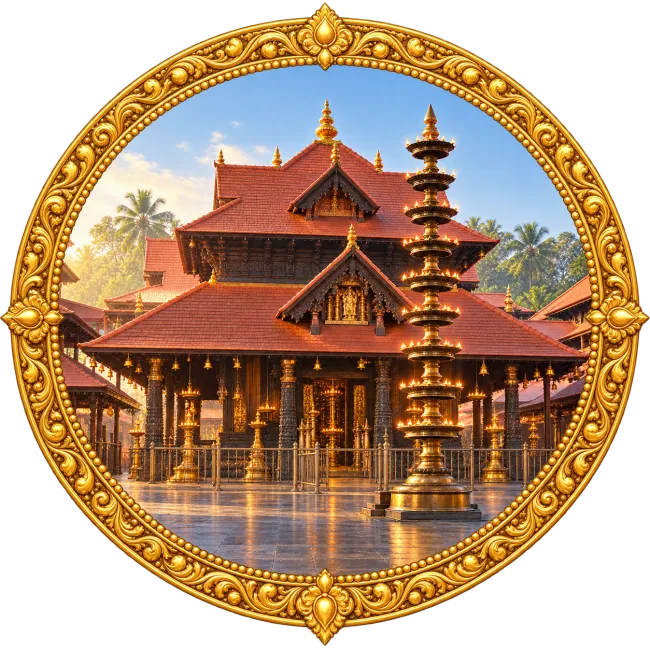
Guruvayur Sri Krishna Temple
Guruvayur Sri Krishna Temple in Kerala is one of India’s most revered temples dedicated to Lord Krishna. The principal deity is worshipped as Guruvayurappan, a four-armed form of Lord Vishnu holding the conch, discus, mace and lotus.
Located in Guruvayur town in Thrissur district, the temple is popularly called the “Dwarka of South India.” Its traditional Kerala architecture, strict ritual schedule, Nirmalyam Darshan, Tulabharam, Choroonu and grand Guruvayur Ekadashi celebrations attract millions of devotees.
About Guruvayur Sri Krishna Temple
Guruvayur Temple is dedicated to Lord Guruvayurappan, who is worshipped in the form of a young Krishna with the divine attributes of Lord Vishnu.
The black stone deity has four arms holding:
Panchajanya, the sacred conch
Sudarshana Chakra, the divine discus
Kaumodaki, the mace
A lotus
The deity is decorated with Tulasi garlands, flowers, silk garments and gold ornaments. Different Alankarams allow devotees to experience Guruvayurappan as Krishna, Vishnu and other divine forms.
The temple follows ancient Tantric and Kerala worship traditions. Daily rituals begin before sunrise and continue until the final Athazha Puja at night.
Only Hindus are permitted to enter the inner temple complex under the traditionally followed entry rules. All visitors must follow the prescribed dress code and security procedures.
When and Who Built Guruvayur Temple?
The traditional origin of Guruvayur Temple is connected with Guru Brihaspati and Vayu, the wind deity. The sacred image is believed to be far older than the present structure.
Historical references indicate that the temple was an established pilgrimage centre by the medieval period. Regional rulers, including the Zamorin of Kozhikode, supported its worship, festivals and renovations.
The temple suffered damage during periods of conflict, including attacks in the eighteenth century. The deity and valuables were temporarily moved for protection and later restored to the shrine.
A major fire occurred in 1970 and damaged parts of the temple complex. The sanctum and principal deity remained protected. The damaged structures were reconstructed while preserving the traditional Kerala architectural style and ritual system.
The present temple therefore represents an ancient sacred tradition maintained through repeated restoration and community patronage.
Legend of the Guruvayurappan Idol
According to temple tradition, the sacred image was originally worshipped by Lord Vishnu in Vaikuntha. Vishnu later gave it to Brahma.
Brahma presented the deity to a couple named Sutapas and Prishni, who had performed severe penance for a son like Lord Vishnu. Vishnu was born to them as Prishnigarbha.
In another birth, the couple became Kashyapa and Aditi, and Vishnu was born as Vamana. They were later born as Vasudeva and Devaki, and Vishnu appeared as Lord Krishna.
Krishna worshipped the sacred image at Dwaraka. Before Dwaraka was submerged in the sea, he instructed Uddhava to ensure that the deity was preserved and installed at a suitable place.
Guru Brihaspati and Vayu recovered the image and searched for a sacred location. They reached Kerala and selected the site of present-day Guruvayur.
Lord Shiva, who was present in the area, moved to nearby Mammiyur so that the Vishnu deity could be installed. Guru and Vayu consecrated the idol, and the place became known as Guruvayur.
Meaning of the Name Guruvayur
The name Guruvayur combines:
Guru: Guru Brihaspati, the teacher of the gods
Vayu: The wind deity
Ur: Place or settlement
Guruvayur therefore means the sacred place established by Guru and Vayu.
The deity is called Guruvayurappan, meaning the Lord of Guruvayur.
Mammiyur Mahadeva Temple Connection
Lord Shiva is believed to have given the sacred land for the installation of Guruvayurappan and moved to Mammiyur.
For this reason, traditional belief holds that a pilgrimage to Guruvayur is completed by visiting Mammiyur Mahadeva Temple.
Devotees unable to visit Mammiyur offer prayers to Lord Shiva from a designated direction within the Guruvayur Temple complex.
The tradition represents harmony between the worship of Vishnu and Shiva.
Religious Significance
Guruvayurappan is worshipped as a compassionate protector who responds to sincere devotion.
People visit the temple to pray for:
Good health and recovery from illness
Marriage and marital harmony
Blessings for children
Success in education
Family peace and prosperity
Professional growth
Relief from financial difficulties
Protection during travel
Mental peace
Devotion to Lord Krishna
Spiritual discipline
Fulfilment of vows
The temple is especially popular for weddings, Choroonu, Tulabharam and offerings made after recovery from illness.
Main Deity and Other Shrines
Lord Guruvayurappan
The principal deity is Lord Krishna in the four-armed form of Vishnu. The idol stands inside the main sanctum and is viewed from the designated darshan area.
Lord Ganesha
Lord Ganesha is worshipped as the remover of obstacles. Devotees seek his blessings before important ceremonies.
Goddess Bhagavathi
Goddess Bhagavathi is worshipped as the protective divine mother.
Lord Ayyappa
Lord Ayyappa has a shrine within the temple complex and is worshipped for discipline and protection.
Other sacred figures and shrines include:
Nagadevatas
Edathedathu Kavil Bhagavathi
Hanuman-related sacred traditions
Garuda
Various guardian deities
Architecture of Guruvayur Temple
Guruvayur Temple is an excellent example of traditional Kerala temple architecture. Its sloping tiled roofs, wooden structures, copper-plated sections and stone base are designed for the region’s heavy rainfall.
Sreekovil
The Sreekovil is the sanctum housing Guruvayurappan. It has a square plan and is decorated with traditional lamps, murals and metalwork.
The deity is visible through the sanctum doorway during scheduled darshan periods.
Chuttambalam
The Chuttambalam is the enclosed structure surrounding the sanctum. It contains pathways, lamps and ritual spaces.
Deepastambham
The tall Deepastambham holds multiple lamps. When illuminated during evening worship, it creates a magnificent devotional atmosphere.
Dwajasthambham
The gold-plated flagstaff stands within the complex and plays an important role during the annual Ulsavam.
Koothambalam
The Koothambalam is a traditional performance hall used for temple arts and cultural presentations.
Guruvayur Temple Timings
The regular daily schedule is:
Darshan may pause during major Pujas and Naivedyam. Timings can be reorganised during Guruvayur Ekadashi, Ulsavam, Ashtami Rohini and other major festivals.
Nirmalyam Darshan
Nirmalyam is the first darshan of the day and begins at 3:00 AM. Devotees see Guruvayurappan with the flowers and decorations offered during the previous night’s worship.
The ritual is considered highly sacred because it allows devotees to receive the Lord’s first darshan before the new day’s Abhishekam and Alankaram.
Visitors should arrive well before the temple opens because queues for Nirmalyam can be long.
Morning Abhishekam and Usha Puja
Oil Abhishekam and Vakacharthu begin at 3:20 AM. Sankhabhishekam follows from 3:40 AM, during which sacred water is offered through a conch.
Malar Nivedyam and Alankaram are performed from 4:10 AM to 4:30 AM. The deity is decorated with fresh flowers, Tulasi garlands and ornaments.
Usha Puja continues from 4:30 AM to 6:00 AM. Morning Seeveli is conducted at 7:00 AM.
The best morning darshan period is from 4:30 AM to 7:30 AM.
Pantheeradi and Ucha Puja
Pantheeradi Puja is performed at 8:00 AM. Its name is connected with the traditional measurement of the sun’s shadow.
Ucha Puja, the main midday worship, is conducted from 11:30 AM to 12:30 PM. Elaborate Naivedyam and sacred lamps are offered to Guruvayurappan.
The morning session ends at 1:30 PM, after which the temple remains closed until 4:30 PM.
Evening Deepa Aradhana
The temple reopens at 4:30 PM. Evening Deepa Aradhana is performed at 6:00 PM.
Rows of traditional oil lamps and the Deepastambham are illuminated, creating one of the most beautiful daily ceremonies at Guruvayur.
Evening Seeveli follows at 6:30 PM. The processional deity is ceremonially carried while priests complete worship at the surrounding sacred points.
The best evening darshan period is from 4:30 PM to 6:30 PM.
Athazha Puja and Night Seeveli
Athazha Puja is the final major worship of the day. It is conducted from 7:30 PM to 9:00 PM.
Night Seeveli takes place at 9:00 PM. The processional deity is carried ceremonially while lamps, music and prayers accompany the ritual.
The temple closes at 9:15 PM after the completion of the night ceremonies.
Tulabharam
Tulabharam is one of Guruvayur’s most popular offerings. The devotee sits on one side of a large balance and is weighed against a selected offering.
Common Tulabharam materials include:
Bananas
Sugar
Jaggery
Rice
Coconuts
Flowers
Coins
Butter
Other approved items
Devotees perform Tulabharam after the fulfilment of a vow, recovery from illness or achievement of an important goal.
The offering should be arranged through authorised counters.
Choroonu Ceremony
Choroonu is the ceremonial first feeding of solid food to a child. It is one of the most important family ceremonies performed at Guruvayur.
The child is given a small quantity of cooked rice in the presence of Guruvayurappan. Parents pray for health, intelligence and good character.
Families should register at the authorised counter, carry the required documents and arrive before the reporting time.
Traditional clothing is recommended for both the child and parents.
Weddings at Guruvayur
Guruvayur is one of Kerala’s most popular temple wedding destinations. Numerous marriages are conducted daily in the designated wedding mandapams.
The ceremony is brief and follows an organised schedule, especially on auspicious dates. Couples should complete registration and documentation in advance.
A temple wedding does not automatically include prolonged darshan. Families must follow the separate queue and entry arrangements announced for the day.
Krishnanattam
Krishnanattam is a traditional temple art form depicting the life and divine activities of Lord Krishna.
It combines dance, music, acting, colourful costumes and sacred storytelling. Performances are offered as a Seva and may be sponsored for specific prayers.
Different episodes are traditionally associated with different benefits, such as marriage, children, prosperity and relief from difficulties.
Major Festivals
Guruvayur Ekadashi
Guruvayur Ekadashi is the most important annual observance. Devotees fast, chant Vishnu’s name and attend special darshan.
Annual Ulsavam
The annual festival begins with Aanayottam, the ceremonial elephant race. The winning elephant receives the honour of carrying the processional deity during the festival.
Ashtami Rohini
Ashtami Rohini celebrates the birth of Lord Krishna. Special Puja, decorations and devotional programmes are organised.
Chembai Sangeetholsavam
This music festival honours Chembai Vaidyanatha Bhagavathar. Carnatic musicians perform devotional compositions before Guruvayurappan.
Vishu
Special Vishukkani darshan is arranged, and devotees seek the Lord’s blessings for the new year.
Other festivals include Kuchela Dinam, Narayaneeyam Day, Mandala season and Vaikuntha Ekadashi.
Sevas and Offerings
Important temple Sevas include:
Udayasthamana Puja
Krishnanattam
Tulabharam
Choroonu
Palpayasam
Butter offering
Archana
Alankaram
Chuttuvilakku
Bhagavathi Azhal
Annadanam
Elephant feeding
Festival sponsorship
Bookings should be completed only through authorised temple systems and counters.
Prasadam
Common prasadam includes:
Palpayasam
Appam
Ada
Butter
Aval
Sugar
Tulasi
Sacred sandalwood paste
Prasadam must be collected from designated counters. Devotees should verify collection times for pre-booked offerings.
Punnathur Kotta Elephant Sanctuary
Punnathur Kotta houses elephants associated with Guruvayur Temple. Many were offered by devotees.
The elephants are cared for by trained handlers and may participate in temple festivals and processions according to official arrangements.
Visitors must follow safety barriers, avoid feeding elephants without permission and obey instructions from staff.
Dress Code and Entry Rules
Guruvayur Temple follows a strict traditional dress code.
Men must generally wear a mundu or dhoti. Shirts, T-shirts and upper garments must be removed before entering designated inner areas. A traditional upper cloth may be carried according to temple rules.
Women may wear:
Saree
Set mundu
Salwar kameez or churidar
Long traditional skirt with blouse
Children should wear modest clothing.
Footwear, mobile phones, cameras and electronic devices are restricted inside the temple. Photography and videography are prohibited.
Only Hindus are permitted inside the main temple complex under the established entry rules.
Entry Fee and Visit Duration
General darshan is available without an entry fee. Separate charges apply to special offerings, Sevas, Tulabharam, Choroonu and other ceremonies.
A regular visit requires 2 to 3 hours. Waiting time can be much longer during weekends, Ekadashi, festival days and auspicious wedding dates.
Nirmalyam visitors should reach the queue before 3:00 AM. Families performing Choroonu or weddings should reserve additional time for registration and ceremony arrangements.
Best Time to Visit
October to February is the most comfortable period for visiting Guruvayur. The weather is suitable for temple darshan and nearby sightseeing.
For a deeply traditional experience, attend Nirmalyam between 3:00 AM and 3:20 AM. For comparatively convenient morning darshan, visit between 4:30 AM and 7:30 AM.
Evening darshan from 4:30 PM to 6:30 PM provides an opportunity to attend Deepa Aradhana.
How to Reach Guruvayur Temple
By Air
Cochin International Airport is the nearest major airport. Calicut International Airport is another option.
Taxis and buses are available from both airports.
By Train
Guruvayur Railway Station is the nearest station and has regional connections. Thrissur Railway Station is the nearest major railhead with wider connectivity.
Buses, taxis and local vehicles operate between Thrissur and Guruvayur.
By Road
Guruvayur is well connected with Thrissur, Kochi, Kozhikode, Palakkad and other Kerala cities.
Government and private buses operate regularly. Vehicles must use designated parking areas because traffic is restricted near the temple.
Nearby Places to Visit
Visitors may also explore:
Mammiyur Mahadeva Temple
Punnathur Kotta Elephant Sanctuary
Parthasarathy Temple
Thiru Venkatachalapathy Temple
Chowallur Shiva Temple
Chavakkad Beach
Palayur Church
Thrissur Vadakkunnathan Temple
Paramekkavu Bhagavathi Temple
Thiruvambady Krishna Temple
Snehatheeram Beach
Visitor Guidelines
Confirm the dress code before joining the darshan queue. Changing rooms and cloakroom facilities should be used where available.
Deposit mobile phones, cameras, footwear and bags only at authorised counters. Preserve the deposit token carefully.
Visit Mammiyur Mahadeva Temple to complete the traditional Guruvayur pilgrimage.
Families attending weddings or Choroonu should arrive before the allotted reporting time and carry all required documents.
Purchase offerings and Seva tickets only through official counters. Avoid unauthorised agents promising faster darshan.
Conclusion
Guruvayur Sri Krishna Temple is one of India’s greatest centres of Krishna devotion. Its ancient Guruvayurappan deity, strict Tantric worship, Nirmalyam Darshan, Tulabharam, Choroonu and traditional arts give it a unique spiritual identity.
The temple teaches devotion, discipline and complete surrender to Lord Krishna. Whether a devotee visits for health, marriage, children, prosperity or spiritual peace, Guruvayur offers an unforgettable experience of faith and the compassionate grace of Guruvayurappan.