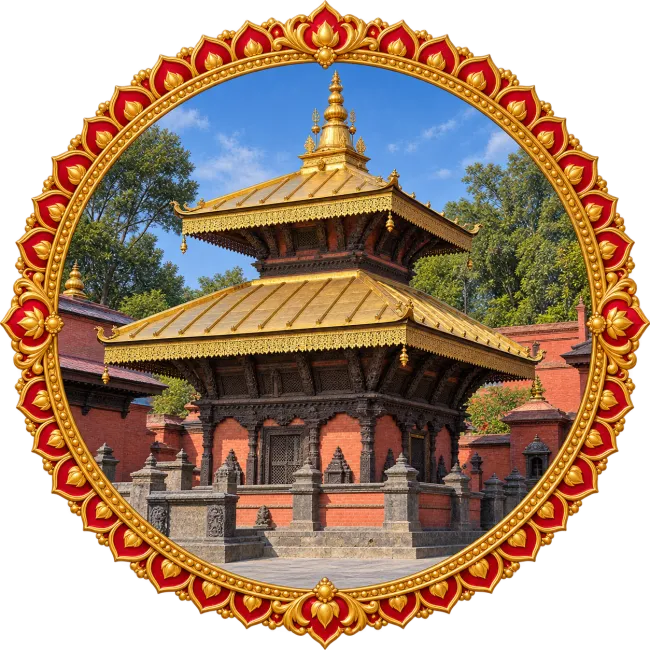
Guhyeshwari Temple, Kathmandu, Nepal
Visit Guhyeshwari Temple in Kathmandu, one of Nepal’s most sacred Shakti Peeths dedicated to Goddess Adi Shakti. Situated near Pashupatinath Temple on the banks of the Bagmati River, the temple is an important centre of Shakti and Tantric worship.
Unlike conventional temples, the principal deity at Guhyeshwari is not worshipped in a human-shaped idol. The divine power of the goddess is represented by a sacred water-filled opening in the ground, covered and protected by a ceremonial Kalash. Devotees visit the temple to pray for protection, spiritual strength, marital happiness, fertility and fulfilment of sincere wishes.
About Guhyeshwari Temple
Guhyeshwari Temple is located in the Pashupati area of Kathmandu, Nepal. It stands on the northern bank of the Bagmati River, a short distance east of Pashupatinath Temple.
The temple is dedicated to Goddess Guhyeshwari, a powerful and secret manifestation of Goddess Parvati or Adi Shakti. It is regarded as one of the most important Shakti Peeths in Nepal.
The name Guhyeshwari is derived from two Sanskrit words:
- Guhya means secret, hidden or mysterious.
- Ishwari means the Supreme Goddess.
Therefore, Guhyeshwari means the “Goddess of Secret Divine Power.” The temple represents the hidden creative energy of the universe and has special importance in Shakta and Tantric traditions.
Guhyeshwari Temple is visited by ordinary devotees, Tantric practitioners, saints and pilgrims performing the sacred journey of the Pashupati region.
History of Guhyeshwari Temple
The religious origin of Guhyeshwari Temple is ancient and connected with the Shakti Peeth tradition. Worship of the goddess at this location existed before the construction of the present temple building.
The present structure was built or extensively reconstructed during the reign of King Pratap Malla in the 17th century. King Pratap Malla ruled the Kathmandu Kingdom between 1641 and 1674 and supported the construction and renovation of numerous temples.
The Malla rulers were devoted to Hindu and Tantric forms of worship. Guhyeshwari became an important royal shrine where special rituals were performed for the protection of the kingdom, victory in battle and continuation of the royal family.
Successive Nepalese rulers and local communities preserved the temple’s rituals. It continues to be an important religious destination for followers of Shakti worship.
The temple forms part of the sacred Pashupati area, known for its collection of ancient temples, ghats, forests and religious monuments.
Shakti Peeth Story of Guhyeshwari Temple
The origin of Guhyeshwari Temple is connected with the story of Goddess Sati and Lord Shiva.
Goddess Sati was the daughter of King Daksha and the first consort of Lord Shiva. King Daksha organized a grand Yajna but intentionally did not invite Shiva and Sati.
Despite Lord Shiva’s advice, Sati attended the ceremony. When King Daksha insulted Lord Shiva, Sati was unable to tolerate the humiliation and gave up her body in the sacred fire.
Lord Shiva became overwhelmed with grief and anger. He lifted Sati’s body and wandered throughout the universe while performing the destructive Tandava.
To protect creation, Lord Vishnu used his Sudarshana Chakra to divide Sati’s body into different parts. Wherever a part of her body fell, a sacred Shakti Peeth appeared.
According to the principal tradition associated with Guhyeshwari, a secret or intimate part of Goddess Sati’s body fell at this location. Other regional traditions associate the site with her knees or hips. The temple’s name emphasizes the secret and creative power of the Divine Mother rather than a visible physical form.
Religious Significance of Guhyeshwari Temple
Guhyeshwari Temple represents the creative and transformative power of Adi Shakti. It is believed to possess intense spiritual energy, making it an important place for both traditional and Tantric worship.
The temple is closely connected with Pashupatinath Temple. Lord Pashupatinath represents Shiva, while Goddess Guhyeshwari represents Shakti. Pilgrims traditionally consider their sacred journey complete after receiving the blessings of both deities.
Devotees worship Goddess Guhyeshwari for:
- Protection from negative influences
- Spiritual strength and courage
- Marital harmony
- Blessings for children
- Family prosperity
- Recovery from illness
- Removal of obstacles
- Success in important work
- Protection during pregnancy
- Fulfilment of sincere wishes
- Progress in spiritual practices
- Relief from fear and anxiety
The temple is especially important for women praying for family well-being, fertility and a peaceful married life.
Main Deity of Guhyeshwari Temple
There is no conventional standing or seated idol inside the main sanctum. The goddess is represented by a sacred opening in the earth containing natural water.
The sacred point is protected by a metal covering and ceremonial Kalash. Devotees worship this place as the living presence of Goddess Guhyeshwari.
The water represents fertility, creation, purity and the eternal source of life. It also represents the hidden power from which the universe emerges.
The sanctum is small and spiritually intense. Devotees receive darshan from the designated area while authorized priests perform the main rituals.
Bhairav of Guhyeshwari Shakti Peeth
Every Shakti Peeth is traditionally associated with a form of Lord Shiva known as Bhairav. At Guhyeshwari, Lord Shiva is worshipped as the guardian of the sacred Shakti Peeth.
The presence of Bhairav represents the belief that Shiva and Shakti are inseparable. Shakti is divine energy, while Shiva represents pure consciousness.
Devotees may offer prayers to Bhairav after worshipping the goddess to seek protection and spiritual balance.
Architecture of Guhyeshwari Temple
Guhyeshwari Temple is constructed in the traditional Nepalese pagoda style. The shrine is smaller than Pashupatinath Temple but is decorated with symbolic and artistic elements connected with Shakti worship.
Important architectural features include:
- Traditional pagoda-style structure
- Decorated roof and metal pinnacle
- Carved wooden doors and supports
- Sacred water-filled sanctum
- Ceremonial metal Kalash
- Stone-paved courtyard
- Traditional oil-lamp stands
- Prayer bells
- Images of Shakti and associated deities
- Bagmati River flowing nearby
The temple’s roof, doorway and courtyard display traditional Newari craftsmanship. The surrounding natural environment and proximity to the river enhance its sacred character.
Guhyeshwari Temple Timings
The temple may follow extended timings during Navratri, Dashain and other major Shakti festivals. Special Tantric rituals may also temporarily affect regular darshan.
Morning Puja and Aarti
Morning worship begins when the temple opens at 5:30 AM. The priests clean and prepare the sanctum before lighting lamps and presenting offerings to Goddess Guhyeshwari.
Morning Aarti is performed at 6:00 AM. The goddess is worshipped with:
- Red flowers
- Vermilion
- Incense
- Oil lamps
- Sacred water
- Rice
- Fruits and sweets
- Red cloth
- Traditional Shakti mantras
The period between 6:00 AM and 9:00 AM is suitable for peaceful darshan. Devotees can visit Guhyeshwari after attending the morning worship at Pashupatinath Temple.
Bhog and Afternoon Darshan
Bhog is offered to Goddess Guhyeshwari at 12:00 PM. The offering may contain rice, fruits, sweets and traditional vegetarian preparations.
Afternoon darshan continues after the completion of the Bhog ritual. This period is generally less crowded than early morning on festival days.
Devotees arranging a special puja should consult the authorized temple priests or designated counters.
Evening Puja and Aarti
Evening Puja begins at 5:30 PM, followed by Aarti at 6:00 PM. Oil lamps are offered before the sacred representation of the goddess while priests recite Shakti mantras.
The temple courtyard becomes peaceful during the evening ceremony. The sound of bells, mantras and flowing water from the nearby Bagmati River creates a devotional atmosphere.
Visitors should reach the temple before 5:30 PM to attend the complete Puja and Aarti.
Tantric Importance of Guhyeshwari Temple
Guhyeshwari is one of Nepal’s most significant centres of Tantric Shakti worship. The temple represents the concealed feminine energy responsible for creation, transformation and spiritual awakening.
Tantric practitioners regard the goddess as a source of inner strength and higher knowledge. Special ceremonies may be conducted during Navratri, Kali Puja and certain lunar occasions.
These rituals are performed only by authorized and experienced priests. Regular visitors should not attempt Tantric ceremonies without proper spiritual guidance.
The temple’s Tantric significance should not be misunderstood as negative or harmful. In its traditional form, Tantra is a disciplined spiritual path involving mantra, meditation, worship and control of the mind and senses.
Major Festivals Celebrated
Dashain
Dashain is the most important festival celebrated at Guhyeshwari Temple. Goddess Guhyeshwari is worshipped as a powerful form of Durga.
Special pujas are performed during Ghatasthapana, Phulpati, Maha Ashtami, Maha Navami and Vijayadashami.
Sharadiya Navratri
All nine forms of Goddess Durga are worshipped during Sharadiya Navratri. The temple receives large numbers of devotees from Nepal and India.
Chaitra Navratri
Devotees observe fasting, offer red flowers and participate in special prayers during Chaitra Navratri.
Guhyeshwari Jatra
The local Jatra includes ceremonial worship and religious processions. Traditional communities of Kathmandu participate in the celebration.
Kali Puja
Special lamps, flowers and Shakti rituals are offered during Kali Puja.
Bala Chaturdashi
Pilgrims visiting the Pashupati area during Bala Chaturdashi also offer prayers at Guhyeshwari Temple. Rituals are performed for departed family members.
Teej
Women visit the temple during Teej to pray for marital happiness, family well-being and the health of their spouses.
Offerings and Prasad
Common offerings made to Goddess Guhyeshwari include:
- Red hibiscus flowers
- Red chunari
- Vermilion
- Bangles
- Cosmetic items
- Rice and grains
- Fruits and sweets
- Coconut
- Incense sticks
- Oil or ghee lamps
- Sacred red threads
- Monetary donations
Women may offer traditional Shringar items while praying for marriage, children and family prosperity.
Prasad may include fruits, sweets, flowers, vermilion and sacred threads blessed during worship.
Entry Rules and Fee
There is no entry fee for regular darshan at Guhyeshwari Temple. Charges may apply for special pujas and priest-led rituals.
Entry to the inner temple is traditionally restricted to Hindu devotees. Visitors who are not permitted inside should respect the instructions of temple officials and view the exterior from the accessible area.
Photography may be restricted near the main sanctum. Visitors should ask permission before taking pictures inside the temple courtyard.
A regular visit requires 45 minutes to one hour. A combined visit to Guhyeshwari and Pashupatinath Temple may require three to four hours.
Visitor Guidelines
- Wear clean and modest clothing.
- Remove footwear before entering the temple.
- Entry to the inner shrine is restricted to Hindu devotees.
- Do not photograph the sanctum without permission.
- Do not touch the sacred Kalash or water-filled opening.
- Maintain silence during Puja and Aarti.
- Keep mobile phones on silent mode.
- Do not carry alcohol, tobacco or non-vegetarian food.
- Use authorized counters for donations and special pujas.
- Avoid throwing offerings into the Bagmati River.
- Keep the temple courtyard clean.
- Respect women and devotees performing personal rituals.
- Follow the instructions of priests and security officials.
Best Time to Visit
October to March is the best period for visiting because Kathmandu experiences pleasant weather.
Navratri and Dashain offer a vibrant religious experience, but the temple remains heavily crowded during these festivals.
For peaceful darshan, visit between 6:00 AM and 9:00 AM on a regular weekday. Evening visitors should reach between 5:00 PM and 5:30 PM to attend Puja and Aarti.
How to Reach Guhyeshwari Temple
From Pashupatinath Temple
Guhyeshwari Temple is located approximately 1 kilometre east of Pashupatinath Temple. Devotees can reach it by walking through the sacred Pashupati area or using a local taxi.
By Air
Tribhuvan International Airport is approximately 4–5 kilometres from the temple. Taxis are available outside the airport.
From Central Kathmandu
The temple is approximately 5–6 kilometres from central Kathmandu. Visitors can travel by taxi, local bus or private vehicle towards the Pashupati area.
From Thamel
Guhyeshwari Temple is approximately 6–7 kilometres from Thamel. The journey takes 25–40 minutes, depending on traffic.
By Local Bus
Local buses and minibuses travelling towards Gaushala or Pashupatinath provide convenient access. Visitors can continue to Guhyeshwari on foot or by local vehicle.
Indian citizens travelling to Nepal should carry a valid passport or voter identity card and confirm transportation requirements before departure.
Nearby Places to Visit
- Pashupatinath Temple
- Bagmati River Ghats
- Kirateshwar Mahadev Temple
- Sleshmantak Forest
- Mrigasthali
- Boudhanath Stupa
- Gorakhnath Temple
- Kopan Monastery
- Budhanilkantha Temple
- Kathmandu Durbar Square
Conclusion
Guhyeshwari Temple is one of Nepal’s most sacred Shakti Peeths and an important centre of Tantric worship. Its association with Goddess Sati, proximity to Pashupatinath Temple and sacred water-filled sanctum give it a distinctive spiritual identity.
Constructed in its present form during the reign of King Pratap Malla, the temple represents the hidden creative power of the Divine Mother. Morning Puja, evening Aarti and the grand celebrations of Navratri and Dashain provide devotees with an opportunity to experience Nepal’s ancient Shakti traditions.
A pilgrimage to the Pashupati area is considered more meaningful when devotees receive the blessings of both Lord Pashupatinath and Goddess Guhyeshwari, representing the eternal union of Shiva and Shakti.