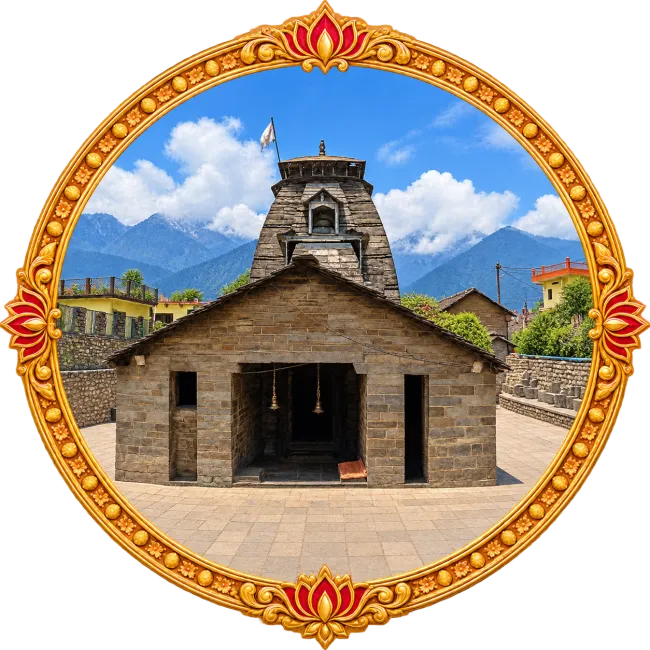
Gopinath Temple, Gopeshwar, Uttarakhand
Gopinath Temple is an ancient Shiva shrine situated in Gopeshwar, the administrative centre of Chamoli district in Uttarakhand. Despite the name Gopinath being commonly associated with Lord Krishna, the principal deity of this temple is Lord Shiva.
The temple is known for its impressive stone architecture, large ancient Trishul and role as the winter seat of Lord Rudranath. Surrounded by the Garhwal Himalayas, it is an important pilgrimage destination for devotees undertaking the Panch Kedar journey.
About Gopinath Temple
Gopinath Temple stands in the centre of Gopeshwar town at an elevation of approximately 1,550 metres. The shrine is dedicated to Lord Shiva in his Gopinath form.
The word Gopinath means the Lord of the Gopis, but local tradition associates the name with Shiva’s divine play and his connection with Goddess Parvati.
The temple complex contains:
Main Shiva sanctum
Ancient Trishul
Nandi image
Smaller shrines
Stone inscriptions
Sculptures from different historical periods
Winter worship space for Lord Rudranath
During winter, when Rudranath Temple becomes inaccessible, its ceremonial image is brought to Gopinath Temple for worship.
When Was Gopinath Temple Built and Who Built It?
Gopinath Temple was developed during the rule of the Katyuri kings, who governed large parts of the central Himalayan region between the early medieval centuries.
The principal stone structure is generally associated with the 9th–12th-century period. Later regional rulers, including Garhwal kings, supported its maintenance and worship.
An inscription connected with the temple’s large Trishul belongs to the 12th century and records historical activity in the region. The shrine underwent repairs over subsequent centuries but continues to preserve its early Himalayan architectural character.
Legend of Lord Shiva and Kamadeva
According to tradition, Lord Shiva entered deep meditation after the death of Goddess Sati. The gods wanted him to marry Parvati because their future son would defeat the demon Tarakasura.
Kamadeva, the god of desire, attempted to awaken Shiva by shooting a flower arrow. Shiva opened his third eye and reduced Kamadeva to ashes.
The event is associated with the region surrounding Gopeshwar. The ancient Trishul in the temple courtyard is believed to preserve the power of Lord Shiva.
Another tradition states that Shiva threw his Trishul during a divine battle or demonstration of power, and it became permanently fixed at this location.
The Ancient Trishul
A large metal Trishul stands in the temple courtyard. It is one of Gopinath Temple’s most distinctive features.
The Trishul carries inscriptions and is associated with medieval Himalayan rulers. Religious tradition maintains that ordinary human force cannot move it, while sincere devotional touch can cause it to vibrate.
The Trishul symbolises:
Creation, preservation and destruction
Past, present and future
Body, mind and spirit
Shiva’s protection
Destruction of ego and ignorance
Visitors should not climb upon, strike or damage the ancient object.
Winter Seat of Rudranath
Rudranath Temple closes before winter because heavy snowfall makes its high-altitude location inaccessible.
The ceremonial image of Lord Rudranath is brought to Gopinath Temple in a traditional Doli procession. Daily winter worship then continues at Gopeshwar.
Before the summer pilgrimage season, the deity returns to Rudranath through a ceremonial journey accompanied by priests and devotees.
Religious Significance
Devotees worship Lord Gopinath for:
Health and longevity
Protection from danger
Courage and spiritual strength
Marriage and family harmony
Relief from fear
Success in education and employment
Safe mountain travel
Forgiveness for past actions
Fulfilment of wishes
Liberation
During winter, the temple also provides devotees with the blessings of Lord Rudranath.
Architecture of Gopinath Temple
Gopinath Temple is constructed in the traditional Nagara and Himalayan stone style. Its form resembles other ancient temples of the Garhwal region.
Architectural features include:
Tall stone Shikhara
Square Garbhagriha
Stone Mandapa
Heavy masonry walls
Carved entrance
Nandi image
Stone sculptures
Ancient inscriptions
Temple courtyard
The sanctum houses the Shiva Lingam. The massive stones and compact design help the structure withstand the Himalayan climate.
Gopinath Temple Timings
The temple remains open throughout the year and follows separate summer and winter schedules.
Summer Timings
Winter Timings
Doli ceremonies and festivals can affect ordinary darshan arrangements.
Morning Puja and Aarti
The day begins with purification of the sanctum and Mangal Puja. The Shiva Lingam receives Abhishekam before general darshan.
Morning rituals include:
Water Abhishekam
Milk and curd
Honey and clarified butter
Bilva leaves
White flowers
Sandalwood
Sacred ash
Shiva mantra chanting
Incense and lamps
Morning Aarti
During winter, separate ceremonial worship is performed for Lord Rudranath.
Bhog and Evening Aarti
Bhog is offered at noon. Fruits, sweets, rice and Satvik preparations may form part of the offering.
Evening Puja includes lamps, incense, flowers and Shiva hymns. During winter, the Aarti honours both Gopinath and the ceremonial presence of Rudranath.
Major Festivals
Mahashivratri
Mahashivratri is the largest festival at Gopinath Temple. Special Abhishekam, fasting, Rudra Path and night worship are organised.
Arrival of Rudranath Doli
The winter arrival of Lord Rudranath is celebrated with flowers, music and special Puja.
Departure of Rudranath Doli
Before the summer pilgrimage begins, the Doli leaves Gopeshwar for Rudranath through a traditional procession.
Shravan Month
Mondays during Shravan attract many devotees for Jalabhishek and Rudrabhishek.
Kartik Purnima
Devotees light lamps and offer prayers to Lord Shiva.
Puja and Religious Services
Available ceremonies may include:
General Shiva Puja
Jalabhishek
Rudrabhishek
Mahamrityunjaya Mantra Path
Rudranath winter Puja
Mahashivratri worship
Shravan Monday Puja
Family welfare prayers
Marriage-related Puja
Health and protection prayers
Havan
Puja arrangements should be completed through authorised priests.
Offerings and Prasad
Traditional offerings include:
Water
Milk
Bilva leaves
White flowers
Fruits
Coconut
Sandalwood
Sacred ash
Incense
Clarified butter
Sweets
Monetary donations
Prasad generally includes sweets, fruits, coconut and blessed flowers.
Dress Code and Temple Rules
Visitors should wear clean, modest and weather-appropriate clothing.
Important rules include:
Remove footwear before entering.
Follow the designated queue.
Do not touch the Lingam without permission.
Do not damage or strike the ancient Trishul.
Follow photography restrictions.
Keep the temple clean.
Avoid alcohol and tobacco.
Deposit donations only at authorised counters.
Respect Doli ceremonies.
Follow local weather instructions.
Entry Fee and Darshan Duration
General darshan is free. Charges apply only to optional Pujas and ritual materials.
A regular visit requires 30–60 minutes. During Mahashivratri and Rudranath Doli ceremonies, waiting time may increase.
Best Time to Visit
The temple can be visited throughout the year.
October to March is important for winter worship of Rudranath. April to June offers pleasant weather and convenient travel.
The monsoon can bring heavy rain and road disruptions. Winter visitors should carry warm woollen clothing.
How to Reach Gopinath Temple
By Air
Jolly Grant Airport near Dehradun is the nearest major airport.
By Train
Rishikesh, Yog Nagari Rishikesh and Haridwar are the nearest convenient railway stations.
By Road
Gopeshwar is connected with Chamoli, Karnaprayag, Joshimath and Rudraprayag.
Accommodation and Facilities
Hotels, guest houses, homestays and tourist lodges are available in Gopeshwar.
Facilities include:
Parking
Drinking water
Toilets
Puja shops
Prasad stalls
Restaurants
Medical assistance
Local taxis
Trekking services
Nearby Places to Visit
Rudranath Temple
Sagar Village
Anusuya Devi Temple
Atri Muni Ashram
Chamolanath Temple
Chopta
Tungnath Temple
Mandal Valley
Joshimath
Badrinath Temple
Conclusion
Gopinath Temple is an ancient Shiva shrine preserving the architectural and religious heritage of the Garhwal Himalayas. Its Katyuri-period stone construction, ancient Trishul and association with Lord Shiva and Kamadeva give it exceptional historical significance.
As the winter seat of Lord Rudranath, the temple remains spiritually important throughout the year. Devotees visit Gopinath Temple to seek health, protection, courage and the blessings of Lord Shiva.