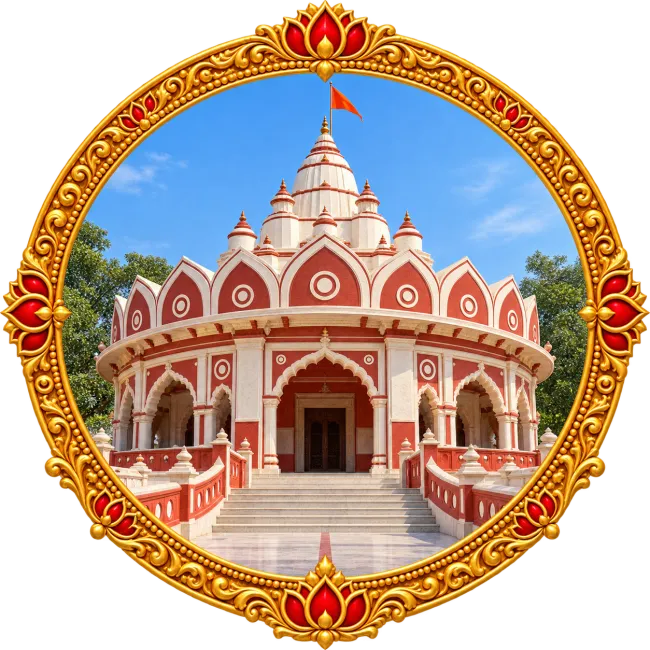
Gol Mandir, Meerut
Visit Gol Mandir Meerut, a beautifully designed Shakti temple dedicated to Maa Jagdambe. Officially known as Siddhpeeth Gol Mandir or Adishakti Jagdambe Shaktipeeth, the temple is situated in Jai Devi Nagar near Shastri Nagar. Its circular structure, lotus-petal-shaped dome, magnificent marble idol, sacred Kalpavriksha, temple pond, and peaceful environment make it one of Meerut’s most recognisable religious landmarks.
The present temple was developed during the 1960s, and the Pran Pratishtha of Maa Jagdambe was performed in 1965. Devotees believe that worshipping the Goddess here removes difficulties and fulfils sincere wishes. A distinctive tradition of lighting a lamp for 40 days is also associated with the temple.
About Gol Mandir Meerut
Gol Mandir is a prominent Durga temple located in Jai Devi Nagar, Shastri Nagar, Meerut, Uttar Pradesh. It is dedicated to Maa Jagdambe, the universal form of Goddess Shakti and the divine mother of creation.
The temple is locally called Gol Mandir because its main prayer hall and dome have been designed in a circular form. The upper structure resembles the blooming petals of a lotus flower, giving the temple a distinctive architectural appearance.
Gol Mandir is regarded as a Siddhpeeth and an important centre of Devi worship in western Uttar Pradesh. Devotees visit the temple to pray for family happiness, health, marriage, children, education, employment, financial stability, and protection from difficulties.
The temple occupies approximately 1,000 square yards. Its spacious complex includes the main sanctum, circular prayer hall, sacred pond, Yagyashala, Kalpavriksha, pathways for parikrama, and open areas where religious programmes are organised.
Both Chaitra Navratri and Sharadiya Navratri are celebrated with grand shringar, special aarti, havan, bhajan, religious processions, and community meals.
History of Gol Mandir Meerut
The development of Gol Mandir began when a respected Brahmin family in Meerut decided to establish a grand temple dedicated to Maa Jagdambe. Land for the temple was purchased during the first half of 1960, and construction began shortly afterwards.
The temple was developed through the efforts of renowned film producer and director Devi Sharan Sharma and his family. The family played an important role in providing the temple with an organised and magnificent architectural form.
Before the present structure was constructed, the area was surrounded by trees and mango orchards. A small shrine made with brick and mud existed within the garden, and local residents visited it to worship the Goddess.
As the surrounding Jai Devi Nagar and Shastri Nagar areas developed, the number of devotees increased. The family and local worshippers resolved to replace the small shrine with a spacious and beautifully designed temple.
The marble idol of Maa Jagdambe was carved from a single block of stone by skilled artisans from Jaipur. The Pran Pratishtha of the deity was performed in 1965 by Anant Shri Swami Shri Krishnabodhashram Ji Maharaj, a revered spiritual teacher associated with the Jyotish Peeth tradition.
Following the consecration, Gol Mandir became an important centre of Shakti worship in Meerut. Its present appearance developed through several phases of construction, renovation, landscaping, and architectural improvement.
A temple trust was formed with Maa Jagdambe regarded as the true presiding authority of the institution. The trust manages daily worship, maintenance, festivals, development work, and services for devotees.
Main Deity of Gol Mandir
The principal deity is Maa Jagdambe, a compassionate and powerful form of Goddess Durga. The Goddess is shown seated upon a lion, symbolising courage, strength, justice, and victory over evil.
The idol is carved from a single block of white marble. Jaipur artisans created the image with detailed features, ornaments, weapons, and a serene facial expression.
Maa Jagdambe is installed upon an elevated platform inside the sanctum. The height of the platform allows devotees to receive darshan even when the prayer hall is crowded.
The Goddess is decorated daily with colourful clothes, flowers, jewellery, garlands, a crown, and traditional ornaments. During Navratri, special artists prepare a different shringar representing one of the nine forms of Maa Durga each day.
The central sanctum is primarily dedicated to Maa Jagdambe, which preserves the temple’s identity as a major Shakti shrine.
Religious Significance of Gol Mandir
Gol Mandir is considered a Siddhpeeth where devotees believe that sincere prayers receive the blessings of Maa Jagdambe. The Goddess is worshipped as the protector of the universe and the mother who guides her children through difficult situations.
Devotees believe that worshipping Maa Jagdambe can:
- Remove obstacles and fear.
- Protect the family from negative influences.
- Bring peace and unity within the household.
- Bless couples with children.
- Help unmarried devotees find a suitable partner.
- Support progress in education and employment.
- Provide strength during illness and difficult circumstances.
- Improve confidence and mental peace.
- Bring prosperity and professional success.
- Fulfil sincere and righteous wishes.
Many devotees visit the temple after the fulfilment of their prayers and offer chunri, coconut, sweets, flowers, or a special shringar to express gratitude.
Tradition of Lighting a Lamp for 40 Days
One of the most popular traditions associated with Gol Mandir is lighting a lamp continuously for 40 days.
Devotees make a spiritual resolve before Maa Jagdambe and light a lamp at the designated place within the temple. They return regularly for 40 days, offer prayers, and ask the Goddess to bless their righteous wish.
The practice represents faith, discipline, patience, and continued devotion. Lighting a lamp symbolises the removal of darkness, confusion, fear, and negativity from life.
Devotees should light lamps only in the area designated by the temple administration. Fire-safety instructions must be followed, and lamps should not be placed near clothes, decorations, trees, or crowded pathways.
Kalpavriksha at Gol Mandir
The sacred Kalpavriksha located within the temple courtyard is another important centre of devotion. Kalpavriksha is described in Hindu tradition as the divine wish-fulfilling tree.
It is known by several names, including:
- Kalpadrum
- Kamtaru
- Taruraj
- Amar Taru
- Swargavriksha
- Harichandan
Devotees perform parikrama of the Kalpavriksha and pray for health, peace, children, marriage, success, and family prosperity. During Navratri, many worshippers complete the parikrama of both the main temple and the sacred tree.
The Kalpavriksha is regarded as a symbol of life, longevity, divine grace, and the fulfilment of pure intentions. Visitors should avoid touching, damaging, or breaking its branches and leaves.
Architecture of Gol Mandir
Gol Mandir is one of Meerut’s most distinctive examples of modern temple architecture. Its circular design and lotus-inspired structure give it an appearance unlike other temples in the city.
The principal architectural features include:
- A circular prayer hall.
- A dome measuring approximately 70 feet in diameter.
- A prominent temple shikhara.
- Lotus-petal-shaped upper structures.
- A spacious sanctum with an elevated platform.
- A sacred pond reflecting the temple building.
- A Yagyashala for havan and Vedic ceremonies.
- Separate entrance and exit pathways.
- A landscaped courtyard and green surroundings.
- A sacred Kalpavriksha.
The circular dome is designed like the petals of a blooming lotus. In Hindu tradition, the lotus represents purity, spiritual awakening, divine beauty, and the ability to remain untouched by negativity.
The temple’s shikhara rises approximately 90 feet and can be seen from different parts of the surrounding neighbourhood. The main entrance is also designed to complement the circular and lotus-inspired architecture.
The pond has been positioned so that the reflection of the temple can be seen in the water. Stair-like pathways on both sides help devotees enter and exit without disturbing the flow of visitors.
Gol Mandir Meerut Timings
The regular darshan and worship schedule of Gol Mandir is as follows:
The temple normally remains open throughout the day, although access to the main sanctum may pause briefly during bhog, shringar, or cleaning.
During Chaitra Navratri, Sharadiya Navratri, Ashtami, Navami, and other major celebrations, special aarti and extended darshan arrangements may be introduced. Devotees should follow the schedule displayed at the temple entrance during festivals.
Daily Puja and Aarti
Daily worship begins when the temple opens at 5:00 AM. The sanctum is cleaned and Maa Jagdambe is prepared for the day with fresh clothes, jewellery, flowers, garlands, sandalwood paste, and other sacred ornaments.
Morning aarti is performed at 6:00 AM. Lamps are offered before the Goddess while devotees sing Durga Aarti and chant the names of Maa Jagdambe.
Midday bhog is offered at 12:00 PM. Fruits, sweets, and sattvic food preparations are presented to the Goddess before being distributed as prasad.
Evening aarti takes place at 7:00 PM. The temple is illuminated with lamps, and the sound of bells, drums, conch shells, and devotional songs fills the circular prayer hall.
Shayan Aarti is performed before the temple closes. The Goddess is offered final prayers and the sanctum is prepared for the night.
Navratri Celebrations
Chaitra Navratri and Sharadiya Navratri are the most important festivals celebrated at Gol Mandir. The temple attracts thousands of devotees during both nine-day celebrations.
Maa Jagdambe receives a different shringar representing the nine forms of Goddess Durga:
- Maa Shailputri
- Maa Brahmacharini
- Maa Chandraghanta
- Maa Kushmanda
- Maa Skandamata
- Maa Katyayani
- Maa Kalaratri
- Maa Mahagauri
- Maa Siddhidatri
Special rituals organised during Navratri include:
- Daily morning shringar
- Special morning and evening aarti
- Durga Saptashati recitation
- Bhajan and kirtan
- Havan and Yagya
- Mata ki Chowki
- Kanya Pujan
- Bhandara
- Prasad distribution
- Temple parikrama
- Kalpavriksha parikrama
During Sharadiya Navratri, a grand religious procession may also be organised. The temple is decorated with flowers, coloured lights, religious flags, and fabric.
Ashtami and Navami are the busiest days. Devotees should arrive early and follow the queue arrangements made by the temple administration.
Other Festivals Celebrated at Gol Mandir
Durga Ashtami
Special shringar, havan, aarti, and Kanya Pujan are performed. Devotees offer red flowers, coconut, chunri, and sweets.
Ram Navami
Ram Navami marks the conclusion of Chaitra Navratri. Religious recitations, aarti, bhog, and community meals are organised.
Diwali
The temple is decorated with lamps and lights. Devotees pray to Maa Jagdambe for prosperity, happiness, and protection.
Guru Purnima
Devotees honour saints, spiritual teachers, priests, and the religious tradition associated with the temple.
Shivratri
Special worship and Jalabhishek are organised at the Shiva worship area within the temple complex. Bhajan and Mahaaarti may also be conducted.
Hanuman Jayanti
Hanuman Chalisa recitation, bhajan, aarti, and prasad distribution are organised as part of the temple’s wider religious activities.
Offerings and Prasad
Devotees may offer the following items to Maa Jagdambe:
- Red chunri
- Coconut
- Fresh flowers and garlands
- Red hibiscus flowers
- Sindoor
- Bangles
- Bindi and shringar items
- Seasonal fruits
- Dry fruits
- Laddu and barfi
- Batasha
- Halwa and puri
- Ghee lamps
- Incense sticks
- Clothes for the deity
Offering a chola or sponsoring the shringar of Maa Jagdambe is considered especially auspicious. Such services should be arranged through the authorised temple office.
Prasad generally consists of sweets, fruits, batasha, halwa, or other food offered to the Goddess.
Special Puja and Religious Services
Devotees may arrange:
- Special Shringar
- Chola Offering
- Durga Saptashati Path
- Havan and Yagya
- Mata ki Chowki
- Jagran
- Kanya Pujan
- Bhog Seva
- Bhandara
- Birthday and anniversary puja
- Thanksgiving puja after wish fulfilment
All personal religious services should be booked through authorised temple representatives.
Entry Fee and Visit Duration
There is no entry fee for general darshan at Gol Mandir Meerut. Devotees can visit the main sanctum, Kalpavriksha, pond, and other accessible parts of the complex without purchasing a ticket.
Charges may apply for special shringar, havan, personal puja, bhog, or religious programmes.
A regular visit requires 45 minutes to one hour. Visitors attending aarti, performing parikrama, and exploring the architecture should reserve one to two hours.
During Navratri, Ashtami, and Navami, waiting time can increase significantly.
Best Time to Visit
October to March is the most comfortable period for visiting Gol Mandir. The weather remains pleasant for darshan and exploring the temple complex.
The best daily darshan periods are:
- Morning: 6:00 AM – 8:30 AM
- Evening: 5:30 PM – 7:30 PM
- Evening Aarti: 7:00 PM
Visitors seeking peaceful darshan should visit on a regular weekday morning. Tuesday, Friday, Sunday, and Navratri days attract more devotees.
Visitor Guidelines
- Wear modest and respectful clothing.
- Remove footwear at the designated place.
- Follow the separate entrance and exit routes.
- Maintain silence inside the sanctum.
- Do not touch the principal deity.
- Ask permission before taking photographs or videos.
- Use authorised counters for donations and puja services.
- Light lamps only in the designated area.
- Do not damage or pluck leaves from the Kalpavriksha.
- Keep children away from the edge of the pond.
- Maintain cleanliness within the complex.
- Do not throw flowers, plastic, or food into the pond.
- Keep mobile phones on silent mode.
- Follow queue and security instructions during Navratri.
- Avoid carrying tobacco, alcohol, leather items, or non-vegetarian food.
How to Reach Gol Mandir Meerut
By Air
Hindon Airport in Ghaziabad is the nearest airport with limited flight services. Indira Gandhi International Airport in Delhi is the nearest major airport and is approximately 90 to 100 kilometres from Meerut.
Taxis and buses are available from Delhi and Ghaziabad to Meerut.
By Train
Meerut City Junction is the nearest major railway station and is approximately 5 to 7 kilometres from Gol Mandir. Meerut Cantonment Railway Station is another option.
Auto-rickshaws, e-rickshaws, and taxis are available outside both stations. Visitors should ask for Gol Mandir in Jai Devi Nagar or Shastri Nagar.
By Bus
Sohrab Gate Bus Stand is one of the nearest major bus terminals. Regular buses connect Meerut with Delhi, Ghaziabad, Hapur, Muzaffarnagar, Bijnor, Bulandshahr, and nearby cities.
Auto-rickshaws and e-rickshaws are available from the bus stand to Jai Devi Nagar.
By Road
Gol Mandir is situated in Jai Devi Nagar near Shastri Nagar and can be reached through Garh Road, Hapur Road, Central Market Road, or Gol Mandir Road.
Visitors travelling from Delhi can use the Delhi–Meerut Expressway and continue towards Shastri Nagar. Parking may be limited during Navratri and major religious events.
Nearby Places to Visit
Visitors can explore the following attractions:
- Mansa Devi Temple
- ISKCON Temple Shastri Nagar
- Baba Aughadnath Temple
- Sadar Maa Kali Mata Temple
- Suraj Kund
- Baba Manohar Nath Temple
- Shaheed Smarak
- Government Freedom Struggle Museum
- Gandhi Bagh
- Shahpeer’s Mausoleum
- St. John’s Church
Conclusion
Gol Mandir Meerut is a beautiful Shaktipeeth that combines devotion, modern architecture, spiritual traditions, and peaceful surroundings. Construction began after the temple land was acquired in 1960, and the sacred marble idol of Maa Jagdambe was consecrated in 1965 by Swami Shri Krishnabodhashram Ji Maharaj.
The temple’s circular prayer hall, lotus-petal design, elevated marble deity, sacred pond, Yagyashala, and Kalpavriksha give it a distinctive identity. The tradition of lighting a lamp for 40 days reflects the faith, patience, and spiritual discipline of devotees.
Whether visitors come for peaceful morning darshan, evening aarti, Navratri celebrations, Kalpavriksha parikrama, or to admire the temple’s architecture, Gol Mandir offers a deeply uplifting experience in the heart of Meerut.