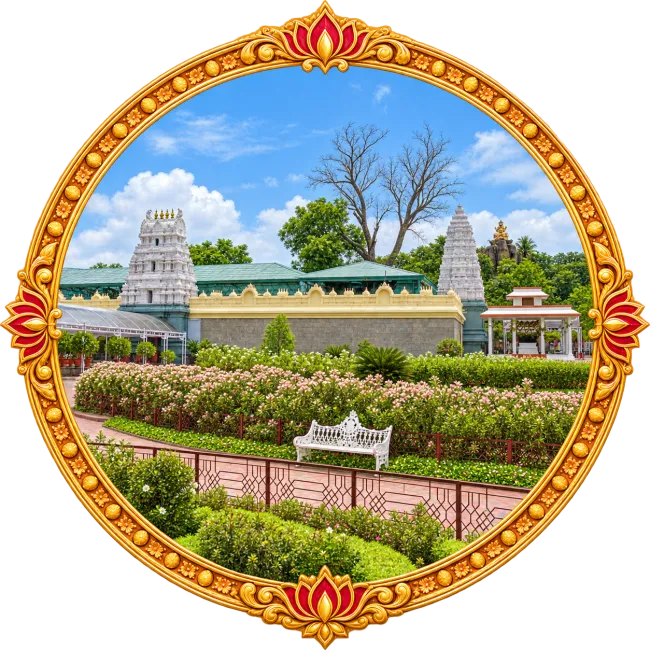
Gnana Saraswati Temple, Basar
Gnana Saraswati Temple in Basar, Telangana, is one of India’s most revered temples dedicated to Goddess Saraswati. Situated near the banks of the Godavari River, the temple is especially famous for Aksharabhyasam, the sacred ceremony through which young children are formally introduced to reading and writing.
Goddess Saraswati is worshipped as the divine source of knowledge, speech, music, memory and artistic ability. Students, parents, teachers, musicians and scholars visit Basar to seek her blessings for education and wisdom.
About Gnana Saraswati Temple
Gnana Saraswati Temple is located in Basar in Nirmal district, Telangana. The village is also written as Basara in several regional traditions.
The principal deity is Goddess Gnana Saraswati. Goddess Lakshmi and Goddess Mahakali are also worshipped at the sacred site.
The temple is closely associated with Sage Vyasa, who is believed to have lived and meditated near the Godavari after the Mahabharata war.
Basar is best known for Aksharabhyasam. Families bring children to the temple before the beginning of formal education and guide them to write their first sacred letters.
The temple receives particularly large crowds during:
Vasant Panchami
Navaratri
Vijayadashami
Guru Purnima
School-admission periods
Weekends and public holidays
When and Who Built Gnana Saraswati Temple?
The spiritual origin of the temple is attributed to Sage Vyasa. According to tradition, he installed the forms of Saraswati, Lakshmi and Mahakali after settling near the Godavari River.
The sacred site later developed into an organised temple under the patronage of regional rulers. Chalukya-period traditions and architectural influences are associated with the development of the stone shrine.
Different dynasties, local chiefs and devotees supported the temple through renovations, land grants and arrangements for daily worship.
The complex experienced damage and repair during periods of political conflict. Local devotees preserved the sacred images and continued worship.
The present temple combines its Vyasa-related spiritual origin with structures and facilities developed during later historical periods.
Legend of Sage Vyasa
According to tradition, Sage Vyasa experienced deep sorrow after witnessing the destruction caused by the Mahabharata war.
Seeking peace, he travelled south with his son Shuka and other disciples. They reached the quiet forests beside the Godavari River and selected the area for meditation.
Vyasa bathed in the river each morning and brought three handfuls of sand to his hermitage. He mixed the sand with turmeric and shaped three divine images.
These forms represented:
Goddess Saraswati
Goddess Lakshmi
Goddess Mahakali
Vyasa worshipped the three Goddesses and established the sacred place as a centre of knowledge, prosperity and protective power.
The settlement became known as Vyasara because of its association with Vyasa. Over time, the name developed into Basara or Basar.
Three Goddesses at Basar
The sacred tradition of Basar combines three forms of the Divine Mother.
Gnana Saraswati
Saraswati represents knowledge, learning, speech, music and wisdom. She is the principal deity of the temple.
Goddess Lakshmi
Lakshmi represents prosperity, abundance, good fortune and family welfare.
Goddess Mahakali
Mahakali represents courage, protection and the destruction of negative forces.
Together, the three Goddesses represent:
Knowledge
Prosperity
Strength
This combination makes Basar an important destination for both students and families.
Religious Significance
Gnana Saraswati is worshipped as the source of intellectual and creative ability.
Devotees visit the temple to pray for:
Success in education
Good memory
Clear speech
Concentration
Examination success
Admission to educational institutions
Musical and artistic ability
Professional growth
Family prosperity
Courage and protection
Blessings for children
Spiritual knowledge
Parents often bring children before school admission or at the beginning of a new academic year.
Main Deity and Other Shrines
Goddess Gnana Saraswati
The principal deity is Goddess Saraswati. She is decorated with silk garments, flowers, ornaments and a crown.
Turmeric has special importance in her worship. Devotees receive sacred turmeric as prasadam and traditionally use it with reverence.
Goddess Lakshmi
Goddess Lakshmi is worshipped for prosperity, employment, business growth and family welfare.
Goddess Mahakali
Goddess Mahakali is worshipped for courage and protection from difficulties.
Other sacred figures and places include:
Lord Ganesha
Sage Vyasa
Vyasa Cave
Dattatreya
Lord Shiva
Navagrahas
Guardian deities
Godavari River ghats
Aksharabhyasam Ceremony
Aksharabhyasam is the most important ceremony performed at Basar. It marks a child’s formal introduction to education.
The term combines:
Akshara: Letter or syllable
Abhyasa: Practice or learning
During the ceremony, the child is guided to write sacred letters in a plate filled with rice or another prescribed material.
A commonly written invocation is:
Om Sri Ganeshaya Namaha
or
Om Aim Saraswatyai Namaha
The priest performs Sankalpa in the child’s name and invokes the blessings of Ganesha and Saraswati.
Aksharabhyasam Procedure
Families generally follow these steps:
Bathe and wear clean traditional clothing.
Purchase or confirm the Aksharabhyasam ticket.
Report at the designated hall.
Place the child before the Puja arrangement.
Complete Ganapati and Saraswati worship.
Guide the child to write sacred letters in rice.
Receive Aarti and blessings.
Have darshan of Goddess Saraswati.
Collect prasadam and turmeric.
The exact procedure depends on the selected ticket category and the temple’s arrangements.
Children are generally brought for the ceremony when they are ready to begin learning. Families should keep the experience calm and avoid forcing a tired or frightened child.
Architecture of Gnana Saraswati Temple
The temple has a relatively simple stone design compared with highly decorated Dravidian complexes.
Main Sanctum
The sanctum houses Goddess Gnana Saraswati. Its compact interior is illuminated by traditional lamps.
The deity’s decoration emphasises her identity as the Goddess of knowledge and wisdom.
Temple Mandapams
Large halls are used for Aksharabhyasam, Archana and family ceremonies.
These halls allow multiple families to participate under the guidance of authorised priests.
Entrance Gopuram
The entrance tower contains sculptures and symbols connected with Saraswati, Shakti and Hindu learning traditions.
Vyasa Cave
A cave on a nearby hill is associated with Sage Vyasa’s meditation. Reaching it requires climbing steps and walking over uneven surfaces.
Godavari Setting
The temple’s location near the Godavari strengthens its connection with Vyasa and ritual purification.
Gnana Saraswati Temple Timings
The regular daily schedule is:
Timings may be extended or reorganised during Vasant Panchami, Navaratri, Vijayadashami and other major occasions.
Morning Puja and Aarti
The temple opens at 4:00 AM with Suprabhata Seva.
Morning Abhishekam is performed from 4:30 AM to 5:30 AM. The Goddess is then decorated with flowers, silk garments and ornaments.
Alankaram and morning Puja continue until 6:00 AM. Morning Aarti and Deepa Aradhana are conducted at 6:00 AM.
The best morning darshan period is from 6:30 AM to 9:30 AM.
Families performing Aksharabhyasam should report before their allotted time and complete registration before entering the ceremonial hall.
Madhyahna Puja
Madhyahna Puja and Rajabhogam are performed at 12:00 PM.
Food and sacred offerings are ceremonially presented to the Goddess. General access may pause during the ritual.
The afternoon ritual break is observed from 1:00 PM to 2:00 PM.
Evening Puja and Aarti
Afternoon darshan begins at 2:00 PM. Aksharabhyasam continues until 6:30 PM according to ticket availability.
Evening Aarti and Deepa Aradhana are performed at 6:30 PM.
The best evening darshan period is from 4:30 PM to 7:00 PM.
Night Puja is conducted at 8:00 PM, and the temple closes at 8:30 PM.
Vasant Panchami
Vasant Panchami is one of the temple’s most important festivals. The day is dedicated to Goddess Saraswati and the beginning of learning.
Thousands of children participate in Aksharabhyasam. The Goddess receives special Alankaram, Puja and offerings.
Families planning to visit should:
Book the ceremony early
Arrive before sunrise
Carry the required documents
Bring simple writing materials
Dress the child comfortably
Follow special queue arrangements
Reserve the entire morning
Navaratri and Vijayadashami
During Navaratri, the Divine Mother is worshipped in different forms.
Saraswati Puja is performed during the concluding days. Books, pens, musical instruments and educational materials are placed before the Goddess.
Vijayadashami is considered highly auspicious for beginning education, music, dance and other forms of learning.
Aksharabhyasam halls receive very large crowds on Vijayadashami.
Major Festivals
Other important festivals include:
Guru Purnima and Vyasa Purnima
Ugadi
Sri Rama Navami
Maha Shivaratri
Deepavali
Dasara
Dhanurmasam
Full-moon observances
Important Saraswati festival dates
Special Puja and cultural programmes may be organised.
Sevas and Offerings
Important temple Sevas include:
Aksharabhyasam
Abhishekam
Kumkumarchana
Saraswati Archana
Sahasranama Archana
Ganapati Homam
Chandi Homam
Deepa Seva
Vahana Puja
Annadanam donation
Saree offering
Festival sponsorship
Flowers, coconuts, fruits, turmeric, kumkum, books, pens and notebooks are common offerings.
Seva tickets should be purchased only through authorised counters.
Turmeric Prasadam
Turmeric is an important form of prasadam at Basar.
It represents:
Purity
Knowledge
Prosperity
Divine protection
Blessings of the Goddess
Devotees apply a small amount respectfully or preserve it in the prayer area at home.
Turmeric prasadam should not be wasted or used for commercial purposes.
Other Prasadam
Devotees may also receive:
Laddu
Pulihora
Flowers
Kumkum
Sacred sandalwood paste
Other blessed food items
Prasadam should be collected from designated counters.
Dress Code and Entry Rules
Visitors should wear clean and modest clothing.
Men may wear a dhoti, kurta-pyjama or full-length trousers with a shirt. Women may wear a saree, half-saree, salwar kameez or another modest outfit.
Traditional clothing is recommended for Aksharabhyasam. Children should wear comfortable clothes that allow them to sit during the ceremony.
Footwear must be removed before entering. Mobile phones, cameras and large bags may be restricted near the sanctum.
Photography and videography are prohibited in designated worship areas.
Entry Fee and Visit Duration
General darshan is available without an entry fee. Separate charges apply to Aksharabhyasam, Abhishekam, Archana and other Sevas.
A regular visit requires 1 to 1½ hours. Families performing Aksharabhyasam should keep 2½ to 3 hours available.
Waiting times are longer during Vasant Panchami, Vijayadashami, weekends and school-admission periods.
Godavari River
The Godavari River flows near Basar. Pilgrims traditionally bathe or wash their hands and feet before temple darshan.
Visitors should use designated ghats and follow water-safety instructions.
Water levels and currents can become dangerous during the monsoon. Children must remain under adult supervision.
Soap, shampoo and plastic waste should not be used at sacred bathing points.
Vyasa Cave
Vyasa Cave is situated on a hill near the temple and is associated with Sage Vyasa’s meditation.
Visitors must climb steps and walk over uneven surfaces. Comfortable footwear should be used until reaching the designated footwear-removal point.
Elderly visitors and those with mobility problems should assess the climb before proceeding.
Best Time to Visit
October to February is the most comfortable period for visiting Basar.
For peaceful darshan, visit between 6:30 AM and 9:00 AM on a weekday.
Families planning Aksharabhyasam should choose an ordinary weekday rather than Vasant Panchami or Vijayadashami if they prefer a less crowded ceremony.
Summer afternoons can be extremely hot, so morning visits are recommended.
How to Reach Gnana Saraswati Temple
By Air
Nanded Airport is one regional option, while Rajiv Gandhi International Airport in Hyderabad offers wider connectivity.
Road or rail travel is required for the final journey to Basar.
By Train
Basar Railway Station is the nearest station. It has connections with Hyderabad, Nizamabad, Nanded and other regional destinations.
Auto-rickshaws and local vehicles are available from the station to the temple.
By Road
Basar is connected with Hyderabad, Nizamabad, Nirmal, Adilabad and Nanded.
Government and private buses operate regularly. Taxis and private vehicles can reach the temple town directly.
Nearby Places to Visit
Visitors may also explore:
Godavari River ghats
Vyasa Cave
Goddess Mahakali shrine
Goddess Lakshmi shrine
Sri Dattatreya Temple
Nizam Sagar region
Nirmal
Nizamabad
Kuntala Waterfall
Pochera Waterfall
Sri Ram Sagar Project
Nanded Hazur Sahib
Visitor Guidelines
Book Aksharabhyasam through authorised counters or the approved system. Avoid agents promising faster access.
Carry the child’s basic details and any documents required for registration.
Bring only simple educational items such as a notebook, slate or pencil. Follow the priest’s guidance regarding ritual materials.
Feed the child before entering the queue and carry drinking water for use outside the sanctum.
During festival days, follow special queue, parking and crowd-control instructions.
Conclusion
Gnana Saraswati Temple at Basar is one of India’s most important centres of Goddess Saraswati worship. Its association with Sage Vyasa, sacred Godavari setting and tradition of Aksharabhyasam give it a unique spiritual identity.
The combined worship of Saraswati, Lakshmi and Mahakali represents knowledge, prosperity and strength. A visit to Basar offers children and students an inspiring beginning to education while allowing families to seek the compassionate blessings of the Divine Mother.