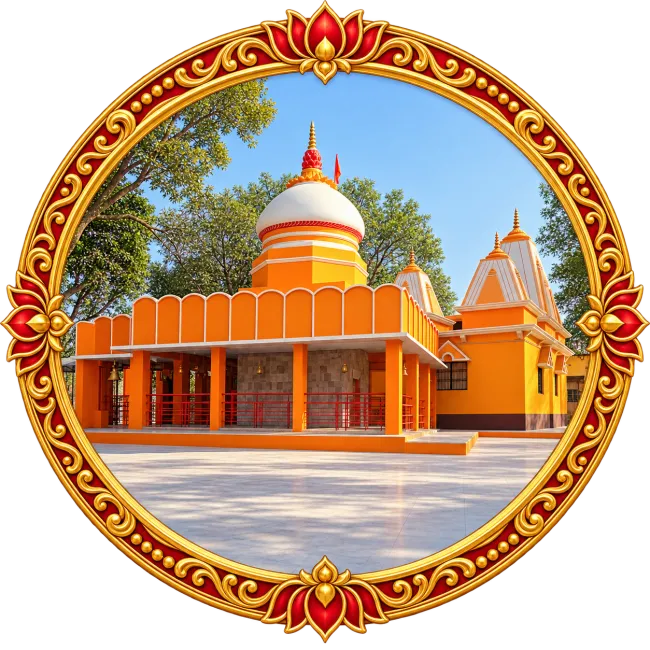
Gauri Shankar Temple, Jaunpur
Visit Gauri Shankar Temple in Sujanganj, Jaunpur, an ancient and highly revered Shiva shrine known for its self-manifested Ardhanarishvara Shivling. Popularly called Shri Gauri Shankar Dham, the temple represents the divine union of Lord Shiva and Goddess Parvati. Its sacred history, peaceful atmosphere, daily aartis and grand celebrations during Maha Shivaratri and Shravan make it one of the most important Shiva pilgrimage destinations in Jaunpur district.
About Gauri Shankar Temple
Gauri Shankar Temple is located in Sujanganj town in the western part of Jaunpur district, Uttar Pradesh. The temple is situated on the Machhlishahr–Sujanganj route, close to Sujanganj market.
The temple is dedicated to Lord Shiva and Goddess Gauri. Its principal Shivling is worshipped as a combined manifestation of Shiva and Shakti. Devotees believe that the Shivling is Swayambhu, meaning that it appeared naturally rather than being carved and ceremonially installed by humans.
The form of the Shivling is associated with Ardhanarishvara, in which Lord Shiva and Goddess Parvati are represented as two inseparable aspects of one divine reality. Because of this distinctive form, the shrine is known as Gauri Shankar Dham.
The temple is also popularly described as “Chhoti Kashi” by local devotees because of its strong Shaiva tradition and the large number of devotees who visit for Jalabhishek, Rudrabhishek and other Shiva rituals.
History of Gauri Shankar Temple
The religious history of Gauri Shankar Dham is associated with the fourteenth century. According to local tradition, the region was ruled by Bhar rulers when the sacred Shivling was discovered.
A resident of a nearby village used to take his cow for grazing. One day, the cow entered a forested area covered with bushes and did not return at the usual time. The owner went looking for her and found the cow standing near a mound.
He observed that milk was flowing naturally from the cow’s udder onto a black stone beneath the bushes. Surprised by the incident, he returned to the village and informed the local people.
The villagers cleared the bushes and began excavating the black stone. Even after digging considerably, they were unable to find its base. During this process, a villager reportedly received a divine message in a dream. The message instructed the villagers to stop digging and construct a temple over the sacred stone.
The residents accepted the dream as the command of Lord Shiva and collectively built a shrine at the site. Over time, the original structure was renovated and expanded with the support of devotees and local communities.
Gauri Shankar Dham is therefore associated with community construction rather than with one particular king or individual. The temple is traditionally believed to have come into existence during the fourteenth century, while the Swayambhu Shivling is regarded as timeless.
Who Built Gauri Shankar Temple?
According to the temple’s traditional history, the original shrine was constructed by residents of Sujanganj and neighbouring villages after the self-manifested Shivling was discovered.
No single ruler is remembered as the exclusive builder of Gauri Shankar Temple. The shrine took shape through the collective efforts of local devotees and was subsequently renovated, maintained and expanded by succeeding generations.
The spiritual history of the site is associated with the period of the Bhar rulers during the fourteenth century. The present temple complex reflects multiple phases of development carried out by the local community and temple administration.
Significance of the Ardhanarishvara Shivling
The main Shivling at Gauri Shankar Dham is worshipped as an Ardhanarishvara form of Lord Shiva and Goddess Parvati. Ardhanarishvara represents the unity of masculine and feminine divine energies.
Lord Shiva represents consciousness, stillness and spiritual knowledge, while Goddess Parvati represents creative power, nature and active energy. Their united form teaches that creation depends upon the balance of both energies.
This form of the deity makes the temple particularly important for married couples and families. Devotees pray here for:
- Happiness and harmony in married life
- A suitable marriage partner
- Resolution of family disagreements
- Health and prosperity
- Protection from difficulties
- Success in personal and professional life
- Children and family welfare
- Mental peace and emotional balance
- Fulfilment of righteous wishes
- Spiritual wisdom and devotion
Newly married couples frequently visit the temple to seek the blessings of Gauri and Shankar for a peaceful and lasting relationship.
Architecture of Gauri Shankar Temple
The temple follows the traditional architectural style of a North Indian Shiva shrine. Its main sanctum houses the ancient Swayambhu Shivling, which forms the spiritual centre of the complex.
The sanctum is designed to allow devotees to offer water, milk, bel leaves and flowers directly to the Shivling. An image of Nandi, the sacred bull and vehicle of Lord Shiva, faces the principal deity.
The temple’s shikhara rises above the sanctum and can be seen from the surrounding area. The complex includes open spaces for devotees, puja ceremonies, religious gatherings and community programmes.
The large temple bell holds special importance in local tradition. Devotees ring the bell before entering the sanctum as a symbolic announcement of their arrival before Lord Shiva. Local belief associates the sound of this bell with divine protection for the surrounding villages.
During Shravan and Maha Shivaratri, the temple is decorated with flowers, lights, saffron flags and devotional banners. Barricades and separate queues are arranged for men and women to manage the large crowds.
Gauri Shankar Temple Timings
Regular Darshan Timings
The temple follows two principal aarti ceremonies every day. Its doors normally open at 04:00 AM, while the sanctum remains closed between 01:00 PM and 02:00 PM.
Shravan and Festival Timings
On major Sawan Mondays, Maha Shivaratri and other special occasions, the temple may open at midnight or during the early morning hours. The afternoon closure may be reduced to ten minutes for cleaning when there are large crowds.
During Shravan, special shringar and Maha Aarti are performed at 08:00 PM. Festival schedules may change according to crowd-management arrangements, so devotees attending a specific ritual should confirm the schedule locally.
Daily Puja and Rituals
Daily worship begins before sunrise with the cleaning and purification of the sanctum. The Swayambhu Shivling is bathed with sacred water, milk and Panchamrit before being decorated with sandalwood paste, flowers and bel leaves.
The principal rituals include:
- Mangala Puja
- Jalabhishek
- Doodh Abhishek
- Panchamrit Abhishek
- Rudrabhishek
- Shiva Sahasranama recitation
- Mahamrityunjaya Mantra Jaap
- Shiva Chalisa recitation
- Morning aarti
- Shringar and bhog
- Evening aarti
- Special Monday worship
Devotees chant “Om Namah Shivaya” while offering water to the Shivling. Married couples may jointly perform Gauri-Shankar Puja for harmony and stability in their relationship.
Rudrabhishek at Gauri Shankar Dham
Rudrabhishek is one of the most important ceremonies performed at the temple. During this ritual, the Shivling is continuously bathed while priests recite mantras from the Shri Rudram.
Items commonly used during Rudrabhishek include:
- Water and Gangajal
- Cow’s milk
- Curd
- Honey
- Sugar
- Ghee
- Sugarcane juice
- Bel leaves
- White flowers
- Sandalwood paste
Devotees may arrange an individual or family Rudrabhishek through the temple priests. Mondays, Pradosh Vrat, Maha Shivaratri and the month of Shravan are considered especially auspicious for this ritual.
Offerings at Gauri Shankar Temple
Devotees may offer the following items:
- Water or Gangajal
- Milk and Panchamrit
- Bel leaves
- White flowers
- Datura
- Akshat
- Sandalwood paste
- Honey
- Sugarcane juice
- Panch Meva
- White barfi
- Fruits and sweets
- Incense sticks and ghee lamps
- Red chunri for Goddess Gauri
White barfi, Panch Meva, bhang and sugarcane juice are among the special offerings presented to Lord Shiva during important celebrations.
Visitors should use the designated place for offerings and avoid leaving plastic containers inside the temple complex.
Major Festivals at Gauri Shankar Temple
Maha Shivaratri
Maha Shivaratri is one of the largest annual celebrations at Gauri Shankar Dham. The temple opens before sunrise, and devotees gather for Jalabhishek, Rudrabhishek and darshan.
Special rituals include Bhasma Aarti, four-prahar worship, Shiva mantra chanting and the ceremonial marriage of Lord Shiva and Goddess Parvati. A Shiva Baraat may also be organized with devotional music and tableaux.
Shravan Month
Shravan is the busiest period at the temple. Devotees visit throughout the month, with the largest crowds arriving on Mondays.
Kanwariyas carry sacred water from rivers and offer it to Gauri Shankar. The temple remains filled with chants of “Har Har Mahadev” and “Bol Bam.” Special shringar and Maha Aarti are performed at 08:00 PM during Shravan.
Sawan Mondays
Each Monday of Shravan is celebrated with Jalabhishek, Rudrabhishek, bhog and special decoration of the deity. Thousands of devotees may visit on a single Monday, so separate queues and security arrangements are established.
Pradosh Vrat
Pradosh Vrat is dedicated to Lord Shiva and Goddess Parvati. Devotees observe a fast and attend the evening puja to seek forgiveness, prosperity and family happiness.
Hartalika Teej
Married and unmarried women worship Gauri and Shankar during Hartalika Teej. Married women pray for their husbands’ health and a happy marriage, while unmarried women seek a suitable life partner.
Kartik Purnima
Devotees light lamps, perform Shiva Puja and participate in charitable activities on Kartik Purnima.
Best Time to Visit
October to March is the best period for a comfortable pilgrimage because the weather is pleasant. Visitors who wish to experience the temple’s grand celebrations can plan their trip during Maha Shivaratri or Shravan.
For peaceful darshan, the most suitable time is between 06:00 AM and 08:00 AM on an ordinary weekday. Mondays are more crowded, while Sawan Mondays attract the largest number of devotees.
A regular visit usually takes one to two hours. During Maha Shivaratri and Sawan Mondays, additional time should be kept for security checks and queues.
How to Reach Gauri Shankar Temple
By Road
Gauri Shankar Dham is situated close to Sujanganj market on the Machhlishahr–Sujanganj road. The temple is approximately 45–50 kilometres from Jaunpur city.
Travellers from Jaunpur can reach the temple through Sikrara and Machhlishahr. Private buses, shared vehicles and taxis operate on this route. Transport is also available from Badlapur and Mungra Badshahpur to Sujanganj.
By Train
Jaunpur City and Jaunpur Junction are the principal railway stations for visitors travelling from distant cities. From either station, travellers can hire a taxi or use local transport through Machhlishahr.
Badshahpur Railway Station, also known as Mungra Badshahpur station, is another convenient option for reaching Sujanganj. Road transport is available from the station to the temple.
By Air
Lal Bahadur Shastri International Airport at Babatpur, Varanasi, is the nearest major airport. Visitors can hire a taxi from the airport and travel to Sujanganj through Jaunpur or the most suitable local road route.
Prayagraj Airport is another option for travellers arriving from cities connected with Prayagraj.
Nearby Places to Visit
Visitors may combine their pilgrimage with the following places:
- Sujanganj market
- Chaurishwar Nath Temple
- Diwan Mahadev Temple, Machhlishahr
- Mungra Badshahpur
- Trilochan Mahadev Temple
- Sheetala Mata Chaukiya Dham
- Shahi Qila, Jaunpur
- Shahi Bridge, Jaunpur
Visitor Guidelines
- Wear clean and respectful clothes.
- Remove footwear before entering the temple.
- Carry Jalabhishek materials in a clean vessel.
- Follow separate queues during crowded festivals.
- Do not push or stop for long periods near the Shivling.
- Perform abhishek only as directed by temple priests.
- Avoid carrying plastic bags into the worship area.
- Keep the temple complex clean.
- Obtain permission before taking photographs inside the sanctum.
- Elderly devotees should avoid peak hours on Sawan Mondays.
- Keep children close during fairs and large gatherings.
- Park vehicles only in designated areas.
Conclusion
Gauri Shankar Temple in Sujanganj is one of the most important centres of Shiva worship in Jaunpur district. Believed to have developed during the fourteenth century, the shrine is associated with the discovery of a self-manifested Shivling after a cow was seen pouring milk over a black stone.
The distinctive Ardhanarishvara form of the Shivling represents the eternal unity of Lord Shiva and Goddess Parvati. This makes the temple especially significant for married couples, families and devotees seeking harmony, protection and spiritual growth.
Daily Jalabhishek, Rudrabhishek, morning and evening aartis, Shravan celebrations and Maha Shivaratri festivities keep the temple spiritually vibrant throughout the year. Whether one visits for a quiet morning darshan or joins the grand gathering of Sawan devotees, Gauri Shankar Dham offers a powerful and memorable experience of Shiva-Shakti devotion.